
⏱️ 6 min read
Cinema has given us some of the most memorable characters in entertainment history, and often it’s the villains who leave the most lasting impressions. These antagonists captivate audiences with their complexity, menace, and unforgettable performances. From psychological terror to pure evil incarnate, certain movie villains have transcended their films to become cultural icons. Their quotable lines, distinctive looks, and motivations have cemented their places in film history, proving that sometimes the bad guy steals the show.
The Most Iconic Antagonists in Cinema History
1. Hannibal Lecter – The Sophisticated Cannibal
Anthony Hopkins’ portrayal of Dr. Hannibal Lecter in “The Silence of the Lambs” (1991) redefined what a movie villain could be. Despite appearing on screen for only 16 minutes, Hopkins created one of cinema’s most terrifying and unforgettable characters. Lecter’s combination of refined culture, brilliant intellect, and cannibalistic tendencies created a villain who was both repulsive and strangely captivating. His chilling line “I ate his liver with some fava beans and a nice Chianti” remains one of the most quoted movie moments in history. The character’s intelligence and composure made him all the more frightening, as he could manipulate anyone with his psychological insights.
2. Darth Vader – The Fallen Hero Turned Dark Lord
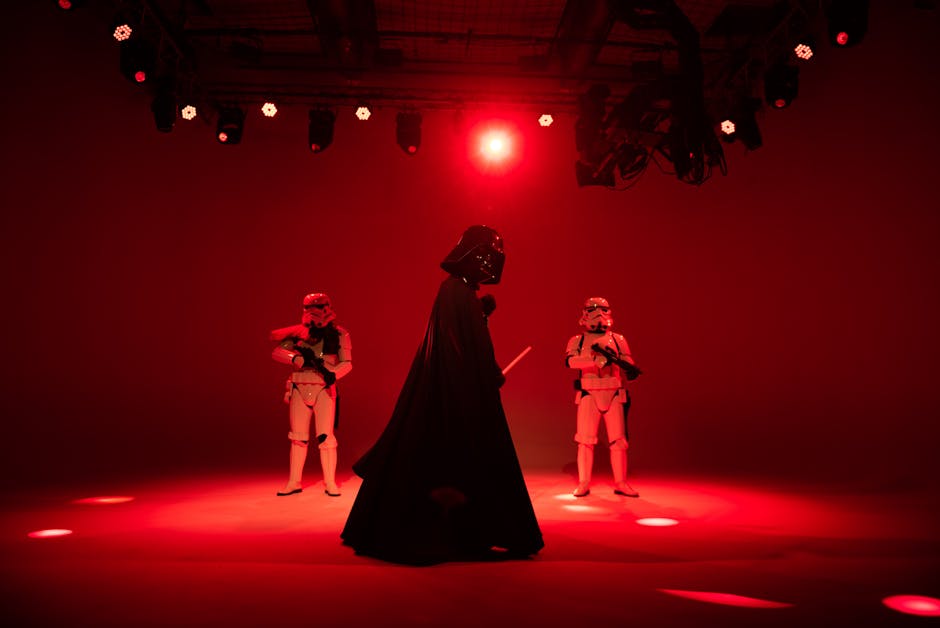
Few villains have achieved the cultural penetration of Darth Vader from the “Star Wars” franchise. Introduced in 1977, Vader’s imposing black armor, mechanical breathing, and deep voice created an instantly recognizable figure. What makes Vader particularly memorable is the tragic backstory revealed across the saga, showing his fall from heroic Jedi to Sith Lord. James Earl Jones’ commanding voice work combined with David Prowse’s physical presence created a villain who was both terrifying and ultimately sympathetic. The revelation “I am your father” remains one of cinema’s greatest plot twists and most parodied moments.
3. The Joker – Chaos Personified
While multiple actors have portrayed Batman’s nemesis, Heath Ledger’s interpretation in “The Dark Knight” (2008) elevated the character to new heights. Ledger’s Joker wasn’t just a criminal; he was an agent of chaos who wanted to prove that civilization was merely a thin veneer over humanity’s true nature. His anarchic philosophy, disturbing makeup, and unpredictable behavior created genuine tension in every scene. Ledger’s posthumous Oscar win for the role acknowledged how he transformed a comic book villain into a complex study of nihilism and madness. His question “Why so serious?” became a cultural phenomenon.
4. Norman Bates – The Boy Next Door With a Dark Secret
Alfred Hitchcock’s “Psycho” (1960) introduced audiences to Norman Bates, played by Anthony Perkins in a performance that forever changed horror cinema. Bates appeared harmless and even sympathetic at first, making the revelation of his murderous, split personality all the more shocking. The shower scene remains one of the most iconic moments in film history, but it’s Perkins’ nuanced portrayal of a deeply disturbed man that makes Bates truly unforgettable. The character established the template for the seemingly normal person harboring dark secrets, influencing countless thrillers that followed.
5. Nurse Ratched – Tyranny in White Uniform
Louise Fletcher’s Oscar-winning performance as Nurse Ratched in “One Flew Over the Cuckoo’s Nest” (1975) created a villain defined not by violence but by psychological control and institutional power. Ratched’s calm, authoritative demeanor masked her cruel manipulation of vulnerable patients. She represented the dehumanizing aspects of bureaucracy and the abuse of authority. What makes her particularly chilling is her belief that she’s acting in her patients’ best interests, making her a villain who doesn’t see herself as evil. Her character remains a powerful symbol of institutional oppression.
6. Anton Chigurh – The Embodiment of Unstoppable Fate
Javier Bardem’s portrayal of hitman Anton Chigurh in “No Country for Old Men” (2007) earned him an Academy Award and created one of modern cinema’s most disturbing villains. With his unusual hairstyle, calm demeanor, and signature cattle gun, Chigurh operates by his own incomprehensible moral code. His coin-flip method of determining victims’ fates makes him seem like a force of nature rather than simply a human killer. Bardem’s performance is terrifying in its restraint, making Chigurh feel like death itself stalking the Texas landscape.
7. Voldemort – The Dark Wizard Who Must Not Be Named
Ralph Fiennes brought J.K. Rowling’s ultimate antagonist to life across the “Harry Potter” series, creating a villain whose very name characters feared to speak. Voldemort’s quest for immortality and pure-blood supremacy made him a complex villain driven by fear of death and rejection. His backstory as Tom Riddle showed how childhood trauma and choices led to his transformation into a monster. The character’s physical transformation, with snake-like features and absence of a nose, visually represented his loss of humanity. Voldemort became the definitive dark wizard in popular culture.
8. Hans Gruber – The Elegant Terrorist
Alan Rickman’s film debut as Hans Gruber in “Die Hard” (1988) set a new standard for action movie villains. Unlike the muscle-bound thugs common in 1980s action films, Gruber was sophisticated, intelligent, and cultured. Rickman’s smooth delivery and European elegance made Gruber a villain audiences almost wanted to root for. His true motivation as a thief posing as a terrorist added depth to what could have been a one-dimensional character. Gruber proved that villains could be charming, witty, and formidable, influencing action cinema for decades.
9. Maleficent – The Mistress of All Evil
Disney’s “Sleeping Beauty” (1959) gave us one of animation’s most iconic villains. Maleficent’s dramatic design, with her horned headdress and flowing robes, made her instantly memorable. Her curse on Princess Aurora stemmed from being snubbed at a christening, showing how perceived slights can fuel villainy. Eleanor Audley’s voice work gave Maleficent a theatrical, commanding presence. Her transformation into a dragon for the final battle cemented her status as Disney’s most visually striking and powerful villain, inspiring countless reimaginings including Angelina Jolie’s live-action portrayal.
10. Sauron – The Ultimate Fantasy Evil
While rarely seen in physical form, Sauron’s presence dominates “The Lord of the Rings” trilogy as the ultimate representation of corrupting power. The Eye of Sauron became an iconic image of all-seeing malevolence. What makes Sauron memorable isn’t a performance or dialogue, but his representation as pure evil—a force that corrupts everything it touches through the One Ring. Peter Jackson’s films brilliantly realized Tolkien’s vision of a villain whose threat comes not from personal confrontation but from his corrupting influence spreading across Middle-earth. Sauron represents evil as a system rather than an individual.
The Lasting Legacy of Cinematic Villainy
These ten villains have earned their places in film history through memorable performances, distinctive characteristics, and complex motivations. They’ve transcended their original films to become part of broader culture, referenced and parodied across media. What unites them is their ability to fascinate audiences—we fear them, but we can’t look away. Whether through psychological complexity, visual distinctiveness, or philosophical depth, these antagonists prove that great villains are essential to great storytelling. They challenge heroes, embody our fears, and sometimes force us to confront uncomfortable truths about human nature. Their continued relevance decades after their debuts demonstrates that truly great villainy is timeless.
