




















1 / 20 Questions
0 Points

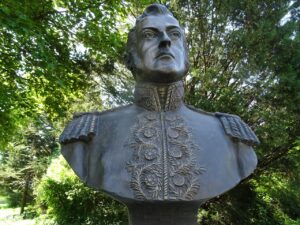
Which European country colonized most of South America?

Portugal

Spain

England

France

Points won
0
Correct score
0%

More questions

More Articles

Top 10 Famous Celebrities with Hidden Talents

Top 10 Famous Celebrities with Hidden Talents

⏱️ 6 min read

When fans think of their favorite celebrities, they often associate them with the talents that made them famous—acting, singing, or performing. However, many stars harbor surprising abilities that rarely make headlines. From Olympic-level athleticism to accomplished artistry, these hidden skills reveal fascinating dimensions to personalities already in the public eye. The entertainment world is filled with multifaceted individuals whose lesser-known talents demonstrate that fame often represents just one facet of their remarkable abilities.

Surprising Skills Beyond the Spotlight

1. Geena Davis: Olympic-Level Archery Champion

Academy Award-winning actress Geena Davis, known for her roles in "Thelma & Louise" and "A League of Their Own," took up archery in her forties and quickly rose to elite competitive levels. Her dedication to the sport was so intense that she trained rigorously for the U.S. Olympic archery team trials in 2000. Davis placed 24th out of 300 competitors, narrowly missing qualification for the Sydney Olympics. Her athletic prowess demonstrates that determination and focus can lead to excellence in entirely new fields, even later in life. Davis has stated that archery taught her discipline and mental fortitude that translated back into her acting career.

2. Steve Martin: Accomplished Banjo Virtuoso

Comedian and actor Steve Martin has performed comedy and acted in films for decades, but his exceptional skill with the banjo remains lesser known to mainstream audiences. Martin is a Grammy Award-winning bluegrass musician who has released multiple albums and toured with professional bluegrass bands. He began playing the instrument as a teenager and continued practicing throughout his comedy career. His album "The Crow: New Songs for the 5-String Banjo" won the Grammy for Best Bluegrass Album in 2010. Martin's banjo proficiency demonstrates professional-level musicianship that rivals career musicians.

3. Natalie Portman: Published Scientific Researcher

Before becoming an Oscar-winning actress, Natalie Portman co-authored two scientific research papers that were published in professional journals. While still in high school, she worked as a research assistant in a psychology laboratory, contributing to a study on object permanence. Later, as a Harvard undergraduate student pursuing a psychology degree, she contributed to research on frontal lobe development. Portman was even listed as a guest lecturer at Columbia University. Her academic achievements reveal a rigorous intellectual life that exists parallel to her acting career, proving that Hollywood stardom and scholarly pursuits need not be mutually exclusive.

4. Hugh Jackman: Trained Journalist and Event School Graduate

Before portraying Wolverine and becoming a musical theater sensation, Hugh Jackman completed a degree in Communications with a journalism major at the University of Technology Sydney. His academic background in journalism provided him with interview skills, research abilities, and communication techniques that enhanced his acting preparation. Jackman has mentioned that his journalism training helps him analyze characters and understand storytelling from multiple perspectives. This educational foundation contributes to his reputation as one of Hollywood's most thoughtful and prepared performers.

5. Lucy Liu: Exhibited Visual Artist

Actress Lucy Liu maintains an active career as a visual artist under the pseudonym Yu Ling. Her artwork has been exhibited in galleries throughout the United States and internationally, including solo shows in prestigious venues. Liu works in various media, including painting, collage, and mixed media installations. Her artistic style combines Eastern and Western influences, reflecting her multicultural background. Liu has stated that creating visual art provides a creative outlet entirely separate from acting, allowing her to express herself without dialogue or character constraints. Several of her pieces have been acquired by serious collectors, validating her talent beyond celebrity novelty.

6. Jeff Goldblum: Jazz Pianist and Bandleader

Actor Jeff Goldblum leads a jazz band called Jeff Goldblum and the Mildred Snitzer Orchestra, performing regularly at venues throughout Los Angeles. Goldblum has studied piano since childhood and maintained his musical skills throughout his acting career. The band performs jazz standards and contemporary arrangements, with Goldblum serving as pianist and occasional vocalist. They've released albums and performed on national television programs. His musical performances reveal sophisticated improvisational skills and deep knowledge of jazz theory, demonstrating that his artistic talents extend far beyond the quirky characters he often portrays on screen.

7. Mayim Bialik: Neuroscientist with a PhD

Known for her roles in "Blossom" and "The Big Bang Theory," Mayim Bialik holds a legitimate PhD in neuroscience from UCLA. Her doctoral dissertation focused on hypothalamic activity in patients with Prader-Willi syndrome. Bialik took a break from acting to complete her undergraduate and doctoral studies, conducting genuine scientific research that contributed to the field. She has published papers in scientific journals and occasionally works as a science communicator, helping translate complex neuroscience concepts for general audiences. Playing a neuroscientist on "The Big Bang Theory" required no acting regarding the scientific content—Bialik understood it all.

8. Viggo Mortensen: Published Poet and Photographer

Actor Viggo Mortensen, famous for his role as Aragorn in "The Lord of the Rings" trilogy, is an accomplished poet, photographer, and painter. He founded Perceval Press, a publishing company that releases poetry, art books, and photography collections—including several volumes of his own work. Mortensen is fluent in multiple languages and has published poetry in Spanish, Danish, and English. His photography has been exhibited in galleries internationally, with collections that document his travels and filmmaking experiences. This artistic versatility reveals a Renaissance sensibility, with creative expression manifesting across multiple mediums beyond performance.

9. Terry Crews: Professional Illustrator and Portrait Artist

Before his NFL career and subsequent success as an actor and comedian, Terry Crews earned a scholarship to the Interlochen Center for the Arts for his painting abilities. He has continued creating artwork throughout his athletic and entertainment careers, working in both digital and traditional media. Crews has painted portraits of celebrities and created illustrations for various projects. He's demonstrated his drawing skills in real-time on social media and television programs, showcasing professional-level technique. His artistic talent provided crucial supplemental income during his early struggling years, as he painted portraits to support his family when acting roles were scarce.

10. Rowan Atkinson: Electrical Engineering Graduate

Comedian Rowan Atkinson, beloved worldwide as Mr. Bean, holds a degree in Electrical Engineering from Newcastle University and later earned a master's degree in the same field from Oxford University. His academic background in engineering reflects a highly analytical mind that contrasts with the physical, seemingly chaotic comedy style that made him famous. Atkinson has mentioned that his engineering training helps him approach comedy construction methodically, treating jokes as problems requiring elegant solutions. This technical background also fuels his passion for automobiles—he's an accomplished race car driver and automotive journalist, contributing knowledgeable reviews to car magazines.

The Depth Behind Fame

These celebrities demonstrate that public personas often represent merely the most visible aspect of complex, accomplished individuals. Their hidden talents reveal dedication, intellectual curiosity, and artistic drive that extends beyond their primary careers. Whether pursuing academic achievements, artistic expression, or athletic excellence, these stars remind audiences that talent rarely exists in isolation. The discipline required to excel in entertainment often translates into success across diverse fields, proving that fame and accomplishment can coexist with genuine expertise in unexpected areas. These multifaceted celebrities inspire fans to pursue their own hidden interests and develop skills beyond their primary vocations.


Top 10 Greatest Scientific Theories

Top 10 Greatest Scientific Theories

⏱️ 7 min read

Throughout human history, scientific theories have fundamentally transformed our understanding of the universe, life, and the laws governing reality. These frameworks of knowledge have not only explained natural phenomena but have also enabled technological advances that shape modern civilization. From the infinitesimally small quantum realm to the vast expanses of space-time, these intellectual achievements represent humanity's most profound insights into how our world works.

The Foundational Theories That Shaped Modern Science

1. Einstein's Theory of General Relativity

Albert Einstein's theory of general relativity, published in 1915, revolutionized our understanding of gravity, space, and time. Rather than viewing gravity as a force acting at a distance, Einstein proposed that massive objects curve the fabric of space-time itself, and this curvature guides the motion of objects. This elegant theory explained phenomena that Newton's laws couldn't account for, such as the precise orbit of Mercury and the bending of light around massive objects. General relativity has been confirmed through numerous experiments, from the observation of gravitational lensing to the recent detection of gravitational waves. It remains the foundation of modern cosmology and our understanding of black holes, the expansion of the universe, and the Big Bang itself.

2. The Theory of Evolution by Natural Selection

Charles Darwin's theory of evolution by natural selection, presented in "On the Origin of Species" in 1859, provided the unifying framework for all biological sciences. This theory explains how species change over time through the differential survival and reproduction of individuals with advantageous traits. Natural selection, combined with genetic variation and inheritance, accounts for the remarkable diversity of life on Earth and the adaptation of organisms to their environments. Modern evolutionary theory has been strengthened by discoveries in genetics, molecular biology, and paleontology, making it one of the most thoroughly substantiated theories in science. It has practical applications ranging from medicine to agriculture and helps us understand antibiotic resistance, conservation biology, and human origins.

3. Quantum Mechanics and Quantum Field Theory

Quantum mechanics emerged in the early 20th century as physicists grappled with phenomena at atomic and subatomic scales that classical physics couldn't explain. This theory reveals that energy exists in discrete packets called quanta, that particles exhibit wave-like properties, and that the act of observation affects the observed system. Quantum mechanics introduced revolutionary concepts such as superposition, entanglement, and the uncertainty principle. Its extension, quantum field theory, successfully describes the behavior of subatomic particles and the fundamental forces of nature. Despite its counterintuitive nature, quantum mechanics is extraordinarily successful, underlying technologies from semiconductors and lasers to MRI machines and potentially enabling quantum computers that could revolutionize information processing.

4. The Big Bang Theory and Cosmic Evolution

The Big Bang theory describes the origin and evolution of the universe from an extremely hot, dense state approximately 13.8 billion years ago. This cosmological model explains numerous observations, including the expansion of the universe, the cosmic microwave background radiation, and the abundance of light elements. According to this theory, the universe has been expanding and cooling ever since its initial state, with matter coalescing into stars, galaxies, and larger structures over billions of years. The Big Bang theory represents a remarkable synthesis of general relativity, particle physics, and observational astronomy. It has transformed cosmology from philosophical speculation into a rigorous, evidence-based science and continues to guide research into dark matter, dark energy, and the ultimate fate of the universe.

5. The Germ Theory of Disease

The germ theory of disease, established primarily through the work of Louis Pasteur and Robert Koch in the 19th century, fundamentally changed medicine and public health. This theory posits that many diseases are caused by microorganisms—bacteria, viruses, fungi, and parasites—that invade the body. Before germ theory, diseases were often attributed to "bad air" or imbalanced humors. The acceptance of germ theory led to revolutionary practices including sterilization, antiseptics, antibiotics, and vaccination. It has saved countless lives by enabling the prevention and treatment of infectious diseases that once decimated populations. The principles of germ theory continue to guide modern epidemiology, immunology, and the ongoing battle against emerging infectious diseases.

6. Plate Tectonics Theory

The theory of plate tectonics, developed in the 1960s, explains the large-scale motion of Earth's lithosphere. According to this theory, the Earth's outer shell is divided into several plates that glide over the mantle, driven by convection currents. Plate tectonics accounts for the distribution of earthquakes and volcanoes, the formation of mountain ranges, and the opening and closing of ocean basins. It unified previously separate observations about continental drift, seafloor spreading, and mountain building into a comprehensive framework. This theory has profound implications for understanding Earth's history, predicting geological hazards, locating mineral resources, and explaining the evolution of life through changing continental configurations and climate patterns.

7. The Laws of Thermodynamics

The laws of thermodynamics, formulated in the 19th century, govern the behavior of energy in physical systems and have universal applications across all sciences. The first law states that energy cannot be created or destroyed, only converted from one form to another. The second law introduces the concept of entropy, stating that in any energy transfer, the total entropy of a system and its surroundings always increases. The third law establishes that entropy approaches a minimum value as temperature approaches absolute zero. These laws explain why certain processes occur spontaneously while others don't, why perpetual motion machines are impossible, and how energy flows through ecosystems, engines, and the universe itself. They remain fundamental to fields ranging from chemistry and biology to engineering and cosmology.

8. Atomic Theory and the Modern Understanding of Matter

Atomic theory, which evolved from philosophical speculation to rigorous science over centuries, explains that all matter consists of discrete units called atoms. John Dalton's work in the early 19th century established that elements are composed of unique atoms with characteristic properties, while later discoveries revealed atoms' internal structure—a nucleus containing protons and neutrons surrounded by electrons. The modern atomic theory, incorporating quantum mechanics, explains chemical bonding, the periodic table's organization, and the behavior of materials. This theory underlies all of chemistry and materials science, enabling the development of new substances, pharmaceuticals, and technologies. It bridges physics and chemistry, explaining properties from the molecular to the macroscopic scale.

9. The Cell Theory of Life

Cell theory, established in the mid-19th century, states that all living organisms are composed of one or more cells, that cells are the basic unit of life, and that all cells arise from pre-existing cells. This theory, developed through the work of scientists including Matthias Schleiden, Theodor Schwann, and Rudolf Virchow, provided the foundation for modern biology and medicine. Cell theory explains growth, reproduction, and heredity at the most fundamental level. It has guided research into cellular processes, disease mechanisms, and treatments. Modern extensions of cell theory incorporate our understanding of cellular biochemistry, genetics, and the origin of life, making it essential to fields from developmental biology to cancer research.

10. Electromagnetic Theory and Maxwell's Equations

James Clerk Maxwell's electromagnetic theory, formulated in the 1860s, unified electricity, magnetism, and light into a single comprehensive framework. Maxwell's equations describe how electric and magnetic fields are generated by charges and currents, how they propagate through space as electromagnetic waves, and how they interact with matter. This theory predicted that light itself is an electromagnetic wave and that other electromagnetic waves could exist at different frequencies. The implications were revolutionary: electromagnetic theory enabled the development of radio, television, radar, wireless communications, and countless other technologies that define modern life. It also paved the way for Einstein's special relativity and remains one of the most elegant and powerful theories in physics.

The Enduring Legacy of Scientific Achievement

These ten scientific theories represent humanity's most significant intellectual achievements, each fundamentally changing how we understand reality. From the biological mechanisms that drive life's diversity to the physical laws governing matter and energy, from the geological processes shaping our planet to the cosmic forces structuring the universe, these theories provide the framework for modern science and technology. They demonstrate the power of systematic observation, rigorous experimentation, and logical reasoning to unlock nature's secrets. As science continues to advance, these foundational theories are refined and extended, but their core insights remain valid, continuing to inspire new discoveries and applications that improve human life and deepen our understanding of the cosmos.