
⏱️ 7 min read
The golden age of piracy has captivated imaginations for centuries, but the reality of life on the high seas was far stranger than most Hollywood portrayals suggest. Beyond the treasure maps and walking the plank, pirates operated under surprising codes of conduct, practiced unusual forms of democracy, and engaged in behaviors that would astonish modern audiences. These seafaring outlaws left behind a legacy filled with peculiar traditions, unexpected rules, and bizarre practices that reveal a complex subculture operating outside the boundaries of civilized society.
Peculiar Traditions and Surprising Truths from the High Seas
1. Pirates Invented an Early Form of Worker’s Compensation
Long before modern insurance policies existed, pirate crews established detailed compensation systems for injuries sustained during battle or ship operations. These agreements, often written into ship articles, specified exact payments for lost body parts. A missing right arm might earn a pirate 600 pieces of eight, while a lost eye could bring 100 pieces of eight. This system ensured that disabled crew members received financial support, demonstrating a level of social welfare that was remarkably progressive for the 17th and 18th centuries. Some crews even provided ongoing support for permanently disabled pirates, allowing them to retire with a portion of future plunder.
2. Pirate Ships Were Surprisingly Democratic
Contrary to popular belief about tyrannical captains ruling with absolute authority, most pirate ships operated as floating democracies. Crew members voted on major decisions, including where to sail, which ships to attack, and how to divide treasure. Captains were elected by the crew and could be removed by vote if they proved incompetent or too cruel. The quartermaster, also elected, served as a check on the captain’s power, managing daily operations and settling disputes. This democratic system stood in stark contrast to the rigid hierarchies of naval and merchant vessels, making piracy attractive to those seeking freedom from authoritarian structures.
3. The Jolly Roger Had Multiple Designs With Specific Messages
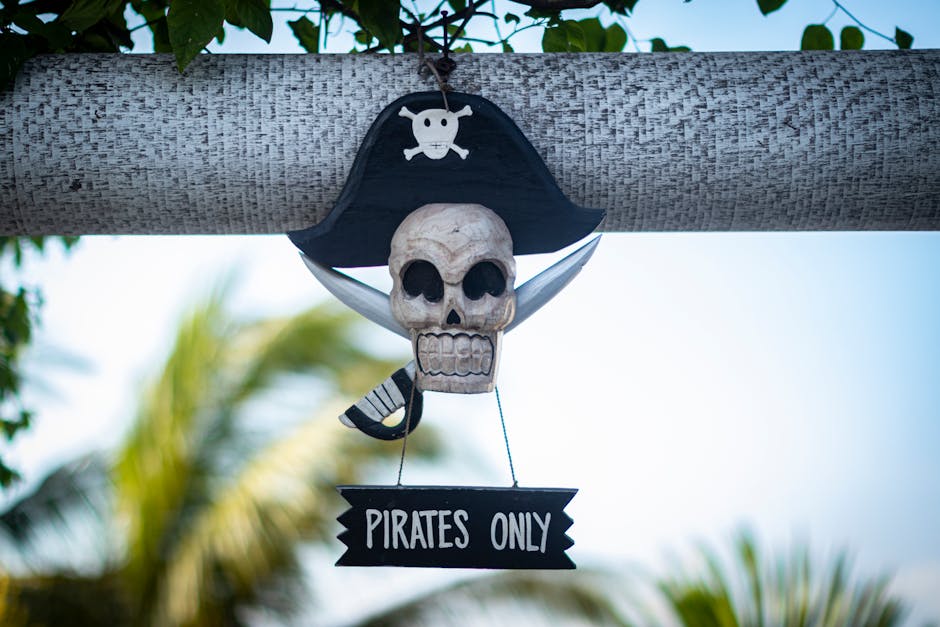
The iconic skull and crossbones flag wasn’t the only pirate banner sailing the seas. Different pirate captains designed unique flags to send specific messages to their targets. Blackbeard’s flag featured a skeleton holding an hourglass and spear, symbolizing that time was running out for his victims. Bartholomew Roberts displayed a pirate figure standing on two skulls labeled “ABH” and “AMH,” meaning “A Barbadian’s Head” and “A Martinician’s Head,” threatening specific colonial populations. A plain red flag, known as the “Bloody Flag,” indicated no quarter would be given—everyone would be killed. These visual communications allowed pirates to intimidate targets into surrendering without firing a shot.
4. Many Pirates Were Escaped Slaves and Former Servants
Pirate crews were remarkably diverse and often racially integrated, unusual for the era. Many crew members were escaped African slaves, former indentured servants, or indigenous peoples fleeing colonial oppression. Some ships had Black crew members comprising up to a third of the total complement. Pirates operated under the principle that any man willing to fight deserved an equal share of the plunder, regardless of race or origin. Several prominent pirates were former slaves, including Black Caesar, who commanded his own ship in the Caribbean. This egalitarian approach made piracy one of the few avenues where marginalized individuals could achieve relative equality and prosperity.
5. Pirates Rarely Made Victims Walk the Plank
The dramatic image of blindfolded prisoners walking the plank into shark-infested waters is largely a fictional invention. Historical records contain very few verified instances of this practice. Pirates preferred more efficient methods of execution or, more commonly, simply imprisoned, marooned, or released their captives. When pirates did kill prisoners, they typically used quicker methods like hanging or shooting. The walking the plank myth appears to have originated in early 19th-century literature and was popularized by Victorian-era adventure novels, becoming permanently embedded in pirate mythology despite its historical rarity.
6. Pirate Captains Often Wore Elaborate Clothing as Psychological Warfare
Famous pirates like Bartholomew Roberts and “Calico Jack” Rackham dressed in expensive, flamboyant clothing stolen from wealthy passengers and cargo holds. This wasn’t mere vanity—it served strategic purposes. Elaborate costumes projected power and success, intimidating enemies while boosting crew morale. The stark contrast between a pirate captain’s fine silks and his crew’s rough garments reinforced his authority. Additionally, dressing like gentlemen allowed some pirates to infiltrate ports or approach merchant vessels without immediate suspicion. Blackbeard famously wore slow-burning fuses in his beard during battle, creating a demonic appearance shrouded in smoke that terrified opponents.
7. Pirate Havens Operated as Functional Independent Republics
Certain pirate strongholds like Nassau in the Bahamas and Port Royal in Jamaica functioned as autonomous communities with their own economies, social structures, and governance systems. At its peak, Nassau housed over 1,000 pirates and operated completely outside colonial law. These havens featured taverns, brothels, markets for selling stolen goods, and even rudimentary judicial systems for settling disputes between crews. The “Pirate Republic” of Nassau existed from 1706 to 1718, representing one of the most successful examples of stateless society in modern history before British forces finally restored colonial control.
8. Pirates Had Strict Rules Against Fighting Among Crew Members
Despite their lawless reputation, pirate ships operated under detailed written codes that strictly regulated behavior aboard ship. Most articles explicitly forbade fighting among crew members while at sea. Disputes had to be settled on shore through formal duels with witnesses, or violators faced severe punishment including marooning or flogging. These rules existed because maintaining unit cohesion was essential for survival during battles and storms. Some codes even prohibited gambling for money aboard ship, as it frequently led to conflicts. The irony of thieves and murderers maintaining strict internal discipline reveals the pragmatic necessity of order within their criminal enterprises.
9. Female Pirates Successfully Disguised Themselves as Men for Years
While women were officially banned from most pirate ships, several notable female pirates successfully concealed their gender for extended periods. Anne Bonny and Mary Read are the most famous examples, both fighting alongside “Calico Jack” Rackham’s crew. Historical accounts describe them as being among the fiercest fighters, often more aggressive in battle than their male counterparts. When their ship was captured in 1720, witnesses reported that Bonny and Read were the only crew members sober enough to fight, as the men had been drinking. Their ability to maintain their disguises demonstrates both their determination and the chaotic, informal nature of pirate crew recruitment.
10. Pirates Suffered From Specific Occupational Diseases and Conditions
Life at sea exposed pirates to unique health challenges beyond combat injuries. Prolonged sun exposure caused severe skin damage and vision problems. The constant dampness led to chronic fungal infections and respiratory illnesses. Limited fresh food resulted in scurvy, causing teeth to fall out and old wounds to reopen. Many pirates suffered from hernias due to the constant heavy lifting of ropes, anchors, and cargo. Lead poisoning from handling ammunition and paint was common, sometimes causing neurological damage that manifested as erratic behavior. Contrary to romantic depictions, the average pirate life expectancy was short, with most dying from disease rather than combat, and many retired pirates bore the permanent physical toll of their profession.
The Reality Behind the Romance
These strange and often surprising facts reveal that historical piracy was far more complex than popular culture suggests. Pirates developed sophisticated social systems, practiced unexpected forms of equality, and operated under detailed rules while simultaneously rejecting societal norms. Their democratic practices, progressive compensation systems, and multicultural crews existed alongside violence, theft, and brutality. Understanding these contradictions provides insight into how marginalized individuals created alternative communities that, while criminal, offered opportunities unavailable in legitimate society. The legacy of piracy continues to fascinate precisely because it represents humanity at its most contradictory—simultaneously lawless and law-abiding, cruel and egalitarian, chaotic and organized.
