









1 / 10 Questions
0 Points

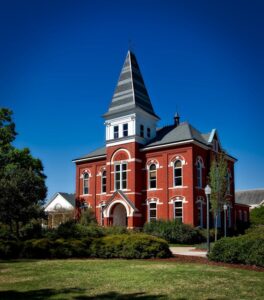
What happens if you step on the school seal at some universities?

You get free tuition

You become class president

You won't graduate on time

You get good luck

Points won
0
Correct score
0%

More questions

More Articles

Did You Know? 12 Crazy Facts About Everyday Technology

Did You Know? 12 Crazy Facts About Everyday Technology

⏱️ 6 min read

Technology surrounds us constantly, from the moment we wake up to the time we fall asleep. Yet beneath the familiar interfaces and routine functions lie fascinating stories, surprising origins, and mind-bending facts that most people never discover. The devices and systems we take for granted every day harbor secrets that reveal just how remarkable our modern world truly is. Here are twelve astonishing facts about the technology you use daily that will change how you see your gadgets forever.

Surprising Origins and Hidden Features

The Camera Icon Actually Honors a Classic Design

Ever noticed that camera icons on smartphones and apps look nothing like modern cameras? That's because they're modeled after the Kodak Brownie and other vintage cameras from the mid-20th century. Despite digital cameras looking completely different today, designers continue using this retro symbol because it's universally recognized. This phenomenon, called skeuomorphism, helps users instantly identify camera functions even though many young people have never seen the type of camera being depicted.

Your Microwave Was Invented by Accident

The microwave oven exists because of melted chocolate. In 1945, engineer Percy Spencer was working on radar technology for Raytheon when he noticed a chocolate bar in his pocket had melted while standing near an active magnetron. Intrigued, he experimented with popcorn kernels and an egg, leading to the invention of microwave cooking. The first commercial microwave, called the "Radarange," stood nearly six feet tall, weighed 750 pounds, and cost as much as a car.

QWERTY Keyboards Were Designed to Slow You Down

The familiar QWERTY keyboard layout wasn't created for efficiency—quite the opposite. When typewriters were first invented, faster typists caused the mechanical keys to jam when commonly paired letters were placed too close together. The QWERTY layout separated frequently used letter combinations to prevent jamming by deliberately slowing typists down. Despite more efficient layouts existing today, like Dvorak and Colemak, we're still stuck with a design created to solve a problem that no longer exists.

Unexpected Capabilities and Hidden Power

USB Drives Destroyed by X-Ray Machines Is a Myth

Contrary to popular belief, airport X-ray machines cannot erase or damage USB flash drives, SD cards, or hard drives. The X-rays used in baggage scanners are non-ionizing and don't affect the magnetic or electronic storage methods used by these devices. However, the strong magnetic fields from MRI machines absolutely can destroy data on traditional hard drives, though solid-state storage remains safe even then. This misconception has caused countless travelers unnecessary worry about their data.

Your Phone Has More Computing Power Than NASA's Moon Mission

The Apollo 11 Guidance Computer that successfully landed astronauts on the moon in 1969 had 64 kilobytes of memory and operated at 0.043 MHz. A modern smartphone has over 100,000 times more processing power and millions of times more memory than the entire Apollo program's computing infrastructure. In your pocket sits technology that could have guided thousands of simultaneous moon missions with computational resources to spare, yet we primarily use it to scroll through social media and take selfies.

Email Predates the World Wide Web by Decades

Most people assume email and the internet arrived together, but email was actually invented in 1971 by Ray Tomlinson—a full twenty years before the World Wide Web became publicly available in 1991. Early email operated across ARPANET, the precursor to the modern internet, and Tomlinson also introduced the @ symbol to separate usernames from computer names. Email was already a mature technology handling millions of messages before most people had even heard of the internet.

Bizarre Technical Realities

The First Computer Mouse Was Made of Wood

Douglas Engelbart's original computer mouse prototype from 1964 was a hand-carved wooden shell with a single button and two metal wheels that tracked movement. Engelbart called it a mouse because the wire coming out the back resembled a tail. His team also considered calling it a "knee controller" when they experimented with leg-operated alternatives. Today's optical and laser mice bear little resemblance to this wooden ancestor, but the name stuck for over six decades.

Airplane Mode Actually Isn't Necessary Anymore

Modern aircraft systems are fully shielded against mobile phone signals, and extensive testing has shown that phones don't actually interfere with flight navigation or communication systems. The Federal Aviation Administration and most aviation authorities worldwide have acknowledged this, which is why many airlines now offer in-flight WiFi and allow phone use at cruising altitude. Airplane mode persists primarily as a precautionary regulation and to prevent hundreds of phones from annoying fellow passengers, not because of genuine safety concerns.

Mind-Blowing Technical Specifications

GPS Works Because of Einstein's Relativity Theory

Global Positioning System satellites orbit at high speeds where time moves slightly faster than on Earth's surface, exactly as Einstein's theory of relativity predicted. Without correcting for these relativistic time differences—about 38 microseconds per day—GPS would accumulate errors of up to six miles daily, rendering the system useless. Your phone's navigation app literally depends on calculations accounting for the fabric of spacetime behaving differently in orbit, making every driving direction a practical application of advanced theoretical physics.

Computer Bugs Got Their Name From an Actual Insect

The term "computer bug" originated in 1947 when engineers working on the Harvard Mark II computer found an actual moth trapped in a relay, causing malfunctions. Grace Hopper, a pioneering computer scientist, taped the moth into the logbook with the note "First actual case of bug being found." While engineers had used "bug" to describe technical problems since the 1800s, this incident cemented the term in computer science forever. The moth is still preserved in the Smithsonian Institution's National Museum of American History.

Surprising Design Choices

Bluetooth Technology Is Named After a Viking King

The wireless Bluetooth standard was named after Harald "Bluetooth" Gormsson, a 10th-century Viking king who united Danish tribes into a single kingdom. Engineers at Ericsson chose this name because they envisioned Bluetooth uniting different communication protocols and devices just as King Harald united Denmark. The Bluetooth symbol even combines the Nordic runes for Harald's initials "H" and "B." Few technology standards have such a peculiar connection to medieval Scandinavian history.

WiFi Doesn't Actually Stand for Anything

Despite widespread belief that WiFi means "Wireless Fidelity," the term is actually meaningless—it was created purely for marketing appeal. The Wi-Fi Alliance chose the name because it sounded similar to "Hi-Fi" (High Fidelity) and seemed catchy and memorable. They briefly used the tagline "The Standard for Wireless Fidelity" for promotional purposes, which created the misconception, but officially WiFi has never been an acronym for anything. It's simply a brand name for IEEE 802.11 wireless networking standards.

Conclusion

These twelve facts reveal that everyday technology harbors far more intrigue than most users ever realize. From accidental inventions and Viking kings to relativistic physics and wooden computer mice, the devices we handle without thought contain fascinating histories and surprising capabilities. Understanding these hidden aspects of technology doesn't just satisfy curiosity—it demonstrates how innovation often comes from unexpected places, how outdated solutions persist through habit, and how the most advanced science enables our most routine activities. The next time you use your smartphone, connect to WiFi, or heat something in the microwave, remember that behind these mundane actions lie stories of creativity, serendipity, and remarkable human ingenuity that transformed our world in ways their inventors could never have imagined.

Did You Know? 10 Interesting Facts About Forests

Did You Know? 10 Interesting Facts About Forests

⏱️ 8 min read

Forests cover approximately 31% of the Earth's land surface and represent some of the most biodiverse and essential ecosystems on our planet. These magnificent natural wonders do far more than provide scenic beauty—they are intricate systems that sustain life, regulate climate, and harbor countless secrets that continue to fascinate scientists and nature enthusiasts alike. From their role in producing the air we breathe to their surprising ability to communicate underground, forests are far more complex and vital than most people realize.

Fascinating Insights Into Our Planet's Forests

1. Forests Are the Planet's Lungs and Air Purifiers

Forests play a crucial role in maintaining the Earth's atmospheric balance by absorbing carbon dioxide and releasing oxygen through photosynthesis. A single large tree can produce enough oxygen for two people for an entire year. Tropical rainforests alone are responsible for producing approximately 20% of the world's oxygen supply, earning them the nickname "the lungs of the Earth." Beyond oxygen production, forests also filter pollutants from the air, trapping dust, ash, pollen, and smoke on their leaves and bark. This natural air purification system is particularly vital in urban areas where tree cover can significantly reduce air pollution levels and improve public health outcomes.

2. The Underground Wood Wide Web Connects Trees

Beneath the forest floor exists an extraordinary network of fungal threads called mycorrhizae that connect trees and plants in what scientists call the "wood wide web." This underground internet allows trees to communicate, share nutrients, and even warn each other about threats like insect attacks or disease. Mother trees, typically the largest and oldest in the forest, use these fungal networks to nurture younger saplings by supplying them with nutrients and carbon. Research has shown that trees can recognize their own offspring and preferentially send them resources. This remarkable interconnected system demonstrates that forests function more like superorganisms than collections of individual plants.

3. Forests House Over 80% of Terrestrial Biodiversity

Despite covering less than one-third of the Earth's land area, forests are home to an astounding array of life forms. Scientists estimate that forests harbor more than 80% of all terrestrial species of animals, plants, and insects. A single rainforest tree in the Amazon can support over 1,000 different species of insects. This incredible biodiversity includes millions of species that have yet to be discovered or studied. The complex vertical structure of forests, from the forest floor to the canopy, creates numerous ecological niches that support specialized species found nowhere else on Earth. This biodiversity is not just impressive—it's essential for ecosystem resilience and provides invaluable genetic resources for medicine, agriculture, and biotechnology.

4. Ancient Forests Store More Carbon Than Any Other Land Ecosystem

Forests serve as the world's most effective carbon storage system, containing more carbon than the entire atmosphere. Old-growth forests are particularly important, storing vast amounts of carbon in their trees, soil, and undergrowth accumulated over centuries. A single hectare of mature forest can store the equivalent of 30 to 40 years' worth of carbon emissions from an average car. When forests are destroyed or degraded, this stored carbon is released back into the atmosphere, contributing significantly to climate change. Tropical forests alone store approximately 229 gigatonnes of carbon, making their preservation critical in the fight against global warming. Protecting existing forests is often more effective at combating climate change than planting new ones, as mature forests continue to sequester carbon while maintaining these massive existing stores.

5. Trees Can Live for Thousands of Years

While the average tree lives for several decades to a few hundred years, some species achieve remarkable longevity. The oldest known individual tree is a Great Basin bristlecone pine named Methuselah, located in California's White Mountains, which is over 4,800 years old. Even more impressive is a Norwegian spruce in Sweden with a root system that has been growing for approximately 9,550 years, making it one of the oldest living organisms on Earth. These ancient trees serve as living witnesses to human history, having survived countless environmental changes, climate shifts, and historical events. Their growth rings provide scientists with invaluable data about past climates, atmospheric conditions, and environmental changes spanning millennia.

6. Forests Regulate Water Cycles and Prevent Flooding

Forests play an indispensable role in managing the planet's water systems. Tree roots act like natural sponges, absorbing rainfall and preventing rapid runoff that causes flooding and erosion. A mature tree can absorb up to 100 gallons of water per day, slowly releasing it back into the atmosphere through transpiration. This process creates local rainfall patterns and maintains regional humidity levels. Forests also filter and purify water as it moves through soil and vegetation, naturally removing pollutants and sediments. In mountainous regions, forests help regulate snowmelt, ensuring steady water flow to rivers and streams throughout the year. Approximately 75% of the world's freshwater comes from forested watersheds, making forest conservation critical for water security.

7. Forest Sounds Actually Promote Human Health and Well-Being

Scientific research has confirmed what many people intuitively understand: spending time in forests has measurable health benefits. The Japanese practice of "forest bathing" or shinrin-yoku has been shown to reduce stress hormones, lower blood pressure, boost immune system function, and improve mood and concentration. The unique acoustic environment of forests, with natural sounds like rustling leaves, bird calls, and flowing water, reduces mental fatigue and promotes relaxation. Phytoncides, antimicrobial compounds released by trees, have been found to increase natural killer cell activity in humans, enhancing immune function. Studies indicate that people living near forested areas have lower rates of cardiovascular disease, respiratory problems, and mental health issues compared to those in areas with minimal tree cover.

8. Mangrove Forests Protect Coastlines From Catastrophic Damage

Mangrove forests, which grow in coastal intertidal zones in tropical and subtropical regions, provide exceptional protection against natural disasters. These unique forests can reduce wave heights by up to 66% over just 100 meters of mangrove width, protecting coastal communities from storm surges, tsunamis, and erosion. During the 2004 Indian Ocean tsunami, areas with intact mangrove forests experienced significantly less damage and fewer casualties than areas where mangroves had been removed. Beyond storm protection, mangroves support incredibly productive ecosystems, serving as nurseries for numerous fish species and supporting complex food webs. They also sequester carbon at rates up to four times higher than terrestrial forests, making them critical allies in climate change mitigation.

9. Forests Generate Their Own Rain Through Transpiration

Large forest systems, particularly tropical rainforests, create their own weather patterns through a phenomenon called evapotranspiration. Trees release water vapor through their leaves, which rises and forms clouds that produce rainfall. The Amazon rainforest generates approximately 50% of its own precipitation through this process. When large sections of forest are removed, regional rainfall patterns can be significantly disrupted, leading to drought conditions even in areas that previously received abundant rain. This self-sustaining water cycle demonstrates how forests maintain not just local climates but influence weather patterns across entire continents. Scientists have observed that air masses passing over dense forests gain more moisture than those passing over cleared land, affecting rainfall hundreds or even thousands of miles away.

10. The World Loses Forest Area Equivalent to 27 Soccer Fields Every Minute

Despite their immense value, forests continue to disappear at an alarming rate. Current estimates indicate that approximately 10 million hectares of forest are lost annually—an area roughly the size of Iceland. This deforestation occurs primarily due to agricultural expansion, logging, infrastructure development, and urbanization. The loss is particularly severe in tropical regions, where forests are cleared for cattle ranching and palm oil plantations. However, there is hope: global deforestation rates have slowed compared to previous decades, and numerous reforestation initiatives are underway worldwide. Some countries have successfully reversed deforestation trends through policy changes, protected area expansion, and sustainable forest management practices. Understanding the rate of forest loss helps emphasize the urgency of conservation efforts and sustainable land use practices.

Conclusion

Forests represent far more than collections of trees—they are complex, interconnected ecosystems that sustain life on Earth in countless ways. From purifying our air and water to regulating climate, supporting biodiversity, and protecting human health, forests provide services that are impossible to replicate artificially. The fascinating facts about forest communication networks, ancient trees, and self-generated weather patterns reveal just how sophisticated and vital these ecosystems truly are. As deforestation continues to threaten these irreplaceable natural treasures, understanding and appreciating the remarkable characteristics of forests becomes increasingly important. Protecting existing forests while restoring degraded areas is not just an environmental priority—it's essential for the continued health and prosperity of all life on our planet.