








1 / 10 Questions
0 Points

What does 'salary' literally mean in Latin?

Salt payment

Daily bread

Work reward

Time value

Points won
0
Correct score
0%

More questions

More Articles

Did You Know? 12 Facts About the Library of Alexandria

Did You Know? 12 Facts About the Library of Alexandria

⏱️ 7 min read

The Library of Alexandria stands as one of history's most legendary institutions, a beacon of knowledge and learning in the ancient world. Founded in Egypt during the third century BCE, this magnificent repository of human wisdom has captivated scholars and history enthusiasts for millennia. While much about this great library remains shrouded in mystery, archaeological evidence and historical accounts reveal fascinating details about its operations, scale, and tragic fate. These remarkable facts illuminate why the Library of Alexandria continues to symbolize both the pinnacle of ancient scholarship and the fragility of human knowledge.

Exploring the Mysteries of Ancient Alexandria's Great Library

1. The Ptolemaic Dynasty's Ambitious Vision

The Library of Alexandria was established around 295-283 BCE by Ptolemy I Soter, though some scholars credit his son Ptolemy II Philadelphus with its completion. The Ptolemaic rulers envisioned creating a universal library that would house all the world's knowledge under one roof. This ambitious project was part of a larger complex called the Mouseion (Temple of the Muses), which functioned as an ancient research institution. The Ptolemies invested enormous resources into this endeavor, making it a centerpiece of their dynasty's cultural prestige and competing with other Hellenistic kingdoms for intellectual supremacy.

2. An Unprecedented Collection Size

Ancient sources suggest the Library of Alexandria housed between 400,000 and 700,000 scrolls at its peak, though these numbers remain debated among historians. To put this in perspective, a single scroll might contain only one book of Homer's Iliad, meaning the collection represented an extraordinary accumulation of texts. The library's directors pursued an aggressive acquisition strategy, seeking works from across the known world, including Egypt, Greece, Persia, India, and beyond. This made Alexandria's collection unrivaled in the ancient Mediterranean world.

3. The Controversial Book Confiscation Policy

Ptolemy III Euergetes implemented one of history's most audacious book acquisition programs. He ordered that all ships docking at Alexandria's harbor be searched for books and scrolls. Any texts found were confiscated and taken to the library for copying. Ship owners received the copies while the library retained the originals—a practice that earned Ptolemy the nickname "the book collector." In one famous incident, Ptolemy borrowed the official state copies of the works of Aeschylus, Sophocles, and Euripides from Athens, providing a substantial deposit. He had them copied, returned the copies to Athens, and forfeited the deposit to keep the originals.

4. A Scholarly Community Like No Other

The Library of Alexandria wasn't merely a storage facility; it functioned as the world's first major research institution. Scholars received stipends, free room and board, tax exemptions, and access to the library's vast collections. This attracted the greatest minds of the ancient world, including mathematicians like Euclid and Archimedes, astronomers like Aristarchus of Samos, and the geographer Eratosthenes, who famously calculated the Earth's circumference with remarkable accuracy. These scholars engaged in research, taught students, and produced works that would influence Western thought for centuries.

5. Revolutionary Cataloging System

The poet and scholar Callimachus created the Pinakes, one of the first systematic library catalogs in history. This monumental work, spanning 120 scrolls, organized the library's holdings into categories including drama, law, philosophy, history, oratory, and medicine. Each entry included the author's name, biography, and a summary of the work. This cataloging system represented a revolutionary approach to organizing knowledge and influenced library science for generations. The Pinakes itself became an important scholarly reference work beyond its function as a library catalog.

6. The Septuagint Translation Project

According to tradition, the Library of Alexandria hosted one of the most important translation projects in religious history: the Septuagint, the Greek translation of the Hebrew Bible. Legend holds that Ptolemy II commissioned seventy-two Jewish scholars to translate the Torah, housing them on the island of Pharos. While the historical accuracy of this account is questioned, the Septuagint was indeed produced in Alexandria and became the primary version of the Old Testament used by early Christians. This translation project demonstrates the library's role in cross-cultural intellectual exchange.

7. Medical and Scientific Advances

The library complex became a center for groundbreaking medical research. Herophilos and Erasistratus, often called the fathers of anatomy, conducted the first systematic dissections of human cadavers at Alexandria, advancing understanding of the nervous system, circulatory system, and brain function. The library's medical texts and research facilities attracted physicians from across the ancient world. These scientific advances were possible because Ptolemaic Egypt permitted human dissection, a practice forbidden in most other ancient societies.

8. Multiple Destruction Events

Contrary to popular belief, the Library of Alexandria didn't perish in a single catastrophic fire. Instead, it suffered gradual decline through multiple damaging events over centuries. Julius Caesar's military campaign in 48 BCE caused fires that destroyed part of the collection. Later incidents included the attack by Emperor Aurelian in 272 CE and the destruction of the Serapeum (a daughter library) in 391 CE. The exact timeline and extent of each destructive event remain subjects of scholarly debate, but the library's demise was a prolonged process rather than one dramatic moment.

9. The Daughter Library at the Serapeum

The Library of Alexandria actually operated as two separate facilities. The main library formed part of the royal palace complex, while the "daughter library" was housed in the temple of Serapis (the Serapeum). The Serapeum library made knowledge more accessible to the general public, as the main library was restricted to scholars and royal guests. Ancient sources suggest the Serapeum held approximately 42,800 scrolls, making it a substantial repository in its own right. This daughter library may have outlasted the main library by several centuries.

10. Lost Works That Haunt History

The destruction of the Library of Alexandria resulted in the irretrievable loss of countless ancient texts. Among the presumed casualties were most of Aristotle's writings (only about one-third of his works survive), numerous plays by Aeschylus, Sophocles, and Euripides, and scientific treatises that might have advanced human knowledge by centuries. The complete works of Callimachus, the library's cataloger, were lost, as were alternative accounts of ancient history that might have provided different perspectives on major events. These losses represent an incalculable setback to human knowledge.

11. Economic Impact on Ancient Alexandria

The library transformed Alexandria into an economic powerhouse. The concentration of scholars created demand for housing, food, and services, while the prestige attracted wealthy patrons and students. The book trade flourished, with scribes producing copies for libraries and private collectors throughout the Mediterranean. Papyrus production, centered in Egypt, became a major export industry. The library essentially created one of the ancient world's first knowledge economies, demonstrating that investment in education and research yields substantial economic returns.

12. Modern Archaeological Quest

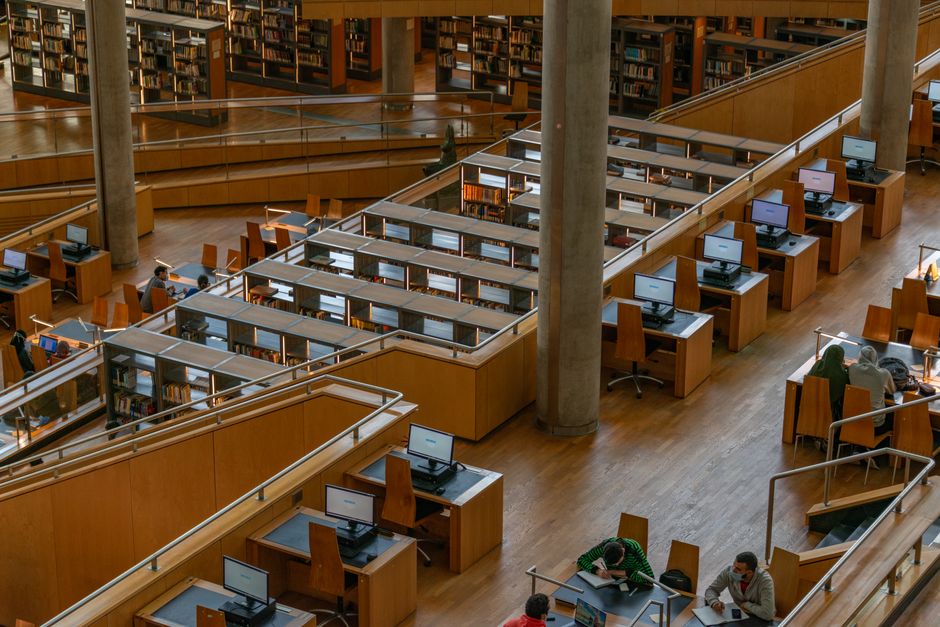
Despite centuries of searching, archaeologists have never definitively located the Library of Alexandria's physical remains. The ancient royal quarter of Alexandria now lies underwater due to earthquakes and rising sea levels, complicating excavation efforts. Polish archaeologists working in the 1990s uncovered lecture halls that may have been associated with the library complex. Modern Egypt commemorated this lost institution by opening the Bibliotheca Alexandrina in 2002, a stunning contemporary library built near the ancient library's presumed location, symbolically reviving Alexandria's role as a center of learning and culture.

The Enduring Legacy of Lost Knowledge

The Library of Alexandria represents humanity's greatest concentration of ancient knowledge and its most tragic loss. From its ambitious founding and aggressive collection policies to its role as a research center and its gradual destruction, the library embodies both human aspiration for universal knowledge and the vulnerability of cultural heritage. The scholars who worked within its walls advanced mathematics, astronomy, medicine, and literature, creating foundations for Western civilization. While the physical library is gone, its influence persists in modern libraries, universities, and research institutions worldwide. The story of Alexandria reminds us that preserving and sharing knowledge remains among humanity's most important responsibilities, and that what we lose cannot always be recovered.

Did You Know? 15 Iconic Secrets About Sci-Fi Movies

Did You Know? 15 Iconic Secrets About Sci-Fi Movies

⏱️ 7 min read

Science fiction cinema has captivated audiences for decades, transporting viewers to distant galaxies, alternate realities, and futures beyond imagination. Behind the stunning visuals and compelling narratives lie fascinating stories of innovation, improvisation, and unexpected challenges that shaped some of the most beloved films in the genre. These behind-the-scenes revelations offer insight into the creative process and the remarkable dedication of filmmakers who brought these extraordinary visions to life.

Behind the Scenes of Cinema's Greatest Sci-Fi Adventures

1. The Original Star Wars Title Crawl Was Created Using Physical Models

Before digital effects became standard, the iconic opening crawl of the original Star Wars (1977) was achieved through remarkably practical means. The text was physically created on a six-foot-long board and filmed using a camera that moved along the board at a specific angle. This painstaking process required multiple takes to achieve the perfect perspective that audiences now recognize instantly. The technique exemplified the innovative spirit that defined early special effects work.

2. The Alien Xenomorph's Design Was Intentionally Disturbing

H.R. Giger's biomechanical design for the creature in Alien (1979) incorporated distinctly unsettling elements that were deliberately chosen to evoke subconscious discomfort. The Swiss artist's sexually suggestive aesthetic was precisely what director Ridley Scott wanted—something that would disturb viewers on a primal level. The studio executives were initially so shocked by the design that they nearly rejected it, but Scott insisted the creature needed to be genuinely frightening rather than conventionally monstrous.

3. Blade Runner's Futuristic Los Angeles Borrowed From Earlier Films

The dystopian cityscape of Blade Runner (1982) wasn't entirely original creation. The visual effects team cleverly repurposed models and footage from other productions, including modified structures from the film Close Encounters of the Third Kind. This resourceful approach helped create one of cinema's most influential depictions of a future metropolis while staying within budget constraints. The layered, cluttered aesthetic became a blueprint for cyberpunk visuals in countless subsequent films.

4. E.T.'s Emotional Voice Combined Multiple Performers

The beloved extraterrestrial's distinctive voice in E.T. the Extra-Terrestrial (1982) wasn't created by a single person. Sound designer Ben Burtt combined recordings from several sources, including an elderly woman who smoked two packs of cigarettes daily, giving E.T.'s voice its raspy, endearing quality. The character's vocalization also included Burtt's own contributions and various other sound elements blended together to create the memorable alien speech patterns.

5. The Terminator's Red Eye Glow Was a Last-Minute Solution

The menacing red glow of the Terminator's eye became iconic, but it originated from a practical filming necessity. When shooting the scenes where Arnold Schwarzenegger's character had exposed mechanical parts, the actor couldn't wear contact lenses under the prosthetic eye piece. The filmmakers solved this problem by adding the red illumination, which not only solved the technical issue but created one of the most recognizable visual elements in science fiction cinema.

6. The Matrix's Bullet Time Required Over 100 Cameras

The revolutionary "bullet time" effect in The Matrix (1999) demanded an elaborate setup involving 122 still cameras arranged in a circular pattern. Each camera captured a single frame in rapid succession, creating the illusion of frozen time while the camera perspective moved fluidly around the subject. This technique, combined with CGI interpolation, produced one of the most imitated visual effects in modern cinema and fundamentally changed action cinematography.

7. Close Encounters' Mashed Potatoes Mountain Was Made From Real Food

Richard Dreyfuss's famous scene sculpting Devil's Tower from mashed potatoes in Close Encounters of the Third Kind (1977) used actual food. The production team prepared enormous quantities of mashed potatoes for multiple takes of the scene. Steven Spielberg insisted on using real materials to capture authentic performances, believing that practical effects would yield more genuine reactions from his actors than imagining or working with substitutes.

8. 2001: A Space Odyssey's Centrifuge Was a Functional Rotating Set

Stanley Kubrick's commitment to realism led to the construction of an actual rotating "Ferris wheel" set for 2001: A Space Odyssey (1968). The massive centrifuge measured 38 feet in diameter and cost $750,000 to build. Actors walked inside the rotating drum while the camera remained fixed to the structure, creating the convincing illusion of artificial gravity. This practical approach delivered visuals that still look remarkably realistic decades later.

9. Back to the Future's DeLorean Wasn't the First Choice

The iconic time machine in Back to the Future (1985) was originally envisioned as a refrigerator. Director Robert Zemeckis and writer Bob Gale changed their minds, fearing children might imitate the film by climbing into refrigerators. The DeLorean DMC-12 was chosen partly for its futuristic appearance and stainless steel construction, which made it plausible that such materials would be necessary for time travel technology.

10. Jurassic Park's Dinosaur Sounds Came From Unexpected Sources

Sound designer Gary Rydstrom created the terrifying vocalizations of Jurassic Park's (1993) dinosaurs using recordings of modern animals. The Tyrannosaurus rex's roar combined a baby elephant's squeal, an alligator's growl, and a tiger's snarl. The Velociraptors' distinctive calls incorporated tortoise mating sounds, demonstrating the creative ingenuity required to give voice to creatures that haven't existed for millions of years.

11. District 9's Documentary Style Was Born From Budget Limitations

Director Neill Blomkamp's choice to film District 9 (2009) in a documentary-style format partly stemmed from budget constraints. The approach allowed the production to create a believable world with relatively limited resources by grounding the fantastic elements in realistic settings. The decision to film in actual Johannesburg locations rather than building elaborate sets gave the film an authentic, gritty atmosphere that enhanced its social commentary.

12. Predator's Thermal Vision Was Achieved Through Unique Filming Techniques

The Predator's (1987) distinctive heat-vision perspective required filming actors in special suits that would respond to thermal imaging cameras. The production team filmed scenes multiple times: once normally and once with actors wearing suits covered in cooling or heating elements. The resulting imagery was then color-corrected and processed to create the alien's hunting vision, producing one of science fiction's most memorable visual perspectives.

13. Total Recall's Practical Mars Environment Used Real Explosives

Paul Verhoeven's Total Recall (1990) relied heavily on practical effects for its Martian sequences. The elaborate sets depicting the Mars mining colony were enhanced with real pyrotechnics and physical effects rather than digital additions. The explosive decompression scenes used actual compressed air and carefully choreographed stunt work, reflecting the era's commitment to practical special effects that actors could physically interact with during filming.

14. The Fifth Element's Costumes Were Designed Years Before Filming

Renowned fashion designer Jean-Paul Gaultier created over 1,000 costumes for The Fifth Element (1997), with some designs conceptualized years before production began. Director Luc Besson had envisioned the film since adolescence and collaborated with Gaultier early in development. The elaborate, avant-garde costumes became integral to the film's distinctive visual style, blending high fashion with science fiction in unprecedented ways.

15. Arrival's Alien Language Was Developed by a Real Linguist

The complex circular language of the heptapods in Arrival (2016) wasn't simply created by the art department. Linguist Jessica Coon served as a consultant to ensure the alien communication system followed logical linguistic principles. Artist Martine Bertrand then created the visual representations based on these linguistic foundations, ensuring the fictional language had internal consistency and theoretical credibility that enhanced the film's exploration of communication and cognition.

The Lasting Impact of Innovation

These fifteen revelations demonstrate that the most memorable science fiction films often achieved their impact through a combination of technical innovation, creative problem-solving, and unwavering artistic vision. From practical effects requiring massive construction projects to innovative sound design using unexpected sources, filmmakers have consistently pushed boundaries to bring impossible worlds to life. Whether working with limited budgets or substantial resources, directors and their teams found ingenious solutions to realize their ambitious visions. These behind-the-scenes stories remind us that movie magic results from dedication, collaboration, and the willingness to attempt what seems impossible—qualities that mirror the very themes these science fiction classics explore.