



⏱️ 6 min read
The intersection of technology and creativity has given rise to revolutionary forms of artistic expression that are reshaping the art world. From computer-generated masterpieces to artificial intelligence collaborations, digital and AI art continue to challenge traditional notions of creativity, authorship, and aesthetic value. These fascinating developments reveal how machines and algorithms are becoming increasingly sophisticated creative partners, opening new frontiers for artists and collectors alike.
Groundbreaking Facts About Digital and AI Art
1. The First Digital Art Emerged in the 1960s
Digital art didn't begin with modern computers. Engineers and artists experimented with computer-generated imagery as early as the 1960s, using massive mainframe computers and plotters. Ben Laposky created "Oscillons" in 1950 using an oscilloscope, while Desmond Paul Henry built drawing machines from analog computers. These pioneers laid the groundwork for today's sophisticated digital art ecosystem, proving that the marriage of technology and creativity has deep historical roots.
2. AI Art Sold for $432,500 at Christie's Auction House
In 2018, the portrait "Edmond de Belamy" became the first AI-generated artwork sold by a major auction house. Created by the Paris-based collective Obvious using a Generative Adversarial Network (GAN), the piece fetched over 40 times its estimated value at Christie's. This landmark sale legitimized AI art in the traditional art market and sparked intense debates about authorship, creativity, and value in algorithmic art.
3. NFTs Revolutionized Digital Art Ownership and Authenticity
Non-fungible tokens transformed digital art by solving the long-standing problem of provenance and scarcity in the digital realm. Blockchain technology enables artists to create verifiable, unique digital assets that can be bought, sold, and collected like physical artworks. This innovation has created new revenue streams for digital artists and established digital art as a legitimate collectible category worth billions of dollars annually.
4. Neural Networks Learn from Millions of Existing Images
Modern AI art systems are trained on vast datasets containing millions of images from across art history. These neural networks analyze patterns, styles, and compositions to generate new works. Systems like DALL-E, Midjourney, and Stable Diffusion process enormous volumes of visual information, learning relationships between text descriptions and visual elements to create images from written prompts with stunning accuracy and creativity.
5. Digital Artists Use Pressure-Sensitive Tablets That Mimic Traditional Tools
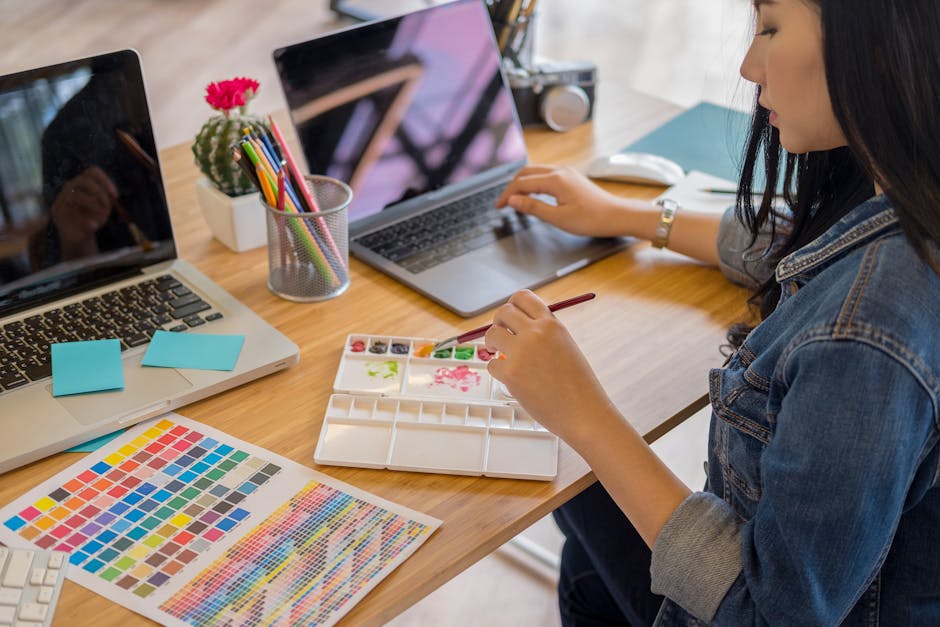
Contemporary digital art tools have evolved to replicate the tactile experience of traditional media. Graphics tablets with thousands of pressure sensitivity levels allow artists to control brush strokes, opacity, and texture with the same nuance as physical painting. Devices like the Wacom Cintiq and iPad Pro with Apple Pencil bridge the gap between digital and traditional techniques, offering artists unprecedented control and flexibility.
6. AI Can Reproduce Artistic Styles with Remarkable Accuracy
Style transfer algorithms can analyze the distinctive characteristics of any artistic style—from Van Gogh's swirling brushwork to Picasso's cubist fragmentation—and apply these elements to new images. This technology enables users to reimagine photographs or original compositions in the manner of master artists, though it raises complex questions about originality, artistic intent, and the nature of creative expression.
7. Some AI Art Tools Process Prompts in Seconds
What once took human artists hours or days to create can now be generated by AI systems in mere seconds. Modern diffusion models and neural networks have achieved remarkable processing speeds, allowing users to iterate rapidly through multiple variations and refinements. This unprecedented speed democratizes visual creation while simultaneously challenging traditional notions of the artistic process and the value of time investment in art.
8. Digital Art Requires No Physical Storage Space
Unlike traditional art that requires climate-controlled storage, insurance, and physical space, digital artworks exist as data files. Collectors can own thousands of pieces without warehouses or gallery walls. This characteristic fundamentally changes art collecting, making it accessible to broader audiences while raising new questions about display, appreciation, and the physical experience of viewing art.
9. Collaborative AI-Human Artworks Are Gaining Recognition
Rather than replacing human artists, AI is increasingly used as a collaborative tool. Artists use algorithms to generate initial concepts, patterns, or variations that they then refine, curate, and integrate into larger works. This partnership approach leverages AI's computational power and pattern recognition while maintaining human aesthetic judgment, emotional intelligence, and intentionality in the creative process.
10. Digital Art Software Offers Unlimited Undo Capabilities
One of digital art's most significant practical advantages is the ability to experiment without permanent consequences. Artists can try bold techniques, make mistakes, and explore multiple directions with complete freedom, knowing they can revert any change. This non-destructive workflow encourages creative risk-taking and experimentation that would be impractical or impossible with traditional media, fundamentally changing the creative process.
11. AI Systems Can Generate Art in Styles That Never Existed
Beyond mimicking historical styles, AI can create entirely novel aesthetic approaches by combining elements in ways no human has previously imagined. These systems can blend incompatible styles, invent new visual languages, and explore aesthetic territories outside human cultural traditions. This capability suggests that AI might not just replicate human creativity but potentially expand the boundaries of what we consider aesthetically possible.
12. Digital Art Has No Material Degradation Over Time
Traditional artworks face inevitable deterioration—paint cracks, paper yellows, and sculptures erode. Digital files, when properly maintained and backed up, remain identical to their original state indefinitely. This permanence ensures that digital artworks can be experienced exactly as the artist intended for generations, though it also eliminates the patina and historical evidence that physical aging provides to traditional works.
13. Some AI Art Platforms Generate Over 10 Million Images Daily
The scale of AI art creation is staggering. Major platforms process millions of user prompts daily, generating an unprecedented volume of images. This explosive output represents a fundamental shift in visual culture, flooding the internet with algorithmically generated imagery and raising questions about oversaturation, quality control, and the environmental impact of computational art generation.
14. Digital Art Enables Real-Time Global Collaboration
Artists separated by continents can work simultaneously on the same digital canvas through cloud-based platforms. This collaborative capability creates new forms of artistic partnership impossible in traditional media, where physical artwork can only be in one place. Digital tools enable genuine creative collaboration across time zones, cultures, and artistic traditions, fostering unprecedented cross-pollination of ideas and techniques.
15. Copyright and Ownership Remain Legally Ambiguous for AI-Generated Art
Legal systems worldwide are struggling to address fundamental questions about AI art: Who owns work created by algorithms? Can AI-generated images be copyrighted? What rights do artists whose work trained the AI retain? These unresolved legal questions create uncertainty for artists, collectors, and platforms, with different jurisdictions proposing conflicting approaches to authorship, ownership, and intellectual property in algorithmic creativity.
The Evolving Landscape of Digital Creativity
These fifteen facts reveal that digital and AI art represent far more than technological novelties—they constitute a fundamental transformation in how art is created, distributed, valued, and experienced. From the first computer-generated images of the 1960s to today's sophisticated neural networks capable of producing museum-quality works in seconds, this evolution continues to accelerate. As AI systems become more sophisticated and digital tools more accessible, the boundaries between human and machine creativity grow increasingly blurred. Whether viewed as democratizing forces that empower new creators or as disruptive technologies that challenge artistic traditions, digital and AI art have permanently altered the artistic landscape, creating opportunities and controversies that will shape creative culture for generations to come.