




1 / 10 Questions
0 Points

Which Prince song became a massive hit for Sinéad O'Connor in 1990?

Purple Rain

Nothing Compares 2 U

Kiss

When Doves Cry

Points won
0
Correct score
0%

More questions

More Articles

Did You Know? 12 Famous Celebrity Friendships

Did You Know? 12 Famous Celebrity Friendships

⏱️ 4 min read

Hollywood friendships often captivate public attention, showing that even the biggest stars maintain genuine, lasting bonds with their fellow celebrities. These remarkable relationships have stood the test of time, survived industry pressures, and demonstrate that authentic connections exist beyond the glamorous facade of showbusiness.

Legendary Celebrity Friendships

1. Leonardo DiCaprio and Tobey Maguire

These two A-listers met as child actors in the late 1980s during auditions. Their friendship has spanned over three decades, with both supporting each other's careers and even co-starring in "The Great Gatsby" (2013). They regularly attend basketball games together and have maintained their close bond despite their busy schedules.

2. Jennifer Aniston and Courteney Cox

Their friendship blossomed on the set of "Friends" and has continued long after the show's finale. Cox served as Aniston's maid of honor at her wedding to Justin Theroux, and they continue to celebrate holidays and special occasions together, proving their relationship extends far beyond their Monica and Rachel characters.

3. Matt Damon and Ben Affleck

Growing up in Cambridge, Massachusetts, these childhood friends went on to collaborate on "Good Will Hunting," which earned them an Oscar for Best Original Screenplay. Their friendship has endured through personal and professional challenges, with both frequently supporting each other's projects and maintaining their close bond.

4. Michelle Williams and Busy Philipps

Meeting on the set of "Dawson's Creek," these actresses formed an unbreakable bond. Philipps has been Williams' consistent red carpet date and supported her through the tragic loss of Heath Ledger. Their friendship demonstrates the power of emotional support in Hollywood.

5. Oprah Winfrey and Gayle King

Their friendship began in 1976 when they were both working at a Baltimore TV station. Through careers, relationships, and media empire building, they've remained inseparable. Their bond has become a cultural touchstone for female friendship.

6. Nicole Kidman and Naomi Watts

These Australian actresses met at North Sydney Girls High School and supported each other through their early acting careers. Their friendship has spanned continents and decades, with both achieving international success while maintaining their close relationship.

7. George Clooney and Brad Pitt

Meeting during the filming of "Ocean's Eleven," these Hollywood heavyweights developed a friendship based on practical jokes and mutual respect. They've collaborated on multiple films and continue to support each other's philanthropic efforts.

8. Taylor Swift and Selena Gomez

Their friendship began when they were both dating Jonas brothers in 2008. Since then, they've supported each other through career highs and relationship challenges, frequently attending awards shows together and defending each other publicly.

9. Jennifer Lopez and Leah Remini

These New York natives share a decades-long friendship that predates their major success. Remini was Lopez's maid of honor at her wedding to Marc Anthony, and they continue to support each other's careers and personal lives.

10. Drew Barrymore and Cameron Diaz

Meeting as teenagers in Los Angeles, their friendship strengthened while filming "Charlie's Angels." They've remained close for over 30 years, with Diaz even helping to deliver Barrymore's daughter. Their bond exemplifies enduring friendship in Hollywood.

11. Ed Sheeran and Taylor Swift

These musical powerhouses met when Sheeran opened for Swift's Red Tour in 2013. They've since collaborated multiple times and maintained a strong friendship, supporting each other's music and defending each other against media criticism.

12. Leonardo DiCaprio and Kate Winslet

Their friendship began during the filming of "Titanic" in 1997. Despite their iconic on-screen romance, they've maintained a platonic relationship for over 20 years, supporting each other's careers and personal lives. DiCaprio even walked Winslet down the aisle at her wedding.

Conclusion

These enduring friendships demonstrate that authentic relationships can thrive in Hollywood despite its competitive nature. From childhood bonds to connections forged on set, these celebrities have proven that true friendship transcends fame, success, and the pressures of the entertainment industry. Their lasting relationships serve as inspiration for maintaining genuine connections in any walk of life.
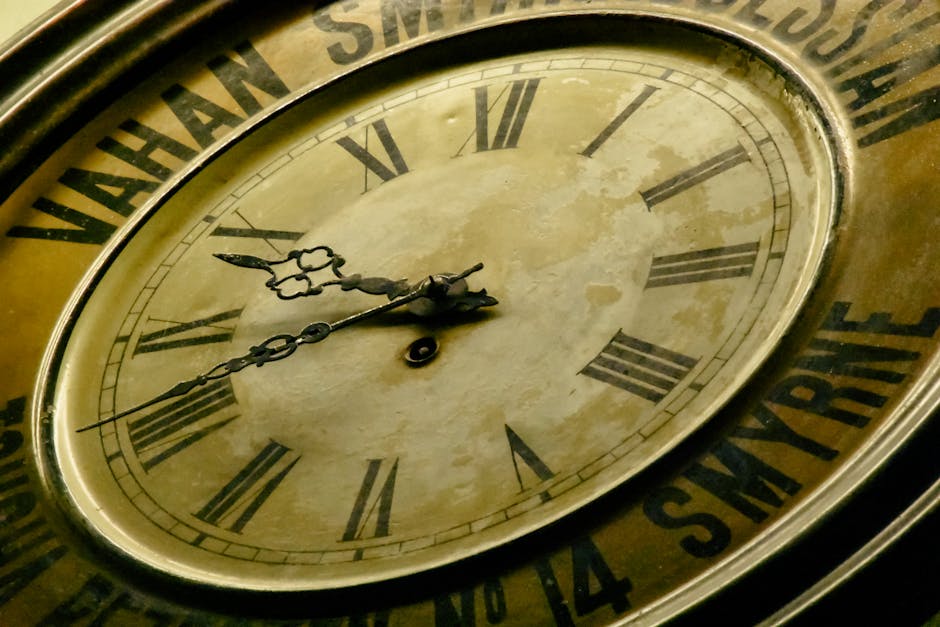

Top 10 Unbelievable Facts About Time You Didn’t Know

Top 10 Unbelievable Facts About Time You Didn’t Know

⏱️ 7 min read

Time is one of the most fundamental aspects of our existence, yet it remains one of the most mysterious and counterintuitive phenomena in the universe. While we experience time as a constant flow from past to future, modern physics and psychology have revealed that our understanding of time is far more complex and fascinating than we ever imagined. From the strange effects of gravity on the passage of time to the peculiar ways our brains perceive temporal duration, the following facts challenge our everyday assumptions about this fourth dimension.

Exploring the Hidden Mysteries of Temporal Reality

1. Time Moves Slower at Lower Altitudes

According to Einstein's theory of general relativity, time literally moves at different speeds depending on gravity's strength. This means that time passes more slowly the closer you are to a massive object like Earth. The difference between time at sea level and time on a mountaintop is measurable with atomic clocks. In practical terms, someone living on the ground floor of a building ages slightly slower than someone on the top floor. While the difference amounts to mere nanoseconds over a lifetime, it's real and measurable. GPS satellites must account for this time dilation to provide accurate positioning data, as they experience time differently than receivers on Earth's surface.

2. The Present Doesn't Actually Exist

Physics has no definition for "now" that applies universally across the universe. What you consider to be happening "right now" on a distant star already occurred years ago due to the finite speed of light. According to relativity, simultaneity is relative—two events that appear simultaneous to one observer may occur at different times for another observer moving at a different velocity. This means there's no universal present moment that all observers can agree upon. The present is essentially a construct of human consciousness rather than a fundamental feature of the universe, making the concept of "now" far more subjective than we typically assume.

3. Time Can Be Stretched by Speed

Time dilation doesn't just occur due to gravity; velocity affects time as well. When objects move at speeds approaching the speed of light, time slows down for them relative to stationary observers. This phenomenon, called time dilation, has been proven through experiments with atomic clocks on airplanes and observations of particle decay rates. If you could travel in a spacecraft at near-light speed for what feels like a few years, you could return to Earth to find that decades or even centuries had passed. This isn't science fiction—it's a verified consequence of special relativity that becomes significant at extremely high velocities.

4. Your Brain Creates False Memories of Time Sequences

The human brain doesn't perceive events in real-time; instead, it processes sensory information and constructs a narrative of events after they occur. Research shows that the brain actually backdates certain conscious experiences to make them seem like they happened earlier than they did. This is why you can seemingly react to something before you're consciously aware of it. Studies have demonstrated that the brain takes approximately 80 milliseconds to process visual information, meaning everything you see is technically in the past. Your perception of the present moment is actually a carefully edited reconstruction created by your neural processes.

5. Time Perception Accelerates with Age

Most people notice that time seems to pass more quickly as they get older, and there are neurological and psychological explanations for this phenomenon. One theory suggests that as we age, we process fewer new experiences and form fewer memories, making time periods seem shorter in retrospect. Another explanation involves the proportional theory: a year represents a much smaller fraction of a forty-year-old's life compared to a four-year-old's life. Additionally, metabolic rates slow with age, which may affect internal clock mechanisms. Brain imaging studies have shown that older adults process visual information more slowly than younger people, potentially altering their perception of temporal duration.

6. There May Be No Fundamental Arrow of Time

Most fundamental laws of physics are time-symmetric, meaning they work equally well whether time moves forward or backward. The equations governing electromagnetism, gravity, and quantum mechanics don't distinguish between past and future. The apparent one-way flow of time—the arrow of time—emerges from the second law of thermodynamics, which states that entropy (disorder) increases over time in closed systems. However, some physicists argue that this perceived direction is merely a consequence of initial conditions in the universe rather than a fundamental property of time itself. This raises profound questions about whether the past and future are truly different in any fundamental sense.

7. Time Dilation Affects Particle Lifespans

Subatomic particles called muons are created when cosmic rays strike Earth's atmosphere. These particles have incredibly short lifespans—only 2.2 microseconds—before they decay. Given their lifespan and the speed they travel, muons created in the upper atmosphere shouldn't reach Earth's surface according to classical physics. However, they do reach the surface in large numbers because they're traveling at near-light speeds. From our reference frame, time dilation extends their lifespan, allowing them to survive the journey. This provides observable, measurable proof that time genuinely passes at different rates depending on relative motion.

8. Gravity Creates Time Machines in the Universe

Black holes represent extreme distortions in spacetime where gravity is so intense that time behaves in extraordinary ways. At the event horizon of a black hole, time dilation becomes so extreme that from an outside observer's perspective, time appears to stop completely for anything crossing that boundary. Additionally, rotating black holes may contain regions called closed timelike curves, where the geometry of spacetime theoretically allows paths that loop back to their own past. While traversable time travel remains speculative, the mathematics of general relativity allows for its possibility under certain exotic conditions involving wormholes or rotating cylinders of infinite length.

9. Quantum Mechanics Challenges Time's Flow

At the quantum level, particles can exist in superposition states that don't follow our intuitive understanding of temporal progression. In the famous delayed-choice quantum eraser experiment, measurements made in the present can appear to affect the behavior of particles in the past. While this doesn't violate causality, it demonstrates that at quantum scales, the relationship between cause and effect isn't as straightforward as our everyday experience suggests. Some interpretations of quantum mechanics even suggest that all possible moments exist simultaneously, and what we perceive as time's flow is merely our consciousness moving through this landscape of possibilities.

10. The Universe May Have No Beginning or End

While the Big Bang theory suggests the universe began approximately 13.8 billion years ago, some cosmological models propose that time itself might not have a beginning or end. Certain theories, such as conformal cyclic cosmology or eternal inflation, suggest that our universe may be part of a larger structure where time extends infinitely in both directions. In some quantum gravity theories, time emerges from more fundamental, timeless quantum processes, meaning time itself might not be a fundamental aspect of reality but rather an emergent phenomenon that exists only under certain conditions. These theories challenge our deepest assumptions about temporal origins and the very nature of existence.

Understanding Our Relationship with Time

These remarkable facts about time reveal that our intuitive understanding barely scratches the surface of temporal reality. From the malleable nature of time's passage to the questions surrounding its fundamental existence, time continues to be one of science's most profound mysteries. Whether examined through the lens of physics, neuroscience, or cosmology, time proves to be far stranger and more wonderful than our everyday experience suggests. As research continues, our comprehension of this dimension will undoubtedly evolve, potentially revolutionizing our understanding of reality itself and our place within the cosmic timeline.