








1 / 10 Questions
0 Points

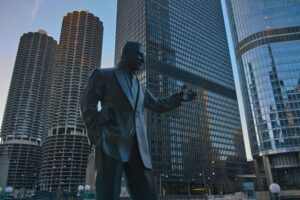
Which 1893 Chicago Ride Became Someone's Permanent Namesake?

Ferris Wheel

Ferris Coaster

Ferris Train

Ferris Carousel

Points won
0
Correct score
0%

More questions

More Articles

Did You Know? 12 Controversial Events About Banksy

Did You Know? 12 Controversial Events About Banksy

⏱️ 7 min read

The mysterious street artist known as Banksy has become one of the most influential and polarizing figures in contemporary art. While his work commands millions at auction and attracts global attention, his career has been marked by numerous controversies that have sparked debates about art, vandalism, commerce, and authenticity. From self-destructing artworks to political provocations, Banksy's actions have consistently challenged conventional boundaries and ignited fierce discussions within the art world and beyond.

The Most Controversial Moments in Banksy's Career

1. The Self-Destructing "Girl with Balloon" Auction Incident

In October 2018, Banksy orchestrated perhaps his most audacious stunt when "Girl with Balloon" sold for £1.4 million at Sotheby's London. Moments after the hammer fell, a shredder hidden within the frame activated, partially destroying the artwork in front of stunned auction-goers. The incident sparked intense debate about whether this was a critique of the commercialization of art or a publicity stunt that ultimately increased the work's value. The buyer chose to keep the renamed piece "Love is in the Bin," which later sold for £18.5 million in 2021, tripling the original price and raising questions about whether Banksy's anti-establishment gesture backfired.

2. The Palestine Hotel Wall Controversy

Banksy's 2017 Walled Off Hotel in Bethlehem created significant controversy for its location adjacent to the Israeli West Bank barrier. While supporters praised it as a powerful political statement about occupation and freedom, critics accused the artist of exploiting Palestinian suffering for profit and tourism. The hotel features artworks depicting the conflict, but questions arose about whether a wealthy Western artist had the right to profit from such a deeply painful situation. Local artists and activists were divided, with some viewing it as raising awareness while others saw it as cultural appropriation.

3. The Great British Spraycation Vandalism Accusations

During summer 2021, Banksy's "spraycation" tour across English coastal towns led to heated debates about vandalism versus art. While many residents celebrated the sudden appearance of artworks in their communities, property owners and local councils faced difficult decisions. Some pieces appeared on private property without permission, leading to accusations of criminal damage. The controversy highlighted the ongoing tension between street art's guerrilla nature and property rights, with some murals quickly protected while others sparked legal discussions about consent and public space.

4. The Dismaland Bemusement Park Backlash

Banksy's 2015 "bemusement park" Dismaland in Weston-super-Mare drew criticism from multiple angles. Local businesses complained that despite attracting 150,000 visitors, the dystopian theme park's pessimistic message damaged the town's reputation and tourism appeal. Others criticized the £3 entrance fee as hypocritical for an artist claiming to champion accessibility. Additionally, the temporary installation's dark themes addressing consumerism, surveillance, and societal decay were deemed too depressing by some critics who felt art should inspire rather than depress.

5. The Stolen Bataclan Memorial Door Incident

In 2019, Banksy's tribute to the 2015 Paris terrorist attack victims, painted on a Bataclan theatre emergency door, was stolen. The theft sparked outrage and raised questions about security, ownership, and respect for memorial art. When recovered in Italy, debates intensified about whether such politically charged memorial pieces should be in private collections or public spaces. The incident highlighted vulnerabilities in protecting street art and whether removing such works from their original context destroys their meaning and disrespects the victims they commemorate.

6. The Israel-Gaza Barrier Murals Dispute

Banksy's murals on the Israeli separation barrier have generated sustained controversy since he first painted there in 2005. While intended as protests against the wall's existence, critics argue the artist simplified an extremely complex geopolitical situation. Some Israelis accused him of anti-Semitism and one-sided political propaganda, while certain Palestinian voices questioned whether a British artist could genuinely represent their struggle. The debate underscores how Banksy's political interventions, while raising awareness, sometimes oversimplify nuanced conflicts.

7. The Los Angeles Billboard Modification Scandal

Banksy's unauthorized alterations to commercial billboards in Los Angeles sparked legal threats and debates about censorship versus vandalism. His modifications, often adding anti-consumerist messages to corporate advertisements, led advertising companies to threaten legal action. Free speech advocates defended the alterations as legitimate political commentary, while property owners and advertisers demanded prosecution. The controversy raised questions about public space, corporate messaging, and whether subverting advertisements constitutes protected expression or criminal damage.

8. The Pest Control Authentication Controversy

Banksy's authentication service, Pest Control, has itself become controversial. The organization refuses to authenticate street pieces, only works sold directly through Banksy, leading to accusations of market manipulation. Gallery owners and collectors have criticized this policy as creating artificial scarcity and devaluing genuine street works. Others argue Pest Control's selective authentication allows Banksy to control his market unfairly. The situation has spawned numerous legal battles over authentication, with some experts claiming genuine Banksys have been denied certificates for commercial reasons.

9. The New York City Street Sale Debacle

In 2013, Banksy set up an unauthorized stall in Central Park selling original signed canvases for $60 each, with most passersby ignoring them. While some celebrated this as commentary on art's arbitrary value, critics called it a publicity stunt that mocked ordinary people. When buyers later discovered their purchases were worth thousands, questions arose about exploitation. Was Banksy demonstrating art world absurdity or creating a situation where uninformed buyers were denied fair value? The event highlighted uncomfortable questions about art market ethics.

10. The Museum Infiltration Installations

Banksy's unauthorized placement of his works in major museums including the British Museum, Louvre, and Metropolitan Museum sparked debates about institutional critique versus vandalism. While supporters praised these guerrilla installations as legitimate challenges to gatekeeping in art institutions, museum officials condemned them as security breaches and damage to public trust. The incidents raised questions about who decides what constitutes museum-worthy art and whether such actions democratize art spaces or disrespect cultural institutions and other artists who follow proper channels.

11. The Brexit Dover Mural Removal

Banksy's 2017 Brexit mural in Dover, showing a worker chipping away an EU flag star, was painted over in 2019, causing international outcry. However, controversy erupted over who actually owned the rights to preserve or remove it. The building owner claimed property rights, while preservationists argued it was culturally significant public art. The incident exposed legal gray areas surrounding street art ownership and sparked debates about whether temporary street art should be preserved against property owners' wishes, and who bears the cost of maintenance.

12. The COVID-19 Hospital Artwork Charity Debate

When Banksy donated "Game Changer" to Southampton General Hospital during the 2020 pandemic, showing a boy playing with a nurse superhero toy, controversy emerged over its subsequent auction. While the £16.8 million sale benefited the NHS, critics questioned why healthcare required charity from artists rather than proper government funding. Others argued Banksy received enormous publicity value from the gesture. The debate highlighted tensions between charitable art donations and systemic funding failures, with some viewing the gesture as genuinely helpful while others saw it as highlighting governmental inadequacy.

The Legacy of Controversy

These twelve controversial events demonstrate how Banksy's work consistently challenges boundaries between art and activism, public and private property, and commerce and critique. Whether viewed as a visionary artist holding mirrors to society's flaws or an opportunistic provocateur exploiting controversy for profit, Banksy's actions have undeniably shaped contemporary discussions about art's role in public discourse. Each controversy reveals deeper questions about authenticity, ownership, political expression, and the commodification of rebellion. As Banksy continues operating in the shadows, these debates will likely persist, ensuring that the artist's work remains as divisive as it is influential in shaping modern artistic and cultural conversations.

Top 10 Fun Facts About Marvel Cinematic Universe

Top 10 Fun Facts About Marvel Cinematic Universe

⏱️ 7 min read

The Marvel Cinematic Universe has become a cultural phenomenon since Iron Man first hit theaters in 2008, revolutionizing the superhero genre and creating an interconnected cinematic experience unlike anything audiences had seen before. Behind the spectacular action sequences and beloved characters lies a treasure trove of fascinating behind-the-scenes stories, creative decisions, and surprising moments that shaped this unprecedented franchise. These remarkable details reveal the innovation, perseverance, and sometimes pure luck that transformed Marvel Studios into a powerhouse of modern cinema.

Remarkable Stories Behind the Phenomenon

Robert Downey Jr.'s Controversial Casting Became the Foundation

When Marvel Studios decided to cast Robert Downey Jr. as Tony Stark in Iron Man, it was considered an enormous gamble. The actor had struggled with substance abuse issues in the past, making him virtually uninsurable by Hollywood standards. Director Jon Favreau fought passionately for Downey, even paying part of his salary out of his own pocket to secure insurance. Marvel executives were hesitant, but Favreau's instincts proved correct. Downey's charismatic performance became the cornerstone of the entire MCU, and his improvised line "I am Iron Man" at the film's conclusion fundamentally changed Marvel's plans, leading them to abandon secret identity storylines in favor of a more open approach.

The Avengers Post-Credit Scene Was Filmed in a Closet

One of the most iconic post-credit scenes in MCU history, featuring the Avengers silently eating shawarma after their battle in New York, was actually filmed in a small space that more closely resembled a closet than a restaurant. The scene was shot after the film's premiere, meaning Chris Evans already had a beard for his next role. To hide this, he wore a prosthetic piece covering the lower part of his face, which is why he appears to be resting his head on his hand throughout the scene. This spontaneous addition came from a throwaway line Tony Stark makes during the battle, proving that sometimes the most memorable moments are the least planned.

Tom Holland's Spider-Man Audition Involved Actual Acrobatics

When Marvel Studios searched for their new Spider-Man, they saw thousands of auditions, but Tom Holland's approach stood out dramatically. The young British actor performed elaborate acrobatic routines during his screen test, including backflips and parkour moves, demonstrating without any special effects that he could physically embody the web-slinger's agility. His gymnastics background and genuine enthusiasm for the character convinced producers that they had found their Peter Parker. Holland was actually told he got the role through an Instagram post from Marvel, discovering the news through social media like any teenager would.

Groot's Voice Required Thousands of Takes

Vin Diesel's voice work as Groot in the Guardians of the Galaxy films involved far more effort than audiences might imagine for a character with such limited vocabulary. Diesel recorded the phrase "I am Groot" thousands of times, each with different emotional inflections, tones, and intentions. He performed the lines in multiple languages for international releases, and director James Gunn provided him with detailed context for each delivery, explaining exactly what Groot was trying to communicate. This meticulous process ensured that despite speaking only three words, Groot could express complex emotions ranging from joy and humor to sacrifice and love.

The Infinity Stones Were Retroactively Connected

While it appears that Marvel Studios had meticulously planned the Infinity Stones storyline from the beginning, the reality is quite different. The Tesseract appeared in Captain America: The First Avenger and The Avengers without initially being designated as an Infinity Stone. The concept was retroactively developed and refined as the franchise expanded. The structured approach to collecting all six stones throughout various films became a narrative framework that provided cohesion to the expanding universe, but it evolved organically rather than being fully planned from the start. This adaptable storytelling approach allowed Marvel to respond to audience reception and creative opportunities as they arose.

Bradley Cooper Never Met the Guardians Cast During Filming

Despite being a central character in the Guardians of the Galaxy franchise, Bradley Cooper, who voices Rocket Raccoon, never appeared on set during principal photography. All his dialogue was recorded separately in sound studios, and he never interacted with his fellow cast members during the filming process. On set, director James Gunn or his brother Sean Gunn performed Rocket's movements and dialogue for the other actors to react to. Cooper would later watch the footage and record his lines to match the emotion and timing of the scenes. This unusual arrangement meant that the strong chemistry audiences perceive between Rocket and the other Guardians was created entirely through post-production magic.

Loki's Popularity Completely Changed His Character Arc

Tom Hiddleston's Loki was originally intended to be a straightforward villain who would be defeated and forgotten. However, audiences connected so strongly with the character's complexity and Hiddleston's charismatic performance that Marvel completely revised their plans. Loki became a recurring character throughout multiple films, evolving from pure antagonist to anti-hero and eventually securing his own Disney+ series. This shift demonstrates how Marvel Studios remained flexible enough to respond to audience enthusiasm, allowing popular elements to flourish rather than rigidly adhering to predetermined plans. Hiddleston's Loki has now appeared in more MCU projects than many primary Avengers.

The "Avengers Assemble" Line Took Eleven Years

Fans waited patiently through 22 films before finally hearing Captain America say the complete phrase "Avengers assemble" in Avengers: Endgame. This deliberate delay built anticipation across more than a decade of storytelling. Joss Whedon nearly included the line at the end of Age of Ultron but cut away just as Cap began speaking, leaving audiences with "Avengers a—" before the credits rolled. The Russo Brothers understood the weight this moment carried and saved it for the most epic battle in MCU history. When Chris Evans finally delivered the complete line, it represented the culmination of years of narrative building and became one of the most crowd-pleasing moments in cinema history.

Mark Ruffalo Accidentally Livestreamed a Movie Premiere

During the premiere of Thor: Ragnarok, Mark Ruffalo accidentally activated Instagram Live in his pocket, broadcasting audio from the first 20 minutes of the film to his followers. The unintentional livestream captured premiere audience reactions and movie dialogue before being discovered and shut down. While this could have been a serious security breach, Marvel and Disney responded with good humor, with Ruffalo joking about his technically challenged relationship with technology. The incident became another endearing moment in Ruffalo's reputation for accidentally revealing spoilers and secrets, something his co-stars and directors learned to carefully monitor during interviews and press events.

Scarlett Johansson Performed While Pregnant

During the filming of Avengers: Age of Ultron, Scarlett Johansson was pregnant, requiring creative solutions to complete Black Widow's elaborate action sequences. The production employed three different stunt doubles, clever camera angles, and strategic costume design to disguise the pregnancy while maintaining the character's physical prowess. Many of her scenes were filmed earlier in the production schedule, and some action sequences were digitally altered in post-production, including face-replacement technology that put Johansson's face on her stunt doubles' bodies. The collaborative effort between Johansson, the stunt team, and visual effects artists ensured that audiences never suspected the behind-the-scenes reality, and Black Widow remained as formidable as ever.

The Legacy of Marvel's Attention to Detail

These fascinating facts reveal that the Marvel Cinematic Universe's success stems not only from compelling characters and spectacular visual effects but also from the dedication, creativity, and adaptability of everyone involved. From controversial casting decisions that defied conventional Hollywood wisdom to spontaneous creative choices that became iconic moments, the MCU's journey demonstrates how filmmaking magic often happens through a combination of careful planning and fortunate accidents. The franchise's ability to evolve based on audience response, embrace happy accidents, and maintain ambitious interconnected storytelling across dozens of films has established a blueprint that will influence blockbuster filmmaking for generations. These behind-the-scenes stories remind us that even the most polished cinematic universe contains human elements of improvisation, risk-taking, and occasional chaos that ultimately contribute to its authentic appeal.