









⏱️ 7 min read
The Industrial Revolution, spanning from the late 18th to the mid-19th century, fundamentally transformed human civilization through groundbreaking technological innovations. This period of rapid industrialization introduced machinery and manufacturing processes that revolutionized production, transportation, communication, and daily life. The inventions that emerged during this era laid the foundation for modern industrial society and continue to influence our world today. These technological breakthroughs not only increased productivity and efficiency but also reshaped social structures, economic systems, and the global balance of power.
Transformative Inventions That Changed the World
1. The Steam Engine: Power That Fueled an Era
James Watt's improved steam engine, patented in 1769, stands as perhaps the most significant invention of the Industrial Revolution. While earlier versions existed, Watt's design introduced a separate condenser that dramatically increased efficiency and practical application. The steam engine provided reliable mechanical power independent of water flow or animal strength, enabling factories to be built anywhere rather than only near rivers. This invention powered textile mills, mining operations, and eventually locomotives and steamships, fundamentally altering manufacturing and transportation. The steam engine's impact extended beyond industry, as it became the driving force behind mechanization and the shift from agrarian to industrial economies.
2. The Spinning Jenny: Revolutionizing Textile Production
Invented by James Hargreaves in 1764, the spinning jenny transformed textile manufacturing by allowing a single worker to spin multiple threads simultaneously. Originally designed with eight spindles, later versions featured up to 120 spindles, exponentially increasing yarn production capacity. This invention addressed the bottleneck in textile manufacturing where spinning couldn't keep pace with weaving demand. The spinning jenny made cotton and wool products more affordable and accessible, stimulating the growth of the textile industry which became the cornerstone of early industrialization. Its impact on cottage industry and the transition to factory-based production reshaped the entire economic landscape of textile manufacturing.
3. The Power Loom: Mechanizing the Weaving Process
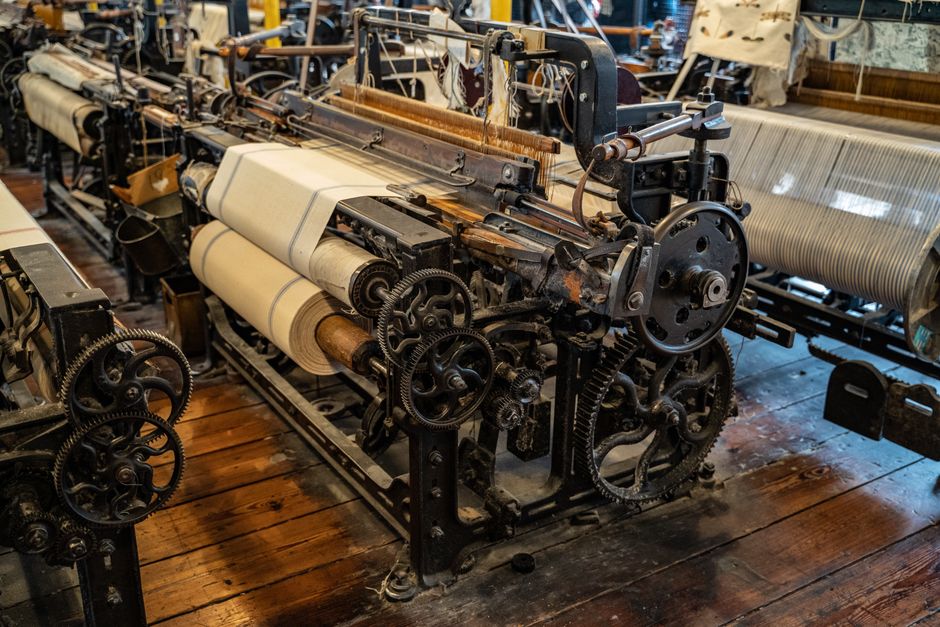
Edmund Cartwright's power loom, invented in 1785, mechanized the weaving process and completed the transformation of textile production begun by spinning innovations. While early versions faced technical challenges, improvements by various inventors created reliable machines that could weave cloth much faster than hand weavers. The power loom enabled mass production of textiles, drastically reducing costs and making fabric goods available to broader populations. This invention contributed significantly to the growth of factory systems and urbanization, as textile mills became major employers and centers of industrial activity. The power loom's efficiency fundamentally changed the economics of cloth production and trade.
4. The Cotton Gin: Transforming Agricultural Processing
Eli Whitney's cotton gin, patented in 1794, revolutionized cotton processing by mechanically separating cotton fibers from seeds. What previously required hours of manual labor could now be accomplished in minutes, making cotton cultivation vastly more profitable. This invention had profound economic and social consequences, particularly in the American South where it reinvigorated cotton plantation agriculture. The cotton gin's efficiency created an enormous supply of raw cotton that fed the growing textile industry in Britain and America, establishing cotton as a dominant global commodity. Unfortunately, it also intensified the demand for slave labor in cotton-producing regions, demonstrating how technological progress can have complex and troubling social ramifications.
5. The Steam Locomotive: Transforming Land Transportation
George Stephenson's development of practical steam locomotives in the 1810s and 1820s revolutionized land transportation and commerce. His famous locomotive "Rocket," built in 1829, demonstrated the viability of steam-powered rail transport for both passengers and freight. Railways enabled rapid, reliable movement of raw materials, manufactured goods, and people across vast distances, breaking geographical barriers that had constrained economic development. The railroad industry stimulated growth in iron, steel, and coal production while opening new markets and facilitating urbanization. Steam locomotives represented more than transportation technology; they symbolized progress and connected remote regions to industrial centers, reshaping national economies and settlement patterns.
6. The Telegraph: Revolutionizing Communication
Samuel Morse's electromagnetic telegraph, perfected in the 1830s and 1840s, transformed long-distance communication by enabling near-instantaneous message transmission. Using electrical signals transmitted through wires and decoded using Morse Code, the telegraph allowed information to travel faster than any physical means of transportation. This invention had enormous implications for commerce, journalism, military operations, and personal communication. Businesses could coordinate operations across distances, news could spread rapidly, and governments could maintain control over far-flung territories. The telegraph network that spread across continents and beneath oceans created the first global communication system, fundamentally changing how humans interacted across space and time.
7. The Bessemer Process: Enabling Mass Steel Production
Henry Bessemer's steelmaking process, introduced in 1856, revolutionized metallurgy by enabling inexpensive, large-scale steel production. Before this innovation, steel was expensive and time-consuming to produce, limiting its applications. The Bessemer process used a blast of air through molten iron to remove impurities rapidly, reducing production time from days to minutes and dramatically lowering costs. This breakthrough made steel affordable for construction, machinery, railways, and countless other applications. The availability of cheap, strong steel enabled the construction of skyscrapers, bridges, ships, and railroads on an unprecedented scale, literally building the infrastructure of modern industrial civilization.
8. The Mechanical Reaper: Transforming Agricultural Harvesting
Cyrus McCormick's mechanical reaper, patented in 1834, revolutionized grain harvesting by mechanizing the labor-intensive process of cutting crops. This horse-drawn machine could harvest grain many times faster than manual laborers with scythes, addressing labor shortages and enabling farmers to cultivate larger acreages. The mechanical reaper increased agricultural productivity, lowered food costs, and freed rural workers to seek employment in growing industrial centers. This invention contributed to the transformation of agriculture from subsistence farming to commercial production, supporting population growth and urbanization. The mechanization of harvesting represented a crucial step in applying industrial principles to agriculture, foreshadowing modern farming methods.
9. The Steamship: Revolutionizing Maritime Transport
The development of practical steam-powered ships in the early 19th century transformed maritime commerce and global connectivity. While various inventors contributed, Robert Fulton's commercially successful steamboat in 1807 demonstrated the technology's viability. Steamships provided reliable transportation independent of wind conditions, reducing voyage times and increasing predictability in international trade and travel. The application of steam power to ocean-going vessels enabled regular transatlantic service, facilitated colonial expansion, and strengthened global economic integration. Steamships carried immigrants to new lands, transported raw materials to industrial centers, and distributed manufactured goods to world markets, making them essential instruments of globalization.
10. The Telephone: Enabling Voice Communication at a Distance
Alexander Graham Bell's telephone, patented in 1876, represented the culmination of Industrial Revolution innovation by enabling real-time voice communication across distances. While technically emerging at the revolution's end, the telephone built upon telegraph technology and electrical discoveries made during this era. This invention transformed business operations, personal relationships, and emergency services by allowing immediate verbal communication. The telephone system required extensive infrastructure development, spurring further technological innovation and employment. Unlike the telegraph's coded messages, the telephone's natural voice communication made long-distance interaction accessible to ordinary people, fundamentally changing social connectivity and laying groundwork for modern telecommunications.
The Lasting Legacy of Industrial Innovation
These ten inventions represent the technological foundation upon which modern industrial society was built. Each innovation addressed specific challenges while creating new possibilities, often in unexpected ways. Together, they transformed manufacturing, agriculture, transportation, and communication, enabling unprecedented economic growth and social change. The Industrial Revolution's inventions demonstrated humanity's capacity for innovation and problem-solving, while also revealing the complex consequences of rapid technological change. The principles of mechanization, efficiency, and systematic innovation established during this period continue to drive technological progress today, making these inventions not merely historical artifacts but foundational elements of contemporary civilization.