
⏱️ 6 min read
The polar regions of our planet represent some of the most extreme and fascinating environments on Earth. The Arctic in the north and Antarctica in the south are realms of ice, unique wildlife, and scientific wonder that continue to captivate researchers and nature enthusiasts alike. These frozen frontiers hold secrets about our planet’s past, present, and future, while harboring ecosystems that have adapted to survive in conditions that would be lethal to most life forms. Here are ten remarkable facts about these magnificent polar regions that showcase their extraordinary nature.
Exploring the Wonders of Earth’s Polar Extremes
1. Antarctica Contains 90% of the World’s Ice
Antarctica is home to approximately 90% of all the ice on Earth and about 70% of the planet’s fresh water. This massive ice sheet averages around 1.6 kilometers in thickness, with some areas reaching depths of nearly 5 kilometers. If all of Antarctica’s ice were to melt, global sea levels would rise by approximately 60 meters, fundamentally reshaping coastlines around the world. This enormous ice mass plays a crucial role in regulating global climate patterns and ocean currents, making Antarctica one of the most important regions for Earth’s climate system.
2. The Arctic Ocean is the Smallest and Shallowest Ocean
Unlike Antarctica, which is a continent surrounded by ocean, the Arctic is an ocean surrounded by continents. The Arctic Ocean is the smallest of Earth’s five oceans, covering approximately 14 million square kilometers, and is also the shallowest, with an average depth of just 1,205 meters. This ocean is largely covered by sea ice that expands in winter and retreats in summer. The Arctic Ocean connects with the Pacific through the Bering Strait and with the Atlantic through the Greenland Sea, creating vital pathways for ocean circulation that influences global weather patterns.
3. Antarctica is Technically a Desert
Despite being covered in ice, Antarctica is classified as the world’s largest desert. The interior of Antarctica receives less than 50 millimeters of precipitation annually, making it drier than the Sahara Desert in some areas. The extremely cold temperatures mean that moisture freezes before it can fall as rain, and the continent experiences very little snowfall in its interior regions. This classification as a polar desert highlights the extreme aridity of the continent, where the ice that exists has accumulated over millions of years rather than from frequent precipitation.
4. Polar Bears and Penguins Never Meet in the Wild
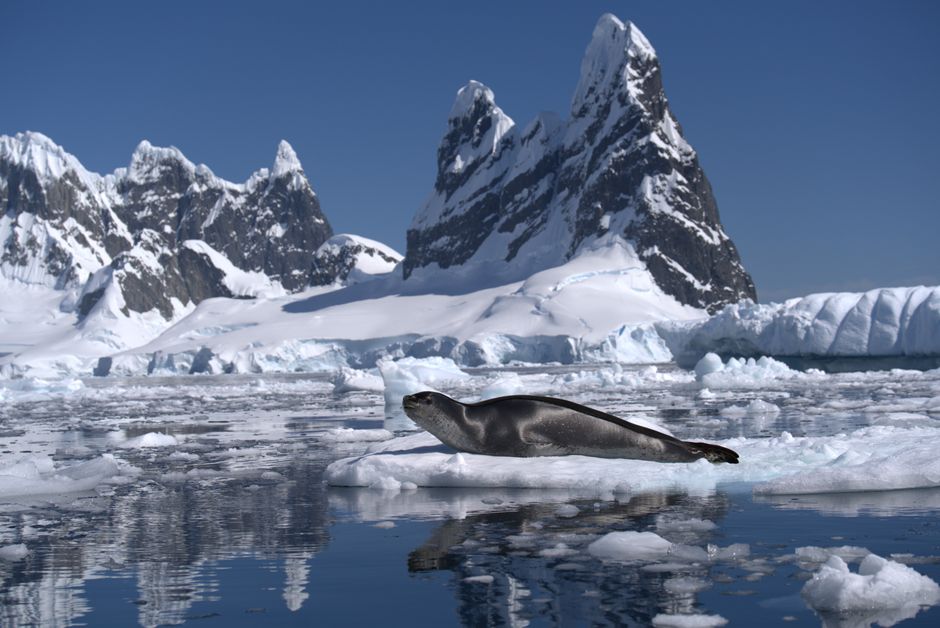
One of the most common misconceptions about the polar regions is that polar bears and penguins coexist. In reality, polar bears are found exclusively in the Arctic region, while penguins inhabit the Southern Hemisphere, with most species living in and around Antarctica. This geographic separation means these iconic animals never encounter each other in their natural habitats. The Arctic is home to polar bears, Arctic foxes, and walruses, while Antarctica hosts various penguin species, seals, and whales. This distribution reflects millions of years of isolated evolution in these distinct polar ecosystems.
5. The Antarctic Ice Sheet is Over 30 Million Years Old
Antarctica’s ice sheet began forming approximately 34 million years ago during a period known as the Eocene-Oligocene extinction event. This makes it one of the oldest continuous ice formations on Earth. Scientists study ice cores drilled from this ancient ice to understand Earth’s climate history, with some cores providing climate data spanning over 800,000 years. The layers of ice act like a time capsule, trapping air bubbles that preserve atmospheric composition from different geological periods, offering invaluable insights into past climate changes and helping predict future trends.
6. The Arctic is Warming Twice as Fast as the Rest of the Planet
The phenomenon known as Arctic amplification means that the Arctic region is warming at approximately twice the rate of the global average. Since the late 1970s, Arctic sea ice extent has declined by about 13% per decade. This accelerated warming is caused by feedback loops, particularly the ice-albedo feedback, where melting ice exposes darker ocean water that absorbs more solar radiation instead of reflecting it. This rapid change affects global weather patterns, ocean circulation, and ecosystems far beyond the Arctic region, making it a critical indicator of global climate change.
7. Antarctica Has Active Volcanoes Beneath the Ice
Beneath Antarctica’s thick ice sheet lies a landscape of mountains, valleys, and active volcanoes. Mount Erebus, standing at 3,794 meters, is the southernmost active volcano on Earth and features a persistent lava lake in its crater. Scientists have discovered at least 138 volcanoes beneath the West Antarctic Ice Sheet, some of which may still be active. These volcanic systems can create subglacial lakes through geothermal heating, and their activity potentially influences ice sheet stability and movement, adding another dimension to understanding Antarctic dynamics.
8. The Arctic Supports Indigenous Communities Dating Back Thousands of Years
Unlike Antarctica, which has no indigenous human population, the Arctic has been home to various indigenous peoples for millennia. Groups such as the Inuit, Sami, Nenets, and Chukchi have developed sophisticated survival strategies and deep cultural connections to the Arctic environment. These communities have accumulated extensive traditional knowledge about Arctic ecosystems, wildlife behavior, and climate patterns. Today, approximately four million people live in the Arctic region, with indigenous peoples making up about 10% of this population, continuing traditions while adapting to rapid environmental changes.
9. Antarctica is Governed by an International Treaty
The Antarctic Treaty, signed in 1959 by 12 countries and now endorsed by 54 nations, designates Antarctica as a scientific preserve and bans military activity on the continent. This remarkable agreement sets aside territorial claims and promotes international cooperation in scientific research. The treaty also prohibits nuclear testing and radioactive waste disposal, making Antarctica one of the few places on Earth dedicated entirely to peaceful purposes and scientific investigation. This cooperative framework has successfully prevented territorial conflicts and established Antarctica as a global commons for scientific advancement.
10. Both Poles Experience Extreme Day and Night Cycles
The polar regions experience some of the most extreme light conditions on Earth. During summer, the poles experience the midnight sun, with 24 hours of continuous daylight, while winter brings the polar night, with 24 hours of darkness. At the exact poles, this means six months of daylight followed by six months of darkness. These extreme photoperiods profoundly affect the ecosystems, with wildlife timing their breeding, migration, and feeding behaviors to these dramatic seasonal shifts. The constant summer daylight fuels intense biological productivity during brief growing seasons, while organisms have evolved remarkable adaptations to survive the dark winter months.
Conclusion
The Arctic and Antarctica represent extraordinary natural laboratories that continue to reveal profound insights about our planet. From ancient ice holding climate secrets to unique ecosystems thriving in extreme conditions, these polar regions play irreplaceable roles in Earth’s environmental systems. Understanding these remarkable facts about the poles helps us appreciate their significance beyond their remote locations. As these regions face unprecedented changes due to global warming, their importance in regulating climate, supporting biodiversity, and advancing scientific knowledge becomes ever more critical. Protecting and studying these frozen frontiers remains essential for understanding our planet’s past and securing its future.
