
⏱️ 7 min read
Ancient Egypt stands as one of the most fascinating and influential civilizations in human history, spanning over three millennia along the banks of the Nile River. While many people are familiar with pyramids and pharaohs, the depth and complexity of Egyptian culture holds countless surprising details that continue to captivate historians and archaeologists today. From revolutionary medical practices to unexpected social freedoms, these remarkable facts reveal a civilization far more advanced and nuanced than commonly imagined.
Fascinating Discoveries from the Land of the Pharaohs
1. Ancient Egyptians Invented Toothpaste
Long before modern dental hygiene, ancient Egyptians created the world’s first toothpaste around 5000 BCE. This abrasive mixture contained crushed rock salt, mint, dried iris flowers, and pepper. They applied it using a chewed stick with frayed ends, essentially creating the first toothbrush. While the formula might sound harsh by today’s standards, it demonstrated the Egyptians’ awareness of oral health and their innovative approach to personal hygiene. Evidence of dental care practices has been found in tombs and medical papyri, showing that maintaining healthy teeth was important across all social classes.
2. Women Enjoyed Remarkable Legal Rights
Ancient Egyptian women possessed legal and economic rights that wouldn’t be matched in many Western societies until the 20th century. Women could own property, initiate divorce proceedings, enter into contracts, and serve on juries. They could run businesses independently and inherit estates equally with male siblings. Women could also become pharaohs, though this was rare, with Hatshepsut and Cleopatra being the most famous examples. This level of gender equality was virtually unheard of in the ancient world and stood in stark contrast to contemporary Greek and Roman societies where women had far fewer rights.
3. The Great Pyramid Was the Tallest Structure for Nearly 4,000 Years
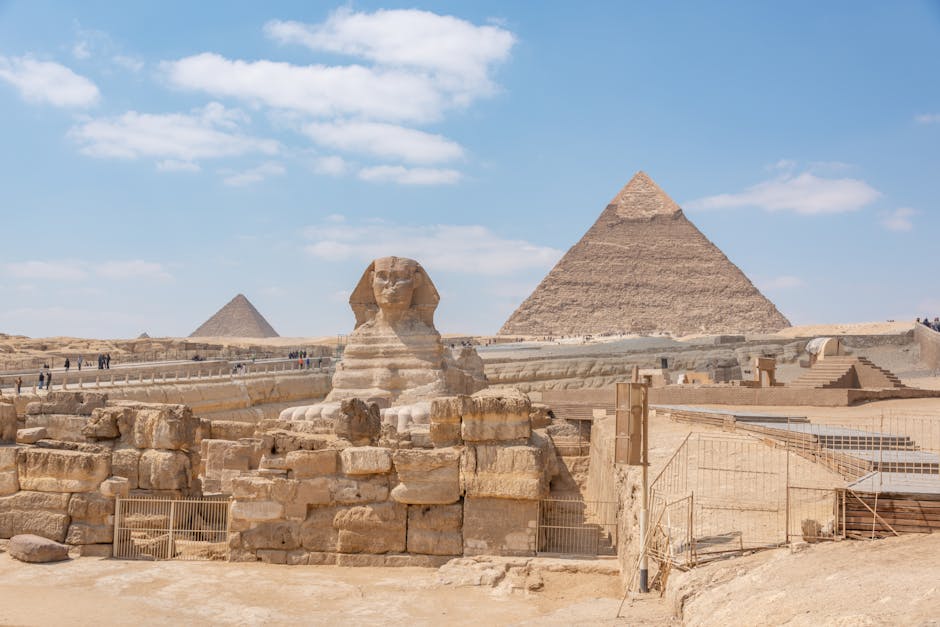
The Great Pyramid of Giza, built for Pharaoh Khufu around 2560 BCE, originally stood at 146.5 meters (481 feet) tall. It held the record as the world’s tallest man-made structure for approximately 3,800 years until the construction of Lincoln Cathedral in England around 1311 CE. The pyramid’s construction required an estimated 2.3 million limestone blocks, each weighing between 2.5 to 15 tons. The precision of its construction is remarkable—the base is level to within just 2.1 centimeters, and the sides are aligned to the cardinal directions within 1/15th of a degree.
4. Cleopatra Lived Closer to the Moon Landing Than the Pyramids’ Construction
This mind-bending temporal fact illustrates just how ancient the pyramids truly are. Cleopatra VII, the last active pharaoh of Egypt, lived from 69 to 30 BCE. The Great Pyramid was completed around 2560 BCE. This means Cleopatra lived approximately 2,500 years after the pyramids were built, while the moon landing occurred about 2,000 years after her death. Ancient Egypt’s civilization was so long-lasting that its own later rulers viewed early dynasties as distant ancient history.
5. Workers Who Built the Pyramids Were Not Slaves
Contrary to popular belief and Hollywood depictions, archaeological evidence strongly suggests that the pyramid builders were not slaves but paid laborers. Excavations of workers’ villages near the Giza pyramids have revealed that these individuals received regular wages, medical care, and proper burials near the monuments they constructed. Workers were organized into crews with names like “Friends of Khufu” and “Drunkards of Menkaure.” They consumed high-quality food, including meat, and the work was likely viewed as a form of national service or religious devotion rather than forced labor.
6. Ancient Egyptians Used Moldy Bread as Antibiotic Treatment
Thousands of years before Alexander Fleming discovered penicillin, ancient Egyptian physicians applied moldy bread to infected wounds. The Ebers Papyrus, a medical text dating to around 1550 BCE, contains references to using spoiled grain and moldy bread for treating infections. While they didn’t understand the science behind it, the naturally occurring penicillium mold on the bread provided genuine antibiotic properties. This medical knowledge demonstrates the Egyptians’ sophisticated understanding of practical healthcare through observation and experimentation.
7. Pharaohs Never Let Their Hair Be Seen
Egyptian pharaohs, both male and female, typically shaved their heads and wore elaborate wigs. These wigs were made from human hair, wool, or plant fibers and were often adorned with gold, jewels, and braiding. The practice served multiple purposes: it was more hygienic in the hot climate, prevented lice infestations, and allowed for elaborate styling that demonstrated wealth and status. The iconic nemes headdress (the striped head cloth seen on King Tut’s death mask) was worn over these wigs or shaved heads, and showing one’s natural hair was considered improper for royalty.
8. Cats Were Sacred Animals With Legal Protection
The ancient Egyptians’ reverence for cats went far beyond keeping them as pets. Cats were associated with the goddess Bastet and were considered sacred animals with legal protection. Killing a cat, even accidentally, could result in the death penalty. When a family cat died, household members would shave their eyebrows in mourning and hold elaborate funeral rites. Cats were mummified and buried in special cemeteries, with thousands of mummified cats discovered at archaeological sites. This veneration partly stemmed from cats’ practical value in protecting grain stores from rodents and snakes.
9. Both Men and Women Wore Makeup Daily
Cosmetics were an essential part of daily life for both genders in ancient Egypt. The distinctive eye makeup seen in Egyptian art wasn’t merely decorative—it served practical purposes. The dark eye paint, called kohl, was made from ground minerals including lead ore. It helped reduce glare from the intense desert sun and may have had antibacterial properties that protected against eye infections. Green eyeshadow made from malachite was also popular. Egyptians believed makeup had magical healing powers granted by the gods Horus and Ra.
10. The Ancient Egyptians Created One of the First Peace Treaties
The Egyptian-Hittite peace treaty, signed around 1259 BCE between Pharaoh Ramesses II and Hittite King Hattusili III, is one of the earliest surviving peace agreements in history. After the famous Battle of Kadesh, both empires negotiated a treaty that established borders, created a mutual defense alliance, and included provisions for extradition of refugees. Remarkably, copies in both Egyptian hieroglyphics and Akkadian cuneiform have been preserved. A replica of this treaty hangs in the United Nations headquarters in New York, symbolizing humanity’s long history of diplomatic conflict resolution.
11. Egyptians Made Paper From Papyrus Plants 5,000 Years Ago
Ancient Egyptians invented one of history’s most important writing surfaces around 3000 BCE using the papyrus plant that grew abundantly along the Nile. To create sheets, they cut the plant’s pith into strips, laid them perpendicular to each other, and pressed them together. The plant’s natural sugars acted as adhesive. Papyrus was lighter and more portable than clay tablets and more durable than animal skins. This innovation revolutionized record-keeping and communication, allowing Egyptian civilization to document everything from religious texts to business transactions, preserving knowledge for millennia.
12. Ancient Egyptians Played Board Games Remarkably Similar to Modern Ones
Entertainment was important in ancient Egyptian society, and board games were popular across all social classes. Senet, one of the oldest known board games, dates back to approximately 3100 BCE. The game involved moving pieces across a board of 30 squares according to the throw of sticks or bones, similar to dice. Senet wasn’t merely entertainment—it had religious significance and was believed to represent the journey through the afterlife. Game boards have been found in tombs, including King Tutankhamun’s, suggesting Egyptians wanted to continue playing in the next world.
The Enduring Legacy of Ancient Egypt
These twelve facts merely scratch the surface of ancient Egyptian civilization’s complexity and sophistication. From groundbreaking medical knowledge and legal systems to engineering marvels and cultural practices, the ancient Egyptians created a society whose innovations continue to influence modern life. Their achievements in architecture, medicine, mathematics, and social organization demonstrate a level of advancement that challenges our assumptions about ancient peoples. The civilization that flourished along the Nile for over three thousand years left an indelible mark on human history, and new archaeological discoveries continue to reveal surprising details about these remarkable people. Understanding these facts not only enriches our knowledge of the past but also reminds us of humanity’s enduring capacity for innovation, creativity, and social progress.
