
⏱️ 7 min read
Deserts rank among Earth’s harshest environments, where scorching temperatures, minimal rainfall, and scarce resources challenge survival at every turn. Yet life not only persists in these arid landscapes—it thrives through remarkable evolutionary innovations. From microscopic adjustments to dramatic behavioral changes, desert organisms have developed extraordinary adaptations that showcase nature’s ingenuity. These survival strategies reveal the incredible resilience of life and offer fascinating insights into how species overcome extreme environmental challenges.
Remarkable Adaptations That Defy Desert Extremes
1. The Camel’s Hump: A Mobile Fat Reserve, Not a Water Tank
Contrary to popular belief, camels do not store water in their humps. These iconic structures contain up to 80 pounds of fatty tissue that serves as an energy reserve during periods of food scarcity. When fat metabolizes, it produces water as a byproduct, allowing camels to survive weeks without drinking. This concentrated fat storage also provides a crucial thermal advantage—by localizing fat deposits rather than distributing them across the body, camels minimize insulation and can better regulate their temperature in extreme heat.
2. Kangaroo Rats Survive Without Ever Drinking Water
The kangaroo rat of North American deserts possesses one of nature’s most extreme adaptations: it never needs to drink water throughout its entire life. These remarkable rodents extract all necessary moisture from the seeds they consume through highly efficient metabolic processes. Their kidneys are extraordinarily efficient, producing urine five times more concentrated than human urine. Additionally, their nasal passages recapture moisture from exhaled air, and they remain in cool burrows during daylight hours to minimize water loss through respiration and evaporation.
3. Desert Plants Practice CAM Photosynthesis to Conserve Water
Many desert plants, including cacti and succulents, employ Crassulacean Acid Metabolism (CAM) photosynthesis, a sophisticated adaptation that revolutionizes how they process carbon dioxide. Unlike typical plants that open their stomata during the day, CAM plants open these pores only at night when temperatures drop and humidity rises. They store carbon dioxide as malic acid, then use it for photosynthesis during daylight hours with stomata closed. This strategy reduces water loss by up to 90 percent compared to conventional photosynthesis.
4. Fennec Foxes Use Oversized Ears as Natural Air Conditioners
The fennec fox of the Sahara Desert sports ears that can grow up to six inches long—disproportionately large for an animal weighing just three pounds. These extraordinary appendages serve as biological radiators, densely packed with blood vessels that release excess body heat into the cooler night air. The increased surface area allows for efficient thermoregulation, helping these foxes maintain safe body temperatures despite desert extremes. Their ears also provide exceptional hearing for detecting prey moving beneath the sand.
5. Sandfish Lizards Literally Swim Through Sand
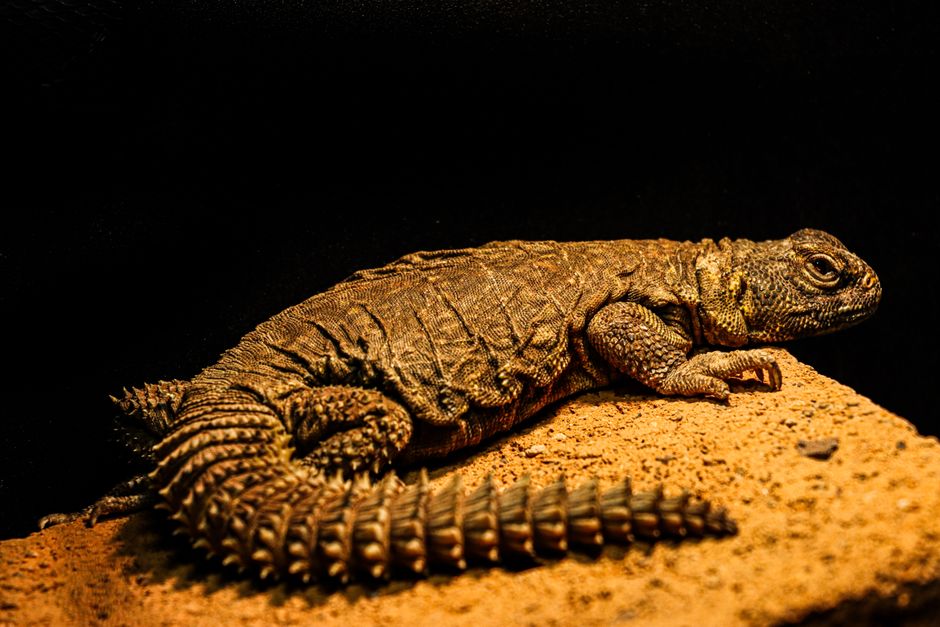
The sandfish lizard of North Africa has evolved a remarkable locomotion technique that allows it to “swim” through sand with fish-like movements. When threatened or seeking cooler temperatures, this reptile dives beneath the surface and undulates its body in S-shaped curves, moving through sand as efficiently as fish move through water. Special adaptations include a wedge-shaped snout, smooth overlapping scales that reduce friction, and ear openings that seal shut to prevent sand intrusion. This ability allows the sandfish to escape predators and avoid lethal surface temperatures exceeding 140 degrees Fahrenheit.
6. Barrel Cacti Function as Accordion-Like Water Storage Systems
Barrel cacti demonstrate engineering brilliance through their expandable ribbed structure, which works like an accordion to accommodate massive water storage fluctuations. During rare rainfall events, these plants rapidly absorb water through shallow but extensive root systems, causing their bodies to swell significantly. A single barrel cactus can store hundreds of gallons of water in specialized tissues. The pleated design allows expansion without tissue damage, while a thick waxy coating minimizes evaporation. During drought, the plant slowly shrinks as it consumes stored reserves.
7. Desert Tortoises Can Store a Year’s Worth of Water in Their Bladders
The desert tortoise possesses an oversized bladder that can hold water equivalent to 40 percent of its body weight. This remarkable reservoir allows the tortoise to survive droughts lasting over a year. During rare desert rains, these reptiles drink copiously and store the excess in their bladders. They can also reabsorb water from their bladder when needed, essentially recycling their own urine. Additionally, desert tortoises obtain moisture from the plants they consume and can tolerate extreme dehydration, losing up to 40 percent of their body weight without fatal consequences.
8. Mesquite Trees Send Roots Nearly 200 Feet Deep
Mesquite trees have developed one of the deepest root systems in the plant kingdom, with taproots documented reaching depths of 175 feet or more in search of underground water sources. This extraordinary adaptation allows mesquites to access water tables far beyond the reach of competing vegetation. While other desert plants focus on shallow, widespread roots to capture surface moisture from brief rains, mesquites invest in vertical growth, essentially tapping into permanent water supplies. This dual strategy—some roots deep, others shallow—ensures survival through varied conditions.
9. Sidewinder Rattlesnakes Minimize Sand Contact With Unique Locomotion
The sidewinder rattlesnake moves across scorching desert sand using a distinctive lateral looping motion that minimizes body contact with the burning surface. Only two points of the snake’s body touch the ground at any time, reducing heat absorption by up to 50 percent compared to traditional serpentine movement. This specialized locomotion also provides superior traction on loose, shifting sand where conventional crawling would be inefficient. The sidewinder’s movement pattern creates characteristic J-shaped tracks in the sand, making it one of the most recognizable desert dwellers.
10. Addax Antelopes Change Coat Color Seasonally for Temperature Regulation
The critically endangered addax antelope of the Sahara demonstrates remarkable physiological flexibility by changing its coat color with the seasons. During scorching summers, the addax develops a nearly white coat that reflects intense solar radiation, keeping body temperatures manageable. In winter, the coat darkens to brownish-gray, absorbing more heat during cooler periods. These antelopes also possess splayed hooves that function like snowshoes for traversing soft sand, and they can detect rainfall from miles away, traveling toward distant storms to find fresh vegetation.
11. Resurrection Plants Return to Life After Complete Desiccation
Resurrection plants, found in deserts worldwide, survive extreme drought by entering a state of suspended animation called anhydrobiosis. During dry periods, these remarkable plants lose up to 95 percent of their moisture content, curl into tight brown balls, and appear completely dead. Their metabolic processes halt entirely, yet specialized proteins protect cellular structures from irreversible damage. When rain finally arrives, resurrection plants can fully rehydrate and resume normal photosynthesis within hours—a feat that would kill most plant species. Some specimens have revived after decades of dormancy.
12. Thorny Devils Harvest Water Through Their Skin
The thorny devil lizard of Australian deserts possesses one of nature’s most ingenious water collection systems. Its entire skin surface is covered with microscopic grooves that channel moisture toward the mouth through capillary action. The lizard can harvest water from any part of its body touching dew, fog, or moist sand. By performing a distinctive “rocking” behavior, thorny devils press different body parts against damp sand, drawing moisture upward through the groove network. This adaptation allows them to drink without a water source, extracting moisture directly from their environment through dermal channels.
Nature’s Testament to Adaptability
These twelve extraordinary adaptations demonstrate that deserts, far from being lifeless wastelands, are laboratories of evolutionary innovation. From water-storing bladders to skin-based drinking systems, from nocturnal photosynthesis to sand-swimming locomotion, desert organisms have developed solutions that challenge our understanding of biological limits. These adaptations remind us that life finds pathways to survival in even the most inhospitable environments, offering valuable lessons about resilience, efficiency, and the remarkable creativity of natural selection. As climate change expands arid regions globally, understanding these desert survival strategies becomes increasingly relevant for both conservation efforts and potential biomimetic applications in human technology.
