⏱️ 6 min read
Impressionism revolutionized the art world in the late 19th century, breaking away from academic traditions and forever changing how artists approached their craft. While many are familiar with the sun-dappled landscapes and vibrant café scenes that define this movement, numerous fascinating and lesser-known aspects of Impressionism remain shrouded in mystery and intrigue. These hidden stories reveal the struggles, innovations, and peculiarities that shaped one of art history's most beloved movements.
Uncovering the Hidden Dimensions of Impressionism
1. The Term "Impressionism" Started as an Insult
The name "Impressionism" was never intended as a compliment. Art critic Louis Leroy coined the term derisively in 1874 after viewing Claude Monet's painting "Impression, Sunrise." In his scathing review, Leroy mockingly used the word to suggest that the artists' works were merely unfinished sketches rather than complete paintings. He sarcastically wrote that wallpaper in its embryonic state was more finished than these canvases. Rather than being discouraged, the artists embraced the label, transforming an insult into a badge of honor that would define their revolutionary approach to capturing light and movement.
2. Impressionists Were Rejected Thousands of Times by the Official Salon
The Paris Salon, the official art exhibition of the Académie des Beaux-Arts, repeatedly rejected Impressionist works throughout the 1860s and 1870s. Claude Monet alone faced rejection after rejection, as did his contemporaries including Renoir, Pissarro, and Sisley. The conservative jury found their loose brushwork, bright colors, and everyday subjects unsuitable for serious art. This systematic exclusion became so notorious that Emperor Napoleon III established the "Salon des Refusés" (Exhibition of Rejects) in 1863, where rejected artists could display their work. This pattern of rejection ultimately drove the Impressionists to organize their own independent exhibitions, beginning in 1874.
3. The Movement's First Exhibition Was Held in a Photographer's Studio
When the Impressionists decided to bypass the official Salon system, they mounted their first independent exhibition in April 1874 in an unlikely venue: the former studio of photographer Nadar on Boulevard des Capucines in Paris. This location was far from the prestigious exhibition halls of the establishment. Thirty artists participated, showing approximately 165 works. The choice of a photographer's studio was particularly fitting, as photography had significantly influenced Impressionist techniques, including their use of cropping, unusual angles, and emphasis on capturing fleeting moments.
4. Many Impressionists Suffered Extreme Poverty and Depression
Behind the cheerful scenes of leisure and light, many Impressionist painters endured crushing poverty and psychological distress. Camille Pissarro struggled financially throughout most of his career, sometimes unable to afford paints or canvases. Claude Monet attempted suicide by drowning in 1868 due to financial desperation and was frequently penniless. Alfred Sisley died in poverty, never achieving commercial success during his lifetime. Paul Cézanne, though from a wealthy family, was often cut off financially by his disapproving father. These hardships starkly contrast with the pleasant, sunlit subjects that dominated their canvases.
5. Impressionist Paintings Were Created Using Cutting-Edge Technology
The Impressionists benefited from significant technological advances in paint manufacturing. The invention of collapsible tin paint tubes in 1841 revolutionized artistic practice, allowing painters to work outdoors with unprecedented ease. Previously, artists had to grind their own pigments and mix paints in their studios, making plein air painting extremely difficult. Additionally, the development of synthetic pigments created new, more vibrant colors that had never before been available, including chrome yellow, cobalt blue, and emerald green. These innovations directly enabled the Impressionists' signature bright palette and outdoor painting practice.
6. A Wealthy Woman Funded Much of the Impressionist Movement
Gustave Caillebotte, a painter and collector from a wealthy Parisian family, played a crucial yet often overlooked role in supporting Impressionism. Not only was he a talented artist himself, but he used his considerable fortune to purchase works from his struggling colleagues and provide them with financial support. He organized exhibitions, paid rent for exhibition spaces, and even left his extensive collection of Impressionist paintings to the French state upon his death. Without Caillebotte's patronage and advocacy, several Impressionist painters might not have survived financially long enough to achieve recognition.
7. The Impressionists Had a Secret Meeting Place
The Café Guerbois in the Batignolles district of Paris served as the unofficial headquarters for the Impressionists during the 1860s and early 1870s. Every Thursday evening, painters including Manet, Monet, Renoir, Degas, Pissarro, and Cézanne would gather, along with writers like Émile Zola, to discuss art theory, critique the establishment, and plan their revolutionary approach to painting. These passionate debates helped forge the intellectual foundation of Impressionism. Later, when the café became too crowded, the group moved their meetings to the Café de la Nouvelle-Athènes in Pigalle.
8. Impressionism Was Influenced by Japanese Art
The opening of trade with Japan in the 1850s sparked a fascination with Japanese woodblock prints among French artists. These prints, known as ukiyo-e, featured bold compositions, flattened perspectives, unusual cropping, and emphasis on everyday life—all elements that profoundly influenced Impressionist aesthetics. Artists like Monet, Degas, and Mary Cassatt collected Japanese prints and incorporated their compositional techniques into their work. Monet even created a Japanese garden at his home in Giverny, which became the subject of his famous water lily series. This cross-cultural exchange, called Japonisme, was essential to the development of Impressionist style.
9. Color Theory Secrets Guided Impressionist Palettes
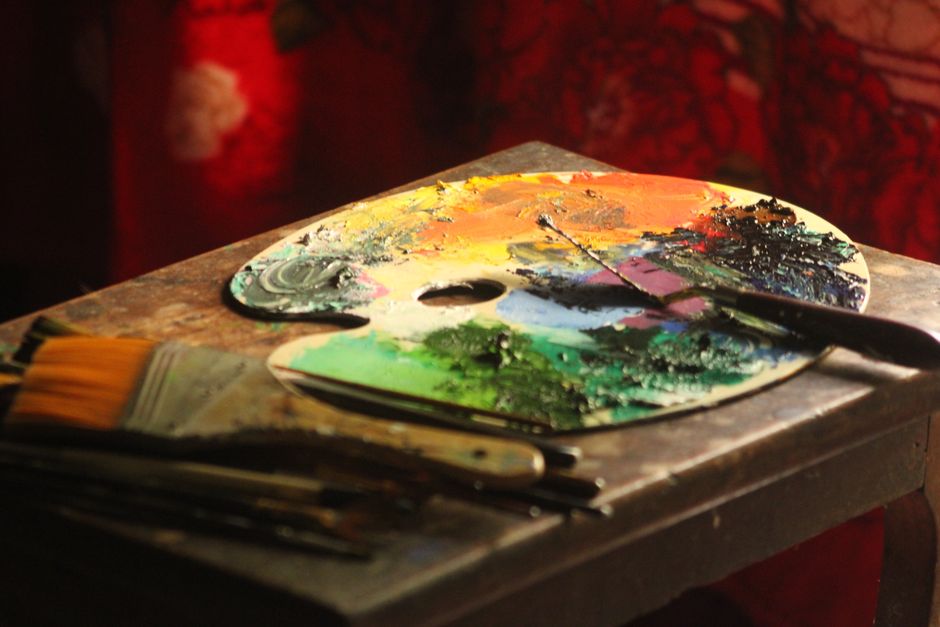
Impressionists didn't simply paint what they saw; they applied scientific color theories to create optical effects. They were influenced by chemist Michel-Eugène Chevreul's research on simultaneous contrast and the complementary color wheel. Rather than mixing colors on their palettes, Impressionists often placed pure pigments side by side on the canvas, allowing the viewer's eye to optically blend them. They discovered that shadows weren't simply darker versions of local colors but contained complementary hues—painting blue shadows in sunlit snow scenes or purple shadows on yellow surfaces. This scientific approach to color was revolutionary and created their paintings' characteristic luminosity.
10. Several Important Impressionists Never Called Themselves Impressionists
Despite being classified as Impressionists by art historians, several key figures associated with the movement rejected the label entirely. Edgar Degas preferred to be called a "realist" or "independent" and resented the Impressionist designation. He focused on artificial indoor lighting rather than natural sunlight and carefully composed his scenes in the studio rather than painting outdoors. Paul Cézanne distanced himself from the group after a few exhibitions, developing his own Post-Impressionist approach. Even Claude Monet, the movement's most iconic figure, expressed frustration with the limiting nature of the Impressionist label later in his career, feeling it failed to capture the evolution of his artistic vision.
The Lasting Enigma of Impressionism
These mysterious and lesser-known facts reveal that Impressionism was far more complex than its pleasant surfaces might suggest. Born from rejection and ridicule, sustained through poverty and perseverance, and built upon technological innovation and scientific theory, the movement transformed art history. The Impressionists' struggles, their secret gathering places, their cross-cultural inspirations, and even their rejection of their own label all contribute to the rich, enigmatic legacy of this revolutionary movement. Understanding these hidden dimensions allows us to appreciate not just the beauty of Impressionist paintings, but the remarkable determination and innovation that brought them into existence against overwhelming odds.