
1 / 10 Questions
0 Points

How Many Keys Does A Standard Piano Have?

100

96

76

88

Points won
0
Correct score
0%

More questions

More Articles

Top 10 Unknown Facts About Sistine Chapel

Top 10 Unknown Facts About Sistine Chapel

⏱️ 6 min read

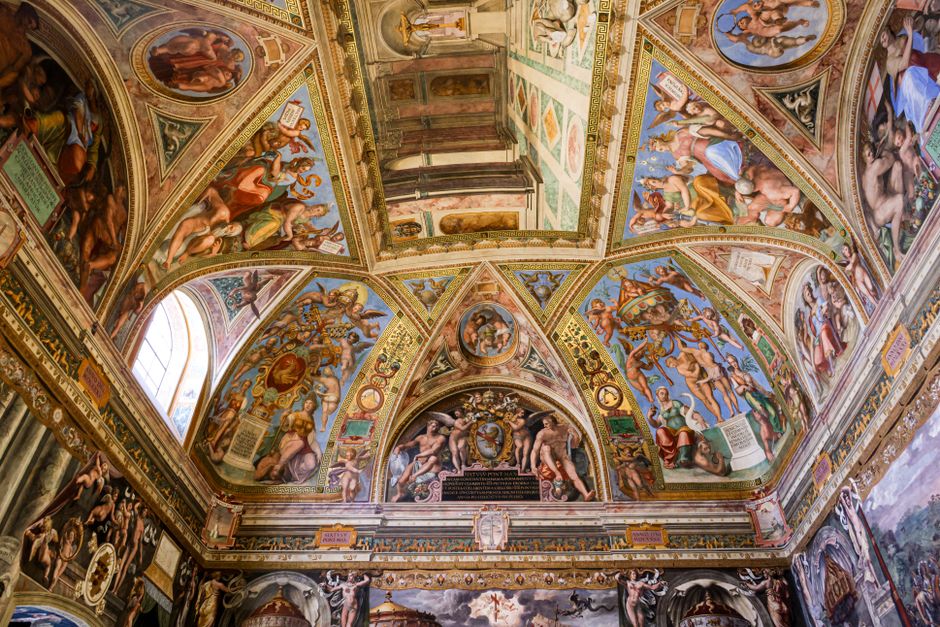
The Sistine Chapel stands as one of the most celebrated artistic achievements in human history, drawing millions of visitors annually to witness Michelangelo's breathtaking ceiling frescoes. Yet beneath the surface of its fame lies a treasure trove of lesser-known details that even art enthusiasts might find surprising. From hidden messages to engineering marvels, these fascinating aspects reveal the chapel's complexity beyond its iconic imagery.

Hidden Depths of a Renaissance Masterpiece

1. The Chapel Was Named After an Unlikely Pope

The Sistine Chapel derives its name from Pope Sixtus IV, who commissioned its construction between 1473 and 1481. While Michelangelo's work dominates popular imagination, Sixtus IV never witnessed the famous ceiling paintings. He died in 1484, more than two decades before Michelangelo began his work. The original chapel featured a simple star-studded ceiling painted by Piermatteo d'Amelia, which was eventually replaced by Michelangelo's masterpiece under Pope Julius II's direction.

2. Michelangelo Worked in Extreme Physical Discomfort

Contrary to popular belief, Michelangelo did not paint the Sistine Chapel ceiling while lying on his back. Instead, he designed a unique scaffolding system that allowed him to stand while working, though he had to bend backward at uncomfortable angles. The artist documented his physical suffering in a sonnet to his friend Giovanni da Pistoia, describing paint dripping onto his face and his body contorting into unnatural positions. The four years of work left him with permanent damage to his eyesight and posture.

3. A Hidden Self-Portrait Exists in The Last Judgment

In "The Last Judgment," painted on the altar wall between 1536 and 1541, Michelangelo included a disturbing self-portrait. The artist depicted his face on the flayed skin held by Saint Bartholomew, who was martyred by being skinned alive. Art historians interpret this as Michelangelo's commentary on the suffering he endured while creating the chapel's artwork, or possibly his anxiety about divine judgment. This macabre self-insertion remained unnoticed for centuries until scholars identified it in the 20th century.

4. The Ceiling Contains Anatomical Secrets

Michelangelo's extensive knowledge of human anatomy, gained through cadaver dissection, led him to embed anatomical illustrations within the chapel's artwork. In the panel depicting God creating Adam, the green cloth and figures surrounding God form a perfect anatomical representation of the human brain, complete with the frontal lobe, cerebellum, and optic chiasm. Similarly, God's neck in the "Separation of Light from Darkness" panel precisely depicts the human brainstem and spinal cord. These hidden details suggest Michelangelo's belief that divine creativity resides within human consciousness.

5. The Chapel Served as a Fortress During Papal Conflicts

Beyond its religious and artistic significance, the Sistine Chapel was designed with defensive capabilities. The structure features unusually thick walls and a fortified gallery above the main chapel. During the Sack of Rome in 1527, the chapel's defensive architecture proved vital as the papal court sought refuge within Vatican walls. The building's robust construction also helped preserve the frescoes through centuries of political turmoil and military conflicts that plagued Rome.

6. Fig Leaves Were Added Decades After Completion

The nude figures in "The Last Judgment" sparked controversy immediately upon the fresco's unveiling. During the Counter-Reformation's Council of Trent, the Catholic Church deemed the nudity inappropriate for such a sacred space. In 1564, Pope Pius IV commissioned artist Daniele da Volterra to paint drapery and loincloths over the most prominent nude figures. Da Volterra earned the unfortunate nickname "Il Braghettone" (the breeches-maker) for this work. Many of these additions were removed during the chapel's restoration in the 1980s and 1990s, though some remain.

7. The Chapel's Acoustic Properties Were Deliberately Engineered

The Sistine Chapel possesses remarkable acoustic qualities that enhance the papal choir's performances. The room's dimensions and the specific placement of architectural elements create perfect resonance for vocal music. The chapel's measurements follow precise mathematical ratios derived from the biblical description of Solomon's Temple. This acoustic engineering allowed the development of the distinctive polyphonic style associated with the Sistine Chapel Choir, one of the oldest religious choirs in the world, established long before Michelangelo's contributions.

8. A Massive Crack Nearly Destroyed the Ceiling

In 1504, before Michelangelo began his work, a large structural crack appeared in the ceiling, threatening the building's integrity. This crack actually led to the decision to have the ceiling repainted, as the damage had destroyed portions of the original star-studded design. Engineers installed iron chains within the chapel's structure to prevent further movement. The crack's presence influenced how Michelangelo planned his composition, and he cleverly incorporated the architectural repairs into his overall design scheme.

9. The Original Floor Contains a Hidden Cosmological Design

While visitors focus on the ceiling and walls, the Sistine Chapel's 15th-century marble floor features an intricate cosmati work design that few notice. This geometric pattern, created using colored stone inlays, represents medieval cosmological concepts and processional paths used during papal ceremonies. The floor's design relates mathematically to the ceiling's proportions, creating a unified symbolic representation of the universe from earth to heaven. The floor has been preserved remarkably well, as it was protected by temporary flooring during the ceiling's painting.

10. The Colors Were Dramatically Different Before Restoration

For centuries, visitors viewed the Sistine Chapel's frescoes through layers of dirt, smoke from candles and incense, and deteriorating varnish applied by previous restorers. The extensive restoration completed in 1999 revealed colors so vibrant and bright that many scholars initially questioned whether the cleaning had gone too far. The restoration proved that Michelangelo used a brilliant color palette featuring vivid purples, greens, and golds that had been obscured for generations. This discovery fundamentally changed understanding of Renaissance color theory and Michelangelo's artistic technique.

Preserving an Irreplaceable Legacy

These lesser-known aspects of the Sistine Chapel demonstrate that even the most studied artworks continue to reveal new dimensions of meaning and craftsmanship. From Michelangelo's anatomical Easter eggs to the building's defensive architecture, each detail adds depth to our appreciation of this Renaissance masterpiece. The chapel represents not merely a collection of beautiful paintings but a complex integration of architecture, theology, art, and human ingenuity that continues to inspire wonder more than five centuries after its creation. Understanding these hidden facts enriches the experience of this sacred space and reminds us that great works of art always contain layers of meaning waiting to be discovered.

Did You Know? 15 Facts About Extinct Animals

Did You Know? 15 Facts About Extinct Animals

⏱️ 7 min read

The history of life on Earth is marked by countless species that once roamed our planet but have since disappeared forever. While extinction is a natural part of evolution, studying these lost creatures offers fascinating insights into biodiversity, adaptation, and the delicate balance of ecosystems. From massive prehistoric beasts to recently vanished species, extinct animals continue to capture our imagination and teach us valuable lessons about conservation. Here are fifteen remarkable facts about animals that no longer walk, swim, or fly among us.

Fascinating Discoveries About Lost Species

1. The Dodo Bird Wasn't Actually Stupid

Contrary to popular belief and the phrase "dumb as a dodo," these flightless birds from Mauritius were well-adapted to their environment. The dodo had no natural predators on its island home, so it didn't need to fear ground-dwelling threats. It was human arrival in the 1500s, along with introduced species like rats and pigs, that led to their extinction by 1681. Recent studies of dodo brain cases suggest these birds had relatively large brains for their body size, comparable to modern pigeons.

2. Woolly Mammoths Survived Until the Pyramids Were Built

While most woolly mammoths died out around 10,000 years ago, a small population survived on Wrangel Island in the Arctic Ocean until approximately 4,000 years ago. This means these magnificent creatures were still alive when the ancient Egyptians were constructing the Great Pyramid of Giza. The isolated island population likely succumbed to genetic problems from inbreeding and environmental changes rather than human hunting.

3. The Thylacine Had a Pouch Despite Being a Carnivore

The Tasmanian tiger, or thylacine, was a remarkable marsupial predator that went extinct in 1936. Unlike most carnivorous mammals, both male and female thylacines had pouches. The female's pouch opened to the rear and could hold up to four young, while males had a protective pouch covering their external reproductive organs. This apex predator could open its jaws to an incredible 120-degree angle, far wider than any modern dog or wolf.

4. Passenger Pigeons Darkened the Sky for Days

Once the most abundant bird in North America, passenger pigeon flocks were so enormous they could take three days to pass overhead and would literally darken the skies. Estimates suggest up to five billion of these birds existed in the early 1800s. Despite their incredible numbers, relentless hunting and habitat destruction drove them to extinction by 1914, when the last known individual, Martha, died at the Cincinnati Zoo.

5. The Megalodon's Teeth Were Larger Than Human Hands

The megalodon, an ancient shark that lived 23 to 3.6 million years ago, possessed teeth that measured over seven inches in length. These massive predators grew to estimated lengths of 50 to 60 feet, roughly three times the size of today's great white sharks. Scientists believe they preyed on whales and had a bite force of up to 40,000 pounds per square inch, making it one of the most powerful predators ever to exist.

6. Steller's Sea Cow Was Hunted to Extinction in Just 27 Years

Discovered in 1741 by European explorers in the Bering Sea, Steller's sea cow was a massive marine mammal reaching up to 30 feet long and weighing up to 11 tons. These gentle giants were slow-moving, peaceful herbivores that fed on kelp. Their docile nature, inability to dive, and delicious meat made them easy targets for hunters. By 1768, just 27 years after their discovery by Western science, they were completely extinct.

7. Irish Elk Weren't Elk and Weren't Exclusively Irish

Despite its name, the Irish elk was actually the largest deer species ever to exist, with antlers spanning up to 12 feet across and weighing up to 88 pounds. These magnificent creatures lived across Europe, Asia, and North Africa during the Pleistocene epoch. Their enormous antlers, while impressive for display and competition, may have contributed to their extinction around 7,700 years ago as forests became denser after the Ice Age.

8. The Quagga Was a Partially Striped Zebra

The quagga was a subspecies of plains zebra that had stripes only on the front portion of its body, while its hindquarters were solid brown. Native to South Africa, these unique animals were heavily hunted for their hides and to preserve grazing land for domestic livestock. The last wild quagga was shot in 1878, and the last captive specimen died in Amsterdam in 1883. Interestingly, a selective breeding program called the Quagga Project has been attempting to recreate their appearance from plains zebras.

9. Giant Ground Sloths Could Weigh as Much as Elephants

Prehistoric ground sloths, such as Megatherium, reached truly staggering proportions, with some species weighing up to four tons and standing over 20 feet tall on their hind legs. Unlike their small, tree-dwelling modern relatives, these creatures walked on the ground and used their powerful claws to pull down tree branches. They went extinct around 10,000 years ago, possibly due to climate change and human hunting pressure.

10. The Moa Birds Were Hunted by Giant Eagles

New Zealand's moa birds were massive, flightless birds that stood up to 12 feet tall and weighed up to 500 pounds. Before human arrival, their only predator was the equally impressive Haast's eagle, the largest eagle ever known, with a wingspan exceeding 10 feet. When Polynesian settlers arrived around 1300 CE and hunted the moa to extinction by 1400 CE, the Haast's eagle also disappeared, having lost its primary food source.

11. Saber-Toothed Cats Had Weak Bites Despite Impressive Teeth

The iconic Smilodon, commonly known as the saber-toothed cat, possessed impressive canine teeth up to seven inches long, yet had a relatively weak bite force compared to modern big cats. Research suggests they used their powerful neck muscles to drive their teeth into prey rather than relying on jaw strength alone. These impressive predators went extinct around 10,000 years ago during the late Pleistocene extinctions.

12. The Great Auk Was the Original Penguin

The great auk, a flightless seabird from the North Atlantic, was actually the original bird to be called a "penguin." When explorers later encountered similar-looking flightless birds in the Southern Hemisphere, they applied the same name, which stuck. Great auks stood about 30 inches tall and were excellent swimmers. They were hunted extensively for their feathers, meat, and fat, with the last confirmed pair killed in Iceland in 1844.

13. Gigantopithecus Was the Largest Primate Ever

Gigantopithecus blacki, which lived in Southeast Asia until around 100,000 years ago, was an enormous ape that stood up to 10 feet tall and weighed up to 1,200 pounds. Known only from fossil jaw bones and teeth, scientists believe these massive primates were herbivores that primarily ate bamboo, similar to modern giant pandas. Climate change and competition with more adaptable species like early humans likely contributed to their extinction.

14. Caribbean Monk Seals Were the Only Tropical Seals

The Caribbean monk seal was the only seal species native to the Caribbean Sea and Gulf of Mexico. Christopher Columbus documented encountering large populations during his voyages, calling them "sea wolves." Intensive hunting for their oil, fur, and meat, combined with their tameness around humans, led to their rapid decline. The last confirmed sighting was in 1952, and they were officially declared extinct in 2008.

15. The Baiji River Dolphin Was Known as the Goddess of the Yangtze

The baiji, or Yangtze River dolphin, was one of only a handful of freshwater dolphin species and was revered in Chinese culture as the "Goddess of the Yangtze." These nearly blind dolphins relied on echolocation to navigate the murky river waters. Despite being declared a national treasure, industrialization, dam construction, pollution, and boat traffic drove them to functional extinction by 2006, making them the first dolphin species driven to extinction by human activity.

Learning From the Past

These fifteen facts reveal the incredible diversity of life that once existed on our planet and the various factors that led to these species' disappearances. While some extinctions occurred due to natural climate changes and evolutionary pressures, human activity has accelerated extinction rates dramatically. From the passenger pigeon's rapid decline despite numbering in the billions to the baiji's recent disappearance in our own lifetime, these stories serve as powerful reminders of our responsibility to protect the biodiversity that remains. Understanding extinct animals helps us appreciate the fragility of ecosystems and the importance of conservation efforts to prevent more species from joining this list of lost creatures.