




1 / 10 Questions
0 Points

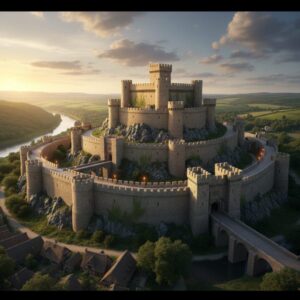
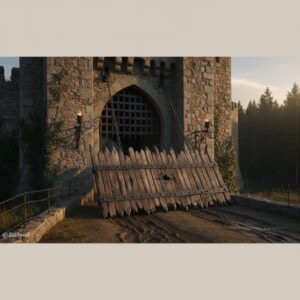
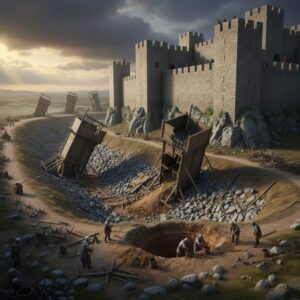
Which castle feature let defenders rain death on attackers below?

Crenellations

Barbican

Machicolations

Arrow loops

Points won
0
Correct score
0%

More questions

More Articles

Top 10 Hidden Easter Eggs in Disney Movies

Top 10 Hidden Easter Eggs in Disney Movies

⏱️ 6 min read

Disney animators have long delighted audiences by concealing clever references, inside jokes, and hidden surprises throughout their films. These Easter eggs range from subtle nods to previous Disney classics to playful tributes that connect the entire Disney universe. Discovering these hidden gems adds an extra layer of enjoyment to repeat viewings and demonstrates the extraordinary attention to detail that goes into every frame of animation.

The Magic Behind Disney's Hidden Treasures

For decades, Disney's creative teams have embedded secret messages and visual callbacks throughout their animated features. These carefully crafted details often go unnoticed during initial viewings but reward observant fans who take the time to look closer. Understanding these connections reveals the passion and creativity of the animators who bring these beloved stories to life.

1. The Sorcerer's Carpet in Aladdin's Opening Scene

In the opening moments of "Aladdin," the peddler attempts to sell various items from his collection. Among the mysterious objects briefly visible is the Beast from "Beauty and the Beast," appearing as a small toy figurine. More impressively, the peddler pulls out what appears to be the Magic Carpet, foreshadowing its important role later in the film. Additionally, keen-eyed viewers can spot the Genie's lamp sitting inconspicuously among the merchant's wares, cleverly hinting at the adventure to come.

2. Rapunzel and Flynn's Coronation Cameo in Frozen

During Elsa's coronation ceremony in "Frozen," the kingdom of Arendelle welcomes dignitaries from across the realm. Among the guests briefly visible in the crowd are none other than Rapunzel and Flynn Rider from "Tangled." The couple appears for just a few seconds as they enter the castle, suggesting that the two Disney kingdoms exist in the same universe. This connection sparked numerous fan theories about the relationships between different Disney royal families and their interconnected timelines.

3. The Mysterious Pizza Planet Truck Throughout Pixar Films

The iconic Pizza Planet delivery truck from "Toy Story" has become one of Pixar's most enduring Easter eggs, appearing in nearly every Pixar film since its debut. This yellow truck with the distinctive rocket logo can be spotted in "A Bug's Life" as a mobile home, in "Finding Nemo" as a vehicle on the street, and even in "Brave," where it's cleverly disguised as a wooden carving. The animators take pride in finding creative ways to incorporate this vehicle into vastly different settings and time periods, making it a beloved treasure hunt for Pixar enthusiasts.

4. Mrs. Potts Making Tea in Tarzan

During the chaotic "Trashin' the Camp" musical sequence in "Tarzan," Terk and her gorilla friends create mayhem with the human camp's possessions. Among the items they play with is a distinctive tea set that bears a remarkable resemblance to Mrs. Potts and Chip from "Beauty and the Beast." The teapot is even shown pouring tea in the same charming manner as the enchanted character, creating a delightful cross-reference that connects these two very different Disney worlds.

5. The Haunted Mansion's Sinister Presence in The Princess and the Frog

Disney's classic theme park attraction makes a subtle appearance in "The Princess and the Frog." Dr. Facilier's voodoo emporium contains numerous mysterious artifacts and decorations that reference the Haunted Mansion ride. Most notably, the shadow magic employed by the villain mirrors effects used in the attraction, and certain mystical symbols throughout his lair match those found in the ride's queue area. This connection pays homage to New Orleans' supernatural reputation while honoring Disney's theme park legacy.

6. Nemo's Cameo Swimming Through Monsters, Inc.

Before "Finding Nemo" even premiered in theaters, the little clownfish made an early appearance in "Monsters, Inc." During Boo's introduction to the monster world, she hands Sulley several toys from her room. Among these toys is a small orange fish that clearly resembles Nemo, complete with his distinctive small fin. This was Pixar's way of teasing their upcoming ocean adventure while demonstrating their commitment to interconnected storytelling.

7. Mickey Mouse's Hidden Silhouette in The Little Mermaid

Throughout "The Little Mermaid," careful observers can spot multiple hidden Mickey Mouse designs. The most notable appears during the scene where King Triton enters the concert hall. In the underwater audience, three circular bubbles arrange themselves in the classic Mickey Mouse silhouette formation. Additionally, when Ursula signs the contract with Ariel, Mickey's iconic three-circle shape can be spotted on the scroll. These hidden Mickeys have become a signature Disney tradition, appearing in virtually every animated feature.

8. The Luxo Ball's Journey Across Pixar's Universe

The colorful red, yellow, and blue Luxo ball, originally featured in Pixar's early short films, has appeared in numerous feature films as a recurring Easter egg. In "Toy Story," it sits on the floor of Andy's room. In "Up," young Carl Fredricksen plays with it as a child. The ball appears in "Finding Nemo," "Inside Out," and even "The Incredibles." This simple prop has become a symbol of Pixar's origins and appears as a nostalgic callback to the studio's beginnings with the Luxo Jr. short film.

9. Dumbo's Mother's Tender Appearance in Lilo & Stitch

During one of the most emotional scenes in "Lilo & Stitch," when Nani reads to Lilo from "The Ugly Duckling," posters decorate the walls of their bedroom. One poster shows an elephant holding a small baby elephant with its trunk in a tender embrace, directly mirroring the iconic scene from "Dumbo" where Mrs. Jumbo comforts her baby through the bars of her cage. This touching reference reinforces the film's themes of family and belonging while honoring one of Disney's most emotional classics.

10. The Mysterious A113 Code Throughout Disney and Pixar Films

Perhaps the most famous Disney Easter egg is the recurring reference to "A113," which appears in countless Disney and Pixar productions. This code references the classroom number at California Institute of the Arts where many Disney animators studied. In "Toy Story," it's Andy's mom's license plate. In "Finding Nemo," it's the model number on the camera that the diver uses. In "The Princess and the Frog," it appears on a streetcar. This code has become such a beloved tradition that fans eagerly search for it in every new Disney release, and animators have become increasingly creative in how they hide it.

The Lasting Impact of Disney's Hidden Details

These Easter eggs demonstrate Disney's commitment to rewarding dedicated fans while creating layers of meaning within their films. From subtle character cameos to recurring symbolic objects, these hidden details encourage repeat viewings and foster a sense of community among Disney enthusiasts who delight in discovering and sharing these secrets. The tradition continues with each new release, ensuring that audiences of all ages have magical surprises waiting to be uncovered in the worlds that Disney creates.

Top 10 Movies With Hidden Symbolism Explained

Top 10 Movies With Hidden Symbolism Explained

⏱️ 8 min read

Cinema has always been more than just entertainment—it's a powerful medium for storytelling that often operates on multiple levels. Beyond the surface narrative, many filmmakers embed layers of symbolism, metaphor, and deeper meaning that reward attentive viewers. These hidden elements can transform a simple story into a profound commentary on society, human nature, or existential questions. Understanding these symbolic layers enhances our appreciation of film as an art form and reveals the extraordinary craftsmanship behind seemingly straightforward movies.

Films That Reward Deeper Analysis

1. The Matrix: Plato's Cave and Digital Enlightenment

The Wachowskis' 1999 masterpiece is packed with philosophical symbolism, most notably drawing from Plato's Allegory of the Cave. The humans trapped in the Matrix represent prisoners chained in a cave, perceiving only shadows of reality. Neo's journey mirrors the philosopher who escapes the cave and perceives true reality, then returns to free others. The film also incorporates heavy Christian symbolism—Neo as a Christ figure is evident through his resurrection, his role as "The One," and even his name (an anagram for "One"). The recurring rabbit imagery references Alice in Wonderland, representing the journey down the rabbit hole into a strange new reality. The choice between red and blue pills symbolizes the decision between painful truth and comfortable ignorance, a theme that resonates with countless philosophical traditions.

2. Get Out: The Sunken Place as Systemic Oppression

Jordan Peele's horror-thriller operates as a brilliant allegory for the Black American experience. The "Sunken Place"—where Chris becomes a powerless observer in his own body—represents systemic racism and the silencing of Black voices in white-dominated spaces. The Armitage family's obsession with Black bodies while dismissing Black consciousness symbolizes cultural appropriation and exploitation. The deer that Chris hits represents Black Americans as prey, while the mounted deer head in the Armitage home suggests trophy-like treatment. The silver spoon that triggers the Sunken Place hypnosis represents inherited wealth and privilege passed down through generations. Even the auction scene, with white bidders competing for Chris's body, directly references slave auctions, making the horror of the past viscerally present.

3. Pan's Labyrinth: Childhood Innocence Versus Fascist Reality

Guillermo del Toro crafts a dual narrative where fantasy and reality mirror each other symbolically. Ofelia's fairy tale journey parallels her real-world struggle against her fascist stepfather, Captain Vidal. The Pale Man, with eyes in his hands, represents the Catholic Church's complicity with Franco's regime—seeing only what it chooses to see while consuming the innocent. The fig tree housing a giant toad symbolizes Spain itself, rotting from within, requiring cleansing from someone pure. The three tasks Ofelia must complete represent the loss of innocence, moral testing, and ultimate sacrifice. Whether the fantasy is real or Ofelia's coping mechanism becomes irrelevant—the symbolism works either way, showing how children create meaning when faced with incomprehensible evil.

4. Black Swan: The Duality of Perfection and Self-Destruction

Darren Aronofsky's psychological thriller uses ballet as a metaphor for the destructive pursuit of perfection. Nina's transformation from White Swan to Black Swan symbolizes the Jungian concept of integrating one's shadow self. The recurring mirror imagery represents the fractured self and the impossibility of objective self-perception. Nina's body horror—the scratching, the feathers emerging from her skin—symbolizes the physical cost of artistic obsession and the dissolution of boundaries between self and performance. Her mother represents artistic dreams displaced onto children, creating suffocating expectations. The film draws heavily from Tchaikovsky's ballet while adding psychological depth, suggesting that true artistry requires embracing both light and darkness within oneself, but questioning whether that integration leads to transcendence or destruction.

5. The Shining: The Overlook Hotel as American History's Dark Heart

Stanley Kubrick's adaptation layers symbolism beyond Stephen King's novel. The Overlook Hotel represents America itself, built on an Indian burial ground—a direct reference to genocide underlying American prosperity. The Gold Room represents the opulence of the 1920s built on inequality and corruption. The photograph at the film's end, showing Jack present in 1921, suggests he's always been part of this cycle of American violence. Room 237 has spawned numerous interpretations, from Holocaust references (the German Adler typewriter, the number 42 on Danny's shirt potentially referencing 1942) to Native American genocide (the Calumet baking powder cans with Indian imagery). The maze symbolizes both the difficulty of escaping the past and the predatory nature of Jack's pursuit of his family.

6. Blade Runner: What Defines Humanity

Ridley Scott's sci-fi noir questions the essence of humanity through replicants who seem more "human" than humans. The eye imagery throughout—extreme close-ups, the eye exam, Roy's final eye-focused death scene—symbolizes perception, consciousness, and the soul. Replicants' four-year lifespan creates urgency that gives their existence meaning, while humans in this world seem to drift purposelessly. The unicorn imagery (particularly in the director's cut) suggests Deckard himself might be a replicant with implanted memories, blurring the line between natural and artificial. Roy Batty's final speech about moments lost "like tears in rain" elevates the replicant above his human creators, suggesting that consciousness and mortality, not biology, define humanity. The constant rain represents both noir tradition and a world crying for redemption.

7. Parasite: Vertical Space and Class Stratification

Bong Joon-ho masterfully uses physical space to represent social hierarchy. The film constantly moves up and down—the Kim family lives in a semi-basement while the Parks occupy a elevated, modernist home. The deeper the characters go (into the bunker), the more desperate and primal they become. The scholar's rock, given as a symbol of aspiration, becomes a weapon, suggesting that symbols of wealth and culture can be destructive. Water serves dual purposes—the rain that creates romantic ambiance for the Parks floods and destroys the Kim's home with sewage. The Native American costume at the birthday party represents oblivious cultural appropriation by the wealthy. The film's title itself works on multiple levels: the poor are called parasites by society, yet the wealthy literally cannot function without their labor, making the question of who parasitizes whom deliberately ambiguous.

8. Eternal Sunshine of the Spotless Mind: Memory and Identity

Michel Gondry's film uses memory erasure as a metaphor for how people cope with heartbreak. The progressive deterioration of Joel's memories—spaces becoming empty, characters turning into sketches—symbolizes how we forget: details vanish first, then contexts, until only emotional impressions remain. Joel's attempt to hide Clementine in childhood memories represents how formative experiences shape adult relationships. The title, from Alexander Pope's poem, refers to ignorance as bliss, but the film questions this premise. The circular structure, with couples repeating the same patterns, suggests that erasing painful memories also erases growth. The color symbolism—Clementine's changing hair colors representing different relationship stages—shows how people evolve within partnerships. Ultimately, the film argues that painful memories are inseparable from identity.

9. Children of Men: Hope in a Dying World

Alfonso Cuarón's dystopia uses infertility as a metaphor for humanity's loss of purpose and future. The single-take action sequences create documentary realism, making the allegorical elements more powerful. Kee's pregnancy transforms her into a Madonna figure, with religious imagery surrounding her journey to the "Human Project." The refugee crisis depicted mirrors real-world immigration issues, with caged humans and xenophobic policies taken to extreme conclusions. The "Quietus" suicide kits represent a society that has given up. Theo's arc from cynical bureaucrat to believer mirrors contemporary political disengagement and reawakening. The film's ambiguous ending—we hear children's laughter but don't see the ship—asks whether faith in humanity's future is justified or merely necessary for survival. The Christmas timeline adds religious symbolism to this secular nativity story.

10. The Truman Show: Media Manipulation and Authentic Existence

Peter Weir's prescient film predates reality television's dominance while exposing its existential implications. Truman's dome represents Plato's Cave, religious concepts of a creator watching over creation, and media's constructed realities. Christof (Christ-of) plays god, with his control room literally in the sky. Seahaven's artificial perfection—the painted sky, the controlled weather, the scripted interactions—symbolizes media's sanitized version of reality and suburban conformity's suffocating nature. Truman's sailing into the storm represents existential courage: choosing authentic uncertainty over comfortable artificiality. The film questions free will in a world of constant surveillance and asks whether any experience can be authentic when potentially observed. The viewers' emotional investment in Truman while supporting his imprisonment mirrors audience complicity in exploitative entertainment. His final exit, directly addressing the camera, breaks the fourth wall and implicates viewers in similar systems of observation and control.

The Power of Cinematic Symbolism

These ten films demonstrate cinema's capacity to work on multiple levels simultaneously, entertaining while challenging viewers to think deeper. The symbolism embedded in these works transforms them from mere stories into cultural artifacts that reflect and critique society, philosophy, and human nature. Whether addressing class inequality, racial injustice, technological ethics, or existential questions, these filmmakers prove that popular entertainment can be intellectually substantial. Recognizing these layers doesn't diminish the immediate viewing experience—instead, it enriches subsequent viewings and deepens appreciation for the filmmaker's craft. The best symbolic films balance accessibility with depth, ensuring casual viewers enjoy the surface narrative while rewarding those who dig deeper. As audiences become more sophisticated and filmmakers more ambitious, this tradition of layered storytelling continues to evolve, proving that cinema remains one of our most powerful tools for exploring complex ideas through compelling narratives.