

1 / 10 Questions
0 Points

What scientific principle allows magicians to make a coin 'vanish' by exploiting the brain's temporary blindness during rapid eye movements?

Inattentional blindness

Persistence of vision

Motion blur

Saccadic suppression

Points won
0
Correct score
0%

More questions

More Articles

Did You Know? 12 Secrets of the Knights Templar

Did You Know? 12 Secrets of the Knights Templar

⏱️ 6 min read

The Knights Templar remain one of history's most enigmatic organizations, shrouded in mystery and legend. Founded in the early 12th century, these warrior monks captured the imagination of medieval Europe and continue to fascinate historians and enthusiasts today. While much has been written about their public exploits during the Crusades, numerous lesser-known aspects of their order reveal a complex organization far ahead of its time. From revolutionary banking practices to sophisticated architectural knowledge, the Templars left an indelible mark on Western civilization that extends far beyond their military reputation.

Hidden Aspects of the Templar Legacy

The Order's Humble Beginnings as Highway Protectors

The Knights Templar originally formed not as a mighty military force but as a small group of nine knights led by Hugh de Payens. Their initial mission in 1119 was remarkably modest: protecting pilgrims traveling the dangerous roads from the port of Jaffa to Jerusalem. For nearly a decade, these founding members operated in relative obscurity, stationed in quarters on the Temple Mount. This humble origin contrasts sharply with the powerful international organization they would become, controlling vast wealth and commanding thousands of knights across Europe and the Holy Land.

The Revolutionary International Banking System

Perhaps the Templars' most innovative contribution was the creation of an early international banking system. Pilgrims traveling to the Holy Land could deposit funds at a Templar house in their home country and receive an encrypted letter of credit. Upon arrival in Jerusalem, they could withdraw their money using this document, avoiding the perils of carrying large sums through bandit-infested territories. This system represented one of the first examples of international finance and introduced concepts that would later become fundamental to modern banking, including checks and credit transfers.

The Secret Initiation Ceremonies

Templar initiation rituals were conducted in absolute secrecy, forbidden to outsiders and often held at night. This secrecy would later contribute to their downfall, as enemies fabricated scandalous accusations about these ceremonies. The actual rituals likely involved oaths of poverty, chastity, and obedience, along with specific promises to defend the Christian faith and protect pilgrims. However, the veil of mystery surrounding these ceremonies spawned countless legends and conspiracy theories that persist to this day.

Advanced Architectural and Engineering Knowledge

The Templars demonstrated remarkable architectural sophistication, constructing fortresses, churches, and commanderies throughout Europe and the Middle East. Their buildings incorporated advanced defensive features and geometric precision that suggested knowledge of sacred geometry and mathematical principles. Many Templar structures featured distinctive round churches modeled after the Church of the Holy Sepulchre in Jerusalem, and their fortifications employed cutting-edge military architecture that influenced castle design for generations.

The Mysterious Fleet That Vanished

On the eve of their arrest in France in 1307, the Templars maintained a significant naval fleet based primarily at La Rochelle. When King Philip IV's forces moved to seize Templar assets, this entire fleet mysteriously disappeared, along with a substantial portion of the order's treasure. The fate of these ships remains unknown, spawning theories ranging from voyages to Scotland to pre-Columbian expeditions to the Americas. No definitive evidence has ever surfaced regarding their destination or cargo.

Exclusive Papal Protection and Privileges

In 1139, Pope Innocent II issued the papal bull "Omne Datum Optimum," granting the Templars extraordinary privileges. They answered only to the Pope himself, bypassing local bishops and kings. They were exempt from paying tithes, could build their own churches, and had their own priests. This unprecedented independence allowed them to accumulate wealth and power rapidly but also created resentment among secular and religious authorities who saw their own power being circumvented.

The Sophisticated Intelligence Network

The Templars operated one of the medieval world's most extensive intelligence networks. With commanderies stretching from the British Isles to the Holy Land, they could relay information across vast distances more efficiently than most kingdoms. Their members included literate, multilingual knights who could gather and transmit strategic information about political developments, military movements, and economic conditions. This intelligence apparatus made them invaluable advisors to kings and popes alike.

Agricultural Innovation and Land Management

Beyond warfare and banking, the Templars were pioneering agriculturalists. They introduced advanced farming techniques across their extensive landholdings, including crop rotation, selective breeding of livestock, and sophisticated irrigation systems. Their estates, known as preceptories or commanderies, became models of efficient agricultural production. They were particularly noted for wine production and sheep farming, with some Templar vineyards and wool operations becoming commercially dominant in their regions.

The Unique Two-Knight Seal

The official Templar seal depicted two knights riding a single horse, a powerful symbol whose meaning has been debated for centuries. The traditional explanation suggests it represented the order's initial vow of poverty, with knights too poor to afford individual mounts. However, scholars have proposed alternative interpretations, including the duality of their role as both monks and warriors, or the importance of brotherhood and mutual support within the order. This iconic image became one of the most recognizable symbols of medieval Christendom.

Strict Military Discipline and Tactical Innovation

The Templars maintained a level of military discipline unprecedented for their era. Their Rule, a detailed code of conduct, prescribed everything from sleeping arrangements to battle formations. In combat, they functioned as a professional standing army centuries before such forces became common. They pioneered cavalry tactics that made them feared opponents, and their refusal to retreat or surrender unless outnumbered three-to-one made them formidable warriors. This military professionalism influenced the development of later military orders and professional armies.

The Baphomet Controversy and Heresy Accusations

Among the most sensational charges leveled against the Templars during their persecution was the worship of an idol called "Baphomet." Under torture, some Templars confessed to venerating a mysterious head or figure during secret ceremonies. Historians generally dismiss these confessions as fabrications extracted through torture, with no credible evidence supporting idol worship. The true nature of "Baphomet," if it existed at all, remains unclear, though theories range from a corruption of "Muhammad" to a Gnostic symbol, or simply an invention of their accusers.

The Friday the 13th Mass Arrest

On Friday, October 13, 1307, King Philip IV of France orchestrated a coordinated dawn raid across his kingdom, simultaneously arresting hundreds of Templars. This precisely executed operation demonstrated remarkable organizational capability and secrecy. The date's association with bad luck in Western culture may partially stem from this catastrophic event for the order. The arrests marked the beginning of a seven-year process that would culminate in the order's official dissolution and the execution of its last Grand Master, Jacques de Molay, who was burned at the stake in 1314.

The Enduring Mystery

The Knights Templar's legacy extends far beyond their two-century existence. These twelve secrets reveal an organization of remarkable complexity—simultaneously pious monks and fierce warriors, innovative financiers and skilled farmers, powerful political players and humble servants of the Church. Their sudden destruction left numerous unanswered questions that continue to fuel speculation and research. From their revolutionary banking practices to their mysterious disappearance, the Templars represent a fascinating chapter in medieval history where documented facts merge with enduring legends, creating an enigma that captivates us nearly seven centuries after their dissolution.
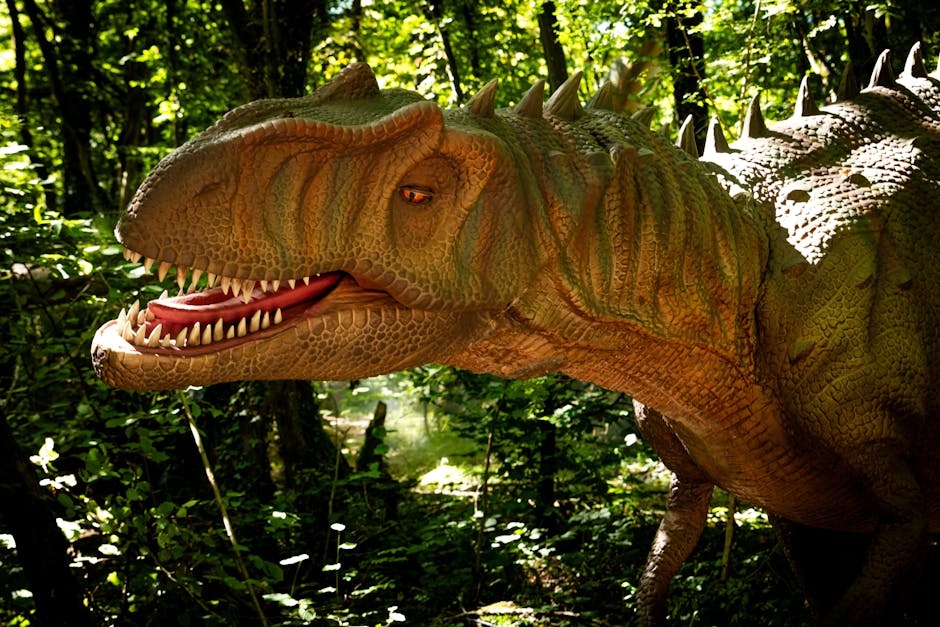

Did You Know? 15 Facts About Extinct Animals

Did You Know? 15 Facts About Extinct Animals

⏱️ 7 min read

The history of life on Earth is marked by countless species that once roamed our planet but have since disappeared forever. While extinction is a natural part of evolution, studying these lost creatures offers fascinating insights into biodiversity, adaptation, and the delicate balance of ecosystems. From massive prehistoric beasts to recently vanished species, extinct animals continue to capture our imagination and teach us valuable lessons about conservation. Here are fifteen remarkable facts about animals that no longer walk, swim, or fly among us.

Fascinating Discoveries About Lost Species

1. The Dodo Bird Wasn't Actually Stupid

Contrary to popular belief and the phrase "dumb as a dodo," these flightless birds from Mauritius were well-adapted to their environment. The dodo had no natural predators on its island home, so it didn't need to fear ground-dwelling threats. It was human arrival in the 1500s, along with introduced species like rats and pigs, that led to their extinction by 1681. Recent studies of dodo brain cases suggest these birds had relatively large brains for their body size, comparable to modern pigeons.

2. Woolly Mammoths Survived Until the Pyramids Were Built

While most woolly mammoths died out around 10,000 years ago, a small population survived on Wrangel Island in the Arctic Ocean until approximately 4,000 years ago. This means these magnificent creatures were still alive when the ancient Egyptians were constructing the Great Pyramid of Giza. The isolated island population likely succumbed to genetic problems from inbreeding and environmental changes rather than human hunting.

3. The Thylacine Had a Pouch Despite Being a Carnivore

The Tasmanian tiger, or thylacine, was a remarkable marsupial predator that went extinct in 1936. Unlike most carnivorous mammals, both male and female thylacines had pouches. The female's pouch opened to the rear and could hold up to four young, while males had a protective pouch covering their external reproductive organs. This apex predator could open its jaws to an incredible 120-degree angle, far wider than any modern dog or wolf.

4. Passenger Pigeons Darkened the Sky for Days

Once the most abundant bird in North America, passenger pigeon flocks were so enormous they could take three days to pass overhead and would literally darken the skies. Estimates suggest up to five billion of these birds existed in the early 1800s. Despite their incredible numbers, relentless hunting and habitat destruction drove them to extinction by 1914, when the last known individual, Martha, died at the Cincinnati Zoo.

5. The Megalodon's Teeth Were Larger Than Human Hands

The megalodon, an ancient shark that lived 23 to 3.6 million years ago, possessed teeth that measured over seven inches in length. These massive predators grew to estimated lengths of 50 to 60 feet, roughly three times the size of today's great white sharks. Scientists believe they preyed on whales and had a bite force of up to 40,000 pounds per square inch, making it one of the most powerful predators ever to exist.

6. Steller's Sea Cow Was Hunted to Extinction in Just 27 Years

Discovered in 1741 by European explorers in the Bering Sea, Steller's sea cow was a massive marine mammal reaching up to 30 feet long and weighing up to 11 tons. These gentle giants were slow-moving, peaceful herbivores that fed on kelp. Their docile nature, inability to dive, and delicious meat made them easy targets for hunters. By 1768, just 27 years after their discovery by Western science, they were completely extinct.

7. Irish Elk Weren't Elk and Weren't Exclusively Irish

Despite its name, the Irish elk was actually the largest deer species ever to exist, with antlers spanning up to 12 feet across and weighing up to 88 pounds. These magnificent creatures lived across Europe, Asia, and North Africa during the Pleistocene epoch. Their enormous antlers, while impressive for display and competition, may have contributed to their extinction around 7,700 years ago as forests became denser after the Ice Age.

8. The Quagga Was a Partially Striped Zebra

The quagga was a subspecies of plains zebra that had stripes only on the front portion of its body, while its hindquarters were solid brown. Native to South Africa, these unique animals were heavily hunted for their hides and to preserve grazing land for domestic livestock. The last wild quagga was shot in 1878, and the last captive specimen died in Amsterdam in 1883. Interestingly, a selective breeding program called the Quagga Project has been attempting to recreate their appearance from plains zebras.

9. Giant Ground Sloths Could Weigh as Much as Elephants

Prehistoric ground sloths, such as Megatherium, reached truly staggering proportions, with some species weighing up to four tons and standing over 20 feet tall on their hind legs. Unlike their small, tree-dwelling modern relatives, these creatures walked on the ground and used their powerful claws to pull down tree branches. They went extinct around 10,000 years ago, possibly due to climate change and human hunting pressure.

10. The Moa Birds Were Hunted by Giant Eagles

New Zealand's moa birds were massive, flightless birds that stood up to 12 feet tall and weighed up to 500 pounds. Before human arrival, their only predator was the equally impressive Haast's eagle, the largest eagle ever known, with a wingspan exceeding 10 feet. When Polynesian settlers arrived around 1300 CE and hunted the moa to extinction by 1400 CE, the Haast's eagle also disappeared, having lost its primary food source.

11. Saber-Toothed Cats Had Weak Bites Despite Impressive Teeth

The iconic Smilodon, commonly known as the saber-toothed cat, possessed impressive canine teeth up to seven inches long, yet had a relatively weak bite force compared to modern big cats. Research suggests they used their powerful neck muscles to drive their teeth into prey rather than relying on jaw strength alone. These impressive predators went extinct around 10,000 years ago during the late Pleistocene extinctions.

12. The Great Auk Was the Original Penguin

The great auk, a flightless seabird from the North Atlantic, was actually the original bird to be called a "penguin." When explorers later encountered similar-looking flightless birds in the Southern Hemisphere, they applied the same name, which stuck. Great auks stood about 30 inches tall and were excellent swimmers. They were hunted extensively for their feathers, meat, and fat, with the last confirmed pair killed in Iceland in 1844.

13. Gigantopithecus Was the Largest Primate Ever

Gigantopithecus blacki, which lived in Southeast Asia until around 100,000 years ago, was an enormous ape that stood up to 10 feet tall and weighed up to 1,200 pounds. Known only from fossil jaw bones and teeth, scientists believe these massive primates were herbivores that primarily ate bamboo, similar to modern giant pandas. Climate change and competition with more adaptable species like early humans likely contributed to their extinction.

14. Caribbean Monk Seals Were the Only Tropical Seals

The Caribbean monk seal was the only seal species native to the Caribbean Sea and Gulf of Mexico. Christopher Columbus documented encountering large populations during his voyages, calling them "sea wolves." Intensive hunting for their oil, fur, and meat, combined with their tameness around humans, led to their rapid decline. The last confirmed sighting was in 1952, and they were officially declared extinct in 2008.

15. The Baiji River Dolphin Was Known as the Goddess of the Yangtze

The baiji, or Yangtze River dolphin, was one of only a handful of freshwater dolphin species and was revered in Chinese culture as the "Goddess of the Yangtze." These nearly blind dolphins relied on echolocation to navigate the murky river waters. Despite being declared a national treasure, industrialization, dam construction, pollution, and boat traffic drove them to functional extinction by 2006, making them the first dolphin species driven to extinction by human activity.

Learning From the Past

These fifteen facts reveal the incredible diversity of life that once existed on our planet and the various factors that led to these species' disappearances. While some extinctions occurred due to natural climate changes and evolutionary pressures, human activity has accelerated extinction rates dramatically. From the passenger pigeon's rapid decline despite numbering in the billions to the baiji's recent disappearance in our own lifetime, these stories serve as powerful reminders of our responsibility to protect the biodiversity that remains. Understanding extinct animals helps us appreciate the fragility of ecosystems and the importance of conservation efforts to prevent more species from joining this list of lost creatures.