
1 / 10 Questions
0 Points

The Aroostook War of 1838-1839 was a bloodless border dispute between the U.S. and which country?

Canada/Great Britain

Spain

Mexico

France

Points won
0
Correct score
0%

More questions

More Articles

Did You Know? 12 Shocking Stories About Leonardo da Vinci

Did You Know? 12 Shocking Stories About Leonardo da Vinci

⏱️ 7 min read

Leonardo da Vinci remains one of history's most enigmatic figures, celebrated as the quintessential Renaissance man. While most people know him as the painter of the Mona Lisa and The Last Supper, the depths of his genius and the peculiarities of his life story contain numerous surprising elements that challenge our conventional understanding of this master artist and inventor. From his unconventional habits to his groundbreaking discoveries that went unrecognized for centuries, these lesser-known aspects of Leonardo's life reveal a complex individual far ahead of his time.

Remarkable Revelations About the Renaissance Master

1. The Self-Taught Genius Who Never Attended University

Despite becoming one of the most brilliant minds in human history, Leonardo da Vinci never received a formal university education. Born out of wedlock in 1452, his illegitimate status barred him from attending university or joining prestigious guilds. Instead of formal schooling, he received basic education in reading, writing, and mathematics at home. This lack of traditional academic training actually liberated Leonardo from rigid classical thinking, allowing him to develop his own methods of observation and investigation. He famously called himself "an unlettered man," yet this self-education enabled him to approach problems with fresh perspectives that formally trained scholars might have missed.

2. The Mirror Writing Mystery

Leonardo wrote nearly all his notes backward, from right to left, creating mirror writing that could only be read easily when held up to a mirror. His notebooks contain approximately 13,000 pages of reversed text, a practice he maintained throughout his life. While some historians suggest this was to keep his ideas secret or prevent smudging since he was left-handed, others believe it was simply more natural for him. This peculiar habit has led to centuries of speculation about whether Leonardo was deliberately encrypting his work or if this was merely his preferred method of writing.

3. The Unfinished Masterpiece Epidemic

Leonardo possessed a chronic inability to complete projects, leaving an astounding number of works unfinished. Of the fewer than twenty paintings attributed to him, many were never completed. His perfectionism and constantly evolving ideas meant he would often abandon projects when they no longer interested him or when he discovered new techniques he wanted to explore. This tendency frustrated patrons and clients throughout his career, yet ironically, some of his unfinished works are now considered masterpieces, offering unique insights into his creative process.

4. The Vegetarian Who Dissected Corpses

Leonardo was known for his compassion toward animals and likely followed a vegetarian diet, reportedly purchasing caged birds just to set them free. Yet this same man conducted extensive human dissections, examining over thirty corpses throughout his lifetime. He created the most detailed anatomical drawings of his era, documenting muscles, organs, and skeletal structures with unprecedented accuracy. This paradox highlights Leonardo's complex character—simultaneously tender-hearted and scientifically ruthless in his pursuit of knowledge about the human body.

5. The Design for the First Robot

In 1495, Leonardo sketched plans for a mechanical knight that could sit up, wave its arms, and move its head. This "robot" was designed to be powered by a system of pulleys and cables, making it one of the first known designs for a humanoid automaton. When engineers built the robot according to Leonardo's specifications in modern times, they discovered his design actually worked. This invention predated the concept of robotics by centuries and demonstrated Leonardo's extraordinary understanding of mechanics and anatomy combined.

6. The Procrastination That Lasted Sixteen Years

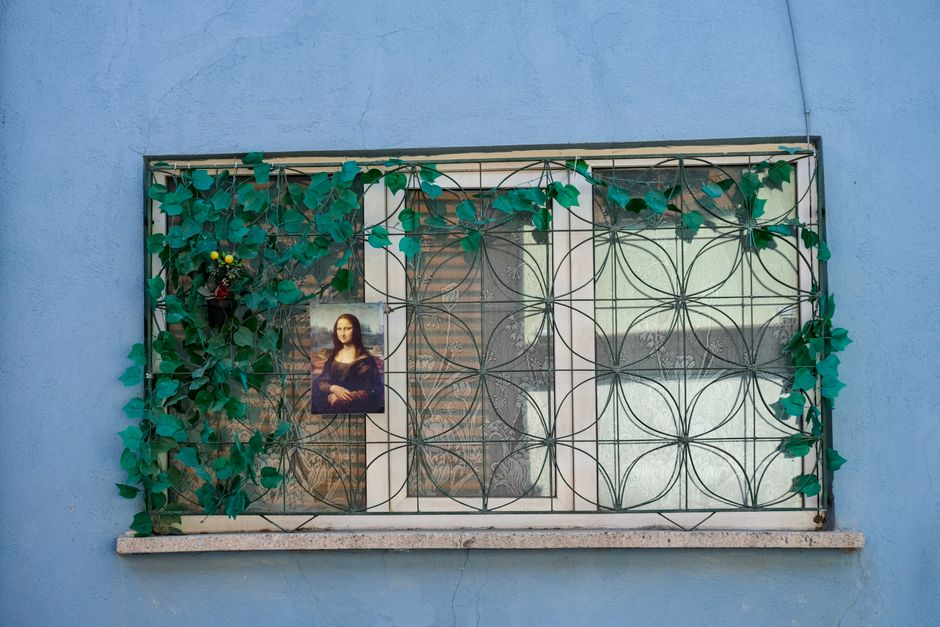
The Mona Lisa, arguably the world's most famous painting, was never delivered to the person who commissioned it. Leonardo began the portrait around 1503 and carried it with him for approximately sixteen years, continuously making tiny adjustments and refinements until his death in 1519. He never considered it finished and never gave it to Francesco del Giocondo, the Florentine merchant who commissioned the portrait of his wife. This obsessive perfectionism meant the painting remained Leonardo's personal possession throughout his life.

7. The Military Weapons Designer for Hire

While celebrated for his art and scientific pursuits, Leonardo actively sought work as a military engineer, designing devastating weapons of war. His notebooks contain detailed plans for machine guns, tanks, submarines, and even poison gas weapons. When applying for a position with the Duke of Milan, Leonardo's letter emphasized his military engineering capabilities over his artistic skills, listing ten ways he could create weapons and fortifications, and only briefly mentioning his abilities as a painter and sculptor at the end.

8. The Discovery of Hardening Arteries

Through his meticulous dissections, Leonardo became the first person to describe atherosclerosis—the hardening and narrowing of arteries. He observed this condition in an elderly man who died peacefully, noting the unusual state of the blood vessels. His drawings and notes on the circulatory system were remarkably accurate, yet remained hidden in private collections for centuries, meaning his discoveries went unrecognized and had to be rediscovered by later scientists.

9. The Allegations of Scandalous Behavior

At age twenty-four, Leonardo was arrested along with three other men on charges of sodomy, then illegal in Florence. The charges were eventually dropped, possibly due to the involvement of someone from a prominent family, but the accusation appeared twice in the official records. Leonardo never married and formed intense emotional attachments to his male students and assistants, particularly Gian Giacomo Caprotti, whom he nicknamed Salaì (little devil) despite the young man's reputation for theft and mischief.

10. The Battlefield Commission That Changed Art

Leonardo was commissioned to paint a massive battle scene, The Battle of Anghiari, on a wall in Florence's Palazzo Vecchio, directly opposite where Michelangelo would paint another battle scene. This unprecedented competition between two titans of Renaissance art never came to full fruition. Leonardo experimented with an ancient Roman encaustic painting technique that failed disastrously when he tried to dry the paint with braziers—the wax-based paint melted and ran down the wall. The ruined work was eventually painted over, though some believe traces may still exist beneath later frescoes.

11. The Accurate Geological Observations Dismissed for Centuries

While examining fossils in the Italian mountains, Leonardo correctly deduced that these shells and marine fossils proved that these mountains were once underwater. He rejected the common biblical flood explanation and understood that geological processes required vast amounts of time. These insights anticipated modern geology by centuries, but his notebooks weren't published until long after his death, meaning his geological insights, like many of his scientific discoveries, had no impact on the advancement of science during his era.

12. The Death Far from Home

Leonardo spent his final years not in Italy, but in France, where King Francis I invited him to live in a manor house near the royal château. The French king so valued Leonardo's genius that he gave him complete freedom to pursue any interests without requiring specific works in return. Leonardo died in Amboise, France, in 1519 at age sixty-seven, allegedly in the arms of the king himself, though this romantic story is likely apocryphal. He was buried in a French church that was later destroyed during the French Revolution, and the exact location of his remains is now unknown.

The Enduring Legacy of an Extraordinary Mind

These twelve revelations about Leonardo da Vinci illuminate the remarkable contradictions and complexities of a man whose genius transcended the boundaries of his era. From his humble beginnings as an illegitimate son barred from formal education to his final years as the honored guest of a king, Leonardo's life journey defied convention at every turn. His inability to complete projects, paradoxical nature as both gentle animal lover and anatomical investigator, and discoveries that went unrecognized for centuries paint a picture of someone perpetually at odds with his own time. Understanding these lesser-known aspects of his life enriches our appreciation not only of his famous artworks but of the restless, curious mind that produced them—a mind that continues to inspire and intrigue us more than five hundred years after his death.

Top 10 Facts About Ancient Cave Paintings

Top 10 Facts About Ancient Cave Paintings

⏱️ 7 min read

Ancient cave paintings represent humanity's earliest known artistic expressions, offering a fascinating window into the minds and lives of our prehistoric ancestors. These remarkable works of art, created tens of thousands of years ago, continue to captivate archaeologists, art historians, and the general public alike. From the techniques used to create them to the meanings they may have conveyed, cave paintings reveal surprising sophistication and universal human impulses that transcend time.

Extraordinary Facts About Prehistoric Art

1. The Oldest Known Cave Art Dates Back Over 45,000 Years

The most ancient cave paintings discovered to date are found in Indonesia, specifically in the caves of Sulawesi. In 2019, researchers confirmed that a hunting scene depicting human-like figures and animals is at least 43,900 years old, making it the oldest known figurative artwork. However, even older non-figurative cave art exists, with hand stencils and abstract markings in Spain's El Castillo cave dating back approximately 40,800 years. Some red disks found in Spanish caves may be as old as 64,000 years, though debate continues about whether these were created by Neanderthals or modern humans. These discoveries continually push back our understanding of when artistic expression first emerged in human evolution.

2. Prehistoric Artists Created Their Own Sophisticated Pigments

Cave painters demonstrated remarkable chemical knowledge by manufacturing their own pigments from natural materials. Red and yellow ochres were created from iron oxide minerals, while black came from manganese dioxide or charcoal. White was derived from clay or ground calcite. These materials were carefully ground into powder and mixed with binding agents such as animal fat, bone marrow, blood, or plant resins to create paint that would adhere to cave walls. Some pigments have survived for millennia because of the stable chemical composition and the protected environment of deep caves. Analysis of these ancient paints reveals that prehistoric artists understood material properties and developed recipes that could be replicated and passed down through generations.

3. Multiple Application Techniques Were Used

Ancient artists employed various sophisticated methods to apply their pigments to cave walls. Some paintings were created by blowing pigment through hollow bones or reeds, essentially creating an early form of spray painting. Others used brushes made from animal hair, twigs, or chewed sticks. Fingers were also commonly used for direct application, and in some cases, artists used pads made from moss or fur. Hand stencils, created by placing a hand on the wall and blowing pigment around it, are particularly common and create haunting negative images. The choice of technique often depended on the desired effect, the surface texture of the cave wall, and the available tools.

4. Animals Dominate Cave Painting Subject Matter

The vast majority of cave paintings depict animals, with horses, bison, aurochs, deer, and mammoths being the most frequently represented species. Interestingly, the animals depicted were not always the ones most commonly hunted for food, suggesting that these paintings served purposes beyond simple documentation of daily life. Predators like lions, bears, and hyenas appear less frequently but are present in significant numbers at certain sites. The animals are often rendered with remarkable anatomical accuracy and dynamic movement, indicating close observation and intimate knowledge of animal behavior. This focus on fauna provides valuable information about which species coexisted with prehistoric humans and how these populations viewed the animal world around them.

5. Human Figures Are Surprisingly Rare and Abstract

While animals are depicted with great realism and detail, human figures in cave art are relatively uncommon and typically rendered in a much more abstract or simplified manner. When humans do appear, they are often shown as stick figures or anthropomorphic shapes that combine human and animal features. This stark contrast between the realistic portrayal of animals and the schematic representation of humans has puzzled researchers for decades. Some theories suggest this indicates a different spiritual or conceptual relationship with animals, while others propose that depicting humans realistically may have been taboo. The few detailed human representations that do exist often show people engaged in hunting or ritual activities.

6. Deep Cave Locations Suggest Ritualistic Purpose

Many cave paintings are located in extremely difficult-to-reach areas, deep within cave systems where prehistoric people did not live. Some paintings are found in chambers that require crawling through narrow passages or navigating dangerous underground terrain. The famous Lascaux cave paintings in France, for example, are located far from the cave entrance in areas with no natural light. This deliberate choice of location suggests that creating and viewing these paintings was part of ritualistic or ceremonial activities rather than casual decoration of living spaces. The acoustic properties of some painted chambers also indicate they may have been chosen for sound quality, possibly for accompanying rituals with chanting or music.

7. Evidence of Shamanic Practices Appears in Cave Art

Certain elements within cave paintings suggest connections to shamanic practices and altered states of consciousness. Therianthropes—figures combining human and animal characteristics—appear in several important cave art sites and may represent shamans in ritual transformation. Geometric patterns, including dots, grids, and zigzags, are also common and resemble entoptic phenomena that people experience during trance states. Some researchers propose that these abstract symbols represent visions seen during shamanic journeys induced by rhythmic drumming, sensory deprivation in dark caves, or possibly psychoactive substances. These theories remain debated, but they offer intriguing possibilities for understanding the spiritual dimensions of prehistoric art.

8. The Same Caves Were Used Across Thousands of Years

Archaeological evidence shows that certain caves were revisited and painted over enormous spans of time, sometimes across 20,000 years or more. Different layers of artwork, created by successive generations separated by millennia, overlap in some locations. This pattern suggests that specific sites held enduring sacred or cultural significance that transcended individual cultures and time periods. The consistency of artistic themes across these vast timescales indicates that certain traditions and knowledge systems were remarkably stable and were passed down through countless generations. This long-term use also demonstrates that prehistoric societies had sophisticated methods of cultural transmission and memory preservation.

9. Climate and Environment Are Recorded in the Artwork

Cave paintings serve as valuable records of past climates and ecosystems, depicting species that no longer exist or no longer inhabit the regions where they were painted. Images of woolly mammoths, woolly rhinoceroses, and other Ice Age megafauna provide evidence of the animals that roamed Europe during the Pleistocene epoch. Changes in the species depicted over time can indicate shifting climatic conditions and the resulting transformations in local fauna. Some paintings show vegetation and landscape features that help researchers reconstruct ancient environments. This artistic record complements other archaeological and geological evidence, offering unique insights into how prehistoric humans experienced and adapted to dramatic environmental changes.

10. Modern Technology Continues to Reveal New Discoveries

Advanced imaging techniques and scientific analysis methods are revolutionizing our understanding of cave art. Multispectral imaging can reveal faded or hidden layers of pigment invisible to the naked eye, uncovering previously unknown paintings or earlier versions beneath visible artwork. Three-dimensional scanning creates detailed models that allow researchers to study the relationship between painted images and the natural contours and textures of cave walls. Radiocarbon dating of organic materials in pigments provides increasingly precise age estimates. DNA analysis of saliva in blown pigment can even identify individual artists. These technologies continue to yield surprising discoveries, including new caves, previously undetected artwork in known sites, and refined understanding of ancient artistic techniques and materials.

Conclusion

Ancient cave paintings represent far more than simple decorations or primitive doodling. These sophisticated artworks demonstrate that our prehistoric ancestors possessed complex symbolic thinking, advanced technical skills, and rich spiritual lives. From the carefully manufactured pigments to the deliberate selection of remote locations, every aspect of cave art reflects intentional choices and deep cultural meanings. Whether serving shamanic rituals, recording observations of the natural world, or fulfilling purposes we have yet to understand, these paintings connect us to the earliest expressions of human creativity. As modern technology continues to unlock their secrets, cave paintings remind us that the impulse to create art and communicate through visual symbols is fundamental to human nature, transcending tens of thousands of years of cultural and technological change.