









1 / 10 Questions
0 Points

Which ancient civilization revered chocolate as 'the food of the gods'?

The Romans

The Egyptians

The Aztecs

The Greeks

Points won
0
Correct score
0%

More questions

More Articles

Did You Know? 12 Mind-Blowing Details About Celebrity Superstitions

Did You Know? 12 Mind-Blowing Details About Celebrity Superstitions

⏱️ 6 min read

From Hollywood A-listers to chart-topping musicians, even the most successful celebrities harbor quirky beliefs and rituals that might surprise their fans. These superstitions often play a significant role in their daily routines, performances, and career decisions. Whether rooted in cultural traditions, personal experiences, or pure coincidence, these fascinating habits reveal the human side of fame and the lengths stars will go to ensure success and ward off bad luck.

The Fascinating World of Celebrity Superstitions

Jennifer Aniston's Pre-Flight Aviation Ritual

Before boarding any aircraft, Jennifer Aniston performs a specific ritual that has become non-negotiable in her travel routine. The beloved actress taps the outside of the plane with her right foot before entering, believing this simple act ensures a safe flight. Aniston has openly discussed this practice in interviews, explaining that it brings her peace of mind during air travel. This superstition has become so ingrained in her routine that she feels genuinely uncomfortable if circumstances prevent her from performing it.

Serena Williams' Tennis Tournament Uniform Strategy

Tennis champion Serena Williams takes her competition superstitions to an extraordinary level. When she's on a winning streak during tournaments, Williams refuses to change her socks throughout the entire event. Additionally, she follows the same shower routine, ties her shoelaces in an identical pattern, and bounces the ball exactly five times before her first serve and twice before her second. These rituals have accompanied her through countless Grand Slam victories, making her one of the most superstitious athletes in professional sports.

Heidi Klum's Carefully Preserved Baby Teeth Collection

Supermodel and television personality Heidi Klum maintains an unusual keepsake that goes beyond typical sentimental memorabilia. She keeps a bag containing all of her baby teeth, which she carries with her regularly. Klum believes these teeth serve as good luck talismans, connecting her to her childhood and bringing positive energy into her professional endeavors. She has mentioned that parting with this collection would feel like losing a piece of her identity and fortune.

Benicio del Toro's Fear of Purple

Academy Award-winning actor Benicio del Toro harbors an intense aversion to the color purple, refusing to wear it or be near it whenever possible. This superstition reportedly stems from cultural beliefs about purple being an unlucky color, particularly in theatrical and film contexts. Del Toro has requested that purple items be removed from film sets and has declined costume choices featuring the color, demonstrating how deeply this belief influences his professional choices.

Taylor Swift's Numerological Obsession with 13

While most people consider 13 an unlucky number, Taylor Swift has embraced it as her personal lucky charm. Born on December 13, she turned 13 on Friday the 13th, and her first album went gold in 13 weeks. Swift writes the number 13 on her hand before performances, and many of her significant life events have connections to this number. She has incorporated the number into her music, performances, and social media presence, transforming what many consider unlucky into her signature symbol of good fortune.

John Mayer's Pre-Performance Dinner Requirement

Grammy-winning musician John Mayer follows a strict pre-show meal ritual that he believes directly impacts his performance quality. He must eat at a specific Japanese restaurant chain before concerts whenever possible. When touring in cities without this restaurant, Mayer has been known to have food specially delivered or seeks out the closest alternative that matches his requirements. He credits this routine with keeping his voice in optimal condition and maintaining his performance energy levels.

Megan Fox's Obsessive Listening Habits

Actress Megan Fox has revealed that she must listen to Britney Spears' music before any important event, audition, or significant moment in her life. Fox believes that this ritual brings her confidence and positive energy. She has described feeling genuinely anxious when unable to perform this pre-event listening session, suggesting that the practice has become psychologically essential to her preparation process.

Michael Jordan's College Shorts Tradition

Basketball legend Michael Jordan maintained one of the most famous superstitions in sports history throughout his professional career. He wore his University of North Carolina shorts underneath his Chicago Bulls uniform during every single game. Jordan believed these shorts brought him luck and connected him to his college success. This practice required him to wear longer NBA shorts to conceal his college gear, inadvertently influencing basketball fashion trends that made longer shorts popular throughout the league.

Cameron Diaz's Doorknob Cleaning Compulsion

Actress Cameron Diaz has discussed her superstitious behavior regarding doorknobs, which she cleans multiple times daily. While partially rooted in germophobia, Diaz has explained that she also believes this practice wards off negative energy and bad luck. She has worn down the paint on doorknobs in her home due to repeated cleaning, demonstrating the intensity of this particular superstition. Diaz sees this ritual as both a physical and spiritual cleansing practice.

Björk's Icelandic Elf Consultation Practice

Icelandic singer Björk embraces her homeland's folklore by consulting with elf experts before making major decisions. In Iceland, belief in hidden people or elves remains culturally significant, and Björk has publicly discussed seeking guidance about elf habitats before construction projects. She takes these consultations seriously, viewing them as a way to maintain harmony with nature and unseen forces. This practice reflects deeper Icelandic cultural beliefs rather than mere personal quirk.

Adele's Pre-Concert Acupuncture Sessions

British superstar Adele never performs without first undergoing acupuncture treatment. She believes this practice not only prepares her voice but also aligns her energy and brings good luck to her performances. Adele has traveled with her acupuncturist on tours and credits these sessions with helping her manage performance anxiety while ensuring vocal success. She has described feeling incomplete and unprepared for shows without this ritual.

Lucille Ball's Colored Stone Magic

Comedy legend Lucille Ball carried colored stones with her at all times, believing each stone possessed specific powers to influence different aspects of her life and career. She would select particular stones before auditions, performances, and important meetings based on what she felt she needed that day—confidence, creativity, or protection. Ball's stone collection was extensive, and she studied their supposed properties meticulously, treating this practice with genuine reverence throughout her groundbreaking career.

The Psychology Behind Celebrity Superstitions

These remarkable superstitions demonstrate that even highly successful individuals seek comfort in rituals and beliefs that provide psychological security. Whether these practices actually influence outcomes or simply provide mental reassurance, they reveal the universal human need for control in unpredictable situations. Celebrities face immense pressure and scrutiny, making these personal rituals valuable tools for managing anxiety and maintaining consistency in their demanding careers. Understanding these superstitions offers insight into how fame affects personal psychology and the creative coping mechanisms that emerge from life in the spotlight.
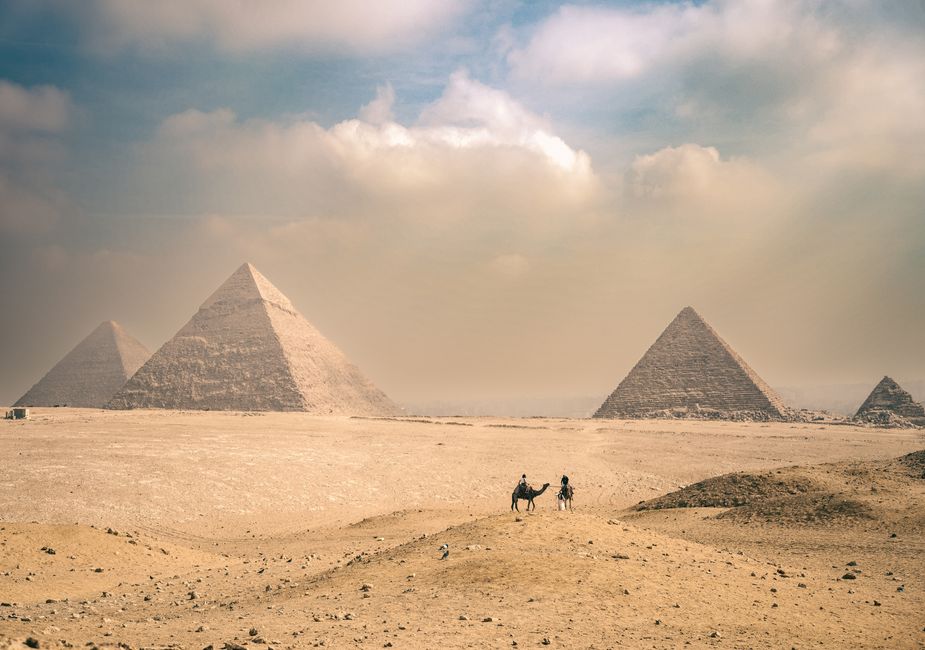

Did You Know? 15 Bizarre Phenomena About Great Pyramids

Did You Know? 15 Bizarre Phenomena About Great Pyramids

⏱️ 7 min read

The Great Pyramids of Giza have captivated humanity for millennia, standing as monumental testaments to ancient Egyptian engineering and ambition. While most people know these structures as royal tombs built around 4,500 years ago, they harbor numerous peculiarities that continue to baffle scientists, historians, and visitors alike. From their precise astronomical alignments to their mysterious acoustic properties, these ancient wonders exhibit characteristics that challenge our understanding of what ancient civilizations could achieve. The following phenomena demonstrate why the Great Pyramids remain among the most enigmatic structures ever constructed.

Extraordinary Characteristics of the Ancient Wonders

The Perfect Pi Ratio

The Great Pyramid of Khufu demonstrates an uncanny mathematical relationship: when its original height is divided by twice its base length, the result approximates pi (3.14159) to remarkable accuracy. This ratio of 280 cubits in height to a base of 440 cubits produces 3.1428, astonishingly close to pi despite the ancient Egyptians having no documented knowledge of this mathematical constant. Whether this represents intentional design or extraordinary coincidence remains hotly debated among scholars.

Temperature Regulation Mystery

The interior chambers of the Great Pyramid maintain a constant temperature of 20 degrees Celsius (68 degrees Fahrenheit), regardless of the scorching desert heat outside or cooler nighttime temperatures. This natural climate control occurs without any modern ventilation systems, suggesting the ancient builders possessed sophisticated understanding of thermodynamics and airflow that allowed the structure to function as a massive temperature regulator.

The Missing Capstone Enigma

All three major pyramids at Giza are missing their pyramidions—the capstones that would have crowned their peaks. Historical records and archaeological evidence provide no definitive explanation for their absence. Some theories suggest they were made of gold or electrum and were stolen, while others propose they were never actually placed, leaving one of history's most prominent architectural mysteries unsolved.

Swivel Door Technology

Ancient engineers installed massive swivel doors at the pyramid entrances weighing approximately 20 tons each. Despite their enormous weight, these doors were so perfectly balanced on pivot points that they could be opened from the inside with minimal force—just a light push. From the outside, however, they were nearly impossible to detect, as the seams blended seamlessly with the surrounding stone. This sophisticated mechanism demonstrates remarkable engineering precision that would be impressive even by modern standards.

Mortar Stronger Than Stone

The mortar used to bind the pyramid blocks together has been analyzed by modern scientists and found to be stronger than the limestone blocks themselves. Despite knowing its chemical composition, researchers have been unable to reproduce this ancient cement. The mortar's superior strength has contributed significantly to the pyramids' survival through millennia of earthquakes, weathering, and other destructive forces.

Astronomical Alignment Precision

The four sides of the Great Pyramid align almost perfectly with the four cardinal directions—north, south, east, and west—with an error margin of only 3/60th of a single degree. Achieving this level of precision required sophisticated astronomical observations and surveying techniques. This alignment suggests the ancient Egyptians possessed advanced knowledge of celestial mechanics and possessed instruments capable of incredibly accurate measurements.

The Eight-Sided Phenomenon

Aerial photography has revealed that the Great Pyramid is not actually four-sided but eight-sided. Each of the four faces is slightly concave, creating a subtle indentation visible only from the air and only under specific lighting conditions, particularly during the spring and autumn equinoxes. This architectural feature may have served astronomical purposes or helped with structural stability, though its exact function remains unclear.

Lightning Rod Properties

The pyramids' shape and limestone composition create natural electrical properties. The structures can concentrate electromagnetic energy in their internal chambers and beneath their base. During thunderstorms, the pyramids effectively function as primitive lightning rods, with their pointed apex attracting and dissipating electrical charges. This phenomenon has led to speculation about whether the ancient builders understood and intentionally utilized these electrical properties.

Acoustic Anomalies

The King's Chamber exhibits strange acoustic properties that create unusual resonance effects. When sounds are produced in this chamber, particularly at certain frequencies around 16 Hz, the entire room vibrates in ways that modern acoustic engineers find remarkable. Some researchers suggest this may have been intentional, designed for ritualistic purposes or possibly even for altered states of consciousness during ceremonies.

Construction Speed Impossibility

According to conventional chronology, the Great Pyramid was completed in approximately 20 years. This would have required placing one 2.5-ton block every 2-3 minutes, working 24 hours a day, every day for two decades. Even with a large workforce, this pace seems virtually impossible using only copper tools, wooden sledges, and human labor—the technology attributed to ancient Egyptians of that era.

The Unexplained Shafts

Four narrow shafts extend from the King's and Queen's chambers, two from each. While initially thought to be ventilation shafts, they don't actually provide ventilation in the conventional sense. These passages point toward specific stars—the King's Chamber shafts aimed at Orion and Alpha Draconis, while the Queen's Chamber shafts pointed at Sirius and Beta Ursa Minor. Their true purpose remains one of Egyptology's enduring puzzles, with theories ranging from symbolic pathways for the pharaoh's soul to astronomical observation tools.

Orion Correlation Theory

The three pyramids of Giza align remarkably well with the three stars of Orion's Belt when viewed from above. This correlation extends beyond simple positioning—even the relative sizes and offset position of the pyramids mirror the brightness and alignment of these celestial bodies. This alignment may reflect the ancient Egyptian belief that their pharaohs would join Osiris (associated with Orion) in the afterlife.

Weight Distribution Mastery

The internal structure features relieving chambers above the King's Chamber—massive granite blocks arranged to distribute the pyramid's enormous weight away from the burial chamber below. This sophisticated engineering prevented the chamber from collapsing under millions of tons of stone. The precision of these weight-bearing structures demonstrates advanced understanding of physics and structural engineering.

Original White Limestone Casing

The pyramids were originally covered in highly polished white Tura limestone casing stones that reflected the sun's rays, making them visible from extraordinary distances. These casing stones were cut so precisely that a knife blade could not fit between them. When intact, the pyramids would have gleamed brilliantly across the desert landscape, serving as massive beacons visible for miles. Most of these outer stones were later removed to build other structures in Cairo.

The Subterranean Chamber Puzzle

Deep beneath the Great Pyramid lies an unfinished chamber carved directly into the bedrock. This mysterious room features a strange pit and passages that lead nowhere, all left in various states of completion. Why this chamber was abandoned mid-construction, what its intended purpose was, and why the builders subsequently created chambers higher in the pyramid structure remains unknown, adding another layer of mystery to these already enigmatic structures.

Conclusion

The Great Pyramids continue to challenge our assumptions about ancient civilizations' capabilities and knowledge. These fifteen bizarre phenomena—from mathematical precision to acoustic anomalies, from astronomical alignments to engineering feats—demonstrate that these structures are far more complex than simple royal tombs. Whether examining their perfect proportions, mysterious chambers, or sophisticated construction techniques, the pyramids consistently reveal new layers of sophistication that blur the lines between ancient wisdom and seemingly impossible achievement. As modern technology enables ever more detailed analysis, these monuments may yet reveal secrets that further transform our understanding of human history and capability. The Great Pyramids stand not merely as relics of the past but as enduring puzzles that continue to inspire wonder, investigation, and debate about what our ancestors knew and accomplished thousands of years ago.