
⏱️ 6 min read
Museums serve as cultural treasures that preserve humanity’s greatest artistic achievements and historical legacies. From ancient artifacts to contemporary masterpieces, these institutions house collections that attract millions of visitors annually. Behind their grand facades and carefully curated exhibitions lie fascinating stories, architectural marvels, and surprising secrets that many visitors never discover. These remarkable facts reveal the extraordinary nature of the world’s most celebrated museums and their invaluable contributions to preserving our cultural heritage.
Remarkable Discoveries About Iconic Cultural Institutions
1. The Louvre’s Transformation from Medieval Fortress to Art Palace
The Louvre Museum in Paris, now the world’s most visited art museum, began its existence in the late 12th century as a medieval fortress built by King Philip II. The original fortress walls and moat can still be viewed in the museum’s basement. Over eight centuries, it evolved through various incarnations as a royal residence before officially becoming a public museum in 1793 during the French Revolution. Today, the Louvre spans 782,910 square feet of gallery space and would take approximately 100 days to view every piece if spending just 30 seconds on each artwork. The museum’s collection contains approximately 380,000 objects, though only about 35,000 are on display at any given time.
2. The Hermitage Museum’s Army of Feline Guards
The State Hermitage Museum in St. Petersburg, Russia, maintains an official staff of approximately 70 cats that patrol the museum’s basements and grounds. This tradition dates back to 1745 when Empress Elizabeth declared cats should guard the palace against rodents. Each cat has a passport, receives veterinary care, and is cared for by museum staff. These feline employees have become such an integral part of the institution that the museum celebrates an annual “Day of the Hermitage Cat” each spring, opening certain areas to visitors who want to meet these unusual staff members.
3. The Metropolitan Museum’s Rooftop Secret Garden
The Metropolitan Museum of Art in New York City features a rooftop garden that transforms into an outdoor sculpture exhibition space each year from spring through fall. This 8,000-square-foot cantilevered rooftop garden offers stunning views of Central Park and the Manhattan skyline while showcasing contemporary art installations. The space wasn’t always accessible to the public; it opened as an exhibition area in 1987 and has since become one of the museum’s most popular seasonal attractions, hosting specially commissioned works by leading contemporary artists.
4. The British Museum’s Reading Room Literary Legacy
The British Museum’s famous circular Reading Room, designed by Sydney Smirke and completed in 1857, served as the workspace for some of history’s most influential thinkers and writers. Karl Marx wrote “Das Kapital” here, while other notable readers included Oscar Wilde, Virginia Woolf, Mahatma Gandhi, and Arthur Conan Doyle. The dome spanning 140 feet in diameter was the second-largest in the world after the Pantheon in Rome when constructed. The Reading Room contained over 25 miles of bookshelves arranged on three levels around the central reading area.
5. The Vatican Museums’ Extensive Underground Network
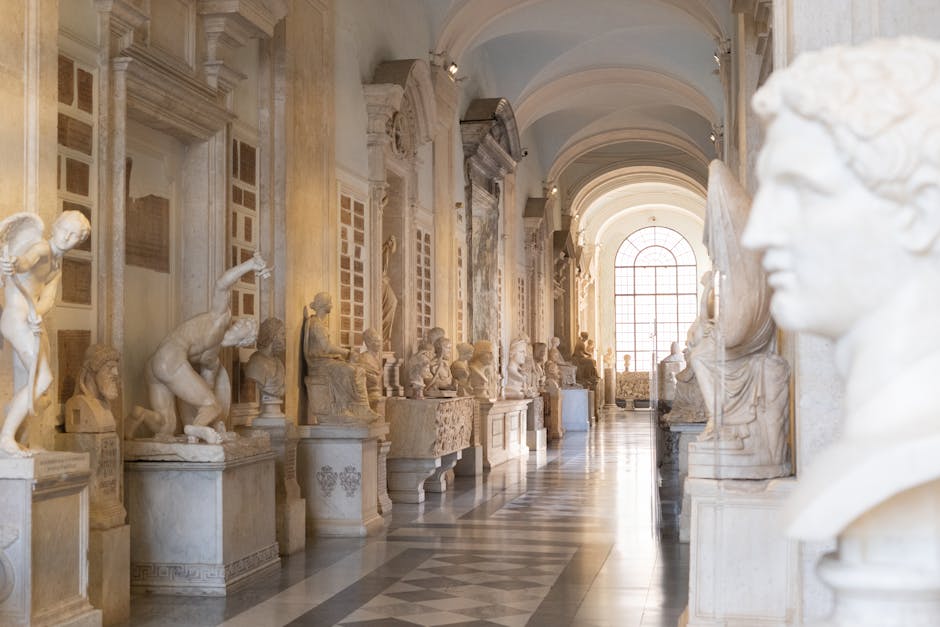
The Vatican Museums comprise 54 separate galleries connected by a complex network of corridors stretching approximately 9 miles in total length. If visitors were to walk through every gallery, viewing each of the estimated 70,000 artworks on display, they would cover nearly nine miles. The museums contain one of the world’s most important art collections, including works from ancient Roman sculptures to Renaissance masterpieces. The entire Vatican collection, including items in storage, contains approximately 5 million objects spanning 5,000 years of human history.
6. The Rijksmuseum’s Underground Bicycle Passage
Amsterdam’s Rijksmuseum, home to masterpieces by Rembrandt and Vermeer, features a unique architectural element that reflects Dutch culture: a public bicycle and pedestrian tunnel running directly through the building. This passageway, which existed before the museum’s recent renovation, was preserved as a public right of way. During the museum’s decade-long renovation completed in 2013, architects had to maintain this throughway while completely renovating the surrounding structure, creating an interesting blend of public infrastructure and cultural institution.
7. The Uffizi Gallery’s Secret Corridor Connection
Florence’s Uffizi Gallery connects to the Pitti Palace through the Vasari Corridor, a one-kilometer elevated enclosed passageway built in 1565. Commissioned by Duke Cosimo I de’ Medici and designed by Giorgio Vasari, this private corridor allowed the ruling family to move between their residence and government offices without mingling with common citizens. The corridor passes over the Ponte Vecchio bridge and contains a collection of over 1,000 paintings, including the world’s largest collection of self-portraits by famous artists. The corridor offers unique views of Florence unavailable anywhere else in the city.
8. MoMA’s Helicopter Installation Technique
The Museum of Modern Art in New York has occasionally used helicopters to install large-scale artworks and sculptures that cannot fit through the building’s doors or elevators. This dramatic installation method has been employed for oversized contemporary pieces in the museum’s sculpture garden. The museum’s commitment to displaying large-scale contemporary works has necessitated creative solutions, including removing windows, using cranes, and coordinating with city officials to temporarily close streets during installation processes.
9. The Prado Museum’s Hidden Duplicates
Madrid’s Prado Museum discovered in 2012 that a painting long attributed to a student of Leonardo da Vinci was actually painted simultaneously alongside the master’s “Mona Lisa” in his workshop. This revelation came after restoration removed later additions, revealing details that proved the work was created at the same time as the original, making it the earliest known copy. The museum’s collection contains approximately 8,200 drawings, 7,600 paintings, 4,800 prints, and 1,000 sculptures, though only about 1,300 works are currently on permanent display.
10. The Guggenheim’s Revolutionary Architectural Design
New York’s Solomon R. Guggenheim Museum, designed by Frank Lloyd Wright and completed in 1959, revolutionized museum architecture with its continuous spiral ramp gallery. Wright conceived the building as a “temple of the spirit,” and the unique design allows visitors to take an elevator to the top and walk down the gentle slope while viewing art on the outer wall. The building’s organic architecture was so controversial when proposed that it took nearly 16 years and 700 sketches before construction began. The museum sparked heated debate among critics and artists, with some praising its innovation while others claimed the dramatic architecture overshadowed the artwork.
Cultural Guardians of Human Achievement
These fascinating facts illuminate the extraordinary nature of the world’s premier museums, revealing that these institutions are far more than simple repositories of art and artifacts. From armies of cats protecting priceless collections to underground tunnels enabling bicycle traffic, from secret corridors connecting palaces to helicopter-assisted installations, museums continually evolve while maintaining their essential mission of preserving cultural heritage. These remarkable buildings and the dedicated professionals who maintain them ensure that future generations can access and appreciate humanity’s greatest creative achievements. Whether through architectural innovation, unusual security measures, or surprising historical connections, each museum offers unique insights into both the art they contain and the societies that created them.
