
⏱️ 6 min read
The Vikings have captured imaginations for centuries, but much of what popular culture portrays about these Norse seafarers is shrouded in myth and misconception. Far from being merely brutal raiders, the Vikings were sophisticated traders, explorers, and settlers who left an indelible mark on medieval history. Their influence stretched from North America to the Middle East, and their legacy continues to fascinate historians and enthusiasts alike. These remarkable facts reveal the true complexity and ingenuity of Viking civilization.
Fascinating Truths About Norse Warriors and Explorers
1. Vikings Never Actually Wore Horned Helmets
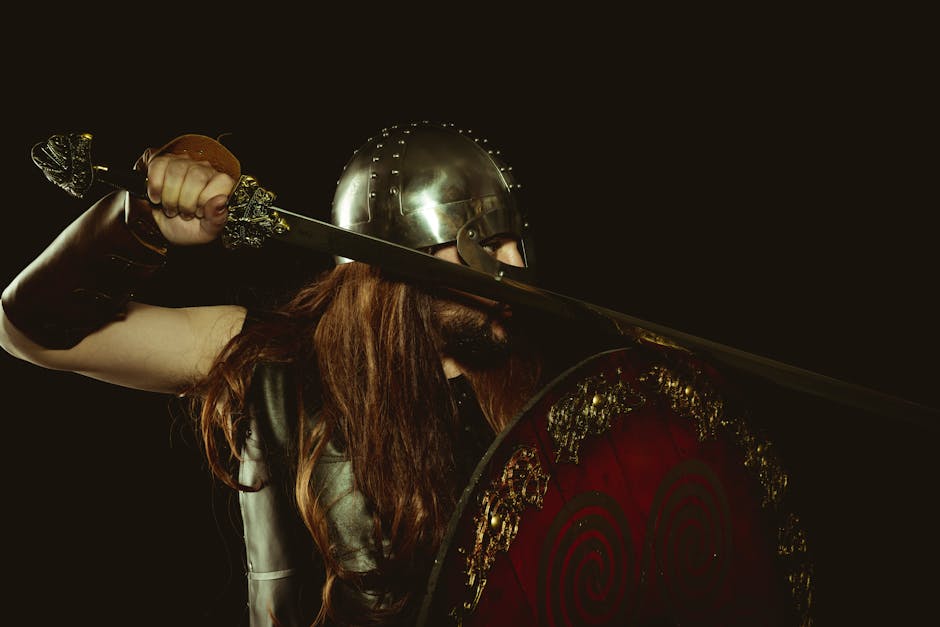
Perhaps the most persistent myth about Vikings is the image of warriors wearing horned helmets into battle. Archaeological evidence has never uncovered a single horned Viking helmet from the Viking Age, which lasted from approximately 793 to 1066 CE. This romanticized image actually originated in 19th-century Scandinavian artwork and was popularized by costume designers for Wagner’s opera productions. Real Viking helmets were practical, rounded iron or leather caps, sometimes with face guards. The horned helmet misconception has become so entrenched in popular culture that it overshadows the actual sophisticated metalworking capabilities Vikings possessed.
2. Norse Explorers Reached North America 500 Years Before Columbus
Long before Christopher Columbus sailed the ocean blue in 1492, Vikings had already established settlements in North America. Around the year 1000 CE, Norse explorer Leif Erikson led expeditions to a land he called Vinland, located in present-day Newfoundland, Canada. Archaeological excavations at L’Anse aux Meadows have confirmed Viking presence, with remains of Norse-style buildings and artifacts. This makes the Vikings the first Europeans to set foot in North America, fundamentally changing our understanding of pre-Columbian exploration and demonstrating the remarkable nautical abilities of these seafarers.
3. Viking Women Enjoyed Remarkable Rights and Independence
Contrary to assumptions about medieval societies, Viking women held significant legal rights and social status that were extraordinary for their time. Women could own property, request divorces, and reclaim their dowries if marriages ended. They managed households and farms while men traveled for trade or raids, often for months or years at a time. Some women even became successful merchants and traders in their own right. Archaeological evidence, including grave goods with weapons and tools, suggests some women may have held positions of considerable authority, challenging modern perceptions of gender roles in Viking society.
4. The Vikings Were Obsessively Hygienic for Medieval Standards
Despite their reputation as savage barbarians, Vikings maintained grooming standards that surpassed most of medieval Europe. Archaeological excavations have uncovered numerous combs, tweezers, razors, and ear cleaners among Viking artifacts. They bathed at least once a week—an astounding frequency compared to other medieval Europeans—and even had a dedicated day for it: Saturday, which translates to “laugardagur” or “washing day” in Old Norse. Vikings also used a strong soap made from animal fat and wood ash. English chronicles from the period actually complained that Viking men were too attractive to English women because of their cleanliness and well-groomed appearances.
5. Viking Navigational Skills Were Extraordinarily Advanced
Without compasses or modern navigational instruments, Vikings crossed vast oceans with remarkable accuracy using sophisticated techniques. They relied on the sun’s position, star patterns, and careful observation of wildlife, water color, and wave patterns. Recent research suggests they may have used “sunstones”—crystals like calcite or cordierite that can locate the sun’s position even on overcast days by analyzing polarized light. Their intimate knowledge of prevailing winds and currents, combined with these tools, allowed them to navigate from Scandinavia to Iceland, Greenland, and beyond with surprising reliability, establishing trade routes that spanned thousands of miles.
6. The Norse Established a Democratic Parliamentary System
Vikings created one of the earliest forms of democratic governance through assemblies called “things” or “althings.” These gatherings brought together free men to settle disputes, make laws, and decide on important community matters. Iceland’s Althing, established in 930 CE, is considered one of the world’s oldest surviving parliaments. During these assemblies, disputes were resolved through discussion and voting rather than solely by the decisions of a single ruler. This system demonstrated a sophisticated approach to governance and conflict resolution that influenced legal traditions throughout Scandinavian regions for centuries to come.
7. Vikings Were Master Craftsmen and Renowned Traders
While their reputation as raiders is well-known, Vikings were equally accomplished as merchants and artisans. They established extensive trade networks connecting Scandinavia, Britain, Continental Europe, the Byzantine Empire, and even the Middle East. Viking traders exchanged furs, amber, walrus ivory, and slaves for silver, silk, spices, and wine. Their craftsmanship in metalwork, woodcarving, and textile production was highly valued across Europe. The quality of Viking swords, made using pattern-welding techniques that created strong, flexible blades, was legendary. These weapons were so prized that they were often given names and passed down through generations as precious heirlooms.
8. Norse Poetry and Storytelling Shaped Literary Tradition
Vikings possessed a rich oral tradition that produced some of medieval Europe’s most important literary works. Skilled poets called skalds composed complex verses using intricate metaphors known as “kennings.” These stories and poems were eventually written down as sagas and eddas, preserving Norse mythology, history, and cultural values. The poetic edda and prose edda remain crucial sources for understanding Norse mythology, influencing countless modern works of fantasy and literature. This sophisticated literary tradition reveals a culture deeply concerned with honor, legacy, and the preservation of memory through artistic expression.
9. The Norse Influenced English Language Profoundly
The Viking presence in England left a permanent mark on the English language. During the Danelaw period, when Vikings controlled large portions of England, Old Norse and Old English mixed extensively. Hundreds of common English words derive from Old Norse, including “sky,” “egg,” “knife,” “husband,” “window,” “anger,” “ugly,” “wrong,” and “die.” Even the pronouns “they,” “them,” and “their” come from Old Norse. Place names ending in “-by” (meaning town), “-thorpe” (meaning village), and “-thwaite” (meaning clearing) indicate areas of Viking settlement. This linguistic legacy demonstrates how deeply Viking culture integrated into English society.
10. Vikings Practiced Complex Religious Beliefs and Rituals
Norse religion was far more nuanced than popular depictions of simple warrior worship suggest. Vikings believed in a complex pantheon of gods, including Odin, Thor, Freya, and Loki, each governing different aspects of life and nature. They practiced elaborate burial rituals, sometimes interring their dead in ships filled with goods for the afterlife. Religious practices included sacrifices, divination, and festivals tied to agricultural cycles. As Vikings encountered Christianity during their travels and raids, many adopted a syncretic approach, wearing both Thor’s hammer and Christian crosses. This religious flexibility reflected the pragmatic and adaptive nature of Viking culture, eventually leading to Scandinavia’s gradual Christianization by the 11th century.
The Enduring Legacy of Viking Civilization
These ten facts barely scratch the surface of Viking complexity and achievement. Far from being one-dimensional raiders, the Norse people were innovators, explorers, artists, and lawmakers who fundamentally shaped medieval European history. Their navigational prowess opened new worlds, their legal traditions influenced democratic systems, and their cultural exchanges enriched countless societies. Understanding these truths about Vikings allows us to appreciate their genuine historical significance beyond Hollywood stereotypes and recognize their lasting contributions to language, law, exploration, and culture that continue resonating into the modern era.
