
⏱️ 7 min read
The Vikings have captured our imagination for centuries, often portrayed as fierce warriors with horned helmets sailing across treacherous seas. However, the reality of Norse culture was far more complex and fascinating than popular culture suggests. These seafaring people from Scandinavia left an indelible mark on European history between the 8th and 11th centuries, not just through conquest, but through trade, exploration, and cultural exchange. Let’s explore some of the most intriguing and lesser-known aspects of Viking civilization that reveal the true nature of these remarkable people.
Surprising Truths About Norse Warriors and Their Society
1. Vikings Never Actually Wore Horned Helmets
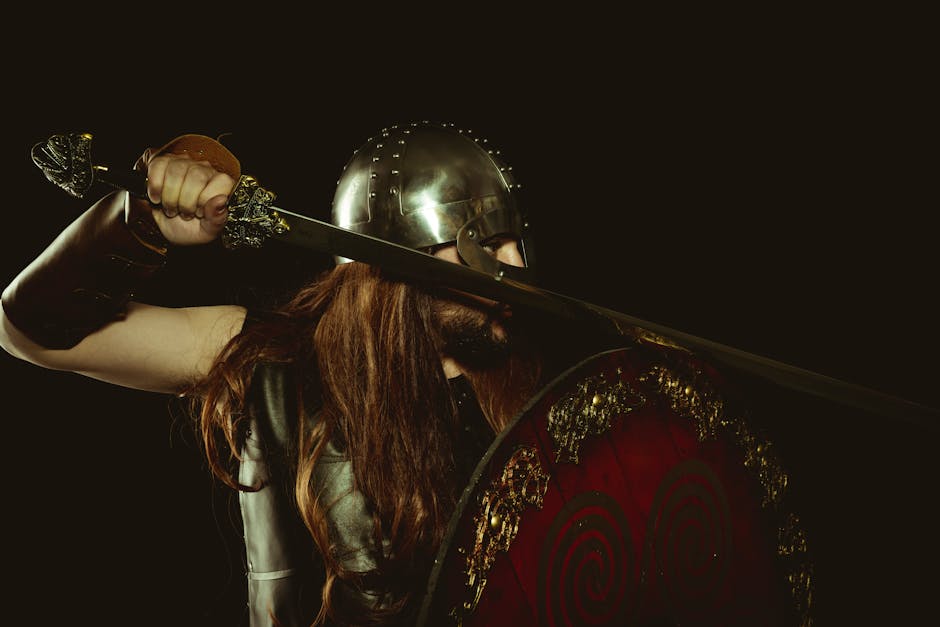
Perhaps the most pervasive myth about Vikings is the iconic image of warriors wearing horned helmets. In reality, there is no archaeological evidence that Vikings ever wore horns on their helmets in battle. This misconception originated in the 19th century, popularized by costume designers for Wagner’s opera productions and Victorian-era romanticized artwork. Actual Viking helmets were practical, rounded iron caps, sometimes with face guards. Horned helmets would have been impractical in combat, potentially endangering the wearer by providing opponents with something to grab. The few horned helmets discovered in Scandinavia predate the Viking Age by thousands of years and were likely used for ceremonial purposes rather than warfare.
2. The Word “Viking” Was Actually a Verb, Not a Noun
Contrary to common usage, “Viking” wasn’t originally an ethnic identifier but rather described an activity. In Old Norse, to go “viking” (fara í víking) meant to go on an expedition, typically involving raiding, trading, or exploring overseas. Not all Scandinavians were Vikings—most were farmers, craftspeople, and traders who never left their homeland. Those who did go viking were often younger sons seeking fortune and adventure, as inheritance laws typically favored the eldest. This distinction is crucial for understanding that Viking culture was far more diverse than the raider stereotype suggests, encompassing peaceful merchants, skilled artisans, and agricultural communities.
3. Norse Women Enjoyed Remarkable Rights and Independence
Viking women held a surprisingly elevated status compared to their European counterparts during the same period. They could own property, request divorces, and reclaim their dowries if marriages ended. When their husbands traveled on trading expeditions or raids, women managed farms and households, making critical economic decisions. Archaeological evidence reveals that some women were buried with weights and scales, indicating their role in commerce. While rare, there’s also evidence suggesting some women may have been warriors, as demonstrated by the famous Birka warrior grave in Sweden, which contained a female skeleton buried with weapons and tactical gaming pieces, suggesting knowledge of military strategy.
4. Vikings Were Obsessively Hygienic and Fashion-Conscious
Far from the unwashed barbarian stereotype, Vikings were remarkably clean by medieval standards. Archaeological excavations have uncovered numerous grooming tools including combs, tweezers, ear cleaners, and razors. They bathed at least once a week, which was considerably more frequent than most Europeans of the era. Vikings also had a custom of “laugardagr” (washing day), which became our modern Saturday. They bleached their hair and beards, sometimes achieving blonde highlights, and maintained well-groomed appearances. English chronicles from the period actually complained that Viking men were too attractive to English women because of their cleanliness and fine clothing, creating romantic competition for local men.
5. The Vikings Discovered North America 500 Years Before Columbus
Norse explorers reached North America around 1000 CE, nearly five centuries before Christopher Columbus’s famous voyage. Led by Leif Erikson, Vikings established a settlement at L’Anse aux Meadows in present-day Newfoundland, Canada. This archaeological site provides irrefutable evidence of Norse presence in North America, with remains of buildings constructed in typical Viking style. The Vikings called this land “Vinland,” and though the settlement was eventually abandoned, likely due to conflicts with indigenous peoples and the difficulty of maintaining supply lines, this achievement demonstrates the extraordinary maritime capabilities and adventurous spirit of Norse explorers who ventured across the Atlantic in open wooden ships.
6. Viking Ships Were Engineering Marvels of Their Time
The longship stands as one of the Viking Age’s greatest technological achievements. These vessels featured a revolutionary clinker-built design with overlapping planks that provided both flexibility and strength, allowing them to flex with ocean waves rather than break. The shallow draft enabled Vikings to navigate both deep oceans and shallow rivers, giving them access to inland territories unreachable by other seafaring peoples. Ships could be beached easily and even portaged overland when necessary. The symmetrical bow and stern design allowed the ship to reverse direction without turning around, a crucial advantage in narrow waterways. These engineering innovations made Vikings the dominant maritime power of their age.
7. Vikings Were Skilled Poets and Storytellers
Behind the warrior facade lay a deeply literary culture. Vikings valued the art of poetry highly, with skilled poets (skalds) holding prestigious positions in royal courts. They composed complex verses in intricate meters, preserving history, mythology, and genealogy through oral tradition long before these tales were written down as the famous sagas. The Norse practiced “flyting,” a form of ritualized insult poetry that required quick wit and verbal dexterity. Poetry wasn’t considered effeminate or separate from warrior culture; rather, a complete warrior was expected to be as skilled with words as with weapons. Many Viking leaders were celebrated poets, including King Harald Hardrada and the legendary Egill Skallagrímsson.
8. The Vikings Practiced Direct Democracy Centuries Before Modern Nations
Vikings developed an early form of democratic assembly called the “Thing” or “Þing,” where free men gathered to settle disputes, make laws, and decide community matters. The Icelandic Althing, established in 930 CE, is considered one of the world’s oldest parliaments still in existence. At these assemblies, even commoners could bring grievances and participate in legal proceedings. Laws were memorized and recited by a law speaker who served as a living legal library. While not a complete democracy by modern standards—women and slaves typically couldn’t participate—the Thing represented a remarkably progressive form of governance for its time, emphasizing community consensus and rule of law over arbitrary monarchical decree.
9. Vikings Were International Traders Who Reached as Far as Baghdad
While Viking raids capture most historical attention, trade was actually more central to Norse economy and expansion. Viking merchants established trade routes stretching from North America to the Middle East, exchanging furs, amber, walrus ivory, and slaves for silver, silk, spices, and wine. Swedish Vikings (Varangians) traveled down Russian rivers to Constantinople and Baghdad, where Arab chronicler Ahmad ibn Fadlan left detailed accounts of his encounters with them. Archaeological finds include Arabic coins in Scandinavian graves, Chinese silk in Norwegian burial sites, and Norse artifacts across Europe and Asia. This extensive trade network facilitated cultural exchange and made Vikings sophisticated international merchants, not merely raiders.
10. Viking Influence Shaped the English Language Profoundly
The Norse linguistic legacy permeates modern English in unexpected ways. When Vikings settled in England, establishing the Danelaw region, Old Norse merged with Anglo-Saxon, contributing thousands of words to English. Common words like “sky,” “knife,” “take,” “get,” “give,” and “they” all derive from Old Norse. Even the “-by” ending in English place names (Derby, Rugby, Grimsby) comes from the Norse word for village or farm. Interestingly, the “sk” sound in English often indicates Norse origin, as Anglo-Saxon words typically used “sh” instead. This linguistic fusion reflects the deep cultural integration between Norse settlers and Anglo-Saxon populations, demonstrating that Vikings weren’t merely invaders but became permanent residents who fundamentally shaped British culture.
Understanding the Viking Legacy
The Vikings were far more than the one-dimensional raiders of popular imagination. They were explorers who reached continents unknown to other Europeans, traders who connected distant civilizations, skilled craftspeople who created beautiful art and sophisticated technology, and poets who preserved rich cultural traditions through generations. Their achievements in navigation, shipbuilding, governance, and exploration laid groundwork for many aspects of modern Western civilization. From democratic institutions to linguistic contributions, from artistic traditions to legal concepts, the Norse legacy continues to influence our world today. Understanding these fascinating facts helps us appreciate the complexity and sophistication of Viking culture, revealing a people whose true story is far more remarkable than any myth.
