
⏱️ 6 min read
Nature has perfected the art of disguise over millions of years of evolution. From the depths of the ocean to the canopies of tropical rainforests, countless species have developed extraordinary abilities to blend seamlessly into their surroundings. These remarkable adaptations serve crucial purposes: avoiding predators, ambushing prey, and ensuring survival in competitive ecosystems. The following examples showcase nature’s most impressive masters of concealment, demonstrating the incredible diversity and sophistication of camouflage strategies across the animal kingdom.
The Masters of Natural Disguise
1. The Cuttlefish’s Instantaneous Color Transformation
Cuttlefish possess one of the most advanced camouflage systems in the entire animal kingdom. These intelligent cephalopods can change their color, pattern, and texture in less than a second, utilizing millions of specialized skin cells called chromatophores, leucophores, and iridophores. Remarkably, cuttlefish achieve this feat despite being colorblind, relying instead on their ability to perceive light polarization and texture through their skin. They can mimic complex backgrounds including coral reefs, sandy bottoms, and rocky surfaces with stunning accuracy, making them virtually invisible to both predators and prey.
2. Leaf-Tailed Geckos and Their Botanical Mimicry
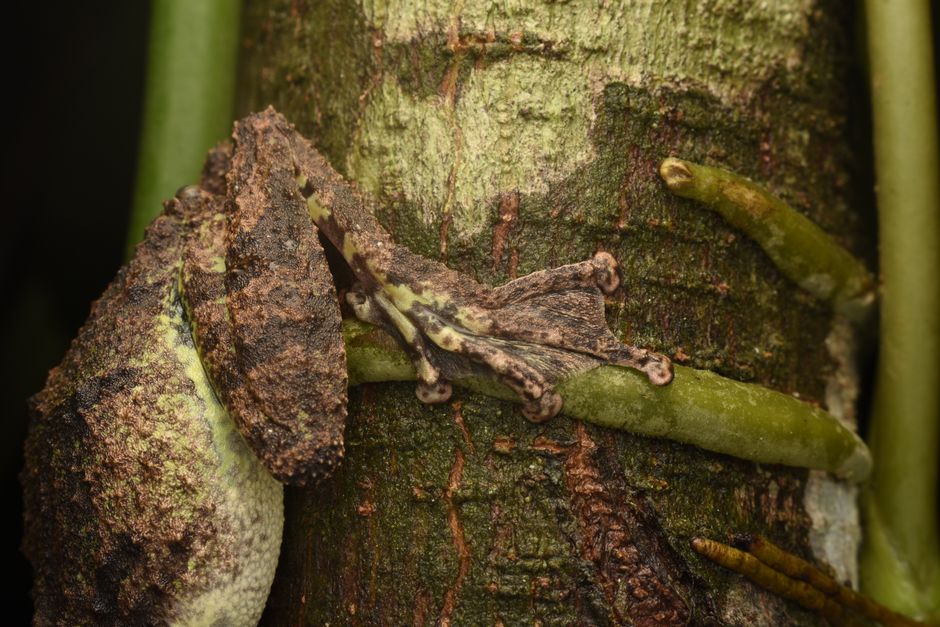
The satanic leaf-tailed gecko of Madagascar represents an extraordinary example of mimicry in reptiles. These nocturnal creatures don’t just blend into their environment—they become it. Their bodies are flattened and shaped exactly like dried or decaying leaves, complete with vein-like patterns, irregular edges, and even fake insect bite marks. During the day, they press their bodies flat against tree bark, eliminating any shadow that might give away their position. Their coloration varies from browns to greens, perfectly matching the bark and lichen of their native forests.
3. The Walking Stick Insect’s Structural Deception
Walking stick insects, or phasmids, have taken camouflage to architectural extremes. These insects have evolved bodies that are nearly indistinguishable from twigs and branches, complete with irregular bumps that resemble bark texture and leaf buds. Some species can remain motionless for hours, swaying gently only when wind moves the surrounding vegetation. Certain species even lay eggs that look like plant seeds, extending their camouflage strategy across generations. With over 3,000 species worldwide, these insects demonstrate remarkable diversity in their stick-like disguises.
4. Arctic Fox Seasonal Wardrobe Changes
The arctic fox showcases one of nature’s most practical camouflage adaptations through its dramatic seasonal coat transformations. During winter months, these foxes sport thick, pristine white fur that renders them nearly invisible against snow and ice, providing both insulation and concealment. As spring arrives and snow melts, they molt into a brown or gray coat that blends perfectly with the tundra’s rocky, earthy terrain. This biannual transformation allows them to maintain effective camouflage year-round in one of Earth’s most visually dynamic environments.
5. Stonefish Deadly Ocean Floor Concealment
The stonefish holds the distinction of being both the world’s most venomous fish and one of its best-camouflaged creatures. Residing on the ocean floor in Indo-Pacific waters, stonefish have warty, textured skin covered in algae and encrusted with debris that makes them utterly indistinguishable from surrounding rocks and coral rubble. Their camouflage is so effective that even experienced divers often fail to notice them until nearly stepping on them. This concealment serves dual purposes: ambushing small fish and crustaceans while avoiding larger predators.
6. Orchid Mantis Predatory Flower Mimicry
The orchid mantis of Southeast Asia employs aggressive mimicry by disguising itself as a beautiful flower rather than blending into the background. With petal-shaped leg lobes and coloration ranging from white to pink, these mantises don’t just hide among orchids—they actively attract prey by resembling the flowers themselves. Pollinating insects approach what they believe to be a flower, only to be captured by the waiting predator. Research has shown that these mantises can even attract more pollinators than actual flowers, making their disguise not just effective but superior to their model.
7. Pygmy Seahorse Coral Integration
Pygmy seahorses, discovered only in recent decades, display such perfect camouflage that marine biologists initially overlooked them entirely. These tiny fish, measuring less than two centimeters in length, live exclusively on specific species of gorgonian coral. Their bodies feature bumpy tubercles that precisely match the polyps of their host coral, while their coloration—whether purple, red, orange, or yellow—exactly matches the coral species they inhabit. Different populations have evolved distinct appearances matching their specific coral hosts, demonstrating remarkable evolutionary specialization.
8. Mimic Octopus Multiple Disguise Repertoire
The mimic octopus possesses an unprecedented ability among animals: it can impersonate multiple different species. Discovered in Indonesian waters in 1998, this remarkable cephalopod can shape-shift to resemble at least fifteen different marine animals, including lionfish, sea snakes, flatfish, and jellyfish. It selects its disguise based on the specific threat it faces, demonstrating not just physical adaptability but behavioral intelligence. By changing its color, texture, body shape, and movement patterns, the mimic octopus represents the pinnacle of active camouflage and defensive mimicry.
9. Dead Leaf Butterfly Wing Artistry
The dead leaf butterfly of Asia exhibits one of the most striking examples of contrast camouflage. While its wings are brilliantly colored when open—displaying vibrant oranges and blues—the moment it lands and closes its wings, it transforms into a perfect replica of a dead, dried leaf. The underside of its wings features detailed veining, brown coloration with subtle variations, and even spots that resemble fungal decay or damage. Some individuals possess a small “stem” extension, completing the illusion. This dramatic transformation allows the butterfly to seemingly vanish the instant it settles.
10. Snow Leopard High-Altitude Concealment
The elusive snow leopard demonstrates how camouflage enables survival in extreme mountain environments. Its thick, smoke-gray coat covered with dark rosettes and spots provides exceptional concealment against the rocky, snow-patched terrain of Central Asian mountains. The pattern breaks up the leopard’s outline against complex backgrounds of boulders, cliffs, and scattered snow, making these large cats nearly impossible to spot even in relatively open terrain. Their neutral coloration works year-round in high-altitude environments where snow coverage varies constantly, allowing them to stalk prey like blue sheep and ibex with remarkable stealth.
The Evolutionary Significance of Natural Camouflage
These ten remarkable examples illustrate the extraordinary lengths to which evolution has refined the art of concealment. Whether through instantaneous color changes, structural mimicry, seasonal adaptations, or behavioral disguises, each species has developed camouflage perfectly suited to its specific ecological niche. These adaptations remind us that survival in nature often depends not on strength or speed, but on the ability to remain unseen. As we continue studying these masters of disguise, we gain deeper insights into evolutionary processes, sensory perception, and the intricate relationships between organisms and their environments. The natural world’s camouflage innovations continue to inspire human technologies, from military applications to adaptive materials, proving that nature remains our greatest teacher in the art of concealment.