







1 / 10 Questions
0 Points

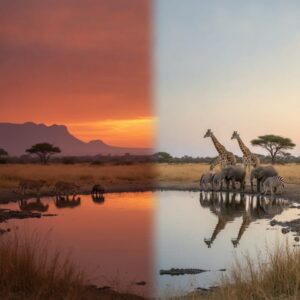
What African waterhole features a floodlit viewing area where lions, elephants, and rhinos drink within feet of each other at night?

Mara River in Maasai Mara, Kenya

Chobe River in Botswana

Seronera in Serengeti National Park, Tanzania

Okaukuejo in Etosha National Park, Namibia

Points won
0
Correct score
0%

More questions

More Articles

Did You Know? 12 Weird Legends About Synesthesia

Did You Know? 12 Weird Legends About Synesthesia

⏱️ 6 min read

Synesthesia, a neurological phenomenon where stimulation of one sense triggers involuntary experiences in another, has captivated human imagination for centuries. While modern science has made significant strides in understanding this condition, numerous myths, legends, and bizarre tales have emerged throughout history. These strange stories blend fact with fiction, creating a fascinating tapestry of cultural beliefs about people who quite literally experience the world differently.

Ancient and Modern Myths Surrounding Synesthesia

1. The Medieval Witchcraft Connection

During the Middle Ages, individuals who claimed to see sounds or taste colors were sometimes accused of witchcraft or demonic possession. Legend has it that several women in 15th-century France were brought before ecclesiastical courts for describing religious hymns as having specific colors. These accounts suggest that synesthetes may have been persecuted for their neurological differences, though historical records remain fragmentary and difficult to verify. Some folklore scholars believe these tales were exaggerated or entirely fabricated during the witch-hunting hysteria, but they persist in local legends across Europe.

2. Pythagoras and the Music of Colored Spheres

Ancient Greek legends attribute synesthetic experiences to the philosopher Pythagoras, claiming he could see the colors of musical notes and planetary movements. According to these tales, he taught his followers that each celestial body produced a specific tone with its own corresponding hue, creating a cosmic symphony visible only to those with special perception. While there's no concrete historical evidence that Pythagoras actually experienced synesthesia, this myth has endured for over two millennia and influenced countless mystical traditions.

3. The Russian Composer Who Tasted Symphonies

A peculiar legend surrounds the claim that composer Alexander Scriabin could taste entire orchestral arrangements. Stories passed down through musical circles suggest he would refuse to perform certain compositions because they had an unpleasant flavor. While Scriabin did genuinely experience color-sound synesthesia and created his "color organ," the tales about tasting music appear to be embellishments added by romanticizing biographers and eager students seeking to mythologize their teacher's already remarkable abilities.

4. The Artist Who Painted Sounds from the Dead

Victorian spiritualism gave rise to legends about artists who claimed to paint the colors they heard emanating from spirits during séances. One particularly persistent story involves a London painter who allegedly created portraits based entirely on the sonic signatures of deceased individuals. These tales merged the era's fascination with both synesthesia and the supernatural, though no verifiable evidence supports the existence of such paranormal synesthetic abilities.

5. Indigenous Shamanic Color-Hearing Rituals

Various legends describe indigenous shamans across different cultures who purportedly developed synesthesia through specific ritual practices. These stories claim that certain ceremonial dances, chants, or plant medicines could temporarily or permanently grant practitioners the ability to see sound. While some entheogens can indeed create temporary cross-sensory experiences, the legends often exaggerate these effects and attribute mystical powers to naturally occurring neurological variations that likely existed independently of any rituals.

6. The Mathematical Savant Who Felt Numbers

A recurring legend in mathematical circles tells of a 19th-century calculating prodigy who claimed each number had a distinct texture and emotional quality. Stories suggest this individual could solve complex equations by "feeling" the smoothness or roughness of numerical relationships. While some synesthetes do experience number-form or ordinal linguistic personification, these tales have been embellished to the point where separating fact from fiction becomes nearly impossible.

7. The Poisoning Theory of Acquired Synesthesia

Dark legends from the Renaissance period suggest that certain noble families used specialized poisons to induce synesthesia in their children, believing it would grant them superior artistic or musical abilities. These myths claim that controlled exposure to mercury or lead compounds could "open the mind's eye." This dangerous folklore has no scientific basis and likely arose from observations of individuals who developed neurological symptoms—possibly including synesthetic experiences—from accidental heavy metal poisoning.

8. The Blind Prophet Who Saw Colors in Voices

Multiple cultures share variations of legends about blind prophets or oracles who could identify people by the colors they "saw" when hearing voices. These stories typically describe individuals who used this alleged ability to detect lies or predict future events. While some blind individuals do report synesthetic experiences, the prophetic elements of these legends clearly belong to the realm of mythology rather than documented neurological phenomena.

9. The Literary Curse of Lord Byron's Circle

A peculiar literary legend suggests that several members of Lord Byron's social circle developed synesthesia after participating in the famous ghost story competition that produced Mary Shelley's "Frankenstein." According to this myth, the intense creative atmosphere and possibly opium use during that fateful summer somehow "infected" participants with crossed sensory perceptions. No historical evidence supports this romantic tale, though it continues to circulate in literary folklore.

10. The Ancient Egyptian Color Hieroglyphs Theory

Some fringe theories, bordering on legend, propose that ancient Egyptian hieroglyphs were designed by synesthetes who encoded the colors they associated with specific sounds into the writing system. Proponents claim this explains certain color choices in temple paintings and tomb decorations. Mainstream Egyptologists dismiss these ideas as unfounded speculation, but the legends persist in alternative archaeology circles.

11. The Mirror-Touch Epidemic of 1518

An unusual legend connects the famous Dancing Plague of 1518 in Strasbourg to mass mirror-touch synesthesia, where witnesses allegedly began physically feeling the dancers' movements in their own bodies. This myth suggests the phenomenon spread like a contagion, causing hundreds to join the dance involuntarily. While the dancing plague was a real historical event, the synesthetic explanation is a modern invention with no period documentation to support it.

12. The Telepathic Twins with Shared Synesthesia

Perhaps the most persistent modern legend involves identical twins who allegedly share identical synesthetic experiences and can communicate through colored thoughts. Various versions of this story circulate online, sometimes claiming the twins were studied by secret government programs or prestigious universities. Despite thorough investigation by skeptics and researchers, no verifiable cases matching these extraordinary claims have been documented, though the legend continues to evolve with each retelling.

Separating Myth from Reality

These twelve legends demonstrate how synesthesia has captured human imagination across centuries and cultures. While synesthesia itself is a real and well-documented neurological condition affecting approximately 4% of the population, the myths surrounding it reveal more about human fascination with unusual perception than about the condition itself. Modern neuroscience continues to unravel the genuine mysteries of synesthesia, providing explanations far more interesting than the legends—even if less supernatural. Understanding these myths helps us appreciate both the remarkable nature of true synesthetic experiences and humanity's eternal tendency to embellish the extraordinary into the mythological.

Top 10 Unknown Moments About Special Effects in Film

Top 10 Unknown Moments About Special Effects in Film

⏱️ 6 min read

The magic of cinema has always relied on the artistry of special effects to transport audiences to impossible worlds and create unforgettable moments. While many are familiar with groundbreaking achievements like the dinosaurs of Jurassic Park or the bullet time of The Matrix, countless lesser-known innovations and behind-the-scenes stories have shaped the evolution of visual effects. These hidden moments reveal the ingenuity, accidents, and creative problem-solving that have defined filmmaking history.

Pioneering Innovations That Changed Cinema Forever

1. The Accidental Discovery of Stop-Motion Animation

In 1896, French filmmaker Georges Méliès experienced a camera jam while filming a Paris street scene. When he resumed filming, the resulting footage showed vehicles and pedestrians seemingly transforming or disappearing. This accidental discovery led Méliès to deliberately experiment with stop-motion techniques, creating over 500 films featuring magical transformations. His 1902 masterpiece "A Trip to the Moon" utilized these techniques to create the iconic image of a spaceship landing in the moon's eye, establishing special effects as an essential component of cinema rather than just a novelty.

2. The Invisible Glass Matte Paintings in The Wizard of Oz

While The Wizard of Oz is celebrated for its Technicolor breakthrough, few realize that nearly 40% of the film's backgrounds were glass matte paintings positioned between the camera and actors. Artists painted elaborate scenes on large panes of glass, leaving portions clear where live action would appear. The Emerald City's elaborate architecture was largely achieved through this technique. What makes this particularly remarkable is that these paintings were created in monochrome, then hand-tinted to match the film's color scheme, requiring extraordinary precision to ensure consistency across scenes.

3. The Practical Miniature City That Burned for Real in Blade Runner

The dystopian cityscape of Blade Runner featured an incredibly detailed miniature city that took months to construct. In one pivotal scene requiring an explosion, the effects team actually set fire to portions of this intricate model. What many don't know is that the miniature included working lights in thousands of tiny windows, each individually wired. When the pyrotechnics were triggered, the crew had only one chance to capture the shot perfectly. The resulting footage was so convincing that audiences assumed it was a full-scale set or a combination of multiple safe takes, not a irreversible practical effect.

4. The Revolutionary Blue Screen Technique from The Thief of Bagdad

The 1940 fantasy adventure "The Thief of Bagdad" pioneered the blue screen compositing technique that would become an industry standard. Cinematographer Georges Périnal developed a method to film actors against a blue background, then use color separation to isolate them and place them into different environments. This represented a massive leap from earlier traveling matte techniques. The film's flying carpet sequences and giant genie effects were so advanced that the technology wouldn't be significantly improved upon for nearly two decades, yet the film rarely receives credit for this innovation outside of effects specialist circles.

Unexpected Solutions to Technical Challenges

5. The Chocolate Syrup Blood in Psycho

Alfred Hitchcock's "Psycho" was filmed in black and white, presenting a unique challenge for the infamous shower scene. Real or realistic-looking blood appeared either too dark or too light on camera. After extensive testing, cinematographer John L. Russell discovered that Bosco chocolate syrup provided the perfect viscosity and shade of gray on black-and-white film. This unconventional solution created one of cinema's most memorable and disturbing sequences. The technique became a standard practice for black-and-white horror films, though few audiences ever knew they were watching chocolate circling the drain.

6. The Backwards-Acting Alien in Under the Skin

In the 2013 science fiction film "Under the Skin," director Jonathan Glazer needed to create an otherworldly effect for scenes showing victims sinking into a mysterious black liquid. The solution was remarkably simple yet invisible to audiences: actors performed the sequences walking backwards while pulling themselves up through a mixture of water and other substances. When the footage was reversed in post-production, the physics appeared completely unnatural and alien. This low-tech approach proved more effective than CGI alternatives, creating genuinely unsettling imagery that felt physically real because it was.

7. The Puppeteered Steel Cables in The Abyss

James Cameron's 1989 underwater epic "The Abyss" featured a sentient water tentacle that required groundbreaking computer-generated imagery. However, the most challenging effects weren't digital. For underwater scenes with submersibles, the team used puppeteers manipulating models with nearly invisible steel cables. The innovation came from developing cables thin enough to be imperceptible on film yet strong enough to control heavy models in water currents. This hybrid approach, combining practical puppetry with emerging CGI, created a seamless reality that neither technique could have achieved independently.

Hidden Technical Achievements

8. The Hand-Painted Lightning Effects in Frankenstein

The spectacular electrical effects in the 1931 "Frankenstein" weren't created with animation or even primitive electrical effects. Artist Kenneth Strickfaden built elaborate electrical equipment that generated real sparks and arcs, but the lightning bolts connecting various apparatus were hand-painted onto each frame of film using rotoscoping techniques. Artists worked for weeks, painting white lines on thousands of individual frames to create the illusion of electricity flowing through Dr. Frankenstein's laboratory. This painstaking frame-by-frame work predated modern rotoscoping by decades and required extraordinary precision to maintain consistent movement.

9. The Forced Perspective Size Illusions in The Lord of the Rings

While Peter Jackson's trilogy is known for its digital effects, some of the most convincing hobbit size differences were achieved through Renaissance-era forced perspective techniques with a modern twist. The team developed a system called "forced perspective on the move," using a motion-controlled camera rig that maintained precise size relationships even as the camera moved. Actors were positioned at different distances from the camera on platforms that moved in mathematical coordination, creating the illusion that characters of different sizes occupied the same physical space. This allowed for dynamic scenes that traditional forced perspective could never achieve.

10. The Practical Spinning Hallway in Inception

Christopher Nolan's famous rotating hallway fight scene in "Inception" was not created with wirework or digital effects. The production team constructed a massive rotating corridor set, 100 feet long and 40 feet in diameter, which actually spun 360 degrees. Actor Joseph Gordon-Levitt spent weeks training to perform fight choreography while the entire environment rotated around him. The camera was mounted within the rotating set, creating the illusion of gravity shifting while maintaining a consistent horizon line. This commitment to practical effects required unprecedented coordination between stunt performers, camera operators, and construction crews, resulting in one of modern cinema's most mind-bending sequences achieved almost entirely in-camera.

The Enduring Legacy of Hidden Innovation

These lesser-known moments in special effects history demonstrate that innovation often comes from unexpected places: accidents, unconventional materials, and creative problem-solving under constraints. From chocolate syrup standing in for blood to massive rotating sets defying gravity, these achievements remind us that the most convincing movie magic often combines artistic vision with practical ingenuity. Many of these techniques continue to influence filmmakers today, proving that effective special effects transcend technology and era. The next time a film sequence leaves you wondering "how did they do that," the answer might be far simpler—or far more complex—than computer-generated imagery. These hidden moments deserve recognition not just as technical achievements, but as testaments to the boundless creativity that defines cinema as an art form.