



1 / 20 Questions
0 Points

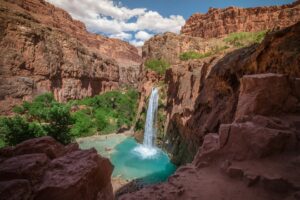
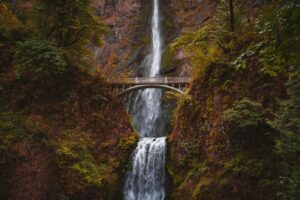
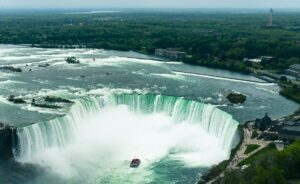
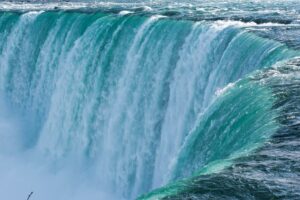
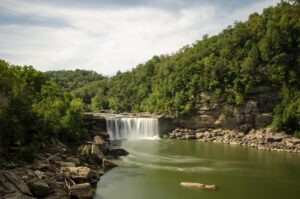
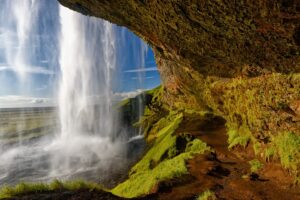
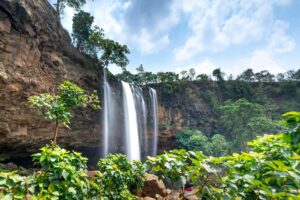
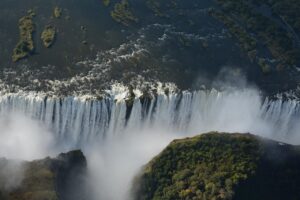
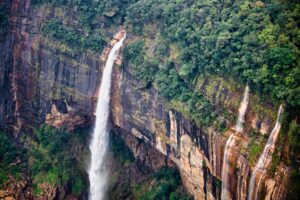
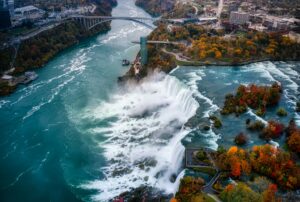
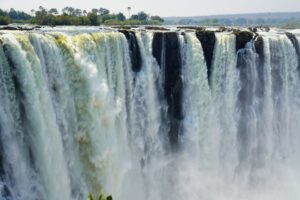
What color is the water at Havasu Falls in Arizona?

Blue-green

Clear

Brown

White

Points won
0
Correct score
0%

More questions

More Articles

Did You Know? 12 Unexpected Facts About World War II

Did You Know? 12 Unexpected Facts About World War II

⏱️ 7 min read

World War II remains one of the most studied conflicts in human history, yet beneath the well-known narratives of battles and political decisions lie countless surprising details that rarely make it into textbooks. From unusual animals serving on the front lines to ingenious deceptions and remarkable technological innovations, the war was filled with extraordinary moments that challenge our understanding of this global conflict. These lesser-known facts reveal the human ingenuity, absurdity, and resilience that characterized this tumultuous period.

Surprising Realities From the Global Conflict

1. Hitler's Nephew Fought for the United States

William Patrick Hitler, the half-Irish nephew of Adolf Hitler, actually served in the United States Navy during World War II. After unsuccessfully attempting to profit from his infamous uncle's name in both Britain and Germany, William fled to America in 1939. Despite initial FBI suspicions about his intentions, he was eventually allowed to enlist in 1944. He served honorably until 1947, earning a Purple Heart for wounds sustained during combat. After the war, he changed his last name and lived quietly in Long Island until his death in 1987.

2. The Soviet Union Used Dogs as Anti-Tank Weapons

In one of the war's most controversial tactics, the Soviet Union trained dogs to carry explosives under German tanks. These "anti-tank dogs" were trained to seek food under vehicles, with explosives strapped to their backs and a wooden lever that would trigger detonation when the dog crawled beneath a tank. While the concept was theoretically sound, the program proved largely ineffective because the dogs were trained using Soviet tanks that ran on diesel, while German tanks used gasoline. The dogs often became confused by the different smell and would return to Soviet lines or run in random directions.

3. A Japanese Soldier Continued Fighting Until 1974

Second Lieutenant Hiroo Onoda, stationed in the Philippines, refused to believe that the war had ended and continued his mission for 29 years after Japan's surrender. Operating in the jungles of Lubang Island, Onoda engaged in sporadic guerrilla warfare, dismissing leaflets announcing the war's end as Allied propaganda. He finally surrendered in 1974 when his former commanding officer traveled to the Philippines to officially relieve him of duty. Onoda returned to Japan as a celebrity, though he remained unapologetic about the Filipino casualties his actions had caused.

4. The Largest Naval Evacuation Saved Manhattan on 9/11, But Its Origins Trace to Dunkirk

The famous Dunkirk evacuation of 1940 established the precedent for civilian vessels assisting in military operations. Over 338,000 Allied soldiers were rescued from the beaches of Dunkirk by a flotilla of over 800 vessels, including hundreds of civilian boats. This "Dunkirk spirit" became legendary in British culture, representing civilian resilience and sacrifice. The operation demonstrated that unconventional thinking and civilian participation could achieve seemingly impossible military objectives, fundamentally changing how maritime rescue operations would be conceived in future conflicts.

5. The Youngest Known Soldier Was Only Six Years Old

Sergei Aleshkov, a six-year-old Soviet boy, became the youngest soldier of World War II after his village was destroyed and his family killed by German forces. Adopted by the 142nd Guards Rifle Regiment, he served as a scout and helped save a wounded commander's life by alerting others when the bunker was buried during an artillery strike. Despite his age, he received official military recognition and remained with the regiment throughout the war. His story exemplifies the countless children whose childhoods were stolen by the conflict.

6. Britain Created a Secret Army of Resistance Fighters

Anticipating a potential German invasion, Britain established a covert resistance network known as the Auxiliary Units. These civilian volunteers, primarily farmers and gamekeepers with intimate knowledge of the countryside, were trained in guerrilla warfare, sabotage, and assassination. They maintained hidden underground bunkers stocked with weapons, explosives, and supplies throughout the British countryside. The operation remained so secret that many members' families never knew of their involvement, and some bunkers weren't discovered until decades after the war ended.

7. American and German Soldiers Fought Together Against the SS

In one of the war's strangest battles, American and German soldiers joined forces at Castle Itter in Austria on May 5, 1945. American troops, Wehrmacht soldiers who had defected, and freed French VIP prisoners defended the castle against attacking Waffen-SS troops who remained fanatically loyal to Hitler even after his death. This unlikely alliance successfully held off the SS attack until reinforcements arrived. The Battle of Castle Itter remains the only known time that American and German troops fought as allies during the war.

8. The Allies Created an Entire Phantom Army

The 23rd Headquarters Special Troops, known as the "Ghost Army," was a 1,100-man American unit that used inflatable tanks, fake radio traffic, and sound effects to deceive German forces about Allied strength and positions. This traveling road show of deception staged more than 20 battlefield deceptions across Europe, often operating within a few hundred yards of enemy lines. The unit included artists, sound engineers, and actors who created elaborate illusions that tied up German divisions and saved countless Allied lives. Their work remained classified until 1996.

9. Carrots Don't Actually Improve Night Vision

The widespread belief that carrots improve night vision originated as British wartime propaganda designed to conceal the existence of radar technology. To explain why RAF pilots were suddenly so successful at shooting down German bombers during nighttime raids, the British government promoted stories about pilots eating carrots to enhance their eyesight. The Germans investigated this claim, and civilians on both sides embraced the myth. While carrots do contain vitamin A necessary for eye health, they don't provide superhuman night vision—radar technology did.

10. A Bear Officially Served in the Polish Army

Wojtek, a Syrian brown bear, was officially enlisted as a soldier in the Polish II Corps and served during the Italian Campaign. Found as a cub in Iran by Polish soldiers, Wojtek became their mascot and eventually helped carry ammunition crates during the Battle of Monte Cassino. He was taught to salute, wrestle with soldiers, and even drink beer. His military service was so notable that his image became the official emblem of the 22nd Artillery Supply Company, and monuments honoring him now stand in multiple countries.

11. Calvin Graham Became a War Hero at Age 12

Calvin Graham enlisted in the U.S. Navy in 1942 by forging his mother's signature, becoming the youngest American serviceman in World War II at just 12 years old. He served aboard the USS South Dakota during the Naval Battle of Guadalcanal, earning a Bronze Star and Purple Heart after being wounded by shrapnel while helping fellow sailors. His true age was discovered the following year when his mother requested his discharge. Initially, the Navy stripped him of his honors and benefits, though they were eventually restored decades later after years of legal battles.

12. The War's First Enemy Casualty Was Killed by a Musket

In an ironic twist of military history, the first German casualty of British forces in World War II was killed with a longbow. On May 27, 1940, British officer Jack Churchill, known as "Mad Jack," recorded a confirmed kill with his longbow during an ambush in France. Churchill was notorious for fighting with a longbow, bagpipes, and a Scottish broadsword throughout the war, insisting that "any officer who goes into action without his sword is improperly dressed." He survived numerous dangerous missions and prisoner-of-war camps, later expressing disappointment that the atomic bombs ended the Pacific War prematurely.

The Hidden Dimensions of Global Conflict

These twelve unexpected facts reveal that World War II was far more complex, strange, and human than conventional histories often portray. From bears carrying ammunition to phantom armies deceiving enemies, from child soldiers to unlikely alliances, the war encompassed an enormous range of human experiences and ingenuity. These stories remind us that behind the strategic decisions and major battles were millions of individual stories—some heroic, some tragic, and some almost too unusual to believe. Understanding these lesser-known aspects provides a richer, more complete picture of the war that shaped the modern world and continues to influence international relations today. The unexpected nature of these facts demonstrates that even the most studied historical events retain the capacity to surprise us, teaching new lessons about human nature, resilience, and the unpredictable nature of warfare itself.

Did You Know? 15 Secrets About the Great Pyramids

Did You Know? 15 Secrets About the Great Pyramids

⏱️ 6 min read

The Great Pyramids of Giza stand as one of humanity's most remarkable achievements, yet despite centuries of study, these ancient monuments continue to harbor mysteries that fascinate archaeologists, historians, and curious minds alike. Beyond their imposing presence on the Egyptian landscape, the pyramids conceal engineering marvels, mathematical precision, and cultural secrets that challenge our understanding of ancient civilizations. Here are fifteen remarkable facts about these timeless structures that reveal just how extraordinary they truly are.

Ancient Engineering Marvels Revealed

1. The Original Gleaming White Exterior

The Great Pyramid of Khufu wasn't always the sandy brown structure we see today. Originally, it was covered in highly polished white Tura limestone casing stones that would have made the pyramid shine brilliantly in the Egyptian sun. These smooth outer stones were so reflective that ancient observers described the pyramid as a glowing beacon visible from miles away. Most of these precious stones were removed over centuries and repurposed for building projects in Cairo, leaving only the rough inner core we see today.

2. The Mysterious Internal Temperature

The interior chambers of the Great Pyramid maintain a constant temperature of 20 degrees Celsius (68 degrees Fahrenheit), which happens to be the average temperature of the Earth. This remarkable climate control occurs regardless of the scorching desert heat outside or cooler nighttime temperatures, suggesting sophisticated understanding of thermal properties and architectural design.

3. Alignment with True North

The Great Pyramid is aligned to true north with an accuracy of better than four minutes of arc, which translates to a margin of error of less than 0.067 degrees. This level of precision is extraordinary considering the ancient Egyptians had no compasses or modern surveying equipment. Even more impressive, this alignment is more accurate than the Greenwich Observatory in London, which was built thousands of years later.

4. The Eight-Sided Design

While the Great Pyramid appears to have four sides, it actually has eight. Each of the four faces is slightly indented along the center line from base to apex, creating a subtle concave effect. This feature is almost impossible to detect from the ground and can only be seen from the air under specific lighting conditions during the spring and autumn equinoxes. The purpose of this design remains debated among scholars.

Mathematical and Astronomical Precision

5. The Golden Ratio Embedded in Stone

The Great Pyramid's dimensions incorporate the golden ratio (phi), approximately 1.618, which appears throughout nature and has been used in art and architecture for millennia. The ratio of the pyramid's height to half its base length equals phi with remarkable accuracy, suggesting the ancient Egyptians possessed advanced mathematical knowledge.

6. Pi Encoded in the Architecture

The relationship between the pyramid's height and its perimeter encodes the value of pi (3.14159). If you divide the perimeter of the pyramid's base by twice its height, you get a number very close to pi. Whether this was intentional or coincidental continues to spark debate, but the precision suggests deliberate incorporation of this fundamental mathematical constant.

7. Star Shaft Alignments

The so-called "air shafts" in the King's and Queen's chambers aren't actually ventilation systems. These narrow passages align with specific stars that were significant in ancient Egyptian religion. The southern shaft from the King's Chamber points to where Orion's Belt would have appeared around 2450 BCE, while the northern shaft aligned with the circumpolar stars the Egyptians associated with immortality.

8. The Speed of Light Connection

The coordinates of the Great Pyramid's location are 29.9792458°N, and the speed of light in a vacuum is 299,792,458 meters per second. This numerical coincidence has sparked considerable interest, though skeptics note that this only works with specific modern measurement conventions. Nevertheless, the correlation remains a fascinating curiosity.

Construction Mysteries and Methods

9. The Massive Scale of Labor

Contrary to popular belief, the pyramids were not built by slaves but by skilled workers who were well-fed and housed in nearby workers' villages. Archaeological evidence suggests that approximately 20,000 to 30,000 workers, including permanent employees and rotating seasonal laborers, constructed the Great Pyramid over roughly 20 years. This required setting one 2.5-ton block every two to three minutes during daylight hours.

10. The Precision-Cut Granite Blocks

The granite blocks in the King's Chamber, some weighing up to 80 tons, were transported from quarries in Aswan, over 500 miles away. These blocks fit together so precisely that a piece of paper cannot fit between them. The cutting and shaping techniques required to achieve this precision with copper tools and stone pounders demonstrate remarkable craftsmanship and patience.

11. The Lost Capstone Mystery

The pyramidion, or capstone, that originally topped the Great Pyramid has never been found. Historical accounts suggest it may have been made of gold, electrum, or gilded stone, serving as the pyramid's crowning glory. Its disappearance remains one of the enduring mysteries, with theories ranging from ancient theft to the possibility it was never placed at all.

Hidden Chambers and Recent Discoveries

12. The Newly Discovered Void

In 2017, scientists using cosmic-ray muon radiography discovered a large void above the Grand Gallery within the Great Pyramid. This previously unknown space, at least 100 feet long, has sparked intense speculation about its purpose and contents. Researchers continue to study this chamber without invasive excavation techniques.

13. The Mysterious Shafts' True Purpose

Recent robotic exploration of the narrow shafts extending from the Queen's Chamber revealed doors with copper handles and hieroglyphic markings. When cameras finally peered beyond these doors in 2002, they found another blocking stone, deepening the mystery of what these passages were designed to protect or symbolize in ancient Egyptian belief systems.

14. The Subterranean Chamber

Deep beneath the pyramid, cut into the bedrock, lies an unfinished chamber that remains enigmatic. This rough-hewn space differs dramatically from the precisely crafted chambers above. Some theories suggest it was an abandoned first attempt at a burial chamber, while others propose it held symbolic significance in the pharaoh's journey to the afterlife.

15. The Ancient Graffiti Marks

Hidden within the pyramid's relieving chambers above the King's Chamber are the only references to Khufu found inside the structure. These quarry marks, including the pharaoh's name, were painted on the blocks by work gangs and were never meant to be seen. Their discovery in the 19th century helped confirm the pyramid's builder and provided insights into the construction process.

Enduring Legacy

These fifteen secrets represent just a fraction of what makes the Great Pyramids so captivating. Each discovery raises new questions while answering others, reminding us that despite our technological advances, ancient civilizations possessed knowledge and capabilities that continue to astound us. The pyramids stand not merely as tombs for pharaohs but as testaments to human ingenuity, ambition, and the timeless desire to create something that transcends mortality. As modern technology allows us to peer deeper into these structures without causing damage, we can expect more revelations that will continue to reshape our understanding of ancient Egypt and the remarkable people who built these eternal monuments.