











1 / 10 Questions
0 Points

What liquid was once worth more than gold?

Perfume

Wine

Olive oil

Vinegar

Points won
0
Correct score
0%

More questions

More Articles

Did You Know? 12 Iconic Movie Scenes That Were Improvised

Did You Know? 12 Iconic Movie Scenes That Were Improvised

⏱️ 6 min read

Some of the most memorable moments in cinema history weren't meticulously planned or scripted—they were spontaneous acts of creativity that happened in the moment. These improvised scenes often capture authentic emotions and reactions that scripted dialogue simply can't replicate. When talented actors are given the freedom to explore their characters beyond the written page, magic can happen. From dramatic monologues to comedic one-liners, these unscripted moments have become permanently etched in film history, proving that sometimes the best performances come from letting go of the script.

The Art of Spontaneous Cinema

Improvisation in film requires a delicate balance between directorial vision and actor autonomy. Directors who embrace this approach often create environments where performers feel safe enough to take risks and explore unexpected choices. The following twelve scenes demonstrate how improvisation has shaped some of cinema's most iconic moments.

1. "Here's Looking at You, Kid" - Casablanca

Humphrey Bogart's legendary line in Casablanca wasn't originally in the script. During filming, Bogart repeatedly used this phrase with Ingrid Bergman, drawing from his off-screen experience teaching her how to play poker between takes. Director Michael Curtiz recognized the natural chemistry and romantic undertone the phrase created, allowing it to remain in the film. The line became one of the most quoted movie lines of all time, ranking fourth on the American Film Institute's list of greatest movie quotes.

2. The Tears in the Rain Monologue - Blade Runner

Rutger Hauer's haunting final monologue as the replicant Roy Batty in Blade Runner represents one of science fiction cinema's most poignant moments. While the original script contained a longer speech, Hauer condensed it and added the now-famous lines about C-beams glittering near the Tannhäuser Gate and attack ships on fire off the shoulder of Orion. His improvised ending, "All those moments will be lost in time, like tears in rain," transformed a standard death scene into a profound meditation on mortality and the value of memory.

3. The Chest-Burster Reaction - Alien

The genuine terror on the cast's faces during Alien's infamous chest-burster scene was completely authentic. Director Ridley Scott deliberately kept most of the actors uninformed about the amount of blood and gore that would be involved in the scene. Their shocked reactions to the explosive birth of the xenomorph weren't acting—they were real responses to an unexpectedly visceral moment, making the scene all the more effective and disturbing.

4. "You Talkin' to Me?" - Taxi Driver

Robert De Niro's iconic mirror confrontation in Taxi Driver was largely improvised. The script simply noted that Travis Bickle talks to himself in the mirror. De Niro created the entire "You talkin' to me?" sequence on set, channeling the character's isolation and building rage into a moment that has been parodied and referenced countless times. This scene showcased De Niro's method acting approach and became a defining moment in his career.

5. The Indianapolis Speech - Jaws

Robert Shaw's chilling monologue about the USS Indianapolis disaster in Jaws stands as one of cinema's most gripping storytelling moments. While various writers contributed to versions of the speech, Shaw rewrote and improvised much of his delivery during filming. His decision to perform it in a quiet, haunted manner rather than dramatically elevated the scene's impact, making Quint's trauma palpable and adding depth to what could have been a simple adventure film.

6. The "I'm Walking Here!" Outburst - Midnight Cowboy

Dustin Hoffman's famous shout at a taxi cab in Midnight Cowboy came from a real moment during filming. When an actual taxi driver ignored the filming and nearly hit Hoffman and co-star Jon Voight, Hoffman stayed in character and delivered the now-legendary line. Director John Schlesinger loved the authentic New York moment and kept it in the final cut, creating one of the most realistic street scenes in cinema history.

7. Jack Nicholson's Axe Introduction - The Shining

When Jack Nicholson breaks through the bathroom door in The Shining, his "Here's Johnny!" line was completely improvised. Nicholson drew from his knowledge of The Tonight Show's famous introduction, creating a moment that was both terrifying and absurdly comedic. Director Stanley Kubrick, who wasn't familiar with the American television reference, initially didn't understand the line but recognized its effectiveness in Nicholson's manic delivery.

8. The Wine-Tasting Scene - The Grand Budapest Hotel

While Wes Anderson is known for his precise, meticulously planned filmmaking style, Ralph Fiennes improvised several moments as Gustave H., including some of his character's more colorful language. Fiennes added spontaneous flourishes to his delivery that enhanced Gustave's refined yet profane personality, demonstrating that even in tightly controlled productions, room for improvisation can enrich performances.

9. Heath Ledger's Hospital Explosion Reaction - The Dark Knight

During the hospital explosion scene in The Dark Knight, Heath Ledger's confused fidgeting with the detonator was partially improvised. When the explosion sequence experienced a brief delay, Ledger stayed completely in character, incorporating the pause into the Joker's unpredictable behavior. His commitment to the character's anarchic nature turned a technical issue into a moment that perfectly captured the Joker's chaotic essence.

10. Bill Murray's Groundhog Day Philosophizing

Bill Murray improvised numerous lines throughout Groundhog Day, particularly in scenes where Phil Connors discusses his existential predicament. His natural comedic timing and philosophical musings added layers to the character that weren't fully present in the original script. Murray's improvisational skills helped transform what could have been a simple comedy premise into a thoughtful exploration of personal growth and redemption.

11. Robin Williams' Entire Performance - Aladdin

Robin Williams' performance as the Genie in Aladdin was largely improvised, with the comedian recording hours of material that animators then had to illustrate. Williams would riff on the scripted lines, creating multiple variations filled with celebrity impressions, pop culture references, and spontaneous jokes. The animators faced the unique challenge of matching their drawings to Williams' unpredictable vocal performance, resulting in one of animation's most energetic and beloved characters.

12. Chris Pratt's Funniest Moment - Parks and Recreation

While technically a television show, Chris Pratt's improvised moment in Parks and Recreation where he shines shoes instead of shining a light deserves mention for its pure, unscripted comedy gold. This type of improvisation carried over to his film work in Guardians of the Galaxy, where director James Gunn encouraged Pratt to improvise many of Star-Lord's quips and reactions, bringing spontaneous humor to the Marvel Cinematic Universe.

The Lasting Impact of Improvisation

These twelve scenes demonstrate that some of cinema's most memorable moments emerged from actors and directors willing to deviate from the script. Improvisation requires confidence, talent, and an understanding of character and story that allows performers to enhance rather than derail the narrative. Whether it's a single line that becomes instantly quotable or an entire monologue that defines a character, these spontaneous moments remind us that filmmaking is a collaborative art form where the best ideas can come from anywhere. The magic of cinema often lies not in rigid adherence to the written word but in the creative chemistry that occurs when talented artists trust their instincts and each other.
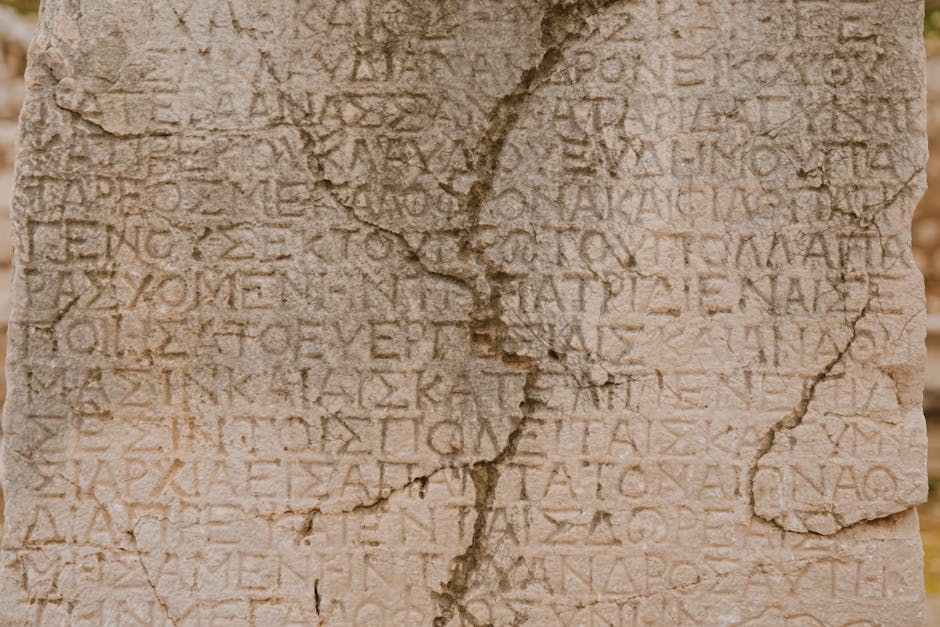

Top 10 Fun Facts About Ancient Civilizations

Top 10 Fun Facts About Ancient Civilizations

⏱️ 6 min read

Ancient civilizations laid the groundwork for modern society, developing sophisticated systems of governance, architecture, mathematics, and culture that continue to influence our world today. While history books often focus on wars and rulers, there are countless fascinating details about daily life, innovations, and achievements that reveal just how advanced and ingenious these ancient peoples truly were. From unexpected medical procedures to surprising entertainment practices, these remarkable facts showcase the creativity and intelligence of our ancestors.

Remarkable Discoveries from the Ancient World

1. The Egyptians Invented Toothpaste Over 5,000 Years Ago

Long before modern dental hygiene, ancient Egyptians were already concerned about oral health and fresh breath. Archaeological evidence reveals that Egyptians created the first toothpaste around 5000 BCE, mixing crushed rock salt, mint, dried iris flowers, and pepper to form an abrasive cleaning paste. While this ancient formula would certainly be too harsh for modern teeth, it demonstrates a sophisticated understanding of dental care. The Egyptians also fashioned toothbrushes from frayed twigs, showing that the pursuit of a bright smile is truly timeless.

2. Roman Concrete Was Superior to Modern Formulas

The ancient Romans developed a concrete formula that has proven more durable than many modern versions. The key ingredient was volcanic ash, which they mixed with lime and seawater to create an exceptionally strong building material. The Pantheon in Rome, built nearly 2,000 years ago, still stands with its original concrete dome intact. Scientists have discovered that Roman concrete actually grows stronger over time through a chemical reaction with seawater, creating a mineral structure that prevents cracks from spreading. This ancient technology has inspired contemporary researchers seeking to create more sustainable and long-lasting construction materials.

3. The Ancient Greeks Had a Computer-Like Device

The Antikythera mechanism, discovered in a shipwreck off the Greek island of Antikythera in 1901, is often called the world's first analog computer. Dating back to around 100 BCE, this intricate bronze device contained at least 30 meshing gears and was used to predict astronomical positions, eclipses, and the timing of the Olympic Games years in advance. Its technological sophistication was unmatched for over a millennium, and modern scientists required X-ray imaging and advanced scanning technology to fully understand its complex mechanisms. This discovery completely changed our understanding of ancient Greek technological capabilities.

4. Mayan Chocolate Was a Currency and Medicine

The ancient Maya didn't just enjoy chocolate as a treat; they considered cacao beans so valuable that they used them as currency. A rabbit could be purchased for 10 cacao beans, while a slave cost approximately 100 beans. The Maya consumed chocolate as a bitter, frothy drink mixed with chili peppers, cornmeal, and other spices, believing it possessed divine properties. They also used chocolate as medicine, treating fever, coughs, and various ailments. Cacao played such a central role in Mayan culture that it featured prominently in religious ceremonies and was believed to be a gift from the gods.

5. Ancient Mesopotamians Kept Detailed Consumer Complaint Records

One of the oldest known customer complaints in history comes from ancient Mesopotamia, dating to approximately 1750 BCE. A clay tablet inscribed with cuneiform writing details a complaint from a customer named Nanni to a copper merchant named Ea-nasir about receiving substandard copper ore. The tablet reveals that ancient civilizations had sophisticated commercial systems, including quality expectations, business ethics, and methods for addressing grievances. This artifact demonstrates that customer service issues and the desire for quality goods are as old as commerce itself.

6. Chinese Seismoscopes Detected Earthquakes 1,800 Years Ago

In 132 CE, Chinese inventor Zhang Heng created the first seismoscope, an ingenious device capable of detecting earthquakes hundreds of miles away. The bronze vessel was decorated with eight dragon heads, each holding a ball in its mouth, positioned above eight corresponding bronze toads with open mouths. When seismic waves reached the device, an internal pendulum mechanism would trigger one of the dragon heads to release its ball, which would fall into a toad's mouth below, indicating the direction of the earthquake. This remarkable invention predated similar Western devices by over 1,500 years.

7. Ancient Egyptians Practiced Brain Surgery

Archaeological evidence shows that ancient Egyptians performed complex brain surgery as early as 3,000 BCE. Skulls have been discovered with holes drilled into them in a procedure called trepanation, and signs of bone healing indicate that many patients actually survived these operations. Medical papyri describe various surgical procedures, including the removal of brain tumors and treatment of head injuries. The Edwin Smith Papyrus, dating to around 1600 BCE, contains detailed descriptions of brain anatomy and surgical techniques, revealing a level of medical knowledge that was extraordinarily advanced for its time.

8. The Indus Valley Civilization Had Advanced Urban Planning

The Indus Valley Civilization, flourishing around 2500 BCE in what is now Pakistan and northwest India, developed remarkably sophisticated cities with features that wouldn't become common elsewhere for millennia. Cities like Mohenjo-Daro and Harappa featured grid-pattern streets, advanced drainage systems, public baths, and standardized brick sizes. Most impressively, nearly every home had access to a private toilet connected to a covered sewage system, demonstrating a level of public sanitation infrastructure that surpassed many cities until the modern era. The civilization also developed standardized weights and measures, facilitating trade across vast distances.

9. Vikings Were Expert Navigators Using Sunstones

Long before GPS or even magnetic compasses were widely used in Europe, Vikings navigated across vast ocean distances using crystalline "sunstones." These calcite crystals could detect the position of the sun even on cloudy days or when the sun was below the horizon by polarizing light. Recent scientific experiments have confirmed that these stones could provide navigational accuracy within a few degrees, explaining how Vikings successfully crossed the North Atlantic to reach Iceland, Greenland, and North America. This sophisticated understanding of light physics enabled their legendary voyages of exploration.

10. Ancient Persians Stored Ice in Desert Structures

The ancient Persians developed yakhchāls, ingenious ice storage structures that kept ice frozen through scorching summer months in the desert. These dome-shaped buildings, some dating back to 400 BCE, used thick, heat-resistant walls made of a special mortar called sarooj, mixed from sand, clay, egg whites, lime, goat hair, and ash. Underground chambers and windcatchers created natural cooling systems, while ice harvested during winter was stored in layers separated by insulation. Some yakhchāls maintained temperatures low enough to produce ice even in summer, and people used this stored ice for food preservation and making cold treats.

Lessons from Ancient Ingenuity

These ten fascinating facts reveal that ancient civilizations were far more technologically advanced and culturally sophisticated than commonly imagined. From medical procedures and computing devices to sustainable building materials and precision navigation techniques, our ancestors developed solutions to complex problems that continue to impress modern scientists and engineers. Understanding these achievements provides not only appreciation for human ingenuity throughout history but also inspiration for contemporary challenges, reminding us that innovation and creativity have always been fundamental human traits.