











1 / 10 Questions
0 Points

What music genre did Jimi Hendrix primarily perform?

Country

Rock

Jazz

Reggae

Points won
0
Correct score
0%

More questions

More Articles

Did You Know? 10 Little-Known Details About Lucid Dreaming

Did You Know? 10 Little-Known Details About Lucid Dreaming

⏱️ 6 min read

Lucid dreaming—the phenomenon of becoming aware that you're dreaming while still asleep—has fascinated humanity for centuries. While many people are familiar with the basic concept, there exists a wealth of lesser-known facts about this extraordinary state of consciousness that even seasoned dreamers might find surprising. From ancient practices to cutting-edge neuroscience, these remarkable details reveal just how complex and fascinating the world of lucid dreaming truly is.

Exploring the Hidden Dimensions of Conscious Dreaming

The Ancient Buddhist Practice That Predates Modern Research

Long before Western scientists began studying lucid dreaming in laboratories, Tibetan Buddhist monks were practicing a sophisticated form of dream yoga called "Milam" for over a thousand years. This meditative practice involves maintaining awareness during the dream state as part of spiritual development. The monks viewed lucid dreaming not merely as entertainment or curiosity, but as a profound tool for understanding the nature of reality and consciousness itself. Their detailed techniques and philosophies were documented in texts centuries before the term "lucid dreaming" was even coined in 1913 by Dutch psychiatrist Frederik van Eeden.

The Unexpected Time Dilation Phenomenon

Contrary to popular belief and the portrayal in films like "Inception," time in lucid dreams doesn't actually move significantly slower or faster than real time. Research conducted at sleep laboratories has demonstrated that when lucid dreamers are asked to perform specific counting tasks or signal with eye movements at timed intervals, the duration closely matches waking time. However, the subjective experience can feel different because dreams often lack the same temporal coherence as waking life, with scenes shifting rapidly and memories of dream events being compressed upon waking.

The Muscle Memory Training Ground

Athletes and musicians have discovered that practicing skills during lucid dreams can actually improve real-world performance. Studies have shown that the brain regions activated during motor activities in lucid dreams are remarkably similar to those used during actual physical practice. German researchers found that participants who practiced tossing coins into a cup during lucid dreams showed measurable improvement in the task when awake. This occurs because the motor cortex doesn't distinguish sharply between vividly imagined actions and real ones, making lucid dreams a legitimate training environment.

The Surprising Prevalence Among the Population

While lucid dreaming might seem rare or special, research suggests that approximately 55% of people have experienced at least one lucid dream in their lifetime, and about 23% of people experience lucid dreams once per month or more. This means that spontaneous lucid dreaming is far more common than many realize. However, frequent lucid dreamers who can induce these states reliably represent a much smaller percentage, estimated at around 1% of the population who experience lucid dreams multiple times per week without training.

The REM Sleep Sweet Spot

Lucid dreams occur almost exclusively during REM (Rapid Eye Movement) sleep, but they're most likely to happen during the later REM cycles of the night. The first REM period might last only 10 minutes, while REM periods in the early morning hours can extend to 30-60 minutes. This is why many lucid dreaming techniques recommend waking up after 4-6 hours of sleep and then returning to bed—you're targeting these longer, more stable REM periods when the brain is primed for vivid dreaming and consciousness is closer to the surface.

The Neurotransmitter Connection

Specific neurotransmitters and supplements can significantly influence the likelihood and vividness of lucid dreams. Acetylcholine, a neurotransmitter crucial for REM sleep and memory formation, plays a particularly important role. Some lucid dreamers use galantamine, a natural supplement that inhibits the breakdown of acetylcholine, to enhance their chances of achieving lucidity. Additionally, the neurotransmitter serotonin affects dream vividness, which explains why certain antidepressants that modify serotonin levels often produce notable changes in dream patterns and recall.

The Eye Movement Communication Method

Scientists have successfully established real-time communication with lucid dreamers using eye movements—a breakthrough that sounds like science fiction. Since the muscles controlling eye movement aren't paralyzed during REM sleep (unlike most other muscles), lucid dreamers can send pre-arranged signals to researchers by moving their eyes in specific patterns, such as left-right-left-right. This technique has been used to confirm lucidity, mark the beginning and end of tasks performed in dreams, and even answer yes/no questions while the dreamer remains asleep.

The Problem-Solving Powerhouse

Lucid dreams can serve as an extraordinary platform for creative problem-solving and innovation. The unusual logic and reduced criticism of the dreaming brain, combined with the conscious awareness of lucid dreaming, creates a unique cognitive state. Several inventors, artists, and scientists have reported solving complex problems or gaining creative insights during lucid dreams. This occurs because the brain can make novel connections and approach problems from angles that might be dismissed by the more rigid logic of the waking mind, while lucidity allows the dreamer to actively explore and remember these solutions.

The Prefrontal Cortex Reactivation

Neuroscientific research using EEG and fMRI technology has revealed that during lucid dreaming, parts of the prefrontal cortex—the brain region associated with higher-order thinking and self-awareness—show increased activity compared to normal dreaming. This area is typically deactivated during regular REM sleep, which explains why we usually accept bizarre dream scenarios without question. The reactivation of these regions during lucid dreams represents a hybrid state of consciousness that combines elements of both waking and sleeping brain activity, creating a truly unique neurological phenomenon.

The Nightmare Therapy Application

Lucid dreaming has emerged as a promising therapeutic tool for treating recurring nightmares, particularly in individuals with PTSD. Imagery Rehearsal Therapy combined with lucid dreaming techniques has shown remarkable success rates. When dreamers become lucid during a nightmare, they can consciously choose to change the narrative, confront threatening figures, or simply observe without fear, knowing they're dreaming. Studies have documented significant reductions in nightmare frequency and intensity among patients who learn to achieve lucidity, offering a drug-free intervention that empowers individuals to literally rewrite their nightmares.

The Continuing Mystery of Conscious Dreams

These ten lesser-known aspects of lucid dreaming reveal a phenomenon far more complex and scientifically intriguing than simple awareness during sleep. From ancient spiritual practices to modern neuroscience, from therapeutic applications to athletic training, lucid dreaming bridges the gap between our conscious and unconscious minds in ways researchers are only beginning to understand. As technology advances and more studies are conducted, we continue to uncover new dimensions of this remarkable state of consciousness, suggesting that the dream world holds far more potential than we ever imagined.

Top 10 Most Unique Bird Species

Top 10 Most Unique Bird Species

⏱️ 7 min read

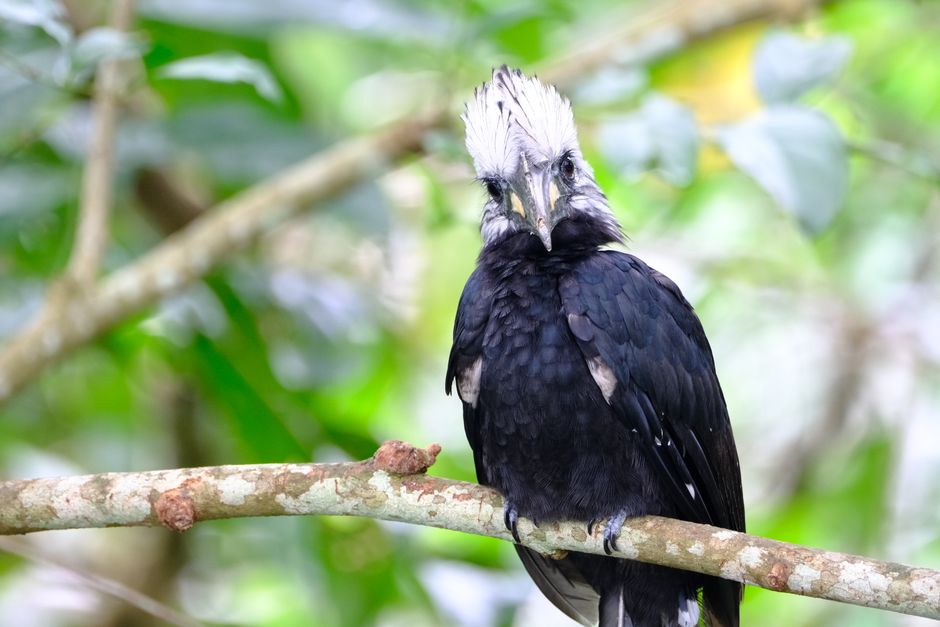
The avian world is filled with extraordinary diversity, showcasing nature's incredible creativity through millions of years of evolution. From remote islands to dense rainforests, certain bird species have developed remarkable adaptations that set them apart from all others. These exceptional creatures display unusual physical features, behaviors, and survival strategies that challenge our understanding of what birds can be. The following exploration reveals ten of the most distinctive bird species on our planet, each representing a unique marvel of natural selection.

Extraordinary Avian Wonders

1. The Shoebill: Africa's Living Dinosaur

Standing up to five feet tall in the wetlands of East Africa, the Shoebill appears as though it stepped directly from the Cretaceous period. This massive bird possesses one of the most distinctive bills in the animal kingdom—a large, shoe-shaped appendage measuring up to 9.5 inches long and 4 inches wide. The bill functions as a formidable hunting tool, capable of decapitating lungfish and small crocodiles with devastating efficiency. Shoebills remain motionless for hours while hunting, demonstrating patience that rivals any predator. Their prehistoric appearance, combined with their statuesque hunting posture and tendency to bow to potential mates or friendly observers, makes them one of nature's most enigmatic creations.

2. The Kakapo: The World's Only Flightless Parrot

New Zealand's critically endangered Kakapo represents an evolutionary paradox—a hefty, ground-dwelling parrot that has lost the ability to fly. Weighing up to nine pounds, these nocturnal birds are the heaviest parrots on Earth. Their moss-green feathers provide excellent camouflage among forest vegetation, while their owl-like facial disc gives them exceptional hearing for navigating in darkness. Kakapos exhibit unusual breeding behavior, with males creating bowl-shaped depressions where they emit deep, booming calls that can travel several miles to attract females. With fewer than 250 individuals remaining, each bird is individually named and monitored, making the Kakapo one of the world's most intensively managed species.

3. The Secretary Bird: Terrestrial Snake Hunter

Standing over four feet tall with crane-like legs, the Secretary Bird of African savannas combines grace with lethal efficiency. This raptor spends most of its time on the ground, stalking through grasslands in search of snakes, lizards, and small mammals. What distinguishes this species is its hunting technique—powerful kicks delivered at incredible speeds to stun or kill venomous snakes, including cobras and puff adders. The bird's quill-like head feathers resemble 19th-century secretaries who tucked pens behind their ears, inspiring its common name. Despite being capable fliers, Secretary Birds prefer terrestrial movement, walking up to 20 miles daily in search of prey.

4. The Hoatzin: The Reptilian Relic

Deep in the Amazon and Orinoco basins lives the Hoatzin, often called the "stink bird" due to its distinctive odor resulting from its unique digestive system. This pheasant-sized bird is the only avian species that ferments vegetation in its crop, similar to how cows digest plant material. Even more remarkable, Hoatzin chicks possess claws on their wings—a primitive feature reminiscent of Archaeopteryx. When threatened, young Hoatzins drop from nests into water below, swimming to safety before using their wing claws to climb back up. This combination of primitive characteristics and specialized adaptations makes the Hoatzin a living window into avian evolutionary history.

5. The Magnificent Frigatebird: Master of Aerial Piracy

With the largest wing-area-to-body-weight ratio of any bird, the Magnificent Frigatebird soars above tropical oceans with unmatched aerial prowess. Males possess a striking scarlet throat pouch that inflates to balloon-like proportions during courtship displays. These birds cannot walk well or take off from flat surfaces, and their feathers aren't waterproof, preventing them from landing on water. Instead, they've perfected kleptoparasitism—harassing other seabirds mid-flight until they regurgitate their catch. Frigatebirds can stay aloft for weeks, even sleeping while gliding on air currents, demonstrating perhaps the most specialized aerial lifestyle of any bird.

6. The Wilson's Bird-of-Paradise: Nature's Technicolor Marvel

On remote Indonesian islands lives the Wilson's Bird-of-Paradise, a species that appears almost artificially colored. Males sport a vibrant turquoise crown, bare blue skin on their heads, yellow neck mantles, and crimson backing. During elaborate courtship displays, males meticulously clear forest floor "courts," removing every leaf and twig to create the perfect stage. They then perform intricate dances, transforming their appearance into a pulsating, iridescent disc that seems to defy natural coloration. This species exemplifies extreme sexual selection, where female preference has driven males to evolve increasingly elaborate ornaments and behaviors.

7. The Kiwi: New Zealand's Honorary Mammal

New Zealand's national symbol challenges conventional bird characteristics so thoroughly that it seems more mammalian than avian. Kiwis possess hair-like feathers, whiskers, nostrils at the tip of their long beaks, and lay eggs that can weigh up to 20% of the female's body weight—proportionally the largest of any bird. They're nocturnal, have poor vision, rely heavily on smell (unusual for birds), and maintain body temperatures several degrees lower than most birds. With vestigial wings hidden beneath their plumage, Kiwis represent an extreme adaptation to ground-dwelling life in an environment historically free from mammalian predators.

8. The Lammergeier: The Bone-Breaking Vulture

Also known as the Bearded Vulture, the Lammergeier has developed one of nature's most specialized diets—it feeds primarily on bone marrow. This magnificent raptor, with its distinctive orange-hued plumage and black "beard," carries bones high into the air before dropping them onto rocky surfaces to shatter them. It can swallow and digest bone fragments up to ten inches long, with stomach acids powerful enough to dissolve them completely within 24 hours. Unlike other vultures that have bald heads, the Lammergeier sports feathered heads since it doesn't need to plunge into messy carcasses. This species occupies a unique ecological niche, extracting nutrients that other scavengers cannot access.

9. The Lyrebird: Nature's Supreme Mimic

Australia's Superb Lyrebird possesses perhaps the most sophisticated vocal abilities of any bird, capable of mimicking virtually any sound with stunning accuracy. These chicken-sized birds can reproduce chainsaws, car alarms, camera shutters, other bird species, and even human speech. Males clear circular display arenas where they perform elaborate courtship dances, fanning their ornate tail feathers into lyre shapes while delivering complex acoustic performances lasting up to 20 minutes. Each male develops a unique repertoire throughout his life, incorporating new sounds encountered in his territory. Their syrinx (vocal organ) is the most complex of any songbird, allowing for this extraordinary mimicry.

10. The Oilbird: The Echolocating Cave Dweller

In the dark caves of Central and South America roosts the Oilbird, the only nocturnal flying fruit-eating bird and one of very few birds capable of echolocation. These reddish-brown birds navigate pitch-black caverns using clicking sounds that bounce off cave walls, similar to bats but using audible frequencies. Oilbirds feast exclusively on oil-rich palm and laurel fruits, feeding their chicks such a lipid-rich diet that nestlings can weigh 50% more than adults. Historically, indigenous peoples harvested these remarkably fat chicks for oil, inspiring the species' common name. Their unique combination of fruit-eating habits, echolocation abilities, and cave-dwelling lifestyle distinguishes them from all other avian species.

The Endless Diversity of Avian Evolution

These ten remarkable species represent merely a fraction of the extraordinary diversity found within the avian world. Each has evolved unique solutions to survival challenges, from the Shoebill's dinosaur-like appearance to the Oilbird's echolocation abilities. Whether adapting to flightlessness, developing specialized diets, or perfecting complex vocalizations, these birds demonstrate nature's boundless creativity. Their existence reminds us that evolution continues to produce creatures that expand our understanding of biological possibilities. Protecting these unique species and their habitats ensures that future generations can continue to marvel at the remarkable variety of life that shares our planet.