





1 / 20 Questions
0 Points

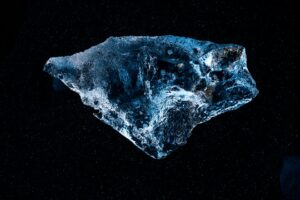
What natural rock is so light it can float on water?

Slate

Pumice

Marble

Granite

Points won
0
Correct score
0%

More questions

More Articles

Did You Know? 10 Paintings That Hide Secret Messages

Did You Know? 10 Paintings That Hide Secret Messages

⏱️ 6 min read

Throughout art history, master painters have embedded hidden messages, symbols, and secrets within their works. These cryptic elements—ranging from political statements to religious symbolism and personal signatures—often go unnoticed by casual observers. Yet once revealed, they transform our understanding of these masterpieces and offer fascinating glimpses into the minds of their creators. Here are ten renowned paintings that conceal intriguing secrets beneath their brushstrokes.

Masterpieces With Hidden Meanings

1. The Last Supper's Mathematical Harmony and Musical Code

Leonardo da Vinci's iconic mural in Milan contains multiple layers of hidden meaning. Beyond the obvious drama of Christ announcing his betrayal, researchers have discovered that the positioning of bread rolls on the table corresponds to musical notes. When read from right to left—as Leonardo often wrote—these placements create a 40-second musical composition that sounds like a requiem. Additionally, da Vinci embedded complex mathematical proportions throughout the composition, with the dimensions of the room and placement of figures following precise geometric ratios that create visual harmony.

2. The Arnolfini Portrait's Mirror Reflection Testimony

Jan van Eyck's 1434 masterpiece depicts a wealthy merchant and his wife, but the convex mirror hanging on the back wall reveals a secret. Within this tiny reflection, two additional figures stand in the doorway—likely van Eyck himself and an assistant, serving as witnesses to what may have been a marriage ceremony. Above the mirror, van Eyck inscribed "Johannes de eyck fuit hic" (Jan van Eyck was here), transforming the painting into a legal document of the event. The mirror's frame also contains ten miniature scenes depicting Christ's Passion, adding layers of religious symbolism to this seemingly secular portrait.

3. Michelangelo's Sistine Chapel Anatomical Studies

Michelangelo, who studied human anatomy through cadaver dissection, concealed detailed anatomical drawings within the Sistine Chapel frescoes. The most famous example appears in "The Creation of Adam," where the flowing robes and figures surrounding God form a precise anatomical illustration of the human brain, complete with the brain stem, frontal lobe, and optic chiasm. In another section, "The Separation of Light from Darkness," God's neck and chest contain what appears to be a detailed rendering of the human brainstem and spinal cord. These hidden anatomies likely represented Michelangelo's belief that divine inspiration and human consciousness were intimately connected.

4. The Ambassadors' Anamorphic Skull Warning

Hans Holbein the Younger's 1533 painting of two wealthy diplomats contains a bizarre, distorted shape floating in the foreground that appears incomprehensible from a frontal view. However, when viewed from an acute angle from the right side of the painting, this mysterious form reveals itself as a perfectly rendered human skull—a "memento mori" reminding viewers of mortality's inevitability. This anamorphic technique demonstrated Holbein's mastery of perspective while delivering a sobering message: despite the ambassadors' wealth, learning, and power displayed throughout the painting, death awaits all.

5. The Garden of Earthly Delights' Medieval Music Score

Hieronymus Bosch's triptych from around 1500 contains countless bizarre and fantastical images, but the Hell panel conceals an unexpected secret. Musical notation appears written on the posterior of one tortured soul, and when a music student transcribed and performed these notes in 2014, they produced a haunting medieval composition. The piece, now called "The Butt Music from Hell," reflects the chaotic and disturbing nature of Bosch's infernal vision. This discovery suggests Bosch may have been musically trained and intentionally composed this piece as part of his comprehensive vision of the afterlife.

6. Caravaggio's Self-Portrait in Martyrdom

In "The Martyrdom of Saint Matthew," Caravaggio included his own face among the witnesses to the violent scene. However, his self-portrait serves a deeper purpose than mere artistic signature. Caravaggio depicted himself as a conflicted observer, simultaneously horrified by and drawn to the violence—a reflection of his own turbulent life marked by brawls, arrests, and ultimately fleeing Rome after killing a man. His expression in the painting captures the psychological complexity of witnessing brutality, turning the work into a confessional statement about his own relationship with violence.

7. Washington Crossing the Delaware's Anachronistic Elements

Emanuel Leutze's patriotic 1851 painting contains deliberate historical inaccuracies that function as hidden messages. The flag shown—the Stars and Stripes—wasn't adopted until 1777, a year after Washington's famous crossing. Leutze, a German-American, intentionally included this anachronism to connect the Revolutionary War with contemporary mid-19th century struggles for democracy in Europe. The painting was created during a period of failed revolutions across Europe, and Leutze embedded symbols of hope and democratic ideals throughout the composition to inspire European revolutionaries, making it as much about 1850s politics as 1776 history.

8. The Old Guitarist's Hidden Mother and Child

Pablo Picasso's Blue Period masterpiece from 1903 conceals an entirely different painting beneath its surface. X-ray analysis and infrared imaging have revealed that beneath the emaciated guitarist sits a ghostly image of a woman nursing a child, possibly combined with other figures including an animal. Picasso, then poverty-stricken, frequently painted over previous works to save money on canvas. However, this hidden maternal image adds poignant meaning to the visible painting, suggesting themes of loss, transformation, and the artist's emotional state during this melancholic period of his career.

9. American Gothic's Satirical Commentary

Grant Wood's 1930 iconic image of a farmer and his daughter (often mistaken for his wife) contains subtle satirical elements that mock small-town provincialism. The man's pitchfork, with its three prongs, echoes throughout the painting—in his overalls' stitching, the window's Gothic arch, and even the wrinkles on his face. Wood intended this repetition to emphasize the rigid, inflexible nature of rural Midwestern life. The dour expressions weren't meant as celebration but as gentle mockery of conservative attitudes. Wood's sister and his dentist posed for the painting, adding another layer of humor to this supposedly serious portrait of American values.

10. Bacchus' Self-Portrait in a Wine Glass

Caravaggio appears again with another self-portrait hidden in his painting "Bacchus." In the carafe of white wine on the table, careful examination reveals a tiny reflection of the artist himself at his easel. This miniature self-portrait, barely visible to the naked eye, demonstrates Caravaggio's extraordinary technical skill and his tendency toward self-insertion in his works. The inclusion transforms the painting from a simple mythological scene into a meditation on the artist's relationship with his subject matter and the act of creation itself, with Caravaggio literally placing himself within the world he's depicting.

The Enduring Mystery of Hidden Messages

These ten paintings demonstrate that the greatest artworks often reward careful examination with unexpected discoveries. Whether embedding anatomical studies, musical compositions, political statements, or personal confessions, these artists created multilayered works that continue revealing new meanings centuries after their creation. Modern technology like X-ray analysis and infrared imaging helps uncover previously invisible elements, suggesting that many more secrets likely remain hidden within the world's masterpieces. These concealed messages remind us that great art functions not merely as decoration but as complex communication across time, inviting each generation to look deeper and discover new interpretations within familiar images.

Did You Know? 15 Facts About Digital and AI Art

Did You Know? 15 Facts About Digital and AI Art

⏱️ 6 min read

The intersection of technology and creativity has given rise to revolutionary forms of artistic expression that are reshaping the art world. From computer-generated masterpieces to artificial intelligence collaborations, digital and AI art continue to challenge traditional notions of creativity, authorship, and aesthetic value. These fascinating developments reveal how machines and algorithms are becoming increasingly sophisticated creative partners, opening new frontiers for artists and collectors alike.

Groundbreaking Facts About Digital and AI Art

1. The First Digital Art Emerged in the 1960s

Digital art didn't begin with modern computers. Engineers and artists experimented with computer-generated imagery as early as the 1960s, using massive mainframe computers and plotters. Ben Laposky created "Oscillons" in 1950 using an oscilloscope, while Desmond Paul Henry built drawing machines from analog computers. These pioneers laid the groundwork for today's sophisticated digital art ecosystem, proving that the marriage of technology and creativity has deep historical roots.

2. AI Art Sold for $432,500 at Christie's Auction House

In 2018, the portrait "Edmond de Belamy" became the first AI-generated artwork sold by a major auction house. Created by the Paris-based collective Obvious using a Generative Adversarial Network (GAN), the piece fetched over 40 times its estimated value at Christie's. This landmark sale legitimized AI art in the traditional art market and sparked intense debates about authorship, creativity, and value in algorithmic art.

3. NFTs Revolutionized Digital Art Ownership and Authenticity

Non-fungible tokens transformed digital art by solving the long-standing problem of provenance and scarcity in the digital realm. Blockchain technology enables artists to create verifiable, unique digital assets that can be bought, sold, and collected like physical artworks. This innovation has created new revenue streams for digital artists and established digital art as a legitimate collectible category worth billions of dollars annually.

4. Neural Networks Learn from Millions of Existing Images

Modern AI art systems are trained on vast datasets containing millions of images from across art history. These neural networks analyze patterns, styles, and compositions to generate new works. Systems like DALL-E, Midjourney, and Stable Diffusion process enormous volumes of visual information, learning relationships between text descriptions and visual elements to create images from written prompts with stunning accuracy and creativity.

5. Digital Artists Use Pressure-Sensitive Tablets That Mimic Traditional Tools

Contemporary digital art tools have evolved to replicate the tactile experience of traditional media. Graphics tablets with thousands of pressure sensitivity levels allow artists to control brush strokes, opacity, and texture with the same nuance as physical painting. Devices like the Wacom Cintiq and iPad Pro with Apple Pencil bridge the gap between digital and traditional techniques, offering artists unprecedented control and flexibility.

6. AI Can Reproduce Artistic Styles with Remarkable Accuracy

Style transfer algorithms can analyze the distinctive characteristics of any artistic style—from Van Gogh's swirling brushwork to Picasso's cubist fragmentation—and apply these elements to new images. This technology enables users to reimagine photographs or original compositions in the manner of master artists, though it raises complex questions about originality, artistic intent, and the nature of creative expression.

7. Some AI Art Tools Process Prompts in Seconds

What once took human artists hours or days to create can now be generated by AI systems in mere seconds. Modern diffusion models and neural networks have achieved remarkable processing speeds, allowing users to iterate rapidly through multiple variations and refinements. This unprecedented speed democratizes visual creation while simultaneously challenging traditional notions of the artistic process and the value of time investment in art.

8. Digital Art Requires No Physical Storage Space

Unlike traditional art that requires climate-controlled storage, insurance, and physical space, digital artworks exist as data files. Collectors can own thousands of pieces without warehouses or gallery walls. This characteristic fundamentally changes art collecting, making it accessible to broader audiences while raising new questions about display, appreciation, and the physical experience of viewing art.

9. Collaborative AI-Human Artworks Are Gaining Recognition

Rather than replacing human artists, AI is increasingly used as a collaborative tool. Artists use algorithms to generate initial concepts, patterns, or variations that they then refine, curate, and integrate into larger works. This partnership approach leverages AI's computational power and pattern recognition while maintaining human aesthetic judgment, emotional intelligence, and intentionality in the creative process.

10. Digital Art Software Offers Unlimited Undo Capabilities

One of digital art's most significant practical advantages is the ability to experiment without permanent consequences. Artists can try bold techniques, make mistakes, and explore multiple directions with complete freedom, knowing they can revert any change. This non-destructive workflow encourages creative risk-taking and experimentation that would be impractical or impossible with traditional media, fundamentally changing the creative process.

11. AI Systems Can Generate Art in Styles That Never Existed

Beyond mimicking historical styles, AI can create entirely novel aesthetic approaches by combining elements in ways no human has previously imagined. These systems can blend incompatible styles, invent new visual languages, and explore aesthetic territories outside human cultural traditions. This capability suggests that AI might not just replicate human creativity but potentially expand the boundaries of what we consider aesthetically possible.

12. Digital Art Has No Material Degradation Over Time

Traditional artworks face inevitable deterioration—paint cracks, paper yellows, and sculptures erode. Digital files, when properly maintained and backed up, remain identical to their original state indefinitely. This permanence ensures that digital artworks can be experienced exactly as the artist intended for generations, though it also eliminates the patina and historical evidence that physical aging provides to traditional works.

13. Some AI Art Platforms Generate Over 10 Million Images Daily

The scale of AI art creation is staggering. Major platforms process millions of user prompts daily, generating an unprecedented volume of images. This explosive output represents a fundamental shift in visual culture, flooding the internet with algorithmically generated imagery and raising questions about oversaturation, quality control, and the environmental impact of computational art generation.

14. Digital Art Enables Real-Time Global Collaboration

Artists separated by continents can work simultaneously on the same digital canvas through cloud-based platforms. This collaborative capability creates new forms of artistic partnership impossible in traditional media, where physical artwork can only be in one place. Digital tools enable genuine creative collaboration across time zones, cultures, and artistic traditions, fostering unprecedented cross-pollination of ideas and techniques.

15. Copyright and Ownership Remain Legally Ambiguous for AI-Generated Art

Legal systems worldwide are struggling to address fundamental questions about AI art: Who owns work created by algorithms? Can AI-generated images be copyrighted? What rights do artists whose work trained the AI retain? These unresolved legal questions create uncertainty for artists, collectors, and platforms, with different jurisdictions proposing conflicting approaches to authorship, ownership, and intellectual property in algorithmic creativity.

The Evolving Landscape of Digital Creativity

These fifteen facts reveal that digital and AI art represent far more than technological novelties—they constitute a fundamental transformation in how art is created, distributed, valued, and experienced. From the first computer-generated images of the 1960s to today's sophisticated neural networks capable of producing museum-quality works in seconds, this evolution continues to accelerate. As AI systems become more sophisticated and digital tools more accessible, the boundaries between human and machine creativity grow increasingly blurred. Whether viewed as democratizing forces that empower new creators or as disruptive technologies that challenge artistic traditions, digital and AI art have permanently altered the artistic landscape, creating opportunities and controversies that will shape creative culture for generations to come.