










1 / 10 Questions
0 Points

What Popular Sandwich Cookie Was Introduced In 1912?

Chips Ahoy

Vienna Fingers

Oreo

Nutter Butter

Points won
0
Correct score
0%

More questions

More Articles

Did You Know? 10 Unsolved Mysteries from History

Did You Know? 10 Unsolved Mysteries from History

⏱️ 7 min read

Throughout human history, countless events, disappearances, and phenomena have defied explanation, leaving historians, archaeologists, and scientists puzzled for generations. Despite advances in technology and research methods, some mysteries remain stubbornly unsolved, continuing to captivate our imagination and challenge our understanding of the past. These enigmas span continents and millennia, from ancient civilizations to the modern era, each offering tantalizing clues but no definitive answers.

Ten Historical Enigmas That Continue to Baffle Experts

1. The Vanishing of the Roanoke Colony

In 1587, over 100 English settlers established a colony on Roanoke Island in present-day North Carolina. When supply ships returned three years later, the entire population had vanished without a trace. The only clue left behind was the word "CROATOAN" carved into a wooden post. Despite numerous theories ranging from assimilation with local Native American tribes to Spanish attacks or disease, no conclusive evidence has ever emerged to explain what happened to the colonists. Archaeological investigations continue to this day, but the fate of the Lost Colony remains one of America's oldest unsolved mysteries.

2. The Identity of Jack the Ripper

Between August and November 1888, at least five women were brutally murdered in London's Whitechapel district by an unknown killer who came to be known as Jack the Ripper. The murderer sent taunting letters to police and newspapers, and despite one of the largest manhunts in history, was never caught or conclusively identified. Over the years, more than 100 suspects have been proposed, including members of the royal family, doctors, artists, and even Lewis Carroll. Modern DNA analysis has been attempted on evidence preserved from the crime scenes, but results remain controversial and inconclusive.

3. The Construction Techniques of the Egyptian Pyramids

While we know the pyramids of Giza were built as tombs for pharaohs around 4,500 years ago, the exact methods used to construct these massive stone monuments remain hotly debated. The Great Pyramid contains approximately 2.3 million stone blocks, each weighing between 2.5 and 15 tons. How ancient Egyptians transported, lifted, and precisely positioned these enormous stones without modern machinery continues to puzzle engineers and archaeologists. Theories include the use of ramps, levers, counterweights, and internal spiral pathways, but no single explanation accounts for all the evidence. Recent discoveries of workers' villages and papyrus records have provided some insights, yet the complete picture remains elusive.

4. The Mysterious Voynich Manuscript

Carbon-dated to the early 15th century, the Voynich Manuscript is a 240-page illustrated codex written entirely in an unknown script that has defied all attempts at translation. The book contains detailed drawings of unidentifiable plants, astronomical diagrams, and illustrations of naked women in strange plumbing systems. Cryptographers, linguists, and codebreakers including World War II experts have attempted to decipher it, but none have succeeded. Some believe it's an elaborate hoax, while others argue it contains genuine knowledge written in a lost or constructed language. The manuscript's purpose and origin remain completely unknown.

5. The Disappearance of Amelia Earhart

On July 2, 1937, pioneering aviator Amelia Earhart and her navigator Fred Noonan vanished over the Pacific Ocean while attempting to circumnavigate the globe. Despite the most extensive air and sea search in naval history at that time, no trace of the plane, crew, or wreckage was ever definitively found. Theories about their fate include crashing into the ocean, landing on an uninhabited island and dying as castaways, or even being captured by the Japanese military. Recent expeditions have discovered artifacts on Nikumaroro Island that some believe belonged to Earhart, but conclusive proof remains elusive.

6. The Fate of the Princes in the Tower

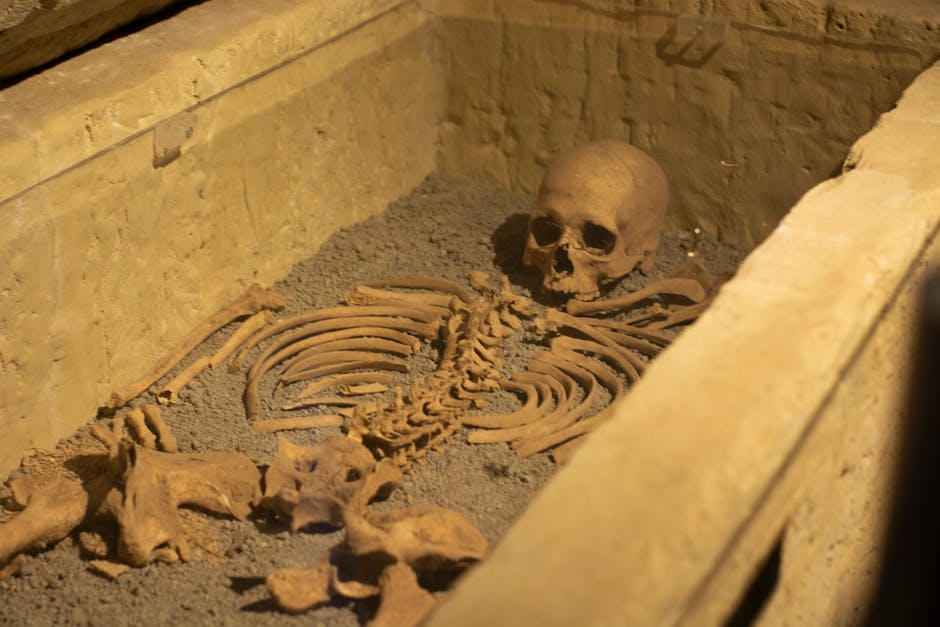
In 1483, twelve-year-old King Edward V of England and his nine-year-old brother Richard, Duke of York, were placed in the Tower of London by their uncle, Richard III. The boys were never seen again, and Richard III took the throne shortly after. In 1674, workers discovered a wooden box containing the skeletons of two children beneath a staircase in the Tower. While many historians believe Richard III ordered their murder, others argue the boys may have died of natural causes or been killed by later political rivals. The bones have never been subjected to modern DNA testing, leaving their identity and the circumstances of the princes' death unconfirmed.

7. The Purpose of Stonehenge

Constructed between 3000 and 2000 BCE, Stonehenge consists of massive standing stones arranged in a circular pattern on England's Salisbury Plain. While archaeologists have learned much about how and when it was built, its original purpose remains debated. Theories include an astronomical observatory, a healing temple, a burial ground for elite members of society, a site for religious ceremonies, or even an ancient calendar. Recent discoveries suggest it may have served multiple purposes over its long history of use. The effort required to transport stones from quarries over 150 miles away indicates it held tremendous significance to Neolithic people, but its precise meaning may never be fully understood.

8. The Lost City of Atlantis

First described by the Greek philosopher Plato around 360 BCE, Atlantis was supposedly an advanced civilization that sank into the ocean "in a single day and night of misfortune." Whether Plato intended his account as literal history or philosophical allegory has been debated for over two millennia. Countless locations have been proposed for Atlantis, including the Mediterranean, the Atlantic Ocean, Antarctica, and even Indonesia. Some scholars believe Plato's story was inspired by the volcanic destruction of the Minoan civilization on Santorini around 1600 BCE, while others consider it pure fiction. Despite numerous expeditions and claims of discovery, no archaeological evidence of Atlantis has ever been verified.

9. The Zodiac Killer's Identity

Between 1968 and 1969, the Zodiac Killer murdered at least five people in Northern California, though he claimed to have killed 37. The killer sent cryptic letters and complex ciphers to newspapers, some of which remain unsolved today. Despite an extensive investigation and thousands of tips over the decades, the killer was never caught. In 2020, a team of codebreakers finally solved one of the Zodiac's most complex ciphers after 51 years, but it contained no information revealing the killer's identity. DNA evidence exists, but without a suspect to compare it to, the case remains open and the killer's identity unknown.

10. The Tunguska Event Explosion

On June 30, 1908, a massive explosion flattened over 770 square miles of forest in Siberia's Tunguska region. The blast, estimated at 1,000 times more powerful than the Hiroshima atomic bomb, was heard 600 miles away. Despite the enormous destruction, no crater was ever found, and no confirmed fragments of the object that caused the explosion have been recovered. The leading theory suggests a meteor or comet exploded in the atmosphere before impact, but alternative explanations including a natural gas explosion, a black hole, or even an alien spacecraft have been proposed. The remote location meant the site wasn't scientifically investigated until nearly 20 years after the event, leaving crucial evidence lost to time.

The Enduring Appeal of Historical Mysteries

These ten unsolved mysteries remind us that history is not a closed book with all questions answered. Each represents a gap in our knowledge, a puzzle that continues to inspire research, debate, and speculation. While some may eventually be solved through advances in technology such as DNA analysis, satellite imaging, or artificial intelligence, others may remain forever beyond our reach. The enduring fascination with these mysteries speaks to humanity's insatiable curiosity and our desire to understand the past. Whether they involve vanished civilizations, unidentified criminals, or unexplained phenomena, these historical enigmas continue to captivate new generations, proving that sometimes the questions we cannot answer are just as valuable as those we can.


Did You Know? 15 Unbelievable Mysteries About Underdog Stories

Did You Know? 15 Unbelievable Mysteries About Underdog Stories

⏱️ 6 min read

Sports history is filled with incredible underdog victories that defy logic, probability, and expectation. Yet behind many of these inspirational triumphs lie fascinating mysteries, unexplained phenomena, and questions that continue to puzzle analysts, historians, and fans alike. These enigmatic elements transform simple comeback stories into legendary tales that transcend the games themselves. Let's explore the most perplexing aspects of underdog victories that remain unsolved or deeply intriguing to this day.

The Unexplained Phenomena Behind Sports' Greatest Upsets

1. The Curse-Breaking Drought That Defied Mathematics

The Chicago Cubs' 108-year championship drought remains one of sports' most mysterious phenomena. Statisticians have calculated that even the worst-run franchise should statistically win a championship within that timeframe purely by chance. The mathematical improbability of such sustained failure—followed by their dramatic 2016 World Series victory as underdogs—raises questions about whether psychological factors create self-fulfilling prophecies that supersede pure athletic ability and organizational competence.

2. The Miracle on Ice's Soviet Lineup Mystery

When Team USA defeated the Soviet Union in 1980, analysts noted peculiar coaching decisions by Soviet legend Viktor Tikhonov. The mystery centers on why he pulled legendary goaltender Vladislav Tretiak after the first period despite only allowing two goals. Decades later, the complete reasoning remains debated, with theories ranging from political pressure to overconfidence, but no definitive explanation has emerged for a decision that may have altered the outcome.

3. Leicester City's Simultaneous Player Peak Performance

Leicester City's 5000-to-1 Premier League championship in 2016 presents a statistical mystery: how did multiple mid-tier players simultaneously achieve career-best performances in the same season? Players like Riyad Mahrez, Jamie Vardy, and N'Golo Kanté all peaked together under Claudio Ranieri. Sports scientists remain puzzled by the perfect storm of individual improvements coinciding so precisely, challenging traditional understanding of performance curves and team chemistry.

4. The Buster Douglas Knockout Power Enigma

Buster Douglas's 1990 knockout of "invincible" Mike Tyson raises questions about sudden performance spikes. Douglas, a 42-to-1 underdog, displayed punching power and hand speed that analysts claim exceeded his previous capabilities. Some attribute this to motivation following his mother's death, but the physiological mechanism by which emotional factors could so dramatically enhance physical performance remains scientifically mysterious.

5. The Super Bowl III Guarantee Psychological Effect

Joe Namath's famous guarantee before Super Bowl III, where his underdog New York Jets defeated the heavily favored Baltimore Colts, introduced a mystery about confidence's role in outcomes. Sports psychologists still debate whether bold predictions create tangible performance advantages through neurological changes, placebo-like effects on teammates, or psychological disruption of opponents. The mechanism remains incompletely understood.

6. Greece's Euro 2004 Tactical Innovation Under Pressure

Greece's shocking Euro 2004 championship as 150-to-1 outsiders involved defensive tactics so effective they seemed to break conventional football wisdom. The mystery lies in how coach Otto Rehhagel devised a system that neutralized superior opponents so consistently. Analysts have never fully replicated his approach's success, suggesting unknown variables in team psychology, opponent preparation, or tournament dynamics were at play.

7. The Rulon Gardner Strength Anomaly

Rulon Gardner's defeat of previously unbeaten Russian wrestler Alexander Karelin at the 2000 Olympics presents physiological mysteries. Gardner demonstrated strength that biomechanical analysis suggested shouldn't exist in someone of his body composition. The source of his power—whether from technique innovations, psychological factors, or unique muscle fiber composition—remains debated among sports scientists.

8. NC State's Cardiac Pack Timing Phenomenon

North Carolina State's 1983 NCAA basketball championship run featured an unprecedented pattern of last-second victories. The statistical improbability of winning multiple consecutive games in the final seconds raises questions about whether clutch performance is a measurable skill or random variance. This mystery continues to divide sports analytics experts between believers in "clutch genes" and statistical skeptics.

9. The Appalachian State Preparation Intelligence Gap

When FCS program Appalachian State defeated fifth-ranked Michigan in 2007, the mystery centered on how a smaller program identified and exploited specific weaknesses in a major program's scheme. The intelligence-gathering methods and analytical capabilities that enabled such precise game planning from a less-resourced program remain partially unexplained, suggesting underestimated sophistication at lower competitive levels.

10. The New York Giants' 2007 Defensive Evolution Mystery

The Giants' defeat of the undefeated Patriots in Super Bowl XLII involved a defensive line that suddenly generated pressure against an offensive line that had protected Tom Brady all season. The mystery involves how their pass rush became unstoppable in that specific game after being good but not dominant throughout the season. Whether scheme adjustments, motivation, or random performance variance caused this remains debated.

11. The Momentum Shift Invisibility Problem

Multiple underdog victories feature dramatic momentum shifts that commentators recognize in real-time but that statistical analysis struggles to capture. The mystery involves identifying objective measures for a phenomenon widely observed subjectively. This gap between perceived reality and measurable data challenges sports science's ability to explain why underdogs suddenly "believe" and favorites "tighten up."

12. Holly Holm's Perfect Style Matchup Discovery

Holly Holm's knockout of seemingly invincible Ronda Rousey in 2015 raises questions about how a significant underdog identified and executed a perfect tactical approach that numerous previous opponents had missed. The mystery involves whether Holm's camp possessed superior analytical capabilities or whether Rousey's vulnerabilities only became exploitable at that specific career moment due to unidentified factors.

13. The 2004 Red Sox Collective Amnesia Phenomenon

Boston's unprecedented comeback from 0-3 down against the Yankees in the 2004 ALCS seems to involve a psychological reset that allowed players to perform without the weight of history. Sports psychologists remain puzzled by how an entire team simultaneously overcame decades of organizational trauma. The mechanism enabling such collective mental state changes remains incompletely understood.

14. The Fatigue Resistance of Underdog Teams

Multiple underdog championship runs show teams maintaining peak performance despite theoretically having less depth and conditioning resources than favorites. Examples include Butler's back-to-back championship game appearances and VCU's Final Four run. The mystery involves how motivation might physiologically delay fatigue or whether underdogs employ unknown conditioning techniques that overcome resource disadvantages.

15. The Home Crowd Noise Amplitude Correlation

Analysis of famous upsets reveals unexplained correlations between specific decibel levels of crowd noise and probability of underdog success, particularly in the Seattle Seahawks' loudest home victories. The mystery involves whether certain sound frequencies or volumes create measurable physiological effects on athletes, or whether the correlation is coincidental. Scientific investigation into acoustic performance effects remains incomplete.

The Enduring Enigma of Unexpected Triumph

These fifteen mysteries remind us that despite advances in sports science, analytics, and psychology, underdog victories retain elements that resist complete explanation. Whether involving unexplained performance spikes, mysterious tactical innovations, or psychological phenomena that transcend measurement, these enigmas preserve the magic and unpredictability that make sports compelling. They challenge our assumption that superior resources, talent, and preparation guarantee victory, suggesting that human competition contains variables we've yet to identify or understand. Perhaps the greatest mystery is whether we'll ever fully explain why, on certain days, the improbable becomes inevitable and the underdog becomes champion.