










1 / 10 Questions
0 Points

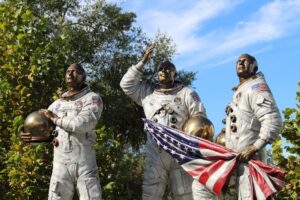
Which Apollo 11 problem almost prevented the first Moon landing?

Computer alarms during descent

Radio failure

Engine malfunction

Fuel leak

Points won
0
Correct score
0%

More questions

More Articles

Top 10 Unknown Myths About Basketball Legends

Top 10 Unknown Myths About Basketball Legends

⏱️ 6 min read

Basketball legends have captivated fans for generations, but their stories have often been distorted by time, media narratives, and popular culture. While many believe they know everything about their favorite players, numerous misconceptions have become accepted as fact. These myths obscure the true achievements and challenges these athletes faced, creating incomplete or inaccurate portraits of their careers and legacies.

Separating Fact from Fiction in Basketball History

1. Michael Jordan Was Cut from His High School Team

One of the most persistent myths in basketball lore is that Michael Jordan was cut from his high school varsity team. The truth is more nuanced. As a sophomore at Laney High School in Wilmington, North Carolina, Jordan was not selected for the varsity squad, but he wasn't technically "cut." He was placed on the junior varsity team because the coach believed he needed more development and playing time. Additionally, at 5'10" as a sophomore, he was considered too small for varsity competition. Jordan used this setback as motivation, but the narrative of being completely rejected from basketball is an exaggeration that has taken on a life of its own.

2. Wilt Chamberlain's 100-Point Game Was Against Elite Competition

Wilt Chamberlain's legendary 100-point game on March 2, 1962, is often cited as the greatest individual performance in NBA history. However, the context reveals a different story. The game was played against the New York Knicks, who were struggling that season, and the opposing center was Darrall Imhoff, a backup playing extended minutes due to injuries. The pace of play was artificially inflated, and Chamberlain's teammates deliberately fed him the ball to chase the record. While the achievement remains remarkable, the circumstances were far more favorable than the myth suggests.

3. Larry Bird Was a Poor Athlete Who Succeeded on Skill Alone

The narrative surrounding Larry Bird often portrays him as an unathletic player who compensated with basketball IQ and shooting ability. This myth disrespects Bird's actual physical capabilities. While he wasn't the fastest player or highest jumper, Bird possessed exceptional body control, quick hands, outstanding endurance, and was remarkably tough. His ability to play through injuries and maintain high performance levels throughout games demonstrated elite athletic conditioning. The "unathletic" label was often a coded way of discussing race in basketball rather than an accurate assessment of his physical abilities.

4. Magic Johnson and Larry Bird Were Always Rivals Off the Court

The Magic Johnson-Larry Bird rivalry defined the NBA in the 1980s, but the myth that they were bitter enemies off the court is false. While they were fierce competitors during games, they developed a genuine friendship that began during the filming of a commercial together in 1984. Their relationship deepened over the years, and when Johnson announced his HIV diagnosis in 1991, Bird was among those who offered immediate support. The media perpetuated the rivalry narrative because it sold tickets and attracted viewers, but the two legends shared mutual respect and admiration throughout their careers.

5. Bill Russell Won Championships Because of Talent Stacked Teams

Bill Russell's 11 NBA championships in 13 seasons often come with the asterisk that he played on overwhelmingly talented Celtics teams. While the Celtics had quality players, this myth downplays Russell's revolutionary impact on defense and team basketball. Before Russell, teams focused primarily on offense, but he transformed basketball into a defensive game, protecting the rim in ways no one had before. Many of his teammates became Hall of Famers largely because Russell's defensive prowess made them better. The myth ignores that Russell was the difference-maker who elevated everyone around him.

6. Kobe Bryant Scored 81 Points by Being a Ball Hog

Kobe Bryant's 81-point performance against the Toronto Raptors in 2006 is often criticized as an example of excessive shot-taking. However, this myth ignores the game's context. The Lakers were down by 18 points in the third quarter, and Bryant's scoring explosion was necessary to prevent a blowout loss. His teammates were struggling, shooting poorly, and the Raptors had no defensive answer for him. Bryant took 46 shots but made 28, demonstrating efficiency rather than recklessness. The performance was a necessary response to game circumstances rather than selfish play.

7. Kareem Abdul-Jabbar's Skyhook Was Unblockable Only Because of Height

The common belief is that Kareem Abdul-Jabbar's skyhook was effective simply because of his 7'2" height. This myth oversimplifies one of basketball's most refined offensive weapons. The skyhook's effectiveness came from Abdul-Jabbar's footwork, timing, body positioning, and the high release point he achieved through perfect technique. Taller players have attempted the skyhook without success because they lacked the technical mastery Abdul-Jabbar developed through countless hours of practice. The shot was unblockable because of skill refinement, not just physical advantages.

8. Shaquille O'Neal Couldn't Shoot Free Throws Due to Large Hands

A persistent myth suggests that Shaquille O'Neal's poor free throw shooting resulted from having hands too large to properly control the basketball. This explanation has been debunked by numerous players with similar or larger hand sizes who shot free throws effectively. Kawhi Leonard, Boban Marjanović, and others have large hands but maintain respectable free throw percentages. O'Neal's struggles stemmed from mechanical issues with his shooting form and possibly psychological factors, not physical limitations. The "large hands" excuse became a convenient narrative that absolved O'Neal of responsibility for improving this weakness.

9. Allen Iverson Never Practiced and Succeeded on Talent Alone

Allen Iverson's infamous "practice" rant in 2002 created a myth that he was lazy and didn't take preparation seriously. The reality was that Iverson was responding to criticism during a difficult personal period after playoff elimination, and his comments were taken out of context. Iverson was actually known for his intense workout regimen and dedication to conditioning. Despite his smaller stature, he absorbed tremendous physical punishment and played through injuries consistently. The myth ignored his work ethic and reduced a complex individual to a sound bite.

10. Tim Duncan Was Boring and Lacked Personality

Tim Duncan's fundamental playing style and quiet demeanor led to the myth that he was boring and personality-free. This narrative severely misrepresented Duncan's character. Teammates and opponents consistently praised his dry sense of humor, love of practical jokes, and engaging personality. His interests in video games, Dungeons & Dragons, and car customization revealed a multifaceted individual. The "boring" label reflected media preferences for flashy personalities rather than Duncan's actual character. His understated excellence and preference for privacy were mistaken for dullness.

Understanding the Complete Picture

These myths about basketball legends demonstrate how narratives can overshadow reality in sports history. Whether simplifying complex situations, perpetuating convenient storylines, or filling gaps in incomplete information, these misconceptions have shaped public perception of some of basketball's greatest players. Examining these myths reveals not only the truth about these athletes but also how sports narratives are constructed and maintained. Understanding the full context of these legends' careers allows for greater appreciation of their actual achievements and the challenges they overcame. By questioning accepted wisdom and seeking deeper truths, fans can develop a more accurate and nuanced understanding of basketball history and the remarkable individuals who shaped the game.


Did You Know? 15 Shocking Coincidences About Language Evolution

Did You Know? 15 Shocking Coincidences About Language Evolution

⏱️ 6 min read

Language evolution is filled with remarkable patterns and coincidences that challenge our understanding of how human communication developed. From parallel developments across continents to unexpected linguistic connections, these fascinating occurrences reveal the intricate tapestry of human language. Here are fifteen extraordinary coincidences that have shaped the way we communicate today.

Remarkable Patterns in Language Development

1. The Universal "Mama" and "Papa" Sounds

Across virtually every language on Earth, the words for mother and father share strikingly similar sounds. From "mama" and "papa" in English to "amma" and "appa" in Tamil, this coincidence isn't due to common ancestry but rather to the biology of infant speech development. The first sounds babies naturally produce—bilabial consonants like "m," "p," and "b"—became universally associated with parents simply because these were the first meaningful utterances children made.

2. Identical Words for "Tea" Worldwide

The word for tea in dozens of languages falls into two categories: variations of "te" or "cha." This remarkable pattern stems from which Chinese port countries traded with historically. Those trading through Fujian province adopted the Min Chinese pronunciation "te," while those trading via Canton used the Mandarin-based "cha." This created a linguistic map that perfectly traces ancient trade routes, an unintentional historical record embedded in everyday vocabulary.

3. The Synchronous Development of Writing Systems

Between 3400 and 3100 BCE, three completely independent civilizations developed writing systems simultaneously: Mesopotamia (cuneiform), Egypt (hieroglyphics), and the Indus Valley (Indus script). Despite no known contact between these regions, all three societies reached this cognitive milestone within a few centuries of each other, suggesting a universal human readiness for written communication at this particular stage of civilization.

4. False Friends Across Language Families

Completely unrelated languages contain words that sound identical but mean entirely different things. The Italian "burro" (butter) sounds like Spanish "burro" (donkey), while the Japanese "aru" (to exist) resembles the English "are." These coincidences, called false friends, occur purely by chance and create amusing confusion for language learners worldwide, demonstrating the finite combinations of human speech sounds.

5. The "Huh?" Universal

Researchers discovered that a word sounding like "huh?" exists in 31 languages studied across five continents, all serving the identical function of requesting clarification. From Dutch to Mandarin Chinese to ǂ'Aqhoe (a language of Botswana), this near-universal word emerged independently, suggesting that certain communicative needs generate remarkably similar solutions across cultures.

6. Parallel Grammar Evolution in Sign Languages

When deaf communities independently develop sign languages, they consistently create similar grammatical structures. Nicaraguan Sign Language, which emerged spontaneously in the 1970s, developed grammatical complexity including spatial agreement and temporal marking that mirrors structures found in much older sign languages like American Sign Language—despite zero contact between these communities.

7. The Indo-European "Two" Pattern

The word for "two" shows remarkable similarity across Indo-European languages: "two" (English), "deux" (French), "duo" (Latin), "dvi" (Sanskrit), and "duo" (Greek). While this family relationship is known, the coincidence lies in how resistant this particular number word has been to change over millennia, remaining recognizable after more than 6,000 years of linguistic evolution.

8. Unrelated Languages Sharing Question Intonation

Languages as diverse as English, Mandarin, Hungarian, and Swahili all use rising intonation to indicate questions, despite belonging to completely different language families. This coincidence suggests that certain prosodic patterns may be hardwired into human cognition or arose from universal acoustic properties that humans naturally associate with uncertainty or seeking information.

9. The Color Term Sequence

Anthropologists discovered that when languages develop color terminology, they follow a remarkably consistent sequence. All languages begin with words for black and white, then add red, followed by green and yellow, then blue, and finally brown. This universal pattern, observed across unrelated cultures worldwide, suggests deep cognitive constraints on how humans categorize and name visual experiences.

10. Palindromic Language Names

Several languages are referred to by palindromic names—words that read the same forwards and backwards. Examples include "Naan" (a Gur language), "Nɨn" (a Grassfields Bantu language), and "Kirik" in certain transliterations. This amusing coincidence has no linguistic significance but represents the playful randomness inherent in how languages name themselves.

11. The Simultaneous Vowel Shift Phenomenon

The Great Vowel Shift that transformed English pronunciation between 1400 and 1700 coincided with similar vowel shifts occurring independently in other Germanic languages. While each shift was unique, the timing of these fundamental pronunciation changes across Northern Europe within the same historical period remains an unexplained coincidence in historical linguistics.

12. Musical Scales and Tonal Languages

Speakers of tonal languages like Mandarin and Yoruba show a significantly higher prevalence of perfect pitch than speakers of non-tonal languages. The coincidence extends further: populations speaking tonal languages traditionally developed musical systems with more complex tonal structures, suggesting deep connections between linguistic and musical cognition that emerged independently across different cultures.

13. Taboo Word Sound Patterns

Profanity across unrelated languages often shares similar sound patterns, particularly the use of plosive consonants (k, p, t, b, d, g) and short, single-syllable constructions. This cross-linguistic coincidence suggests that certain sound combinations carry inherent psychological impact, making them naturally suited for expressing strong emotions regardless of cultural context.

14. The Double Negative Reversal

Multiple unrelated languages independently shifted from using double negatives for emphasis (as in older English "I don't know nothing") to having double negatives cancel each other out mathematically. This evolution occurred separately in standard English, standard French, and several other languages during similar time periods, suggesting parallel logical reasoning about linguistic structure.

15. Onomatopoeia Convergence

While animal sounds vary across languages, certain representations show surprising convergence. The rooster's call is represented with hard "k" sounds in languages from Korean ("kkokiyo") to Greek ("kikiriku") to English ("cock-a-doodle-doo"). This partial coincidence demonstrates that while onomatopoeia is culturally filtered, certain acoustic realities impose similar constraints across linguistic boundaries.

Understanding the Patterns

These fifteen coincidences in language evolution reveal that human communication, while remarkably diverse, operates within certain universal constraints. Whether imposed by biology, cognition, physics, or social needs, these patterns demonstrate that language development isn't entirely random. Some coincidences reflect shared human experiences and biological limitations, while others result from similar cultural responses to communication challenges. Together, they illuminate the complex interplay between culture, cognition, and chance that has shaped how humanity speaks, signs, and writes. Understanding these patterns enriches our appreciation for both linguistic diversity and the fundamental commonalities that unite all human languages.