



1 / 10 Questions
0 Points

Which current insult originally meant 'blessed'?

Silly

Stupid

Dumb

Lame

Points won
0
Correct score
0%

More questions

More Articles

Top 10 Fun Facts About Volcanoes and Eruptions

Top 10 Fun Facts About Volcanoes and Eruptions

⏱️ 7 min read

Volcanoes are among nature's most powerful and awe-inspiring phenomena, capable of both creating and destroying landscapes in spectacular fashion. These geological wonders have fascinated scientists and the general public alike for centuries, shaping civilizations, creating new land, and reminding us of the dynamic forces that continue to transform our planet. From their explosive eruptions to their role in Earth's ecosystem, volcanoes hold countless surprising secrets that reveal the incredible power hidden beneath our feet.

Fascinating Volcanic Phenomena

1. More Volcanoes Exist Underwater Than on Land

While terrestrial volcanoes like Mount Vesuvius and Mount Fuji capture most of our attention, the majority of volcanic activity actually occurs beneath the ocean's surface. Scientists estimate that approximately 75% of all volcanic eruptions happen underwater, with more than one million submarine volcanoes dotting the ocean floor. These underwater volcanic systems create mid-ocean ridges spanning over 40,000 miles, forming the longest mountain chain on Earth. Many of these submarine volcanoes remain undiscovered due to the challenges of deep-sea exploration, and they play a crucial role in creating new oceanic crust through the process of seafloor spreading.

2. Volcanic Lightning Creates Spectacular Displays

One of nature's most dramatic phenomena occurs when volcanic eruptions generate lightning within ash clouds, creating what scientists call "dirty thunderstorms." This spectacular display happens when ash particles, rock fragments, and ice collide within the eruption plume, generating static electricity that builds up until it discharges as lightning bolts. The 2010 eruption of Iceland's Eyjafjallajökull volcano produced stunning volcanic lightning that illuminated ash clouds thousands of feet high. These electrical storms can occur even in eruptions that don't produce traditional thunderstorm conditions, making them a unique volcanic characteristic.

3. The Pacific Ring of Fire Contains 75% of Active Volcanoes

The Pacific Ring of Fire, a 25,000-mile horseshoe-shaped zone encircling the Pacific Ocean, hosts approximately 452 volcanoes and accounts for roughly 75% of the world's active and dormant volcanoes. This region experiences intense volcanic and seismic activity due to the movement and collision of tectonic plates. Countries including Japan, Indonesia, the Philippines, New Zealand, and the western coasts of North and South America all sit within this volatile zone. The Ring of Fire is also responsible for about 90% of the world's earthquakes, making it the most geologically active region on the planet.

4. Volcanoes Can Trigger Temporary Global Cooling

Massive volcanic eruptions can actually cool the Earth's climate for several years following an eruption. When volcanoes eject enormous amounts of sulfur dioxide into the stratosphere, these gases form sulfate aerosols that reflect sunlight back into space, reducing the amount of solar radiation reaching Earth's surface. The 1815 eruption of Mount Tambora in Indonesia caused "The Year Without a Summer" in 1816, leading to widespread crop failures and food shortages across the Northern Hemisphere. Similarly, the 1991 eruption of Mount Pinatubo in the Philippines lowered global temperatures by approximately 0.5°C for nearly two years.

5. The Loudest Sound Ever Recorded Was a Volcanic Eruption

The 1883 eruption of Krakatoa in Indonesia produced the loudest sound ever documented in recorded history. The explosion was heard over 3,000 miles away in Perth, Australia, and Rodrigues Island near Mauritius. The sound waves from the eruption circled the Earth multiple times and were detected by barometers worldwide for days afterward. The eruption was so powerful that it ruptured the eardrums of sailors on ships 40 miles away and generated tsunamis up to 120 feet high, ultimately causing the deaths of over 36,000 people in the surrounding regions.

Volcanic Impacts and Characteristics

6. Volcanic Soil Is Incredibly Fertile for Agriculture

Despite the destruction volcanoes can cause, volcanic soil, known as andisol, is among the most fertile on Earth. Volcanic ash and rock are rich in minerals such as potassium, phosphorus, iron, and magnesium, which are essential nutrients for plant growth. As volcanic material weathers and breaks down over time, it releases these minerals into the soil, creating exceptionally productive agricultural land. This explains why densely populated regions exist near active volcanoes in countries like Indonesia, the Philippines, and Italy, where farmers have cultivated volcanic soils for thousands of years, producing abundant crops despite the risks.

7. Olympus Mons Is the Largest Volcano in the Solar System

While Earth hosts impressive volcanoes, Mars claims the title for the largest volcano in our solar system. Olympus Mons towers approximately 16 miles high, nearly three times the height of Mount Everest, and spans roughly 374 miles in diameter, making it about the size of Arizona. This massive shield volcano formed over millions of years due to Mars's lower gravity and lack of tectonic plate movement, allowing lava to accumulate in one location. The volcano is so large that an observer standing on its surface wouldn't be able to see the summit due to the curvature of the volcano itself and would have difficulty seeing the base from the summit.

8. Some Volcanoes Emit Blue Flames

The Kawah Ijen volcano in Indonesia produces an otherworldly phenomenon: electric blue flames that glow in the darkness. These aren't typical flames from burning organic material but rather the combustion of sulfuric gases emerging from cracks in the volcano at extremely high temperatures, sometimes exceeding 1,100°F. When the sulfur ignites upon contact with oxygen in the air, it burns with a brilliant blue flame. During the day, the volcano also features a striking turquoise-colored acidic crater lake. This unique spectacle attracts photographers and tourists worldwide, though the toxic gases make it a dangerous location to visit.

9. Volcanic Eruptions Can Create New Islands

Volcanoes possess the remarkable ability to create entirely new landmasses through repeated eruptions. When underwater volcanoes erupt continuously, lava accumulates on the ocean floor until it eventually breaks the surface, forming new islands. Iceland itself was formed through volcanic activity along the Mid-Atlantic Ridge. More recently, in 2013, a volcanic eruption off the coast of Japan created a new island called Niijima, which eventually merged with a neighboring island. The Hawaiian Islands represent another spectacular example, formed over millions of years as the Pacific Plate moved over a volcanic hotspot, creating a chain of islands through successive eruptions.

10. Ancient Romans Used Volcanic Concrete That Outlasted Modern Versions

The ancient Romans discovered that mixing volcanic ash from the area around Mount Vesuvius with lime created an incredibly durable form of concrete that has outlasted many modern concrete structures. This volcanic concrete, used to construct the Pantheon and numerous harbor structures, has survived for over 2,000 years, even in seawater where modern concrete typically deteriorates within decades. Scientists have discovered that the volcanic ash causes a chemical reaction with seawater that actually strengthens the concrete over time, unlike modern concrete which weakens when exposed to saltwater. This ancient building technique is now being studied to develop more sustainable and durable construction materials for the future.

Conclusion

Volcanoes represent some of the most powerful and dynamic forces shaping our planet, offering endless opportunities for scientific discovery and wonder. From the hidden underwater volcanic systems that create new ocean floor to the fertile soils that support agriculture for millions of people, these geological phenomena impact our world in countless ways. Whether generating spectacular lightning displays, creating new islands, or even cooling global temperatures, volcanoes demonstrate the incredible power and complexity of Earth's geological processes. Understanding these magnificent natural features not only satisfies our curiosity but also helps us better prepare for and coexist with these powerful forces of nature that continue to shape our planet's past, present, and future.

Did You Know? 15 Facts About Renaissance Art

Did You Know? 15 Facts About Renaissance Art

⏱️ 6 min read

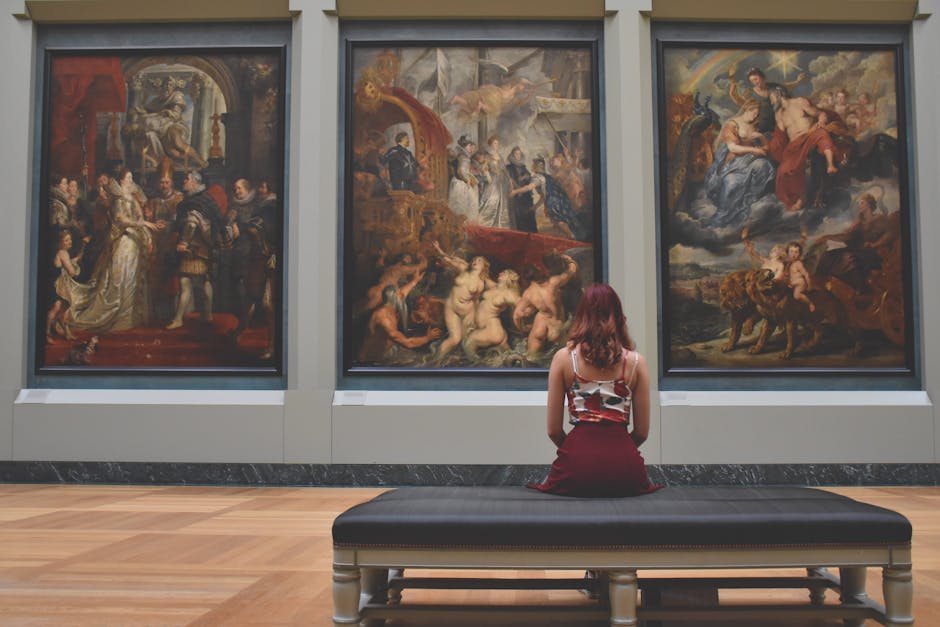
The Renaissance period, spanning roughly from the 14th to the 17th century, represents one of the most transformative eras in art history. This cultural rebirth began in Italy and spread throughout Europe, fundamentally changing how artists approached their craft and how society viewed art itself. The masterpieces created during this time continue to captivate audiences worldwide, but many fascinating details about Renaissance art remain lesser-known. These remarkable facts reveal the innovation, dedication, and groundbreaking techniques that defined this extraordinary period.

Surprising Discoveries About Renaissance Masterpieces

1. The Mathematical Foundation of Renaissance Beauty

Renaissance artists were deeply influenced by mathematical principles, particularly the golden ratio (approximately 1.618). This mathematical proportion, also known as the divine proportion, was believed to create the most aesthetically pleasing compositions. Artists like Leonardo da Vinci and Raphael incorporated these calculations into their works, carefully measuring facial features, architectural elements, and spatial relationships to achieve perfect harmony and balance in their paintings.

2. The Secret Behind Vibrant Blue Pigments

The brilliant blue color seen in many Renaissance paintings came from ultramarine, a pigment made from crushed lapis lazuli stones imported from Afghanistan. This pigment was more expensive than gold, making it one of the most costly materials an artist could use. Wealthy patrons would often specify in contracts how much ultramarine should be used, particularly for painting the Virgin Mary's robes, as the expense demonstrated both devotion and status.

3. Michelangelo's Ceiling Controversy

Contrary to popular belief, Michelangelo did not paint the Sistine Chapel ceiling while lying on his back. He actually designed a special scaffolding system that allowed him to stand while working, though he had to crane his neck upward for extended periods. The physical toll was still immense, and Michelangelo documented in letters how the work affected his posture and eyesight during the four years it took to complete.

4. The Revolutionary Technique of Linear Perspective

Filippo Brunelleschi's discovery of linear perspective around 1415 completely transformed artistic representation. This mathematical system allowed artists to create realistic three-dimensional space on flat surfaces by using a vanishing point. His demonstration involved a painting of the Florence Baptistery that, when viewed with a mirror, appeared indistinguishable from the actual building, proving the technique's effectiveness.

5. Leonardo's Unfinished Legacy

Leonardo da Vinci completed remarkably few paintings during his lifetime, with only about 15 surviving works definitively attributed to him. His perfectionist nature and diverse interests in engineering, anatomy, and science meant he often abandoned artistic projects. Many of his paintings remained unfinished, yet even these incomplete works demonstrate his revolutionary techniques and remain invaluable to art history.

6. The Gruesome Reality Behind Anatomical Accuracy

Renaissance artists' unprecedented understanding of human anatomy came from directly dissecting corpses, often illegally. Leonardo da Vinci personally dissected approximately 30 bodies, creating detailed anatomical drawings that weren't surpassed in accuracy for centuries. This hands-on approach to studying muscles, bones, and organs allowed artists to depict the human form with previously impossible realism.

7. The Medici Family's Artistic Empire

The Medici banking family of Florence acted as patrons to an astounding number of Renaissance masters, including Michelangelo, Botticelli, and Leonardo da Vinci. Their financial support wasn't merely generous; it was strategic, as they understood that sponsoring artistic innovation enhanced their political power and social prestige. Without Medici patronage, many iconic Renaissance works might never have been created.

8. Hidden Symbols and Secret Messages

Renaissance paintings are filled with symbolic imagery that contemporary viewers would have immediately recognized but often eludes modern audiences. Objects like lilies represented purity, dogs symbolized loyalty, and skulls reminded viewers of mortality. Artists embedded these symbols throughout their compositions, creating multiple layers of meaning that rewarded careful observation and cultural knowledge.

9. The Sfumato Technique's Mysterious Quality

Leonardo da Vinci pioneered sfumato, a painting technique involving extremely subtle gradations of light and shadow without harsh lines or borders. The term comes from the Italian word for "smoke" or "vanished," describing how colors and tones blend imperceptibly. This technique gives paintings like the Mona Lisa their characteristic soft, almost ethereal quality and mysterious atmosphere.

10. Botticelli's Forgotten Centuries

Despite creating iconic works like "The Birth of Venus," Sandro Botticelli fell into obscurity after his death and wasn't rediscovered until the 19th century. His graceful, flowing style fell out of fashion as the Renaissance progressed toward more dramatic compositions. For roughly 300 years, his paintings were largely ignored, demonstrating how artistic tastes and historical appreciation can dramatically shift over time.

11. The Workshop System's Collaborative Nature

Renaissance masterpieces were rarely the work of a single artist. Masters maintained large workshops where apprentices and assistants collaborated on paintings. The master would typically create the initial design and paint important elements like faces and hands, while assistants handled backgrounds, clothing, and less significant details. This system explains why authenticating Renaissance works can be challenging.

12. Oil Paint's Revolutionary Impact

The adoption of oil paint, which allowed for greater color intensity, smoother blending, and the ability to work more slowly than egg tempera, revolutionized Renaissance art. Introduced from Northern Europe, oil paints enabled artists to achieve unprecedented realism through building up translucent layers of color, creating depth and luminosity impossible with previous mediums.

13. The Camera Obscura's Artistic Assistance

Several Renaissance artists experimented with the camera obscura, an optical device that projects images onto surfaces through a small hole. While controversial among art historians, evidence suggests some artists used this tool to achieve accurate perspective and proportions. This wasn't considered cheating but rather a legitimate technique for understanding light, form, and spatial relationships.

14. Female Artists Breaking Barriers

Despite significant obstacles, some women achieved recognition as Renaissance artists. Sofonisba Anguissola became court painter to Philip II of Spain, while Artemisia Gentileschi created powerful works featuring strong female subjects. These women navigated restrictive guild systems and social expectations that typically excluded them from artistic training and professional opportunities.

15. The Controversial Restoration Debates

Modern restoration of Renaissance artworks remains highly controversial. The Sistine Chapel's restoration in the 1980s and 1990s revealed brilliant colors beneath centuries of dirt and darkened varnish, but critics argued that restorers removed Michelangelo's final touches. These debates highlight ongoing tensions between preserving original appearances and respecting later alterations that have become part of a work's history.

The Enduring Influence of Renaissance Innovation

The Renaissance period's contributions to art extend far beyond beautiful paintings and sculptures. The era established fundamental principles about perspective, proportion, and technique that remain relevant today. From mathematical approaches to composition to innovative materials and methods, Renaissance artists pushed boundaries and experimented fearlessly. Their dedication to understanding anatomy, mastering new technologies, and creating works of unprecedented realism set standards that influenced countless generations of artists. These fifteen facts merely scratch the surface of the Renaissance's complexity, revealing an era where art, science, mathematics, and philosophy intersected to create some of humanity's most treasured cultural achievements.