










1 / 20 Questions
0 Points

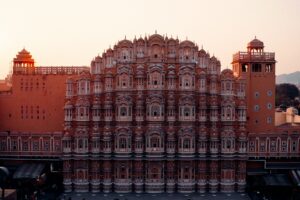
Which Indian city is known as the 'Pink City'?

Mumbai

Jaipur

Kolkata

Chennai

Points won
0
Correct score
0%

More questions

More Articles

Top 10 Bizarre Historical Events You Won’t Learn in School

Top 10 Bizarre Historical Events You Won’t Learn in School

⏱️ 8 min read

History textbooks often focus on major wars, political movements, and celebrated leaders, but the past is filled with strange, unsettling, and downright bizarre events that rarely make it into classroom curricula. These overlooked moments reveal the peculiar, unexpected, and sometimes disturbing aspects of human civilization that challenge our understanding of what people were capable of throughout the ages.

Extraordinary Historical Oddities That Defy Belief

1. The Great Emu War of Australia

In 1932, Australia declared war on an unusual enemy: emus. Following World War I, thousands of ex-soldiers took up farming in Western Australia, but their crops were being devastated by an estimated 20,000 emus migrating inland. The government responded by deploying soldiers armed with Lewis guns to cull the bird population. Despite their military training and weaponry, the soldiers were consistently outsmarted by the flightless birds, which scattered into small groups and proved remarkably difficult to kill. After several weeks and thousands of rounds of ammunition expended for minimal casualties, the military withdrew in defeat. The emus had won, and the "war" became a source of international ridicule and a testament to nature's resilience against human intervention.

2. The Dancing Plague of 1518

In July 1518, residents of Strasbourg (then part of the Holy Roman Empire) experienced one of history's most perplexing medical mysteries. A woman named Frau Troffea began dancing uncontrollably in the street and continued for days. Within a week, 34 others had joined her, and by the end of the month, approximately 400 people were dancing without rest. Many dancers collapsed from exhaustion, strokes, or heart attacks, with deaths estimated between 15 and several dozen. Historical documents confirm this wasn't folklore but a genuine mass hysteria event. Authorities initially encouraged more dancing, believing the afflicted would only recover by dancing it out, even constructing stages and hiring musicians. Modern theories suggest stress-induced psychosis, ergot poisoning, or mass psychological illness, but the true cause remains unknown.

3. The London Beer Flood Disaster

On October 17, 1814, the Meux and Company Brewery in London experienced a catastrophic failure when a massive vat containing over 135,000 gallons of beer ruptured. The explosion caused a domino effect, breaking other vats and releasing more than 388,000 gallons of beer into the surrounding streets. A wave of beer, reportedly eight feet high, demolished two houses and damaged the structural walls of nearby buildings. Eight people drowned in the flood of alcohol, mostly residents of basement dwellings in the impoverished St. Giles district. Rescue efforts were hampered by crowds attempting to scoop up free beer with pots, pans, and even boots. The brewery was eventually taken to court but found not guilty, as the incident was ruled an "Act of God."

4. The Cadaver Synod of Pope Formosus

In January 897 CE, Pope Stephen VI orchestrated one of the most macabre trials in Catholic Church history. He ordered the corpse of his predecessor, Pope Formosus (who had been dead for nine months), to be exhumed, dressed in papal vestments, and propped up on a throne to face trial. A deacon was appointed to answer on behalf of the deceased pope, who was charged with perjury and ascending to the papacy illegally. Unsurprisingly, the corpse was found guilty. His papal vestments were torn off, the three fingers of his right hand used for blessings were cut off, and his body was thrown into the Tiber River. This grotesque spectacle reflected the intense political conflicts within the medieval Church and resulted in Stephen VI himself being imprisoned and later strangled.

5. The Tanganyika Laughter Epidemic

On January 30, 1962, at a mission-run boarding school in Tanganyika (now Tanzania), three girls began laughing uncontrollably. The laughter spread rapidly throughout the school, affecting 95 students and forcing the school to close in March. But the epidemic didn't stop there—it spread to other villages and schools, ultimately affecting approximately 1,000 people over an 18-month period. Symptoms included uncontrollable laughter lasting from a few hours to 16 days, along with crying, fainting, rashes, and respiratory problems. No infectious agent or toxin was ever identified. Researchers concluded it was a case of mass psychogenic illness triggered by stress, likely related to the social pressures facing young people during Tanzania's transition to independence.

6. The War of the Bucket

In 1325, tensions between the Italian city-states of Bologna and Modena reached a breaking point over the theft of an oak bucket. Modenese soldiers raided Bologna and stole a wooden bucket from a well, which became the casus belli for a war that claimed approximately 2,000 lives. The conflict was actually rooted in deeper rivalries between Guelphs and Ghibellines—political factions supporting the Pope and Holy Roman Emperor respectively—but became known as the War of the Bucket due to the stolen object. Modena won the war, and the bucket remains on display in the city's Palazzo Comunale to this day, a bizarre symbol of medieval Italian politics and the absurd pretexts that could trigger massive bloodshed.

7. The Great Molasses Flood of Boston

On January 15, 1919, a storage tank containing 2.3 million gallons of molasses burst in Boston's North End, creating a wave up to 25 feet high that rushed through the streets at 35 miles per hour. The sticky tsunami killed 21 people and injured 150 others, while also crushing buildings, horses, and vehicles in its path. The disaster caused structural damage throughout the neighborhood, with the elevated railway nearly collapsed. Cleanup efforts took weeks, with crews using salt water to dissolve the molasses, and residents claimed they could smell molasses in the area for decades afterward. Investigations revealed the tank was structurally unsound and had never been properly tested, leading to one of the first class-action lawsuits against a major corporation in American history.

8. The Defenestrations of Prague

Prague has the distinction of experiencing multiple significant historical events involving throwing people out of windows—a practice known as defenestration. The most famous occurred in 1618 when Protestant nobles threw two Catholic regents and their secretary from the windows of Prague Castle, an act that sparked the Thirty Years' War. Remarkably, all three survived the 70-foot fall, landing in a pile of manure. Catholics claimed angels saved them, while Protestants credited the dung heap. An earlier defenestration in 1419 saw Hussite protesters throw seven town council members from windows, killing them. This peculiar method of political expression became so associated with Prague that it merits its own place in history as a recurring revolutionary tactic.

9. The Trial and Execution of Animals

Throughout medieval Europe, animals were regularly put on trial for crimes and could be sentenced to death, excommunication, or exile. Court records document pigs being tried for eating children, roosters accused of laying eggs (considered satanic), and even insects facing legal proceedings. In 1474, a rooster was formally tried and burned at the stake in Basel, Switzerland, for the "crime" of laying an egg. In France, a sow was dressed in human clothing and executed by hanging for killing a child. These animals received full legal representation, and proceedings followed established judicial protocols. This practice reflected medieval beliefs about animal moral responsibility and the application of human legal concepts to the natural world, continuing sporadically until the 18th century.

10. The Honey Urine Doctors of Medieval Times

Medieval physicians developed an unusual diagnostic technique that persisted for centuries: tasting their patients' urine. Doctors would systematically smell, examine the color and clarity, and taste urine to diagnose diseases. The detection of sweet-tasting urine helped identify what we now know as diabetes mellitus (mellitus means "honey-sweet" in Latin). Urine wheels—charts displaying various colors and their corresponding ailments—were standard medical tools. This practice, known as uroscopy, was considered sophisticated medicine and remained a primary diagnostic method well into the 17th century. While modern sensibilities find this practice repulsive, it represented genuine medical observation and led to legitimate diagnostic discoveries that predated laboratory testing by centuries.

The Lessons Hidden in History's Strange Corners

These ten bizarre historical events demonstrate that the past was far stranger than standard textbooks suggest. From military campaigns against birds to catastrophic floods of food products, from dancing plagues to judicial proceedings against animals, these incidents reveal the unexpected complexity, occasional absurdity, and profound humanity of historical experience. They remind us that history isn't just a series of important dates and famous leaders—it's also filled with moments that challenge our assumptions about rationality, behavior, and the nature of human societies. Understanding these unusual events provides a more complete picture of our collective past and shows that truth can indeed be stranger than fiction.

20 Fun Facts About Everyday Objects You Use

20 Fun Facts About Everyday Objects You Use

⏱️ 6 min read

Every day, people interact with dozens of common objects without giving them a second thought. From the keyboard you type on to the zipper on your jacket, these familiar items have fascinating histories, surprising features, and hidden complexities. Understanding the stories behind these everyday objects can transform the mundane into the extraordinary and reveal the ingenuity of human innovation.

Remarkable Discoveries About Common Items

1. The QWERTY Keyboard's Deliberate Slowdown

The standard keyboard layout wasn't designed for speed but to prevent typewriter jams. In the 1870s, Christopher Latham Sholes arranged commonly paired letters far apart to slow typists down, ensuring mechanical arms wouldn't collide. Despite modern keyboards having no such limitation, the inefficient layout persists due to widespread adoption and muscle memory.

2. Plastic Wrap's Military Origins

The clingy kitchen staple was originally developed as a spray-on coating for military fighter planes during World War II. When scientists at Dow Chemical discovered it wasn't suitable for that purpose, they repurposed it for civilian use, eventually becoming an essential food storage solution in homes worldwide.

3. The Microwave Oven's Accidental Invention

Engineer Percy Spencer discovered microwave cooking entirely by accident in 1945 when a chocolate bar melted in his pocket while working with radar equipment. This serendipitous moment led to one of the most revolutionary kitchen appliances, fundamentally changing how people prepare food.

4. Bubble Wrap's Failed Wallpaper Dream

Inventors Marc Chavannes and Al Fielding created bubble wrap in 1957 as textured wallpaper by sealing two shower curtains together. When that market rejected their product, they pivoted to marketing it as greenhouse insulation before finally finding success as protective packaging material.

5. Post-it Notes Born from Failed Adhesive

In 1968, 3M scientist Spencer Silver created an adhesive that was too weak for its intended purpose. Years later, colleague Art Fry used it to create bookmarks that wouldn't damage his hymnal pages, leading to one of the most successful office products ever created.

6. The Ballpoint Pen's Aviation Connection

László Bíró invented the ballpoint pen after observing how newspaper ink dried quickly. The pen gained popularity during World War II when the British Royal Air Force needed pens that wouldn't leak at high altitudes, unlike traditional fountain pens that relied on gravity and air pressure.

7. Shopping Cart Resistance in Early Days

When Sylvan Goldman introduced shopping carts in 1937, customers refused to use them. Men thought they looked weak pushing carts, while women found them similar to baby carriages. Goldman hired models to push carts around his store to demonstrate their acceptability and usefulness.

8. The Rubber Band's Ancient Rubber Source

While rubber bands were patented in 1845, the rubber came from trees in the Amazon rainforest. Indigenous peoples had used natural rubber for centuries before Europeans discovered it, creating waterproof boots and balls long before industrial applications emerged.

9. Tea Bags Created by Mistake

New York tea merchant Thomas Sullivan sent samples in small silk bags in 1908, intending customers to remove the tea. Instead, they dunked the entire bag, finding it more convenient. This accident revolutionized tea consumption and became the standard method worldwide.

10. The Zipper's Slow Rise to Prominence

Despite being invented in 1893, zippers didn't become popular until the 1920s when the B.F. Goodrich Company used them in rubber boots. The company coined the name "zipper" after the sound the fastener made, and World War I increased demand as they proved more efficient than buttons for military gear.

11. Aluminum Foil's Expensive Past

Before the Hall-Héroult process made aluminum affordable in the late 1800s, the metal was more valuable than gold. Napoleon III served his most honored guests with aluminum utensils while others used gold. Today, people casually wrap leftovers in what was once a precious material.

12. The Pencil Eraser's Pink Tradition

Erasers aren't naturally pink. When the modern eraser was developed, manufacturers added the color to distinguish their product from competitors. The tradition stuck, and pink became synonymous with erasers despite eraser material having no inherent color preference.

13. Paper Clips During Nazi Occupation

During World War II, Norwegians wore paper clips on their lapels as a symbol of resistance and unity against Nazi occupation. The simple office supply became a powerful statement of solidarity, demonstrating how everyday objects can carry profound cultural significance.

14. The Toothbrush's Prison Innovation

The modern toothbrush with nylon bristles was invented in 1938, but bristle toothbrushes date to ancient China around 1498. Interestingly, the first mass-produced modern toothbrush was made by prisoners in 1780s England using animal bones and boar bristles.

15. Velcro Inspired by Nature

Swiss engineer George de Mestral invented Velcro in 1941 after examining burrs stuck to his dog's fur under a microscope. He spent eight years developing the hook-and-loop fastener, which became essential in aerospace, medicine, and everyday clothing.

16. The Match's Dangerous Early Formulation

Early matches contained white phosphorus, which was highly toxic and caused a disease called "phossy jaw" in factory workers. The condition literally rotted away the jawbone. Safety matches using red phosphorus replaced the dangerous versions in the late 1800s.

17. Teflon's Accidental Discovery

DuPont scientist Roy Plunkett discovered Teflon by accident in 1938 while researching refrigerants. The slippery substance initially found use in the Manhattan Project before becoming the non-stick coating on cookware that revolutionized home cooking decades later.

18. The Stapler's Handcrafted Royal Beginning

The first known stapler was handmade in the 18th century for King Louis XV of France. Each staple was individually inscribed with the royal insignia, making it perhaps the most luxurious office supply ever created.

19. Scotch Tape's Ethnic Controversy

The "Scotch" in Scotch Tape came from an ethnic slur. When 3M's masking tape initially had too little adhesive, a frustrated customer told the salesman to take it back to his "Scotch" bosses and add more adhesive. The company reclaimed the term as a brand name, emphasizing value and quality.

20. The Humble Paperclip's Design Perfection

The modern paperclip design, called the Gem, hasn't changed significantly since the 1890s because it's nearly perfect. Its simple wire shape efficiently holds papers together while being inexpensive to manufacture, proving that sometimes the simplest solutions are the most enduring.

Understanding the World Through Objects

These twenty everyday objects demonstrate that innovation often comes from unexpected places—military needs, accidental discoveries, and nature's inspiration. Many items people use without thinking have survived decades or centuries because their designs solved problems so efficiently that improvement became unnecessary. From keyboards deliberately designed to slow users down to erasers colored pink purely for marketing reasons, the objects surrounding us tell stories of human creativity, persistence, and the ability to find practical applications for failed experiments. The next time you reach for a paper clip, tear off some aluminum foil, or pop bubble wrap, remember that these simple items represent breakthrough moments in human ingenuity and have fascinating histories worth appreciating.