



















1 / 20 Questions
0 Points

Which is the longest river in the world?

Nile River

Amazon River

Mississippi River

Yangtze River

Points won
0
Correct score
0%

More questions

More Articles

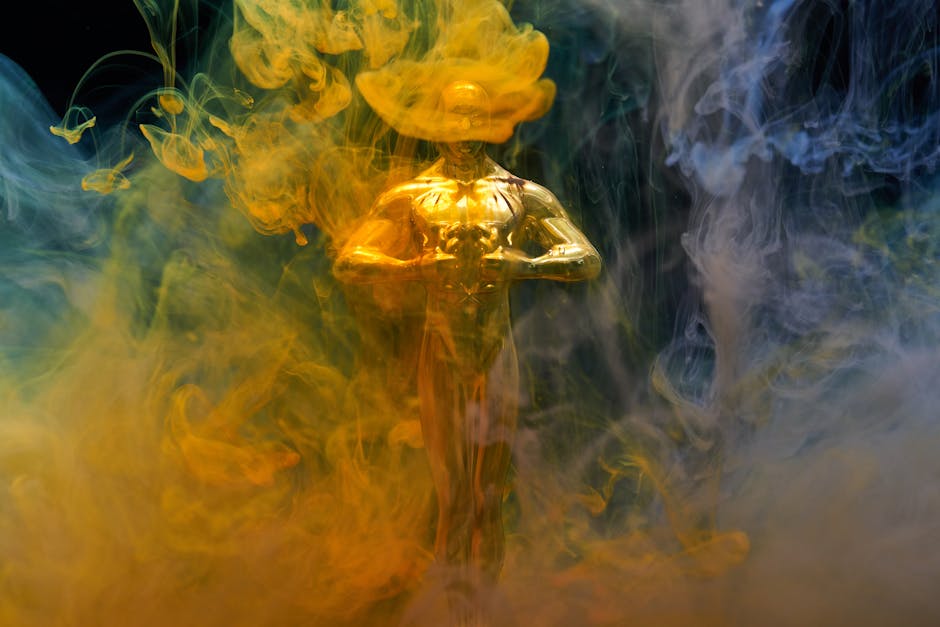
Did You Know? 12 Facts About Oscar-Winning Actors

Did You Know? 12 Facts About Oscar-Winning Actors

⏱️ 7 min read

The Academy Awards represent the pinnacle of achievement in cinema, and the actors who claim these golden statuettes often have fascinating stories behind their victories. From surprising refusals to record-breaking performances, the history of Oscar-winning actors is filled with remarkable trivia that even devoted film fans might not know. These compelling facts reveal the human stories, unexpected turns, and historic moments that have shaped the most prestigious acting award in entertainment.

Remarkable Facts About Academy Award Winners

1. The Youngest Best Actor Winner Broke Records at 29

Adrien Brody made Oscar history in 2003 when he won Best Actor for "The Pianist" at just 29 years old, making him the youngest person ever to receive this honor. His emotional acceptance speech, which included an unexpected kiss with presenter Halle Berry, became one of the ceremony's most memorable moments. Before Brody, the record was held by Richard Dreyfuss, who won at 30 for "The Goodbye Girl" in 1978. This record has stood for over two decades, demonstrating how rare it is for actors in their twenties to achieve this level of recognition.

2. Three Actors Have Refused Their Oscar Statuettes

While most actors dream of winning an Academy Award, three individuals actually declined to accept their prizes. George C. Scott refused his Best Actor award for "Patton" in 1970, calling the ceremony a "meat parade." Marlon Brando rejected his Best Actor Oscar for "The Godfather" in 1973, sending Native American activist Sacheen Littlefeather in his place to protest Hollywood's treatment of Indigenous peoples. Dudley Nichols was the first to refuse in 1936 for Best Screenplay, though this was due to a Writers Guild dispute rather than a statement about the Academy itself.

3. Katharine Hepburn Holds the Unbeaten Record

Katharine Hepburn remains the most decorated actor in Oscar history with four Best Actress wins spanning nearly five decades. She earned her awards for "Morning Glory" (1933), "Guess Who's Coming to Dinner" (1967), "The Lion in Winter" (1968), and "On Golden Pond" (1981). Remarkably, Hepburn never attended the Academy Awards ceremony to accept any of her four Oscars, maintaining her reputation as a fierce individualist who avoided Hollywood's glamorous spotlight whenever possible.

4. The Shortest Performance Ever to Win an Oscar

Beatrice Straight won the Academy Award for Best Supporting Actress in 1976 for "Network" despite appearing on screen for only five minutes and two seconds. Her powerful scene as the betrayed wife confronting her unfaithful husband proved that screen time doesn't determine impact. This remains the shortest performance ever to win an acting Oscar, though Judi Dench came close with approximately eight minutes of screen time in "Shakespeare in Love," for which she won Best Supporting Actress in 1999.

5. Only Three People Have Won Posthumous Acting Oscars

Winning an Oscar after death is extremely rare, having occurred only three times in the Academy's history. Peter Finch won Best Actor for "Network" in 1977, just two months after his death from a heart attack. Heath Ledger received Best Supporting Actor for his haunting portrayal of the Joker in "The Dark Knight" in 2009. Most recently, Chadwick Boseman was nominated posthumously for Best Actor in "Ma Rainey's Black Bottom" in 2021, though he didn't win, making the achievement even more exclusive.

6. The Longest Wait Between Nominations and a Win

Some actors wait decades between their first nomination and their eventual victory. Christopher Plummer holds a notable record, waiting 39 years between his first nomination for "The Last Station" in 2010 and finally winning Best Supporting Actor for "Beginners" in 2012 at age 82, making him the oldest actor to win an Academy Award. Similarly, Paul Newman was nominated eight times over 37 years before finally winning Best Actor for "The Color of Money" in 1987, though he had received an honorary Oscar the year before.

7. Multiple Actors Have Won for Playing the Same Character

In a unique occurrence, two different actors have won Oscars for portraying the same character in different films. Marlon Brando won Best Actor for playing Vito Corleone in "The Godfather" (1972), while Robert De Niro won Best Supporting Actor for playing the younger version of the same character in "The Godfather Part II" (1974). Heath Ledger and Joaquin Phoenix both won for playing iterations of the Joker, though in different film universes and interpretations of the character.

8. The Actors Who Won for Their Film Debuts

Winning an Oscar for a debut performance is exceptionally rare. Mercedes McCambridge won Best Supporting Actress for her first film role in "All the King's Men" (1949). Harold Russell won Best Supporting Actor for "The Best Years of Our Lives" (1946), his only film role, and received an additional honorary Oscar the same year. Barbra Streisand won Best Actress for her film debut in "Funny Girl" (1968), though she had already achieved stardom on Broadway.

9. Actors Who Won for Playing Real Oscar Winners

Several actors have won Academy Awards for portraying other Oscar winners on screen. Cate Blanchett won Best Supporting Actress for playing Katharine Hepburn in "The Aviator" (2004). Renée Zellweger won Best Actress for her portrayal of Judy Garland in "Judy" (2019). Javier Bardem was nominated for playing Desi Arnaz in "Being the Ricardos" (2021), though he didn't win. This meta-achievement demonstrates how fascinated Hollywood remains with its own history.

10. The Only Actor to Win Consecutive Oscars in Recent History

Tom Hanks achieved the rare feat of winning Best Actor in consecutive years, taking home statuettes for "Philadelphia" (1993) and "Forrest Gump" (1994). This back-to-back achievement hadn't been accomplished since Spencer Tracy won for "Captains Courageous" (1937) and "Boys Town" (1938). Since Hanks, no actor has managed to win in consecutive years, highlighting just how exceptional this accomplishment remains in the modern era of increasingly competitive Oscar races.

11. Actors Who Predicted Their Own Oscar Wins

Jack Nicholson famously predicted he would win Best Actor for "One Flew Over the Cuckoo's Nest" (1975) and was proven correct. Sally Field's acceptance speech for "Places in the Heart" (1984) included her now-famous line "You like me, right now, you like me!" which has often been misquoted as "You really like me!" Jennifer Lawrence predicted during interviews that she had no chance of winning for "Silver Linings Playbook" (2012), then seemed genuinely shocked when her name was called, making her stumble on the stairs to the stage.

12. The Cast That Made Oscar History Together

"Network" (1976) became the first film to win three acting Oscars, with victories for Peter Finch, Faye Dunaway, and Beatrice Straight. This feat wasn't repeated until "Everything Everywhere All at Once" (2023) achieved the same milestone with wins for Michelle Yeoh, Ke Huy Quan, and Jamie Lee Curtis. Only a handful of films have ever received acting nominations in all four categories, demonstrating how exceptional it is for a single film's entire ensemble to receive Academy recognition simultaneously.

Conclusion

These fascinating facts reveal that behind every Oscar statuette lies a story of perseverance, surprise, or sometimes controversy. From record-breaking ages to unprecedented refusals, from the shortest winning performances to decades-long waits for recognition, Academy Award-winning actors have created a rich tapestry of cinema history. These achievements remind audiences that the Oscars celebrate not just talent, but also the unpredictable nature of artistic recognition and the diverse paths actors take to reach Hollywood's highest honor. Whether winning on their first nomination or after a lifetime of work, these performers have left an indelible mark on film history.


Did You Know? 15 Strange Coincidences About Physics of Sports

Did You Know? 15 Strange Coincidences About Physics of Sports

⏱️ 6 min read

The world of sports is a fascinating playground where the laws of physics create some truly remarkable and unexpected phenomena. From the playing field to the swimming pool, physics governs every movement, trajectory, and outcome in ways that often seem coincidental or even magical. These strange intersections between athletic performance and scientific principles reveal just how intimately connected human achievement is with the fundamental forces of nature.

Remarkable Physical Phenomena in Athletic Competition

1. The Sweet Spot Exists at the Same Location Across Different Sports

Baseball bats, tennis rackets, and golf clubs all share an uncanny similarity: their "sweet spots" occur at approximately the same proportional distance from the handle—about 6-7 inches from the end of the striking surface. This isn't planned design but rather a consequence of vibrational nodes and the center of percussion coinciding at nearly identical relative positions across these different implements, despite their vastly different purposes and constructions.

2. Basketball Free Throws and Satellite Trajectories Follow Identical Mathematics

The parabolic arc of a basketball shot follows the exact same mathematical equations that NASA uses to calculate satellite orbits and planetary trajectories. The only difference is scale and atmospheric resistance. A perfect free throw at 52 degrees and a satellite achieving orbit both obey Kepler's laws of motion, making every basketball player an inadvertent orbital mechanics engineer.

3. Ice Skating Spins Demonstrate the Same Physics as Collapsing Stars

When figure skaters pull their arms inward during a spin and accelerate dramatically, they're demonstrating the same conservation of angular momentum that causes neutron stars to spin hundreds of times per second. This coincidental relationship between a graceful athletic maneuver and one of the universe's most violent phenomena occurs because both follow identical fundamental physics principles.

4. Swimming Pool Wave Patterns Match Ocean Tsunami Behavior

The waves created by competitive swimmers in Olympic pools exhibit interference patterns and resonance frequencies remarkably similar to tsunami wave mechanics. Pool designers must account for these same destructive wave interactions that oceanographers study, making competitive swimming venues miniature laboratories for understanding catastrophic natural disasters.

5. Curveballs and Airplane Lift Use the Same Bernoulli Principle

A baseball pitcher throwing a curveball and a Boeing 747 achieving lift both rely on the Bernoulli principle—faster-moving air creates lower pressure. The spinning baseball creates differential air speeds on opposite sides, causing it to curve through the exact same mechanism that keeps multi-ton aircraft airborne. The coincidence that a children's game and modern aviation share fundamental physics is remarkable.

6. Pole Vaulters Experience the Same Energy Conversion as Hydroelectric Dams

The energy transformation in pole vaulting—kinetic energy converting to elastic potential energy in the pole, then to gravitational potential energy at peak height—mirrors the exact process in hydroelectric power generation. Both achieve approximately 90% efficiency in energy conversion, an unexpected similarity between human athletic achievement and industrial power generation.

7. Golf Ball Dimples Work Like Aircraft Wing Turbulators

The dimples on golf balls were discovered accidentally but serve the same purpose as the deliberate vortex generators on aircraft wings. Both create controlled turbulence that reduces overall drag through boundary layer manipulation. Engineers and golf ball manufacturers independently arrived at nearly identical solutions to the same aerodynamic challenge.

8. Sprint Starting Blocks Apply Rocket Launch Physics

Olympic sprinters using starting blocks demonstrate Newton's third law with the same force ratios used in rocket launches. The angle of the blocks (typically 45-60 degrees) optimizes thrust efficiency using principles identical to those that determine optimal rocket launch trajectories, despite the vastly different scales involved.

9. Tennis Ball Bounce Height Mirrors Molecular Collision Theory

The coefficient of restitution for tennis balls (0.73-0.76) represents the same elastic collision principles that govern molecular behavior in gases. The predictable bounce height of a tennis ball follows the kinetic molecular theory equations used in thermodynamics, connecting courtside physics with fundamental chemistry.

10. Ski Jump Trajectories Match Ballistic Missile Paths

The flight path optimization in ski jumping follows the same ballistic trajectory calculations used for projectile weapons and missiles. The ideal takeoff angle of approximately 10-12 degrees above horizontal in ski jumping coincidentally matches the optimal launch angle for certain classes of ballistic projectiles when accounting for air resistance.

11. Cycling Peloton Drafting Equals Naval Fleet Formation Efficiency

The aerodynamic drafting effect in professional cycling pelotons, which can reduce energy expenditure by up to 40%, operates on the same fluid dynamics principles that naval architects use for ship convoy formations. Both minimize drag through strategic positioning within pressure fields created by lead objects.

12. High Jump Techniques Changed Due to the Same Physics as Bridge Construction

The Fosbury Flop revolutionized high jumping because it lowers the jumper's center of mass relative to the bar, allowing the body to clear heights the center of mass doesn't reach. This same principle of structural stress distribution is used in arch bridge design, where materials follow curved paths while loads pass through different geometric centers.

13. Soccer Ball Knuckling Mimics Atmospheric Reentry Instability

The unpredictable "knuckleball" effect in soccer, where balls flutter erratically at certain speeds, demonstrates the same aerodynamic instability that spacecraft experience during atmospheric reentry. Both occur when drag forces overcome stabilizing spin, creating chaotic trajectory variations governed by identical fluid dynamics equations.

14. Bobsled Track Banking Matches Highway Exit Ramp Engineering

The precisely calculated banking angles in Olympic bobsled tracks follow the same physics that civil engineers use for highway exit ramps. Both must balance centripetal force requirements with friction coefficients to prevent skidding or tipping. The optimal angles coincide across both applications despite different design purposes.

15. Marathon Running Efficiency Peaks at the Same Rate as Combustion Engine Optimization

Elite marathon runners achieve peak thermodynamic efficiency around 25%, converting food energy to mechanical work. Remarkably, this matches the practical efficiency limit of gasoline internal combustion engines. Both systems face similar constraints from thermodynamic laws, causing biological and mechanical engines to converge at nearly identical efficiency maximums.

The Universal Nature of Physical Laws

These fifteen strange coincidences reveal a profound truth: the laws of physics are truly universal, applying equally to human athletic endeavors and cosmic phenomena, to recreational activities and industrial engineering. Whether launching a basketball or a satellite, spinning on ice or collapsing into a neutron star, the same mathematical relationships and physical principles govern all motion and energy transformation. These parallels aren't really coincidences at all—they're evidence that the physical universe operates according to elegant, consistent rules that manifest across every scale and application. Understanding these connections not only enhances appreciation for athletic achievement but also demonstrates how sports serve as accessible laboratories for observing fundamental physics in action.