










1 / 10 Questions
0 Points

Which Learning Theory Focuses On Hands On Experience?

Behaviorism

Perennialism

Constructivism

Essentialism

Points won
0
Correct score
0%

More questions

More Articles

Did You Know? 10 Unknown References About Famous Sculptures

Did You Know? 10 Unknown References About Famous Sculptures

⏱️ 7 min read

The world's most celebrated sculptures stand as testaments to human creativity and artistic vision, yet beneath their polished surfaces lie fascinating stories, hidden meanings, and obscure references that even seasoned art enthusiasts might not know. These masterpieces often contain deliberate symbolism, accidental discoveries, and connections to historical events that dramatically alter our understanding of these iconic works. Exploring these lesser-known aspects reveals the depth of thought and circumstance that shaped these monumental creations.

Unveiling the Hidden Layers of Sculptural Masterpieces

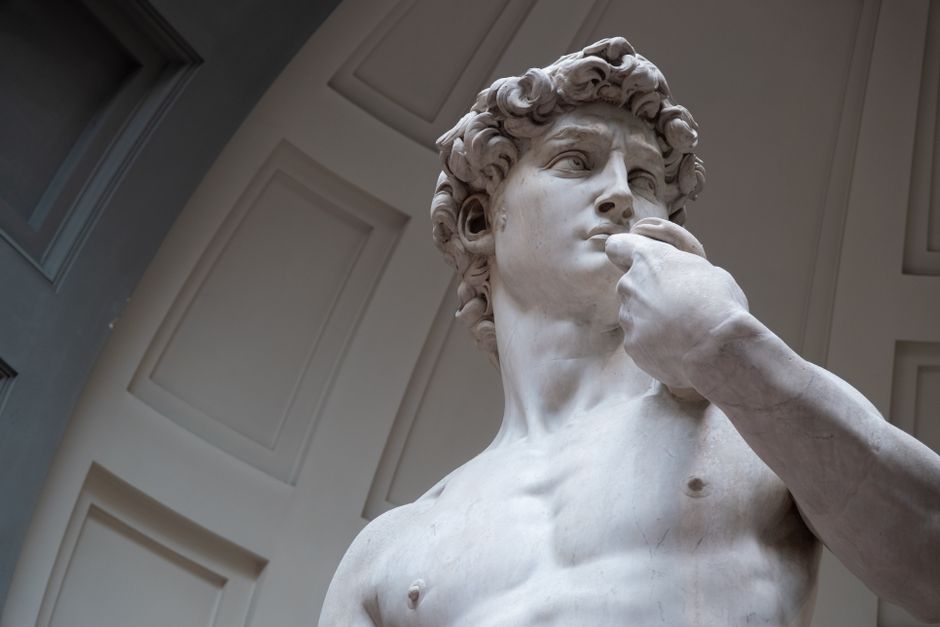
1. Michelangelo's David Contains a Strategic Imperfection

While Michelangelo's David is celebrated for its anatomical precision, the sculptor intentionally distorted the figure's proportions. The head and hands are disproportionately large compared to the rest of the body—approximately 10% larger than anatomically correct. This wasn't an error but a calculated decision based on the sculpture's original intended placement high atop Florence's cathedral. Michelangelo understood that viewers looking upward would experience a foreshortening effect, so he compensated by enlarging the upper features. When the statue was ultimately placed at ground level in the Piazza della Signoria, this deliberate "imperfection" became permanent, though few observers notice the exaggerated proportions.

2. The Statue of Liberty's Color Was Never Meant to Be Green

Frédéric Auguste Bartholdi's colossal neoclassical sculpture was originally a shiny copper color when dedicated in 1886. The iconic green patina that now defines Lady Liberty resulted from natural oxidation over approximately thirty years. What many don't know is that the copper sheets covering the iron framework contain a reference to ancient Roman repoussé techniques, where metal is shaped by hammering from the reverse side. Additionally, Bartholdi may have modeled the face after his own mother, Charlotte, though this remains debated among historians. The seven spikes on her crown represent the seven continents and seven seas, symbolizing universal liberty—a detail often overlooked by millions of visitors.

3. Rodin's The Thinker Was Originally Much Smaller and Had a Different Purpose

Auguste Rodin's The Thinker, now synonymous with philosophical contemplation, was initially conceived as a much smaller figure titled "The Poet" and was meant to sit atop Rodin's monumental Gates of Hell. The figure represented Dante Alighieri surveying the circles of Hell from his Divine Comedy. The sculpture's pose references Michelangelo's work, particularly the prophets and sibyls from the Sistine Chapel ceiling. When Rodin later enlarged the work and it was cast independently, most of its connection to Dante's narrative was lost to popular understanding. The Thinker's clenched right hand originally held a stylus, identifying him clearly as a poet, though this detail became absorbed into the fist in the final version.

4. The Terracotta Army Features Unique Faces Based on Real People

China's famous Terracotta Army, created to accompany Emperor Qin Shi Huang in the afterlife, contains approximately 8,000 soldiers, and remarkably, no two faces are identical. Recent research suggests the sculptors used actual members of the emperor's army as models, creating a genuine portrait gallery of third-century BCE Chinese warriors. The level of detail extends beyond faces—the soldiers' ears were crafted with the same individual attention. Furthermore, the statues were originally painted in vibrant colors including pink, red, violet, and blue, though the pigments flaked off shortly after excavation when exposed to air. The army also references specific military ranks through variations in armor, hairstyles, and hand positions.

5. The Venus de Milo Once Had Arms Holding an Apple

Discovered in 1820 on the Greek island of Milos, the Venus de Milo's missing arms have sparked endless speculation. However, evidence suggests she originally held an apple in her left hand, identifying her as Aphrodite, who won the golden apple in the Judgment of Paris. Some sketches made shortly after the statue's discovery show fragments that indicated her arm positions before these pieces mysteriously disappeared. The sculpture also contains an often-missed detail: her left foot is positioned to suggest she was standing on a pedestal or ship's prow, and her twisted torso creates a sophisticated spiral composition that references earlier Hellenistic sculptural innovations.

6. Mount Rushmore Has a Hidden Hall of Records Behind Lincoln's Head

Sculptor Gutzon Borglum intended Mount Rushmore to include far more than the four presidential faces visible today. Behind Abraham Lincoln's head, there exists a chamber carved into the rock—the Hall of Records. Borglum envisioned this as a vault containing important documents about American history and the monument's creation. Though never completed during his lifetime, in 1998, a repository of records was finally placed in the unfinished chamber, sealed behind a 1,200-pound granite capstone. The chamber references ancient practices of creating time capsules and historical records within monuments, connecting this American landmark to traditions spanning millennia.

7. The Little Mermaid Statue Has Been Repeatedly Vandalized Due to Political Protests

Edvard Eriksen's 1913 bronze statue in Copenhagen harbor seems innocent enough, but it references a complex story involving the sculptor's wife and a prima ballerina. When Ellen Price, the ballet dancer who inspired the piece, refused to model nude, Eriksen used his wife Eline as the body model while using Price's face. This unusual collaboration is rarely discussed in official accounts. The statue has also become an unexpected symbol in political discourse, suffering multiple beheadings and paint attacks throughout its history. These incidents transformed the sculpture from a simple fairy tale tribute into a canvas for social commentary, adding layers of modern meaning Hans Christian Andersen never anticipated.

8. Donatello's David Contains Controversial Homoerotic Symbolism

Created around 1440, Donatello's bronze David was the first freestanding nude male sculpture since antiquity, but it contains details that have sparked scholarly debate for centuries. The young David wears nothing but boots and a hat, standing with one foot on Goliath's severed head. Most intriguingly, a feather from Goliath's helmet runs up the inside of David's leg in what many art historians interpret as deliberately sensual imagery. This detail, combined with David's confident contrapposto pose and the work's commission by the Medici family, references Renaissance Florence's complex attitudes toward male beauty and classical ideals. The sculpture's homoerotic undertones were revolutionary for its time and remain a subject of academic discussion.

9. The Chicago Picasso Was Never Officially Named by the Artist

When Pablo Picasso gifted his monumental sculpture to Chicago in 1967, he refused to title it, and the 50-foot-tall Cor-Ten steel structure has been simply called "The Chicago Picasso" ever since. What many don't realize is that the sculpture may reference multiple subjects simultaneously—theories suggest it represents a woman, an Afghan hound, or even a baboon. Picasso never clarified his intent, maintaining the ambiguity was deliberate. The work also references his earlier cubist experiments and his practice of creating maquettes, as the final sculpture was built from a 42-inch model. Picasso refused the $100,000 commission fee, instead donating the design to the city, making it one of the first major public artworks in an American city center.

10. The Charging Bull Was Originally an Illegal Installation

Arturo Di Modica's famous Charging Bull sculpture, now a symbol of Wall Street and American financial optimism, was originally installed illegally in 1989. Di Modica spent $360,000 of his own money creating the 7,000-pound bronze beast and, without permission, placed it in front of the New York Stock Exchange as a Christmas gift to the city following the 1987 stock market crash. Police removed it within hours, but public outcry led to its reinstallation at nearby Bowling Green. The sculpture references ancient symbols of prosperity and strength while simultaneously embodying guerrilla art tactics. Its journey from illegal installation to beloved landmark demonstrates how public adoption can transform unauthorized art into official cultural heritage.

The Stories Within the Stone

These ten revelations demonstrate that famous sculptures carry far more significance than their visible forms suggest. From intentional distortions and hidden chambers to controversial symbolism and acts of artistic rebellion, these works continue to surprise us with their depth. Understanding these lesser-known references enriches our appreciation of these masterpieces and reminds us that great art always contains layers waiting to be discovered. Each sculpture serves not just as an aesthetic achievement but as a complex document of its time, encoded with meanings both deliberate and accidental that continue to resonate across centuries.

Did You Know? 10 Hidden Mysteries About Ocean Currents

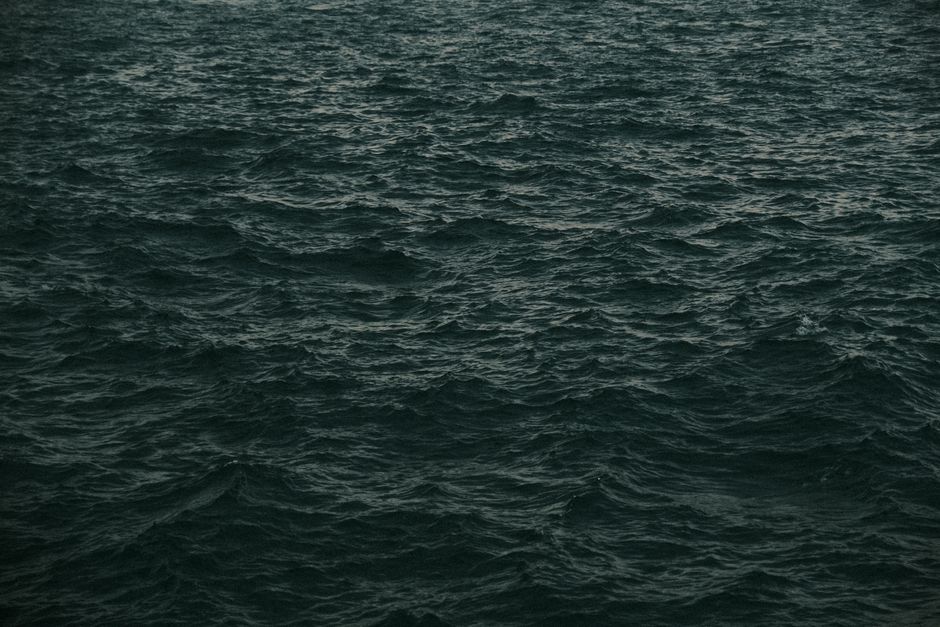
Did You Know? 10 Hidden Mysteries About Ocean Currents

⏱️ 7 min read

Beneath the surface of our planet's vast oceans lies an intricate network of flowing water that shapes global climate, marine ecosystems, and even human civilization. While most people recognize that ocean currents exist, few understand the remarkable complexities and enigmas that scientists continue to unravel. These powerful rivers within the sea hold secrets that challenge our understanding of oceanography, climate science, and the interconnected nature of Earth's systems.

Unveiling the Secrets of Ocean Circulation

1. The Mysterious Slowdown of the Atlantic Meridional Overturning Circulation

The Atlantic Meridional Overturning Circulation (AMOC), which includes the famous Gulf Stream, has been weakening at an alarming rate that scientists are still struggling to fully explain. This massive system of currents acts like a conveyor belt, transporting warm water northward and cold water southward. Recent studies suggest the AMOC is at its weakest point in over 1,000 years, slowing by approximately 15% since the mid-20th century. What remains mysterious is whether this slowdown is part of a natural cycle or primarily driven by climate change. The implications are profound—a complete shutdown could trigger dramatic cooling across Europe and alter precipitation patterns worldwide, yet researchers cannot predict with certainty when or if this might occur.

2. Deep Ocean Currents That Flow Against Gravity

In a phenomenon that seems to defy logic, certain deep ocean currents actually flow uphill against gravitational forces. These "undercurrents" travel along the seafloor, sometimes climbing underwater mountains and ridges. The mechanism behind this counterintuitive behavior involves complex interactions between water density, temperature, salinity, and the Earth's rotation. Scientists discovered that the Coriolis effect and differences in water density can create pressure gradients strong enough to push water upward along underwater slopes. This mystery challenges conventional understanding of fluid dynamics and continues to reveal new insights about how energy and nutrients circulate through the deep ocean.

3. Ghost Currents: The Invisible Antarctic Bottom Water

The coldest, densest water on Earth forms around Antarctica and sinks to create what oceanographers call Antarctic Bottom Water. This incredibly dense water mass spreads across the ocean floor globally, yet tracking its exact pathways remains remarkably difficult. These "ghost currents" can take centuries to complete their journey, flowing silently at depths exceeding 4,000 meters. What mystifies researchers is how this bottom water interacts with underwater topography, how quickly it's mixing with warmer waters above, and whether climate change is fundamentally altering its formation and circulation patterns. Recent evidence suggests these deepest currents are warming and potentially slowing, with consequences we're only beginning to understand.

4. The Enigmatic Subsurface Countercurrents

Hidden beneath well-known surface currents, mysterious countercurrents flow in the opposite direction, creating a two-layer system that scientists didn't fully recognize until recent decades. The Equatorial Undercurrent in the Pacific, for example, flows eastward directly beneath the westward-flowing surface current. These subsurface rivers can be hundreds of meters thick and carry enormous volumes of water. The puzzle lies in understanding what drives these opposing flows and how they maintain their separation. The energy dynamics, the role of wind stress, and the precise mechanisms that prevent these layers from mixing completely remain active areas of research with implications for understanding heat distribution and marine nutrient transport.

5. Unpredictable Eddy Formation and Behavior

Ocean eddies—massive, swirling vortices of water that can span hundreds of kilometers—break off from major currents in patterns that remain frustratingly difficult to predict. These circular currents can persist for months or even years, transporting heat, salt, and marine life across vast distances. What puzzles oceanographers is the apparently chaotic nature of when, where, and how these eddies form and dissipate. Some eddies strengthen unexpectedly, while others vanish without clear cause. Understanding eddy behavior is crucial for climate models and marine navigation, yet their formation involves such complex interactions between currents, wind, and topography that accurate long-term prediction remains beyond current capabilities.

6. The Hidden Influence of Underwater Topography

Seamounts, underwater ridges, and abyssal plains sculpt ocean currents in ways that scientists are still mapping and comprehending. These submarine features can accelerate currents, create turbulence, or redirect flow patterns entirely. The mystery deepens in areas where detailed seafloor maps don't exist—which is the majority of the ocean floor. Researchers have discovered that relatively small underwater features can have disproportionately large effects on current behavior, creating localized upwelling zones or mixing hotspots. How these topographical effects cascade through larger circulation patterns and influence global climate remains an open question requiring advanced seafloor mapping and sophisticated modeling.

7. The Paradox of Missing Mixing Energy

Ocean currents require enormous amounts of energy to maintain their circulation, yet scientists cannot fully account for where all this energy comes from. Wind and tides provide substantial power, but calculations suggest there should be a significant energy deficit. The mystery of this "missing mixing" has led researchers to investigate previously overlooked energy sources, including internal waves, geothermal heat from underwater volcanoes, and energy transfer mechanisms that occur at microscopic scales. Recent discoveries have identified some additional energy sources, but a complete energy budget for ocean circulation remains elusive, suggesting fundamental gaps in our understanding of ocean physics.

8. Abrupt Current Reversals in the Indian Ocean

The Indian Ocean exhibits unique current patterns that reverse direction seasonally with the monsoons, but the precise triggers and mechanics of these dramatic shifts remain incompletely understood. The Somali Current, for instance, becomes one of the world's strongest currents during summer monsoons, then reverses completely during winter. What mystifies researchers is the speed and completeness of these transitions and how marine ecosystems adapt to such radical changes. Additionally, scientists have observed irregular variations in these reversals that don't align perfectly with monsoon patterns, suggesting other influencing factors that haven't been fully identified.

9. The Deep Scattering Layer Migration Mystery

Trillions of small marine organisms undertake the largest daily migration on Earth, moving vertically through the water column in sync with daylight—but how ocean currents interact with and potentially guide this massive biomass movement remains mysterious. These organisms, which form what's called the deep scattering layer, can influence water density and potentially affect current behavior through their collective movement. The feedback loops between current patterns and biological migrations create complex interactions that challenge both oceanographers and marine biologists. Understanding these connections could reveal how currents distribute nutrients and how marine ecosystems might respond to changing circulation patterns.

10. Unexplained Temperature Anomalies in the Pacific

The Pacific Ocean periodically develops mysterious warm and cold patches that don't correspond to known current patterns or climate oscillations like El Niño. The "Blob," an enormous mass of unusually warm water that appeared off North America's west coast in 2013, disrupted marine ecosystems and weather patterns for years, yet its formation mechanism remains debated. Scientists cannot reliably predict when such anomalies will appear or how long they'll persist. These temperature mysteries suggest there are current dynamics and heat transport mechanisms operating at scales or in ways that current ocean models don't adequately capture, pointing to fundamental gaps in our oceanographic knowledge.

The Ongoing Quest for Understanding

These ten mysteries surrounding ocean currents reveal how much remains unknown about the forces that regulate our planet's climate and support marine life. From currents that defy gravity to energy budgets that don't balance, from unpredictable eddies to temperature anomalies without clear causes, the ocean continues to guard its secrets. As technology advances—through autonomous underwater vehicles, satellite monitoring, and sophisticated computer modeling—scientists inch closer to solving these puzzles. Yet each answer seems to generate new questions, reminding us that the ocean's complexity may ensure that some mysteries endure for generations to come. Understanding these hidden aspects of ocean circulation isn't merely academic curiosity; it's essential for predicting climate change, protecting marine ecosystems, and preparing for the environmental challenges that lie ahead.