












1 / 20 Questions
0 Points

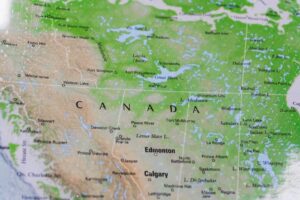
Which ocean borders Western Canada

Pacific Ocean

Arctic Ocean

Atlantic Ocean

Indian Ocean

Points won
0
Correct score
0%

More questions

More Articles

Top 10 Historical Predictions That Came True

Top 10 Historical Predictions That Came True

⏱️ 6 min read

Throughout history, visionaries, scientists, and authors have gazed into the future and made bold predictions about what was to come. While many forecasts have missed the mark entirely, some individuals possessed an uncanny ability to anticipate technological advances, social changes, and global events with remarkable accuracy. These predictions stand as testament to human foresight and the power of informed speculation. Here are ten of the most striking historical predictions that eventually became reality.

Prophecies That Shaped Our Understanding of Tomorrow

1. Jules Verne's Vision of Moon Travel

In 1865, French author Jules Verne published "From the Earth to the Moon," describing a journey to the lunar surface with astonishing precision. Verne predicted that three astronauts would launch from Florida in a projectile-like spacecraft, experience weightlessness, and splash down in the ocean upon return. Over a century later, the Apollo 11 mission in 1969 mirrored these details remarkably, with three astronauts launching from Florida and returning via ocean splashdown. Even Verne's calculations regarding the size and cost of the projectile were surprisingly accurate, demonstrating his scientific understanding far ahead of his time.

2. Mark Twain's Prediction of His Own Death

Samuel Clemens, better known as Mark Twain, was born in 1835 during an appearance of Halley's Comet. He famously predicted: "I came in with Halley's Comet in 1835. It will be the greatest disappointment of my life if I don't go out with Halley's Comet." True to his words, Twain died on April 21, 1910, one day after the comet's closest approach to Earth. This eerie prediction demonstrated not only his understanding of astronomical cycles but also an almost supernatural intuition about his own mortality.

3. H.G. Wells and the Atomic Bomb

British author H.G. Wells wrote "The World Set Free" in 1914, describing "atomic bombs" that would harness the power of radioactive decay to create devastating weapons. Wells predicted these weapons would be dropped from aircraft and would continue to explode for days, creating a scenario remarkably similar to nuclear fallout. When the first atomic bombs were dropped on Hiroshima and Nagasaki in 1945, physicist Leo Szilard, who helped develop the Manhattan Project, credited Wells' novel as an inspiration for his work on nuclear chain reactions.

4. Morgan Robertson's Titanic Disaster

Fourteen years before the Titanic sank, American author Morgan Robertson published "Futility, or the Wreck of the Titan" in 1898. The novella described a massive British ocean liner called the Titan that was deemed unsinkable but struck an iceberg in the North Atlantic in April and sank, resulting in massive loss of life due to insufficient lifeboats. The parallels between Robertson's fictional ship and the real Titanic are chilling: both were approximately 800 feet long, had triple screw propellers, could carry about 3,000 people, had insufficient lifeboats, and sank after hitting an iceberg on a cold April night.

5. Nikola Tesla's Wireless World

In 1909, inventor Nikola Tesla predicted a future where wireless technology would revolutionize communication. He described a device that would fit in a vest pocket and allow people to communicate across vast distances, witness events from anywhere in the world, and access information instantaneously. Tesla's vision essentially described smartphones, wireless internet, and video streaming more than a century before they became commonplace. His prediction was based on his pioneering work in radio and wireless energy transmission.

6. Alexis de Tocqueville's Prophecy of American-Russian Rivalry

French political thinker Alexis de Tocqueville, in his 1835 work "Democracy in America," predicted that the United States and Russia would become the world's two great superpowers. He wrote: "There are at the present time two great nations in the world... the Russians and the Americans... Each of them seems marked out by the will of Heaven to sway the destinies of half the globe." This prediction came to fruition following World War II, when the Cold War established these two nations as competing global superpowers for nearly half a century.

7. Leonardo da Vinci's Flying Machines and Parachutes

Renaissance genius Leonardo da Vinci sketched designs for helicopters, parachutes, and flying machines in the late 15th century, centuries before human flight became possible. His aerial screw design from 1485 served as a conceptual predecessor to the modern helicopter, while his pyramid-shaped parachute design was proven functional when a replica was successfully tested in 2000. Da Vinci's writings reveal he understood principles of aerodynamics and lift that wouldn't be scientifically explained until the Wright Brothers' era.

8. Ray Bradbury's Earbuds and Interactive Television

Science fiction author Ray Bradbury's 1953 novel "Fahrenheit 451" described "thimble radios" and "seashells" that people wore in their ears to listen to music and entertainment—essentially predicting earbuds and Bluetooth headphones. The novel also depicted wall-sized interactive televisions that allowed viewer participation, foreshadowing modern smart TVs and video conferencing. Bradbury's vision of a society distracted by personal audio devices and immersive screens has proven remarkably prescient in the age of smartphones and streaming services.

9. John Elfreth Watkins' 1900 Predictions

In 1900, American civil engineer John Elfreth Watkins Jr. published an article titled "What May Happen in the Next Hundred Years" in the Ladies' Home Journal. His predictions included digital color photography, television, mobile phones, air conditioning, prepared meals, and transcontinental travel taking mere hours instead of days. Watkins also predicted that the average human lifespan would increase to fifty years (it has since exceeded that significantly). His success rate was remarkably high, with many predictions coming true well within his century-long timeline.

10. Edward Bellamy's Credit Card System

In his 1888 utopian novel "Looking Backward: 2000-1887," American author Edward Bellamy described a cashless society where citizens used a "credit card" system for purchases. In his vision, each person received a card with credit corresponding to their share of national production. While Bellamy's economic model didn't materialize exactly as described, the concept of credit cards, debit cards, and electronic payment systems became fundamental to modern commerce. The first actual credit card wasn't introduced until 1950 by Diners Club, more than sixty years after Bellamy's prediction.

The Legacy of Accurate Forecasting

These ten remarkable predictions demonstrate that human imagination, when combined with scientific knowledge and careful observation of trends, can pierce the veil of time. Whether through literary fiction, scientific speculation, or philosophical analysis, these visionaries managed to anticipate developments that would fundamentally reshape human civilization. Their success reminds us that while the future remains uncertain, patterns of progress and human ingenuity often follow predictable paths. As we face our own uncertain future, these historical predictions serve as both inspiration and instruction, showing us that thoughtful consideration of possibilities can help us prepare for, and even shape, the world to come.
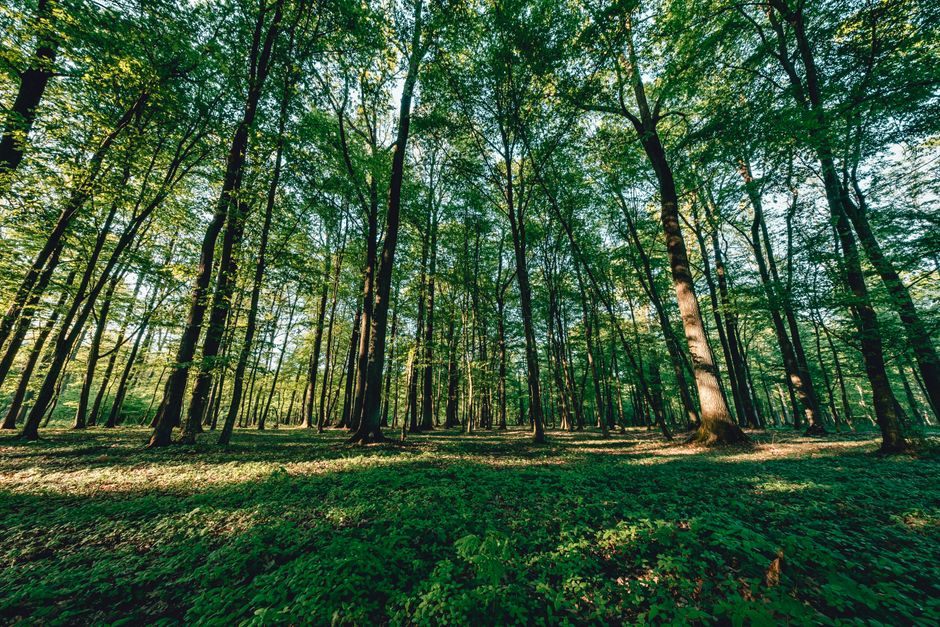

Did You Know? 10 Surprising References About Ecosystems

Did You Know? 10 Surprising References About Ecosystems

⏱️ 7 min read

Ecosystems are complex networks of living organisms and their physical environments, working together in intricate balance. While many people understand the basics of ecological systems, there are numerous fascinating aspects that remain lesser-known. From microscopic interactions to planet-wide phenomena, these surprising facts reveal just how remarkable and interconnected our natural world truly is.

Remarkable Ecosystem Facts That Challenge Common Perceptions

1. The Wood Wide Web Underground

Beneath forest floors exists an extraordinary communication network known as the mycorrhizal network, often called the "Wood Wide Web." This system consists of fungal threads that connect the roots of different trees and plants, allowing them to share nutrients, water, and even chemical signals. Research has demonstrated that mature "mother trees" can recognize their own offspring and preferentially send them nutrients through this fungal network. This underground internet also serves as an alarm system, warning neighboring plants of insect attacks or drought conditions, fundamentally changing our understanding of forests as cooperative communities rather than collections of competing individuals.

2. Whale Falls Create Oasis Ecosystems on the Ocean Floor

When a whale dies and its massive body sinks to the ocean floor, it creates what scientists call a "whale fall" – a complete ecosystem that can sustain life for decades. A single whale carcass can support over 400 species, many of which are found nowhere else on Earth. The decomposition process occurs in stages: first, scavengers like hagfish and sleeper sharks strip the soft tissue; then specialized worms and crustaceans consume the lipid-rich bones; finally, bacteria break down the remaining materials. Some whale fall ecosystems have been observed supporting unique communities for more than 50 years, serving as crucial stepping stones for deep-sea species dispersal across the ocean floor.

3. Forests Produce Their Own Rain

Large forests, particularly tropical rainforests like the Amazon, don't just receive rain – they actively create it. Through the process of transpiration, trees release water vapor into the atmosphere. A single large tree can transpire hundreds of liters of water daily. This moisture rises, forms clouds, and falls as rain, often over the same forest or downwind regions. The Amazon rainforest generates approximately 50-80% of its own rainfall through this process. This phenomenon explains why deforestation in one region can lead to drought conditions thousands of kilometers away, as the atmospheric river of moisture is disrupted.

4. Bacteria Outnumber All Other Organisms Combined

In virtually every ecosystem on Earth, bacteria represent the most abundant form of life by sheer numbers. A single gram of soil can contain up to one billion bacterial cells, representing thousands of different species. These microorganisms are not merely passengers in ecosystems; they are fundamental engineers that cycle nutrients, fix nitrogen from the atmosphere, decompose organic matter, and even influence weather patterns. In the human gut ecosystem alone, bacterial cells outnumber human cells, and these microbes play essential roles in digestion, immunity, and even mood regulation. Without bacteria, most ecosystems would cease to function within days.

5. Desert Ecosystems Harbor More Life Than Tropical Rainforests

While this seems counterintuitive, certain desert ecosystems contain greater biodiversity per square meter than some rainforests – specifically when examining soil organisms and invertebrates. The Atacama Desert in Chile, one of the driest places on Earth, supports hundreds of species of bacteria, fungi, and microorganisms specially adapted to extreme conditions. These organisms have developed remarkable survival strategies, including the ability to extract moisture from fog and enter dormancy for years or decades. Desert soil crusts, composed of cyanobacteria, lichens, and mosses, are so rich in life that a single footprint can destroy communities that took decades to develop.

6. Coral Reefs Face Complete Ecosystem Collapse at 2°C Warming

Coral reefs, often called the rainforests of the sea, support approximately 25% of all marine species despite covering less than 1% of the ocean floor. However, these ecosystems exist within an incredibly narrow temperature range. Scientific studies indicate that if global temperatures rise by 2°C above pre-industrial levels, over 99% of coral reefs will experience annual bleaching events from which they cannot recover. This would trigger a cascade of extinctions affecting not only the reef organisms but also the 500 million people who depend on reefs for food, coastal protection, and livelihoods. The loss would represent the collapse of entire ecosystem structures built over thousands of years.

7. Keystone Species: The Wolves That Changed Rivers

When wolves were reintroduced to Yellowstone National Park in 1995 after a 70-year absence, they triggered a phenomenon called a "trophic cascade" that literally changed the physical geography of the park. The wolves controlled deer populations, which had been overgrazing riverbank vegetation. As vegetation recovered, riverbanks stabilized, reducing erosion and changing river courses. Beaver populations increased, creating wetlands. Bird species returned, and even bear populations grew due to increased berry availability. This demonstrates how a single keystone species can fundamentally restructure entire ecosystems, influencing everything from plant communities to geological features.

8. Mangrove Forests Store More Carbon Than Rainforests

Despite occupying less than 1% of tropical forest area, mangrove ecosystems store three to five times more carbon per equivalent area than tropical rainforests. These coastal ecosystems trap carbon in their waterlogged soils, where oxygen-poor conditions prevent decomposition, allowing carbon to accumulate for millennia. A single hectare of mangrove forest can store over 1,000 tons of carbon. Additionally, mangroves provide critical ecosystem services including coastal protection from storms, nursery habitat for 75% of commercial fish species, and water filtration. The destruction of mangrove ecosystems releases massive amounts of carbon while eliminating these protective benefits.

9. Arctic Permafrost Contains Twice the Carbon in the Atmosphere

Frozen within Arctic permafrost lies approximately 1,600 billion tons of carbon – more than double the amount currently in Earth's atmosphere. This carbon has been locked away in frozen soil, dead plant material, and even preserved animal carcasses for thousands of years. As global temperatures rise, this permafrost is thawing at unprecedented rates, releasing both carbon dioxide and methane into the atmosphere. The thawing creates a feedback loop: warming melts permafrost, releasing greenhouse gases, which causes more warming. Some scientists warn that this represents a "tipping point" that could accelerate climate change beyond human control, fundamentally altering global ecosystems.

10. Urban Ecosystems Support Unique Biodiversity

Cities are not ecological deserts but functioning ecosystems that can support surprising biodiversity. Urban areas often contain more plant species diversity than surrounding rural regions due to the introduction of ornamental plants, creating novel ecosystems found nowhere in nature. Peregrine falcons, once endangered, now thrive in cities where skyscrapers mimic cliff faces and abundant pigeons provide prey. Research has documented unique evolutionary adaptations in urban wildlife, including birds that sing at higher pitches to be heard over traffic noise and plants that flower earlier in response to urban heat islands. These "novel ecosystems" challenge traditional conservation approaches and demonstrate nature's remarkable adaptability.

Understanding Our Interconnected Natural World

These ten remarkable facts illustrate that ecosystems are far more complex, interconnected, and dynamic than commonly understood. From underground fungal networks connecting forests to whale carcasses supporting unique deep-sea communities, from bacteria that outnumber all visible life to urban environments creating new evolutionary pathways, ecosystems constantly surprise us with their resilience and fragility. Recognizing these connections – whether the wolves that reshape rivers or the mangroves that protect coastlines – emphasizes the importance of protecting biodiversity and understanding our role within, rather than separate from, these intricate natural systems. As we face unprecedented environmental challenges, appreciating these ecosystem relationships becomes essential for developing effective conservation strategies and ensuring the health of our planet for future generations.