










1 / 10 Questions
0 Points

Which President Built A Secret Bowling Alley Under The White House?

Gerald Ford

Dwight Eisenhower

Richard Nixon

Harry Truman

Points won
0
Correct score
0%

More questions

More Articles

Top 10 Famous Celebrities with Hidden Talents

Top 10 Famous Celebrities with Hidden Talents

⏱️ 6 min read

When we think of our favorite celebrities, we often associate them with their primary claim to fame—whether that's acting, singing, or athletic prowess. However, many stars harbor impressive hidden talents that might surprise even their most devoted fans. Beyond the red carpets and stadium performances, these multifaceted individuals have cultivated skills that showcase their versatility and creative range. From unexpected musical abilities to academic achievements and surprising physical talents, these celebrities prove that success often comes from being a jack-of-all-trades.

Hollywood Stars with Secret Skills

1. Hugh Jackman's Master Juggling Abilities

Before becoming Wolverine and a Broadway sensation, Hugh Jackman trained extensively in physical theater. One of his most impressive hidden talents is juggling, a skill he developed during his drama school days. Jackman can juggle multiple objects with remarkable dexterity and has even incorporated this talent into some of his stage performances. He's been known to surprise talk show audiences by juggling during interviews, demonstrating that his coordination extends far beyond his dance routines and action sequences.

2. Geena Davis: Olympic-Level Archer

Academy Award winner Geena Davis isn't just talented on screen—she's also an elite archer who nearly qualified for the U.S. Olympic archery team in 2000. Davis took up archery in her late thirties and became so proficient that she competed in the Olympic trials, ranking 24th out of 300 competitors. Her dedication to the sport demonstrates her competitive spirit and ability to master complex physical skills. Davis has continued to advocate for women's sports while maintaining her impressive archery abilities, proving that it's never too late to develop exceptional talents.

3. Steve Martin's Banjo Virtuosity

While audiences know Steve Martin for his comedy genius, fewer realize he's an accomplished bluegrass banjo player. Martin began playing banjo as a teenager and has maintained this passion throughout his entertainment career. He's released several albums, won Grammy Awards for his banjo work, and tours with the Steep Canyon Rangers. His skill level is so advanced that he's respected within the bluegrass community as a legitimate musician, not just a celebrity hobbyist. Martin has even composed music for Broadway productions, showcasing the depth of his musical knowledge.

4. Natalie Portman's Multilingual Mastery

Harvard graduate Natalie Portman speaks six languages fluently: English, Hebrew, French, Japanese, German, and Spanish. Her linguistic abilities go beyond basic conversational skills—she's conducted interviews and speeches in multiple languages and has even served as a simultaneous translator at events. Portman's intellectual pursuits extend to her academic work, having published papers in scientific journals while pursuing her psychology degree. This hidden talent reflects her commitment to global understanding and cultural appreciation.

Musicians with Unexpected Abilities

5. Ke$ha's Near-Perfect SAT Score and Academic Prowess

Behind the glitter and party anthems, pop star Ke$ha (now known as Kesha) is remarkably intelligent, having scored nearly perfect on her SATs with a 1500. She was accepted to Barnard College but chose to pursue music instead. Kesha has written songs for other artists, demonstrating sophisticated songwriting abilities that often get overshadowed by her public persona. She's also an advocate for animal rights and has shown deep knowledge of environmental issues, proving that her intellectual capabilities extend far beyond standardized test scores.

6. Bruce Dickinson's Commercial Pilot License

Iron Maiden's lead singer Bruce Dickinson is a licensed commercial pilot who has flown the band's tour plane, nicknamed "Ed Force One." His aviation career includes flying Boeing 757s for a commercial airline and piloting various aircraft types. Dickinson has also competed in fencing at international levels, written novels, hosted radio shows, and founded an aviation maintenance company. His multifaceted career demonstrates that rock stardom doesn't preclude success in highly technical fields requiring years of training and certification.

Athletes Beyond the Game

7. Shaquille O'Neal's Law Enforcement Credentials and Musical Career

NBA legend Shaquille O'Neal holds a doctorate in education, has released four rap albums (one went platinum), and is a certified law enforcement officer. Shaq has worked as a reserve police officer in multiple jurisdictions and takes his law enforcement role seriously, completing the same training as full-time officers. He's also a skilled DJ, performing at major music festivals under the name "DJ Diesel." O'Neal's diverse pursuits showcase his curiosity and willingness to master completely different fields, from academia to music production.

8. Mayim Bialik's Neuroscience Doctorate

Before returning to television in "The Big Bang Theory," actress Mayim Bialik earned a Ph.D. in neuroscience from UCLA. Her dissertation focused on hypothalamic activity in patients with Prader-Willi syndrome. Bialik has published papers in scientific journals and uses her platform to promote STEM education and scientific literacy. Unlike her character Amy Farrah Fowler, Bialik is a real scientist who brings authentic knowledge to her roles. She's also an accomplished author, writing books on parenting and women's health that incorporate her scientific training.

Multi-Talented Performers

9. Terry Crews' Professional Painting and Illustration Skills

Before his NFL career and acting success, Terry Crews earned an Art Excellence Scholarship and seriously considered pursuing fine arts professionally. Crews creates detailed portraits and paintings, often gifting elaborate artworks to friends and colleagues. His artistic talent has landed him commissions for portraits of celebrities and athletes. Crews has showcased his artwork publicly and continues to paint regularly, maintaining this creative outlet alongside his entertainment career. His work demonstrates professional-level technique and artistic vision that could have made him successful in the art world alone.

10. Neil Patrick Harris's Magic and Sleight of Hand Expertise

Actor Neil Patrick Harris is an accomplished magician who serves on the Board of Directors of Hollywood's Magic Castle, one of the most prestigious magic organizations in the world. Harris has performed complex illusions and sleight of hand routines that have impressed professional magicians. He's hosted magic-themed shows, incorporated magic into his acting roles, and collected rare magic memorabilia. His dedication to the craft extends beyond celebrity hobby status—he's studied under master magicians and can perform tricks that baffle even seasoned professionals. Harris has also used his magic skills for charitable causes and to mentor young magicians.

Conclusion

These ten celebrities remind us that talent rarely exists in isolation. Their hidden abilities demonstrate dedication, intellectual curiosity, and the courage to pursue passions outside their primary careers. Whether mastering musical instruments, earning advanced degrees, or developing physical skills to competitive levels, these stars have invested time and effort into becoming well-rounded individuals. Their diverse talents not only enrich their own lives but also inspire fans to explore their own hidden abilities and pursue multiple passions simultaneously. In an age of specialization, these celebrities prove that being a renaissance person remains both possible and rewarding.

Did You Know? 15 Forgotten Facts About Sistine Chapel

Did You Know? 15 Forgotten Facts About Sistine Chapel

⏱️ 6 min read

The Sistine Chapel stands as one of humanity's greatest artistic achievements, yet beneath its famous ceiling lies a treasure trove of lesser-known stories and remarkable details. While millions recognize Michelangelo's masterpiece, the chapel's full history reveals surprising facts that even art enthusiasts often overlook. These forgotten aspects illuminate the extraordinary circumstances, hidden meanings, and remarkable details that make this Renaissance jewel even more fascinating than commonly understood.

Forgotten Treasures of the Sistine Chapel

1. The Chapel's Original Purpose as a Fortress

Before becoming an artistic wonder, the Sistine Chapel was designed with military defense in mind. Pope Sixtus IV commissioned the structure in the 1470s with fortified walls and crenellations suitable for armed defense. The building's robust construction included features that would allow Vatican defenders to withstand sieges, reflecting the volatile political climate of Renaissance Italy where even religious buildings needed military capabilities.

2. Michelangelo's Reluctant Acceptance

Contrary to popular belief, Michelangelo considered himself primarily a sculptor, not a painter. When Pope Julius II commissioned him in 1508, the artist initially refused, believing his rival Bramante had suggested him for the project hoping he would fail. Michelangelo viewed the commission as a distraction from his true passion for sculpture and only accepted under considerable papal pressure.

3. The Revolutionary Painting Technique Without Assistants

Unlike standard Renaissance practice where master artists supervised teams of assistants, Michelangelo painted the ceiling almost entirely alone. He fired his initial team of assistants early in the project, dissatisfied with their work. This solitary approach meant he personally painted over 5,000 square feet of frescoes, an unprecedented undertaking that took four years of physically grueling labor.

4. The Ceiling's Hidden Self-Portrait

Michelangelo embedded a haunting self-portrait within the Last Judgment fresco—not as a heroic figure, but as the flayed skin held by Saint Bartholomew. This macabre image reflects the artist's anguish and physical suffering during the project. Art historians interpret this as Michelangelo's commentary on his own martyrdom for his art, presenting his face on the empty skin as a symbol of his sacrifice.

5. The Astronomical Accuracy Few Notice

Recent research has revealed that Michelangelo incorporated precise astronomical alignments into his work. The arrangement of figures corresponds to constellations visible in Rome during significant biblical dates. This sophisticated understanding of astronomy demonstrates the Renaissance integration of art, science, and theology, suggesting Michelangelo worked with astronomical advisors to achieve this accuracy.

6. The Color Restoration Controversy

When restorers cleaned the ceiling between 1980 and 1994, they revealed vibrant colors that shocked the art world. Centuries of candle smoke and grime had darkened the frescoes, leading generations to believe Michelangelo preferred somber tones. The brilliant pinks, greens, and oranges that emerged remain controversial, with some experts arguing the cleaning removed original finishing layers.

7. The Floor's Marble Message

While visitors gaze upward, they miss the 15th-century Cosmatesque marble floor below. This geometric masterpiece uses colored marble in intricate patterns that mirror cosmological concepts. The floor's design creates a symbolic connection between heaven (the ceiling) and earth, with its circles and spirals representing the Renaissance understanding of the universe's divine order.

8. The Sistine Choir's Unique Musical Heritage

The chapel gave its name to the Sistine Chapel Choir, one of the oldest religious choirs in the world. For centuries, this ensemble included castrati singers, whose preserved pre-pubescent vocal ranges produced an ethereal sound considered closest to angelic voices. The last castrato, Alessandro Moreschi, served until 1913, and recordings of his voice still exist.

9. The Strategic Lighting Design

The chapel's original windows were carefully positioned to illuminate specific sections at different times of day. Morning light emphasized the Creation scenes, while afternoon sun highlighted the prophets and sibyls. This deliberate design transformed the chapel's appearance throughout the day, creating a dynamic viewing experience that modern artificial lighting cannot replicate.

10. The Censorship Campaign Against Nudity

Twenty-four years after completion, the Council of Trent deemed the Last Judgment's numerous nude figures inappropriate. Pope Pius IV commissioned artist Daniele da Volterra to paint drapery over the genitals, earning him the unfortunate nickname "Il Braghettone" (the breeches-maker). Subsequent popes added more coverings, though some were removed during modern restorations.

11. The Architectural Illusion of Depth

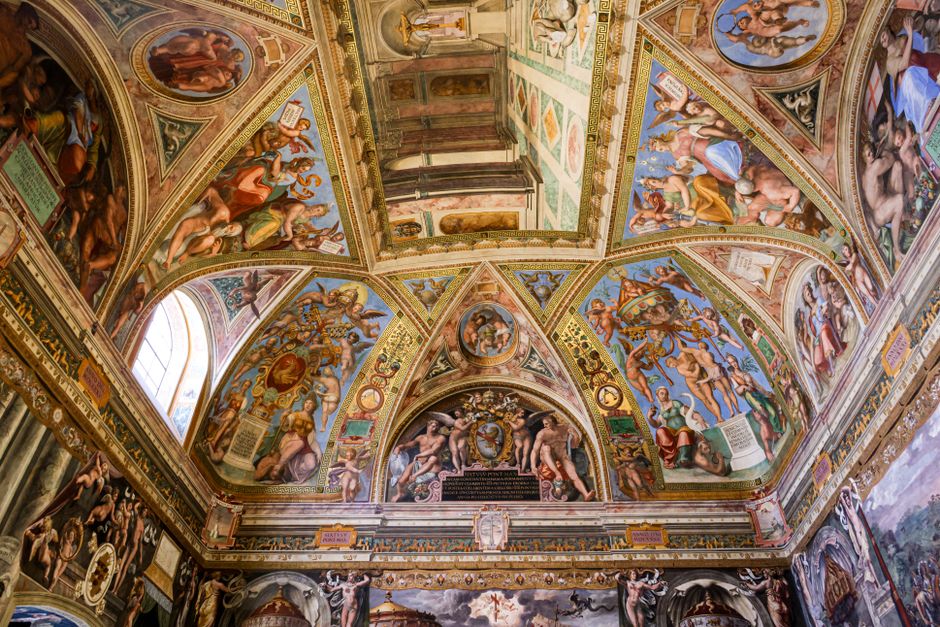
Michelangelo created elaborate architectural elements on the flat ceiling that appear three-dimensional. The painted cornices, pilasters, and thrones seem to project from the surface through masterful use of perspective and shading. This trompe-l'oeil technique transforms the barrel vault into what appears to be a complex architectural space, fooling the eye even today.

12. The Brain Hidden in God's Creation

Medical experts have identified an anatomically accurate brain embedded in the most famous panel, "The Creation of Adam." The billowing drapery surrounding God precisely matches brain anatomy, including the cerebellum, optic chiasm, and pituitary gland. Some scholars believe Michelangelo, who dissected cadavers, deliberately included this as a statement about divine consciousness or human intellect.

13. The Systematic Crack Pattern

A large crack runs through the ceiling, particularly visible in the Deluge scene. This structural defect appeared while Michelangelo was still working and forced him to adjust his technique. Rather than starting over, he modified his plaster mixture and application method, resulting in better preservation of later sections compared to earlier work.

14. The Prophetic Warning in the Flood Scene

The Deluge panel contains a detail rarely discussed: a figure carrying a barrel on his back, often interpreted as Noah with wine—a reference to drunkenness and moral failure. Michelangelo positioned this scene prominently, possibly as a warning to corrupt Renaissance popes about divine judgment. This subtle criticism exemplifies how artists embedded social commentary in religious commissions.

15. The Papal Conclave Tradition

Since 1492, the Sistine Chapel has served as the location for papal conclaves, where cardinals elect new popes. The famous smoke signals—black for unsuccessful votes, white for a successful election—emerge from a stove installed specifically for this purpose. Voting occurs beneath Michelangelo's Last Judgment, with Christ as judge presiding symbolically over the selection of his earthly representative.

The Enduring Legacy

These forgotten facts reveal the Sistine Chapel as more than a beautiful ceiling—it represents an intersection of art, politics, science, and spirituality. From its fortress origins to its hidden anatomical images, from censorship controversies to papal elections, the chapel embodies the complexity of Renaissance culture. Understanding these overlooked details enriches appreciation for both Michelangelo's genius and the historical context that shaped this masterpiece. The chapel continues revealing secrets to careful observers, ensuring its status as an inexhaustible subject for discovery and wonder centuries after its creation.