





1 / 10 Questions
0 Points

Which sport was invented to keep athletes fit during winter?

Basketball

Ice hockey

Bowling

Volleyball

Points won
0
Correct score
0%

More questions

More Articles

Top 10 Weird Phenomena About Weather Phenomena

Top 10 Weird Phenomena About Weather Phenomena

⏱️ 7 min read

Nature has a remarkable ability to surprise us with atmospheric displays that seem to defy explanation. While we often think of weather as routine rain, sunshine, or snow, the Earth's atmosphere produces extraordinary phenomena that challenge our understanding of physics and leave witnesses in awe. From mysterious lights to bizarre cloud formations, these unusual weather events remind us that our planet's meteorological systems are far more complex and fascinating than we might imagine.

Extraordinary Atmospheric Wonders

1. Ball Lightning: The Elusive Glowing Spheres

Ball lightning remains one of meteorology's most perplexing mysteries. Witnesses describe luminous spheres ranging from golf ball to beach ball size, floating through the air during thunderstorms. These glowing orbs can pass through walls, hover in place, or move against the wind before vanishing with a loud pop or simply fading away. Despite centuries of reports, scientists have struggled to reproduce or study this phenomenon in controlled conditions. Some theories suggest ball lightning consists of ionized gas or plasma, while others propose it results from silicon particles vaporized by lightning strikes. The ephemeral nature of these events makes them extraordinarily difficult to document scientifically.

2. Fire Whirls: Nature's Spinning Infernos

When intense heat combines with specific wind conditions, the atmosphere can spawn terrifying fire whirls—vertical vortexes of flame that twist and dance across landscapes. These fiery tornadoes occur during wildfires, volcanic eruptions, or even controlled burns when rising hot air begins rotating. Fire whirls can reach temperatures exceeding 2,000 degrees Fahrenheit and generate winds over 100 miles per hour. The phenomenon becomes self-sustaining as the vortex pulls in fresh oxygen while expelling smoke and heat upward. Historical accounts describe fire whirls during massive urban fires, including the Great Chicago Fire of 1871 and the firebombing of Hamburg during World War II, where these vortexes reportedly lifted and carried burning debris considerable distances.

3. Catatumbo Lightning: The Never-Ending Storm

At the mouth of Venezuela's Catatumbo River, where it meets Lake Maracaibo, an extraordinary atmospheric phenomenon occurs up to 260 nights per year. Known as Catatumbo Lightning, this localized storm produces lightning strikes up to 280 times per hour, lasting for up to 10 hours at a stretch. The phenomenon results from a unique combination of factors: warm Caribbean winds colliding with cold Andes mountain air, methane deposits in the region's swamps, and the surrounding topography that channels winds into a perfect storm-generating system. This natural light show is so consistent and bright that it has historically served as a natural lighthouse for sailors navigating the area.

4. Morning Glory Clouds: The Rolling Tubes of Dawn

In the skies above northern Australia's Gulf of Carpentaria, a spectacular meteorological event known as Morning Glory clouds creates what appears to be giant rolling tubes stretching across the horizon. These rare roll clouds can extend for hundreds of miles, traveling at speeds up to 35 miles per hour and reaching heights of nearly 6,500 feet. The cylindrical formations result from complex interactions between sea breezes, temperature inversions, and the peninsula's geography. Glider pilots travel from around the world to ride the powerful updrafts associated with these clouds, though the phenomenon remains unpredictable despite occurring most frequently between September and November.

5. Sprites, Elves, and Blue Jets: The Secret Light Show Above Storms

High above thunderstorms, far beyond where commercial aircraft fly, the upper atmosphere hosts an ethereal light show invisible to observers on the ground. Sprites appear as reddish-orange flashes shooting upward from storm clouds, sometimes reaching 50 miles into the atmosphere. Blue jets project narrow cones of blue light above thunder clouds, while ELVES (Emission of Light and Very Low Frequency perturbations due to Electromagnetic Pulse Sources) create expanding rings of light in the ionosphere. These phenomena occur so briefly—lasting mere milliseconds—that they were only confirmed to exist in 1989 when scientists accidentally captured them on video. They result from electrical discharges in the upper atmosphere triggered by powerful lightning strikes below.

6. Frost Flowers: Delicate Ice Sculptures on Water and Plants

When temperatures plummet and specific conditions align, nature creates intricate ice formations called frost flowers. On young sea ice, these delicate structures form when water vapor escapes through cracks and instantly freezes into elaborate crystalline patterns resembling petals. On certain plants, sap extrudes from stems during the first hard freezes of autumn, creating ribbon-like ice formations that curl and twist in extraordinary shapes. These ephemeral sculptures typically form during calm, cold nights and melt quickly once touched by sunlight or warmer temperatures. Marine frost flowers have particular scientific significance as they concentrate sea salt and can influence atmospheric chemistry in polar regions.

7. Sun Dogs: The False Suns in Icy Skies

Sun dogs, or parhelia, create the illusion of two or three suns in the sky simultaneously. These bright spots appear on either side of the actual sun, sometimes accompanied by a complete luminous halo. The phenomenon occurs when sunlight refracts through hexagonal ice crystals suspended in cirrus clouds or ice fog, typically when the sun sits low on the horizon. The crystals act like prisms, bending the light at specific angles—most commonly 22 degrees from the sun. Ancient civilizations often interpreted sun dogs as omens, and they appear in historical records dating back millennia. This phenomenon occurs worldwide but is most frequently observed in cold regions where ice crystals commonly form in the atmosphere.

8. Brinicles: The Underwater Fingers of Death

Beneath polar sea ice, a deadly phenomenon called a brinicle forms when extremely cold, salt-rich water descends from forming sea ice above. As this brine sinks, being denser and colder than surrounding seawater, it freezes the water around it, creating a hollow tube of ice that extends downward like a frozen stalactite. When a brinicle reaches the seafloor, it spreads outward, instantly freezing everything in its path, including slow-moving creatures like sea stars and sea urchins. First filmed in detail in 2011, brinicles demonstrate how temperature differentials and salt concentrations create unexpected weather-related phenomena in marine environments. The process requires extremely still water and specific temperature conditions, making brinicles rare even in polar regions.

9. Red Sprites and Volcanic Lightning: When Earth Meets Sky

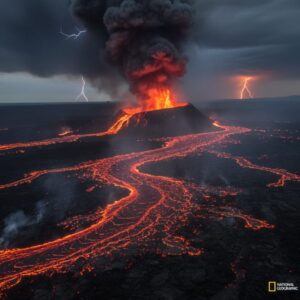
Volcanic eruptions generate their own weather systems, including spectacular lightning displays quite different from typical thunderstorm lightning. Volcanic lightning, also called dirty thunderstorms, forms within ash plumes when rock fragments, ash, and ice particles collide, generating static electricity. These electrical discharges create dramatic displays of branching lightning illuminating volcanic plumes from within. The phenomenon can occur continuously during major eruptions, with some events producing hundreds of lightning strikes per hour. Recent research suggests that studying volcanic lightning patterns may help scientists better understand eruption dynamics and predict volcanic behavior, as the electrical activity correlates with the size and nature of the eruption.

10. Sailing Stones: The Mystery of Death Valley's Moving Rocks

In California's Death Valley, rocks weighing up to 700 pounds mysteriously move across the dry lakebed of Racetrack Playa, leaving long trails in the mud behind them. For decades, this phenomenon baffled scientists who proposed theories ranging from magnetic fields to hurricane-force winds. The mystery was finally solved in 2014 when researchers observed that a rare combination of conditions causes the movement: during cold winter nights, shallow water freezes into thin ice sheets. On sunny mornings, the ice begins breaking into large floating panels that are pushed by light winds. The ice sheets, driven by these gentle breezes, push the embedded rocks across the slick mud surface. This phenomenon requires such precise conditions—standing water, freezing temperatures, morning sun, and light winds—that the rocks may move only a few times per decade.

Understanding Nature's Peculiarities

These extraordinary weather phenomena demonstrate that Earth's atmosphere and climate systems produce far more than simple rain or sunshine. From electrical discharges in the upper atmosphere to ice formations that kill marine life, from rocks that seemingly move themselves to storms that never sleep, these unusual events reveal the complexity and wonder of meteorological processes. Many of these phenomena have only recently been explained or documented, reminding us that despite advances in science and technology, nature still holds mysteries waiting to be understood. Each weird weather event teaches us something new about physics, chemistry, and the delicate interactions that govern our planet's climate systems, encouraging us to look skyward with greater appreciation and curiosity.

Did You Know? 12 Weird Myths About Iconic Movie Props

Did You Know? 12 Weird Myths About Iconic Movie Props

⏱️ 6 min read

Hollywood has always been a place where legends are born, and sometimes those legends extend beyond the screen to the props themselves. Over the decades, countless stories have circulated about famous movie props, creating a mythology that often overshadows the truth. While some of these tales contain kernels of fact, many are complete fabrications that have been repeated so often they've taken on a life of their own. Let's separate fact from fiction as we explore some of the most persistent myths surrounding cinema's most iconic objects.

Debunking the Legends Behind Cinema's Most Famous Objects

1. The Ruby Slippers Were Always Red

One of the most common misconceptions about "The Wizard of Oz" is that Dorothy's magical slippers were always intended to be ruby red. In reality, in L. Frank Baum's original novel, the shoes were silver. The switch to ruby was purely practical—Technicolor was still relatively new in 1939, and the filmmakers wanted footwear that would pop against the Yellow Brick Road. Despite this straightforward explanation, myths persist that the color was changed for mystical or symbolic reasons related to the film's themes.

2. The DeLorean Had Plutonium Chambers

Many fans of "Back to the Future" believe that the DeLorean time machine prop actually contained working mechanical components in its plutonium chambers. The myth suggests elaborate lighting and mechanical systems were built into these compartments. In truth, the "plutonium" effects were largely achieved through basic lighting tricks and post-production work. The prop was far simpler than the legend suggests, relying on movie magic rather than intricate engineering.

3. The Maltese Falcon Was Made of Precious Materials

Legend has it that the famous black bird from the 1941 film noir classic was crafted from expensive materials to give it appropriate weight and presence. Some versions of this myth claim it contained real precious metals or stones. The reality is far more mundane—the prop was made from plaster and lead, chosen specifically because these materials were inexpensive and easy to work with. The prop's value comes entirely from its cinematic legacy, not its composition.

4. Rosebud Sleds Were Burned During Filming

A persistent myth about "Citizen Kane" claims that multiple Rosebud sleds were actually burned during the famous furnace scene, with Orson Welles demanding take after take until he got it perfect. The truth is that careful planning meant only one sled was burned for the actual shot. The scene was too important and expensive to waste multiple props, and the film's tight budget wouldn't have allowed for such extravagance regardless of Welles' perfectionism.

5. The Chest in Pulp Fiction Contains Gold

One of cinema's greatest mysteries spawned its own myth—that the glowing briefcase in "Pulp Fiction" actually contained gold bars or diamonds on set to create authentic reactions from the actors. Some versions claim it held powerful lights that made actors genuinely squint. Director Quentin Tarantino has confirmed that the briefcase simply contained an orange light bulb. The mystery was intentional, and no elaborate prop contents were needed.

6. Wilson the Volleyball Could Float Indefinitely

Fans of "Cast Away" often believe that the Wilson volleyball used in filming was specially designed to float for extended periods and withstand ocean conditions. The myth suggests multiple high-tech versions were created with waterproofing and buoyancy features. In reality, production used regular volleyballs with hand-painted faces, and multiple balls were on hand simply because they would get damaged or lost during filming. No special engineering was required.

7. The Lightsabers Made Humming Sounds On Set

Many "Star Wars" enthusiasts believe the original lightsaber props contained sound-making mechanisms that helped actors feel immersed in their battles. This myth likely stems from behind-the-scenes footage where actors make "vwoom" sounds while fighting. The props were completely silent on set—the iconic sounds were added entirely in post-production by sound designer Ben Burtt, who created them by combining projector motor hum with television tube interference.

8. The Chest-Burster Was Filled With Real Organs

A gruesome myth surrounding "Alien" claims that director Ridley Scott filled the chest-burster prop with actual animal organs from a butcher shop to make the scene more realistic and to generate genuine shock from the cast. While the cast's reactions were indeed authentic because they weren't told exactly how the scene would unfold, the prop used synthetic materials and theatrical blood. No real organs were involved, despite the scene's visceral impact.

9. Indiana Jones' Whip Was Made From Authentic Bullwhip Materials

The legend persists that Harrison Ford's iconic whip in the Indiana Jones franchise was crafted using traditional bullwhip construction methods with kangaroo leather, and that Ford used this same heavy, authentic whip for all his stunts. In reality, multiple whips of varying weights and materials were used. Stunt whips were often made from lighter, safer materials, while the "hero" whip used for close-ups was more traditional. Ford certainly didn't perform every whip stunt with a single authentic weapon.

10. The Overlook Hotel Typewriter Was Haunted

Among "The Shining" enthusiasts, stories circulate that the typewriter used by Jack Torrance for his increasingly deranged manuscript caused strange occurrences on set. Some versions claim it would type by itself or malfunction in unexplainable ways. This is pure Hollywood mythology. The Adler typewriter was simply a period-appropriate prop, and any mechanical issues were normal for a machine of its age and use.

11. E.T.'s Eyes Were Controlled by Remote-Controlled Mechanisms

A technical myth suggests that E.T.'s expressive eyes used revolutionary remote-controlled servo motors that allowed operators to create subtle, human-like movements from a distance. While the puppet was indeed sophisticated for its time, the eye mechanisms were actually controlled by relatively simple cable and pulley systems operated by puppeteers in close proximity. The revolutionary aspect was the artistry of the puppeteers, not the technology itself.

12. The Infinity Gauntlet Weighed Over 50 Pounds

Marvel fans often believe the Infinity Gauntlet worn by Thanos in the Avengers films was an incredibly heavy practical prop that required significant strength to wear and move. This myth likely stems from the gauntlet's imposing appearance and the character's god-like power. In reality, the practical version used on set was made from lightweight materials like foam and plastic. Much of what audiences saw was digital enhancement, and no actor had to bear the weight of a 50-pound glove.

The Reality Behind the Legends

These myths about iconic movie props reveal our deep fascination with the objects that help bring our favorite films to life. While the truth behind these props may be less dramatic than the legends suggest, it doesn't diminish their importance to cinema history. If anything, understanding the practical, often simple solutions that filmmakers employed makes their achievements even more impressive. These props didn't need to be made of precious materials, contain real organs, or use revolutionary technology—they just needed to serve the story and capture our imaginations, which they continue to do decades after their creation.