



















⏱️ 7 min read
Leonardo da Vinci remains one of history's most enigmatic figures, celebrated as the quintessential Renaissance man. While most people know him as the painter of the Mona Lisa and The Last Supper, the depths of his genius and the peculiarities of his life story contain numerous surprising elements that challenge our conventional understanding of this master artist and inventor. From his unconventional habits to his groundbreaking discoveries that went unrecognized for centuries, these lesser-known aspects of Leonardo's life reveal a complex individual far ahead of his time.
Remarkable Revelations About the Renaissance Master
1. The Self-Taught Genius Who Never Attended University
Despite becoming one of the most brilliant minds in human history, Leonardo da Vinci never received a formal university education. Born out of wedlock in 1452, his illegitimate status barred him from attending university or joining prestigious guilds. Instead of formal schooling, he received basic education in reading, writing, and mathematics at home. This lack of traditional academic training actually liberated Leonardo from rigid classical thinking, allowing him to develop his own methods of observation and investigation. He famously called himself "an unlettered man," yet this self-education enabled him to approach problems with fresh perspectives that formally trained scholars might have missed.
2. The Mirror Writing Mystery
Leonardo wrote nearly all his notes backward, from right to left, creating mirror writing that could only be read easily when held up to a mirror. His notebooks contain approximately 13,000 pages of reversed text, a practice he maintained throughout his life. While some historians suggest this was to keep his ideas secret or prevent smudging since he was left-handed, others believe it was simply more natural for him. This peculiar habit has led to centuries of speculation about whether Leonardo was deliberately encrypting his work or if this was merely his preferred method of writing.
3. The Unfinished Masterpiece Epidemic
Leonardo possessed a chronic inability to complete projects, leaving an astounding number of works unfinished. Of the fewer than twenty paintings attributed to him, many were never completed. His perfectionism and constantly evolving ideas meant he would often abandon projects when they no longer interested him or when he discovered new techniques he wanted to explore. This tendency frustrated patrons and clients throughout his career, yet ironically, some of his unfinished works are now considered masterpieces, offering unique insights into his creative process.
4. The Vegetarian Who Dissected Corpses
Leonardo was known for his compassion toward animals and likely followed a vegetarian diet, reportedly purchasing caged birds just to set them free. Yet this same man conducted extensive human dissections, examining over thirty corpses throughout his lifetime. He created the most detailed anatomical drawings of his era, documenting muscles, organs, and skeletal structures with unprecedented accuracy. This paradox highlights Leonardo's complex character—simultaneously tender-hearted and scientifically ruthless in his pursuit of knowledge about the human body.
5. The Design for the First Robot
In 1495, Leonardo sketched plans for a mechanical knight that could sit up, wave its arms, and move its head. This "robot" was designed to be powered by a system of pulleys and cables, making it one of the first known designs for a humanoid automaton. When engineers built the robot according to Leonardo's specifications in modern times, they discovered his design actually worked. This invention predated the concept of robotics by centuries and demonstrated Leonardo's extraordinary understanding of mechanics and anatomy combined.
6. The Procrastination That Lasted Sixteen Years
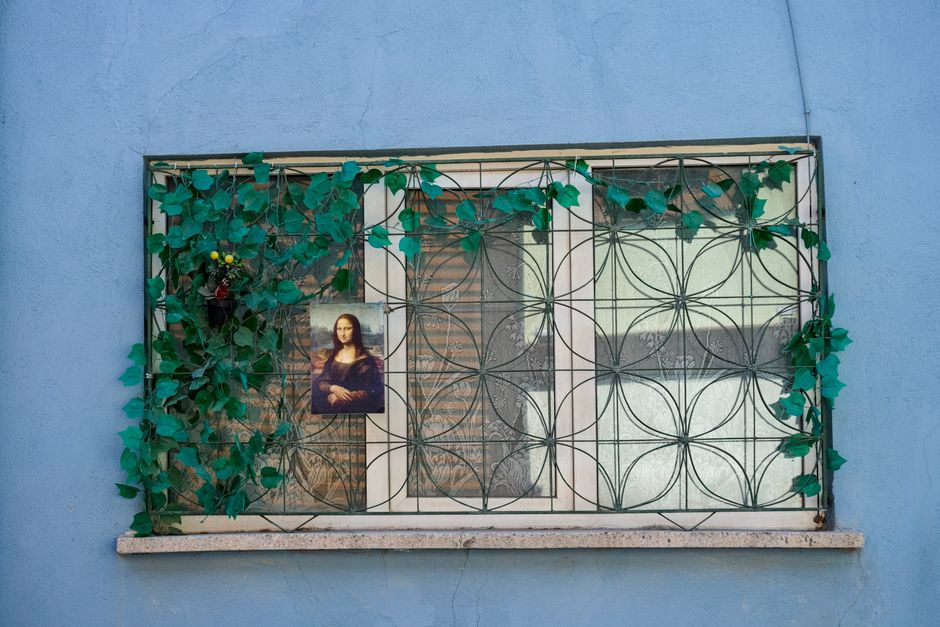
The Mona Lisa, arguably the world's most famous painting, was never delivered to the person who commissioned it. Leonardo began the portrait around 1503 and carried it with him for approximately sixteen years, continuously making tiny adjustments and refinements until his death in 1519. He never considered it finished and never gave it to Francesco del Giocondo, the Florentine merchant who commissioned the portrait of his wife. This obsessive perfectionism meant the painting remained Leonardo's personal possession throughout his life.
7. The Military Weapons Designer for Hire
While celebrated for his art and scientific pursuits, Leonardo actively sought work as a military engineer, designing devastating weapons of war. His notebooks contain detailed plans for machine guns, tanks, submarines, and even poison gas weapons. When applying for a position with the Duke of Milan, Leonardo's letter emphasized his military engineering capabilities over his artistic skills, listing ten ways he could create weapons and fortifications, and only briefly mentioning his abilities as a painter and sculptor at the end.
8. The Discovery of Hardening Arteries
Through his meticulous dissections, Leonardo became the first person to describe atherosclerosis—the hardening and narrowing of arteries. He observed this condition in an elderly man who died peacefully, noting the unusual state of the blood vessels. His drawings and notes on the circulatory system were remarkably accurate, yet remained hidden in private collections for centuries, meaning his discoveries went unrecognized and had to be rediscovered by later scientists.
9. The Allegations of Scandalous Behavior
At age twenty-four, Leonardo was arrested along with three other men on charges of sodomy, then illegal in Florence. The charges were eventually dropped, possibly due to the involvement of someone from a prominent family, but the accusation appeared twice in the official records. Leonardo never married and formed intense emotional attachments to his male students and assistants, particularly Gian Giacomo Caprotti, whom he nicknamed Salaì (little devil) despite the young man's reputation for theft and mischief.
10. The Battlefield Commission That Changed Art
Leonardo was commissioned to paint a massive battle scene, The Battle of Anghiari, on a wall in Florence's Palazzo Vecchio, directly opposite where Michelangelo would paint another battle scene. This unprecedented competition between two titans of Renaissance art never came to full fruition. Leonardo experimented with an ancient Roman encaustic painting technique that failed disastrously when he tried to dry the paint with braziers—the wax-based paint melted and ran down the wall. The ruined work was eventually painted over, though some believe traces may still exist beneath later frescoes.
11. The Accurate Geological Observations Dismissed for Centuries
While examining fossils in the Italian mountains, Leonardo correctly deduced that these shells and marine fossils proved that these mountains were once underwater. He rejected the common biblical flood explanation and understood that geological processes required vast amounts of time. These insights anticipated modern geology by centuries, but his notebooks weren't published until long after his death, meaning his geological insights, like many of his scientific discoveries, had no impact on the advancement of science during his era.
12. The Death Far from Home
Leonardo spent his final years not in Italy, but in France, where King Francis I invited him to live in a manor house near the royal château. The French king so valued Leonardo's genius that he gave him complete freedom to pursue any interests without requiring specific works in return. Leonardo died in Amboise, France, in 1519 at age sixty-seven, allegedly in the arms of the king himself, though this romantic story is likely apocryphal. He was buried in a French church that was later destroyed during the French Revolution, and the exact location of his remains is now unknown.
The Enduring Legacy of an Extraordinary Mind
These twelve revelations about Leonardo da Vinci illuminate the remarkable contradictions and complexities of a man whose genius transcended the boundaries of his era. From his humble beginnings as an illegitimate son barred from formal education to his final years as the honored guest of a king, Leonardo's life journey defied convention at every turn. His inability to complete projects, paradoxical nature as both gentle animal lover and anatomical investigator, and discoveries that went unrecognized for centuries paint a picture of someone perpetually at odds with his own time. Understanding these lesser-known aspects of his life enriches our appreciation not only of his famous artworks but of the restless, curious mind that produced them—a mind that continues to inspire and intrigue us more than five hundred years after his death.