⏱️ 7 min read
Throughout history, brave explorers have ventured into the unknown, driven by curiosity, ambition, and the desire to expand human knowledge. These remarkable individuals risked their lives to map uncharted territories, discover new lands, and connect distant civilizations. Their journeys transformed our understanding of the world and shaped the course of human history. From navigating treacherous seas to traversing hostile deserts and frozen wastelands, these adventurers left indelible marks on geography, science, and culture.
Legendary Voyagers Who Changed the World
1. Christopher Columbus and the European Discovery of the Americas
Christopher Columbus, an Italian navigator sailing under the Spanish flag, embarked on his historic voyage in 1492 seeking a western route to Asia. Instead, he encountered the Caribbean islands, marking the beginning of sustained European contact with the Americas. Though he never realized he had discovered continents previously unknown to Europeans, his four voyages across the Atlantic Ocean opened the door to widespread exploration and colonization of the New World. Columbus's expeditions fundamentally altered global history, initiating the Columbian Exchange—a massive transfer of plants, animals, culture, populations, and diseases between the Eastern and Western Hemispheres that reshaped civilizations on both sides of the Atlantic.
2. Ferdinand Magellan's Circumnavigation of the Globe
Ferdinand Magellan, a Portuguese explorer sailing for Spain, led the first expedition to successfully circumnavigate the Earth between 1519 and 1522. Though Magellan himself was killed in the Philippines in 1521, his crew completed the journey under Juan Sebastián Elcano's command. This extraordinary voyage proved definitively that the Earth was round and much larger than previously believed. Magellan discovered the strait at the southern tip of South America, now bearing his name, which provided a navigable route between the Atlantic and Pacific Oceans. This expedition demonstrated the interconnectedness of the world's oceans and expanded European geographical knowledge immeasurably.
3. Marco Polo's Silk Road Journey to China
Venetian merchant Marco Polo undertook one of history's most famous overland journeys, traveling the Silk Road to reach China in 1275. He spent nearly two decades in the court of Kublai Khan, the Mongol emperor, serving as an advisor and traveling extensively throughout Asia. Upon returning to Venice, Polo documented his experiences in "The Travels of Marco Polo," which provided Europeans with their first comprehensive look at Asian cultures, geography, and riches. His detailed accounts of paper money, coal, and the vastness of China's cities amazed medieval Europe and inspired future explorers, including Christopher Columbus, to seek routes to these wealthy Eastern lands.
4. Vasco da Gama's Sea Route to India
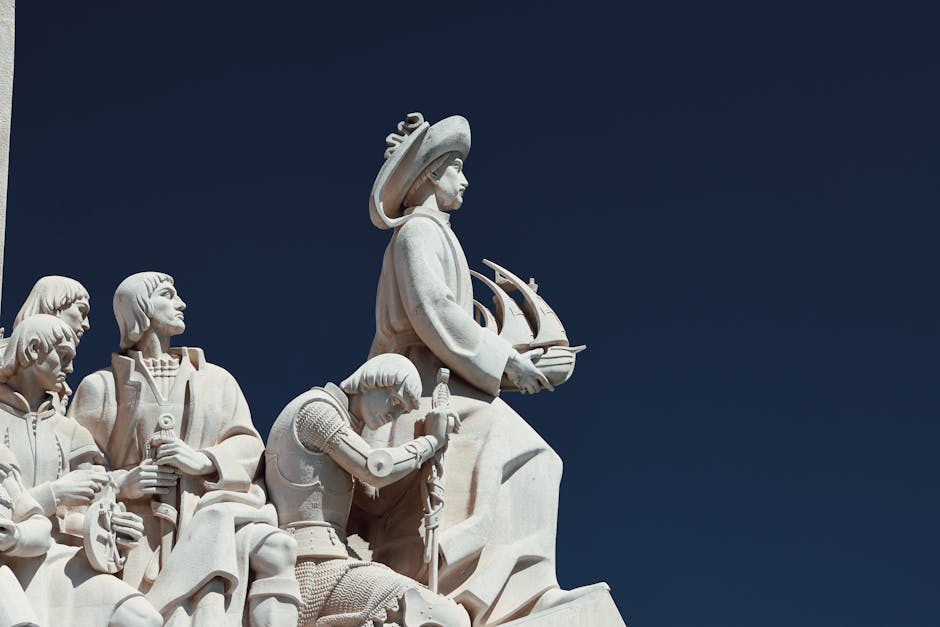
Portuguese explorer Vasco da Gama achieved what European navigators had long sought: a maritime route from Europe to India. In 1498, after rounding the Cape of Good Hope at Africa's southern tip, da Gama successfully reached Calicut on India's southwestern coast. This discovery was monumentally significant for European trade, as it eliminated the need for overland routes controlled by Middle Eastern intermediaries and opened direct access to the lucrative spice trade. Da Gama's voyage established Portugal as a major maritime power and initiated the age of European imperialism in Asia, fundamentally transforming global commerce and political relationships.
5. James Cook's Mapping of the Pacific Ocean
British Royal Navy captain James Cook conducted three groundbreaking voyages between 1768 and 1779 that revolutionized knowledge of the Pacific Ocean and its lands. Cook meticulously charted New Zealand, surveyed the eastern coast of Australia, and explored numerous Pacific islands, producing maps of unprecedented accuracy. He was the first European to reach Hawaii and navigated through the treacherous waters around Antarctica. Cook's scientific approach to exploration, which included taking astronomers, botanists, and artists on his voyages, set new standards for maritime expeditions. His achievements in navigation, cartography, and cross-cultural encounters made him one of history's greatest explorers.
6. David Livingstone's Exploration of Central Africa
Scottish missionary and physician David Livingstone spent over three decades exploring the African interior during the mid-19th century. He became the first European to cross the width of southern Africa and documented the magnificent waterfall on the Zambezi River, naming it Victoria Falls. Livingstone's explorations opened vast regions of central Africa to Western knowledge, including major river systems and lakes. Though he opposed the slave trade vehemently, his travels inadvertently facilitated European colonization. His disappearance and subsequent discovery by journalist Henry Morton Stanley in 1871 became one of history's most famous encounters, immortalized in Stanley's greeting: "Dr. Livingstone, I presume?"
7. Roald Amundsen's Race to the South Pole
Norwegian explorer Roald Amundsen became the first person to reach the South Pole on December 14, 1911, winning the dramatic race against British explorer Robert Falcon Scott. Amundsen's meticulous planning, use of sled dogs, and adaptation of Inuit survival techniques proved superior to Scott's approach. Earlier, Amundsen had also been the first to successfully navigate the Northwest Passage between 1903 and 1906, solving a puzzle that had challenged explorers for centuries. His polar achievements represented the culmination of the Heroic Age of Antarctic Exploration and demonstrated the importance of learning from indigenous peoples' knowledge when venturing into extreme environments.
8. Lewis and Clark's American Transcontinental Expedition
Meriwether Lewis and William Clark led the Corps of Discovery expedition from 1804 to 1806, traversing the North American continent from St. Louis to the Pacific Ocean and back. Commissioned by President Thomas Jefferson following the Louisiana Purchase, their journey mapped vast territories, documented hundreds of previously unknown plant and animal species, and established diplomatic relations with numerous Native American tribes. The expedition's detailed journals provided invaluable scientific, geographical, and ethnographic information about the western territories. With crucial assistance from Sacagawea, a Shoshone woman who served as interpreter and guide, Lewis and Clark's expedition opened the American West to further exploration and settlement.
9. Ibn Battuta's Epic Islamic World Travels
Moroccan scholar Ibn Battuta embarked on a pilgrimage to Mecca in 1325 that evolved into a 29-year journey covering approximately 75,000 miles throughout the Islamic world and beyond. He traveled through North Africa, the Middle East, India, Southeast Asia, and China, visiting the equivalent of 44 modern countries. Ibn Battuta's detailed observations, recorded in his "Rihla" (travels), provide invaluable historical accounts of 14th-century Islamic civilization, including descriptions of cities, rulers, customs, and trade networks. His journeys far exceeded those of his near-contemporary Marco Polo in scope and distance, making him arguably the greatest traveler of the pre-modern world.
10. Ernest Shackleton's Antarctic Survival Epic
Sir Ernest Shackleton led the Imperial Trans-Antarctic Expedition of 1914-1917, which became one of history's greatest survival stories despite failing to achieve its goal of crossing Antarctica. When his ship, the Endurance, became trapped and crushed by pack ice, Shackleton led his entire 28-man crew to safety through extraordinary leadership and endurance. The journey included camping on ice floes, sailing in lifeboats to remote Elephant Island, and Shackleton's legendary 800-mile open-boat voyage to South Georgia Island to seek rescue. Though not successful in geographic terms, Shackleton's expedition demonstrated unparalleled leadership, resilience, and the strength of human determination in the face of impossible odds.
The Enduring Legacy of Exploration
These ten extraordinary explorers represent different eras, motivations, and regions, yet they share common traits: courage, determination, and insatiable curiosity. Their discoveries expanded the boundaries of human knowledge, connected disparate civilizations, and demonstrated both the best and worst of human ambition. While we must acknowledge that many expeditions had problematic consequences for indigenous peoples and environments, the explorers' contributions to geography, science, and cross-cultural understanding remain significant. Their legacies continue to inspire modern explorers who now venture into space, deep oceans, and other frontiers, proving that the human spirit of discovery remains as vital today as it was centuries ago.