










1 / 9 Questions
0 Points

Who serves as the head of the U.S. Department of Justice?

Attorney General

Chief Justice

Secretary of Defense

Director of the FBI

Points won
0
Correct score
0%

More questions

More Articles

Did You Know? 12 Movies That Took Decades to Finish

Did You Know? 12 Movies That Took Decades to Finish

⏱️ 6 min read

The world of cinema is filled with ambitious projects that push the boundaries of filmmaking, but some productions face such monumental challenges that they take decades to complete. From technical limitations to financial struggles, creative differences to personal setbacks, these films represent extraordinary persistence and dedication. Here are twelve remarkable movies that required decades of work before finally reaching audiences.

Epic Productions That Defied Time

1. The Thief and the Cobbler: Richard Williams' 28-Year Obsession

Legendary animator Richard Williams began work on "The Thief and the Cobbler" in 1964, envisioning it as his masterpiece that would revolutionize animation. Williams worked on the film intermittently for 28 years, creating some of the most complex hand-drawn animation ever attempted. The production was so meticulous that some sequences took years to complete. Unfortunately, Williams lost control of the project in 1992, and the film was released in a heavily edited form in 1995. Despite never being completed as intended, the surviving footage demonstrates extraordinary artistry and ambition that influenced countless animators.

2. Boyhood: Growing Up in Real Time

Director Richard Linklater embarked on an unprecedented experiment in 2002, filming "Boyhood" over the course of 12 years using the same cast. The film follows a boy named Mason from age six to eighteen, with Linklater shooting for a few days each year. This allowed the actors to genuinely age alongside their characters, creating an authentic portrait of growing up. Released in 2014, the film received critical acclaim and numerous awards, proving that patient, long-term vision could produce something truly unique in cinema.

3. Mad Max: Fury Road's 15-Year Journey

George Miller first conceived "Mad Max: Fury Road" in the late 1990s, originally planning to shoot in 2001. However, the September 11 attacks led to increased insurance costs for filming in desert locations, forcing delays. The project then faced numerous obstacles including the Iraq War, Miller's commitment to "Happy Feet," and extensive script development. Production finally began in 2012, and the film was released in 2015, three decades after the previous Mad Max film. The wait proved worthwhile, as the film became a critical and commercial triumph.

4. The Man Who Killed Don Quixote: Terry Gilliam's 29-Year Quest

Terry Gilliam's attempt to adapt "The Man Who Killed Don Quixote" became one of cinema's most infamous troubled productions. Beginning in 1989 with development, Gilliam faced catastrophic setbacks including his lead actor falling ill, flash floods destroying equipment, and military jets disrupting sound recording during a 2000 attempt. The production collapsed multiple times over nearly three decades, with various actors attached and withdrawn. Gilliam finally completed the film in 2018, making it a testament to directorial persistence against seemingly insurmountable odds.

5. Apocalypse Now's Tortured Production

While Francis Ford Coppola's "Apocalypse Now" was released in 1979, the journey began much earlier. Coppola acquired the rights to adapt Joseph Conrad's "Heart of Darkness" in 1969, with John Milius writing the screenplay in the late 1960s. The actual production, beginning in 1976, was notoriously difficult, plagued by typhoons, Martin Sheen's heart attack, and Marlon Brando's difficult behavior. However, Coppola continued working on the film for decades, releasing "Apocalypse Now Redux" in 2001 and "Apocalypse Now Final Cut" in 2019, making it a 50-year obsession.

6. Avatar: James Cameron's 15-Year Technical Wait

James Cameron wrote an 80-page treatment for "Avatar" in 1994, but the technology needed to realize his vision didn't exist. Cameron deliberately waited for filmmaking technology to catch up with his imagination, using the intervening years to develop motion-capture and 3D filming techniques. Production began in earnest in 2005, with the film finally released in 2009. This patient approach paid off spectacularly, as "Avatar" became the highest-grossing film of all time and revolutionized 3D cinema.

7. Brazil's Decade-Long Conception and Battle

Terry Gilliam's dystopian masterpiece "Brazil" had a complex genesis spanning from the mid-1970s through its 1985 release. Gilliam conceived ideas for the film throughout the 1970s, began serious development in 1982, but then fought a legendary battle with Universal Pictures over the final cut. This conflict extended the film's journey by months as Gilliam fought to preserve his vision, even taking out advertisements to pressure the studio. The struggle became as famous as the film itself, representing the artist's fight against corporate control.

8. Megalopolis: Francis Ford Coppola's 40-Year Dream

Francis Ford Coppola began developing "Megalopolis" in the early 1980s, envisioning an epic exploration of utopian architecture and society. He conducted extensive research and planned to shoot in the late 1990s, but the project was postponed after September 11, 2001, as its themes of rebuilding New York became too sensitive. Coppola continued refining the script for decades, finally beginning production in 2022 using his own money. The film represents one of the longest gestations in cinema history, with release scheduled for 2024.

9. The Other Side of the Wind: Orson Welles' Unfinished Swan Song

Orson Welles began shooting "The Other Side of the Wind" in 1970, working intermittently until 1976. Financial problems, legal disputes over ownership, and Welles' perfectionism meant the film was never completed before his death in 1985. The footage sat in legal limbo for decades, with various attempts to finish it. Finally, in 2018, Netflix funded the film's completion, 48 years after principal photography began, allowing audiences to see Welles' final vision.

10. Eyes Wide Shut: Stanley Kubrick's Meticulous Final Film

Stanley Kubrick began developing his adaptation of "Traumnovelle" in the late 1960s, but didn't seriously pursue it until the 1990s. The actual production, beginning in 1996, took an unprecedented 400 days of shooting spread over 15 months, with Kubrick's legendary perfectionism requiring countless takes. When combined with his decades of development, the project represented nearly 30 years of Kubrick's life. Released in 1999 shortly after his death, it stands as a testament to his uncompromising artistic vision.

11. Blade Runner: From Novel to Screen to Redemption

While Ridley Scott's "Blade Runner" was released in 1982, its journey spans decades. Hampton Fancher wrote early drafts in the mid-1970s based on Philip K. Dick's novel, with development continuing for years before production. More significantly, Scott continued refining the film for decades after its initial release, creating the Director's Cut in 1992 and the definitive Final Cut in 2007, making it a 30-year process of perfecting his vision.

12. Eraserhead: David Lynch's Five-Year Art Project

David Lynch's surrealist debut "Eraserhead" was produced sporadically from 1972 to 1977, shot primarily on weekends and whenever funding became available. Lynch and his small crew worked with extreme dedication despite constant financial hardship, sometimes halting production for months until money could be raised. The five-year production created the film's uniquely nightmarish atmosphere, with Lynch using the extended timeline to experiment and develop his distinctive visual style that would define his career.

The Legacy of Patience in Filmmaking

These twelve films demonstrate that great cinema sometimes requires extraordinary patience and persistence. Whether waiting for technology to advance, battling financial constraints, or simply pursuing perfectionism, these filmmakers refused to compromise their visions. Their decades-long struggles resulted in some of cinema's most innovative and memorable works, proving that artistic ambition can triumph over time. These productions remind us that true creative achievement cannot always be rushed, and sometimes the wait makes the final result even more remarkable.
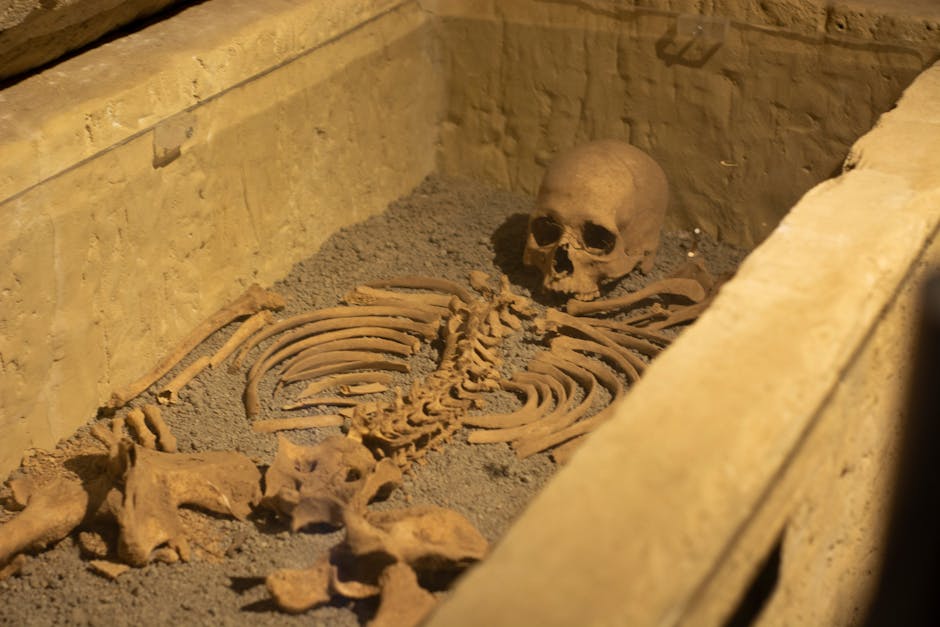

Did You Know? 10 Unsolved Mysteries from History

Did You Know? 10 Unsolved Mysteries from History

⏱️ 7 min read

Throughout human history, countless events, disappearances, and phenomena have defied explanation, leaving historians, archaeologists, and scientists puzzled for generations. Despite advances in technology and research methods, some mysteries remain stubbornly unsolved, continuing to captivate our imagination and challenge our understanding of the past. These enigmas span continents and millennia, from ancient civilizations to the modern era, each offering tantalizing clues but no definitive answers.

Ten Historical Enigmas That Continue to Baffle Experts

1. The Vanishing of the Roanoke Colony

In 1587, over 100 English settlers established a colony on Roanoke Island in present-day North Carolina. When supply ships returned three years later, the entire population had vanished without a trace. The only clue left behind was the word "CROATOAN" carved into a wooden post. Despite numerous theories ranging from assimilation with local Native American tribes to Spanish attacks or disease, no conclusive evidence has ever emerged to explain what happened to the colonists. Archaeological investigations continue to this day, but the fate of the Lost Colony remains one of America's oldest unsolved mysteries.

2. The Identity of Jack the Ripper

Between August and November 1888, at least five women were brutally murdered in London's Whitechapel district by an unknown killer who came to be known as Jack the Ripper. The murderer sent taunting letters to police and newspapers, and despite one of the largest manhunts in history, was never caught or conclusively identified. Over the years, more than 100 suspects have been proposed, including members of the royal family, doctors, artists, and even Lewis Carroll. Modern DNA analysis has been attempted on evidence preserved from the crime scenes, but results remain controversial and inconclusive.

3. The Construction Techniques of the Egyptian Pyramids

While we know the pyramids of Giza were built as tombs for pharaohs around 4,500 years ago, the exact methods used to construct these massive stone monuments remain hotly debated. The Great Pyramid contains approximately 2.3 million stone blocks, each weighing between 2.5 and 15 tons. How ancient Egyptians transported, lifted, and precisely positioned these enormous stones without modern machinery continues to puzzle engineers and archaeologists. Theories include the use of ramps, levers, counterweights, and internal spiral pathways, but no single explanation accounts for all the evidence. Recent discoveries of workers' villages and papyrus records have provided some insights, yet the complete picture remains elusive.

4. The Mysterious Voynich Manuscript

Carbon-dated to the early 15th century, the Voynich Manuscript is a 240-page illustrated codex written entirely in an unknown script that has defied all attempts at translation. The book contains detailed drawings of unidentifiable plants, astronomical diagrams, and illustrations of naked women in strange plumbing systems. Cryptographers, linguists, and codebreakers including World War II experts have attempted to decipher it, but none have succeeded. Some believe it's an elaborate hoax, while others argue it contains genuine knowledge written in a lost or constructed language. The manuscript's purpose and origin remain completely unknown.

5. The Disappearance of Amelia Earhart

On July 2, 1937, pioneering aviator Amelia Earhart and her navigator Fred Noonan vanished over the Pacific Ocean while attempting to circumnavigate the globe. Despite the most extensive air and sea search in naval history at that time, no trace of the plane, crew, or wreckage was ever definitively found. Theories about their fate include crashing into the ocean, landing on an uninhabited island and dying as castaways, or even being captured by the Japanese military. Recent expeditions have discovered artifacts on Nikumaroro Island that some believe belonged to Earhart, but conclusive proof remains elusive.

6. The Fate of the Princes in the Tower

In 1483, twelve-year-old King Edward V of England and his nine-year-old brother Richard, Duke of York, were placed in the Tower of London by their uncle, Richard III. The boys were never seen again, and Richard III took the throne shortly after. In 1674, workers discovered a wooden box containing the skeletons of two children beneath a staircase in the Tower. While many historians believe Richard III ordered their murder, others argue the boys may have died of natural causes or been killed by later political rivals. The bones have never been subjected to modern DNA testing, leaving their identity and the circumstances of the princes' death unconfirmed.

7. The Purpose of Stonehenge

Constructed between 3000 and 2000 BCE, Stonehenge consists of massive standing stones arranged in a circular pattern on England's Salisbury Plain. While archaeologists have learned much about how and when it was built, its original purpose remains debated. Theories include an astronomical observatory, a healing temple, a burial ground for elite members of society, a site for religious ceremonies, or even an ancient calendar. Recent discoveries suggest it may have served multiple purposes over its long history of use. The effort required to transport stones from quarries over 150 miles away indicates it held tremendous significance to Neolithic people, but its precise meaning may never be fully understood.

8. The Lost City of Atlantis

First described by the Greek philosopher Plato around 360 BCE, Atlantis was supposedly an advanced civilization that sank into the ocean "in a single day and night of misfortune." Whether Plato intended his account as literal history or philosophical allegory has been debated for over two millennia. Countless locations have been proposed for Atlantis, including the Mediterranean, the Atlantic Ocean, Antarctica, and even Indonesia. Some scholars believe Plato's story was inspired by the volcanic destruction of the Minoan civilization on Santorini around 1600 BCE, while others consider it pure fiction. Despite numerous expeditions and claims of discovery, no archaeological evidence of Atlantis has ever been verified.

9. The Zodiac Killer's Identity

Between 1968 and 1969, the Zodiac Killer murdered at least five people in Northern California, though he claimed to have killed 37. The killer sent cryptic letters and complex ciphers to newspapers, some of which remain unsolved today. Despite an extensive investigation and thousands of tips over the decades, the killer was never caught. In 2020, a team of codebreakers finally solved one of the Zodiac's most complex ciphers after 51 years, but it contained no information revealing the killer's identity. DNA evidence exists, but without a suspect to compare it to, the case remains open and the killer's identity unknown.

10. The Tunguska Event Explosion

On June 30, 1908, a massive explosion flattened over 770 square miles of forest in Siberia's Tunguska region. The blast, estimated at 1,000 times more powerful than the Hiroshima atomic bomb, was heard 600 miles away. Despite the enormous destruction, no crater was ever found, and no confirmed fragments of the object that caused the explosion have been recovered. The leading theory suggests a meteor or comet exploded in the atmosphere before impact, but alternative explanations including a natural gas explosion, a black hole, or even an alien spacecraft have been proposed. The remote location meant the site wasn't scientifically investigated until nearly 20 years after the event, leaving crucial evidence lost to time.

The Enduring Appeal of Historical Mysteries

These ten unsolved mysteries remind us that history is not a closed book with all questions answered. Each represents a gap in our knowledge, a puzzle that continues to inspire research, debate, and speculation. While some may eventually be solved through advances in technology such as DNA analysis, satellite imaging, or artificial intelligence, others may remain forever beyond our reach. The enduring fascination with these mysteries speaks to humanity's insatiable curiosity and our desire to understand the past. Whether they involve vanished civilizations, unidentified criminals, or unexplained phenomena, these historical enigmas continue to captivate new generations, proving that sometimes the questions we cannot answer are just as valuable as those we can.