











1 / 10 Questions
0 Points

What was the original federal minimum wage when it was first established?

$0.50 per hour

$1.00 per hour

$0.25 per hour

$0.10 per hour

Points won
0
Correct score
0%

More questions

More Articles

Did You Know? 12 Fun Facts About Global Currencies

Did You Know? 12 Fun Facts About Global Currencies

⏱️ 6 min read

Money makes the world go round, but the currencies we use every day hold fascinating stories that often go unnoticed. From ancient origins to modern innovations, global currencies reveal remarkable insights about history, culture, and human ingenuity. These surprising facts demonstrate that money is far more than just a medium of exchange—it's a reflection of our shared global heritage and the unique characteristics of different nations.

Discovering the Surprising World of International Money

1. Canada's Scratch-and-Sniff Currency Experiment

In 2013, rumors circulated that Canada's new polymer banknotes featured a scratch-and-sniff maple scent. While the Bank of Canada officially denied intentionally adding any fragrance, many Canadians insisted they could detect a sweet, maple-like aroma from the bills. The polymer notes, which replaced paper currency, were actually designed to be more durable, secure, and difficult to counterfeit. This unexpected controversy highlighted how seriously people pay attention to changes in their national currency and how sensory experiences can become associated with money.

2. The World's Smallest National Currency

The smallest banknote ever issued for circulation was the Romanian 10 Bani note from 1917, measuring just 27.5 by 38 millimeters—roughly the size of a postage stamp. Due to metal shortages during World War I, Romania had to print these tiny emergency notes instead of minting coins. Handling such diminutive currency must have been quite challenging for everyday transactions, and many of these notes have become valuable collector's items precisely because they were so easy to lose or destroy.

3. Coins That Survive Volcanic Eruptions

British coins are designed to withstand extreme conditions, including temperatures up to 800 degrees Celsius. This durability was dramatically proven when coins survived the devastating eruption of Mount Vesuvius in 79 AD, remaining intact in the ruins of Pompeii. Modern coins continue this tradition of resilience, with the Royal Mint engineering currency that can endure fires, chemical exposure, and even volcanic activity, ensuring that money retains its physical integrity under almost any circumstance.

4. The Euro's Hidden Security Constellation

Euro banknotes contain a hidden map of Europe that becomes visible only under ultraviolet light. This sophisticated anti-counterfeiting measure includes fluorescent fibers, a constellation of stars, and the European flag, all invisible to the naked eye. The security features are so advanced that each denomination has different patterns and colors when viewed under UV light, making the euro one of the most secure currencies in the world and a nightmare for counterfeiters to replicate accurately.

5. Sweden's Journey Toward a Cashless Society

Sweden is rapidly approaching becoming the world's first completely cashless society, with less than 1% of transactions involving physical money. Many Swedish banks no longer handle cash at their branches, and some businesses refuse to accept it altogether. Churches have installed card readers for donations, and even homeless vendors selling magazines accept mobile payments. This dramatic shift has prompted the Swedish government to ensure that elderly citizens and those without access to digital banking aren't left behind in this monetary revolution.

6. The Rai Stones of Yap Island

On the Micronesian island of Yap, one of the world's most unusual currencies still holds cultural significance—massive limestone discs called Rai stones, some weighing up to four tons. These stones were quarried from islands hundreds of miles away and transported by canoe, with their value determined by size, craftsmanship, and the difficulty of the journey. Remarkably, the stones don't need to move during transactions; ownership is simply acknowledged by the community, making it one of history's earliest examples of a ledger-based currency system.

7. Plastic Money Before Credit Cards

Australia introduced the world's first polymer (plastic) banknotes in 1988, revolutionizing currency production globally. These notes last four times longer than traditional paper money, can be recycled, and are virtually impossible to tear. The polymer design also allows for transparent windows and sophisticated holographic security features. Today, over 50 countries have adopted polymer banknotes, including the United Kingdom, Canada, and New Zealand, making plastic money a truly global phenomenon.

8. The Penny That Costs More Than Its Worth

The United States spends approximately 2.1 cents to manufacture each penny, which is worth only one cent. This means the U.S. Mint loses millions of dollars annually producing pennies and nickels. Despite numerous proposals to eliminate the penny from circulation, sentimental attachment and lobbying from the zinc industry (pennies are 97.5% zinc) have kept it in production. Several countries, including Canada and Australia, have eliminated their lowest-denomination coins without economic disruption.

9. Bitcoin's Anonymous Creator Mystery

The world's first decentralized cryptocurrency, Bitcoin, was created in 2009 by an individual or group using the pseudonym Satoshi Nakamoto, whose true identity remains unknown. This mysterious creator owns approximately one million bitcoins, which would be worth billions of dollars at current values, yet has never touched them. The anonymity of Bitcoin's founder adds to the cryptocurrency's mystique and has spawned countless theories about Nakamoto's identity, from tech entrepreneurs to groups of cryptographers.

10. The Dinar's Ancient Purchasing Power

The Kuwaiti Dinar holds the distinction of being the world's highest-valued currency unit, with one dinar worth approximately three U.S. dollars. This strength stems from Kuwait's substantial oil exports and its stable economy. Interestingly, the name "dinar" derives from the Roman "denarius," connecting modern Middle Eastern currency to ancient Roman coinage and demonstrating how monetary terminology survives across millennia and civilizations.

11. Hyperinflation's Astronomical Numbers

Zimbabwe experienced one of history's worst cases of hyperinflation, culminating in the printing of a 100 trillion dollar banknote in 2009. At its peak, prices doubled every 24 hours, and the currency became essentially worthless, with people carrying wheelbarrows of cash for basic purchases. Zimbabwe eventually abandoned its currency altogether, adopting a multi-currency system using foreign money. These banknotes have since become collector's items, ironically worth more as curiosities than they ever were as legal tender.

12. The Symbol That Conquered the World

The dollar sign ($) may have originated from the Spanish peso symbol, where "P" was written over "S" to represent "pesos." Over time, the P became simplified to just a vertical line through the S. This symbol has become so universal that it's now used to represent various currencies beyond the U.S. dollar, including the Canadian dollar, Australian dollar, and many others. Its widespread adoption demonstrates how certain monetary symbols transcend their origins to become truly international representations of value.

The Enduring Fascination of Global Money

These twelve remarkable facts reveal that currencies are far more than simple tools for commerce. They embody technological innovation, cultural heritage, economic policy, and even artistic expression. From massive stone discs to digital cryptocurrencies, from scratch-and-sniff experiments to volcanic durability, money tells the story of human civilization and our constant quest to improve how we exchange value. As we move toward an increasingly digital financial future, these fascinating aspects of physical and traditional currencies remind us of the rich history behind every transaction we make, and how the concept of money continues to evolve with human society.
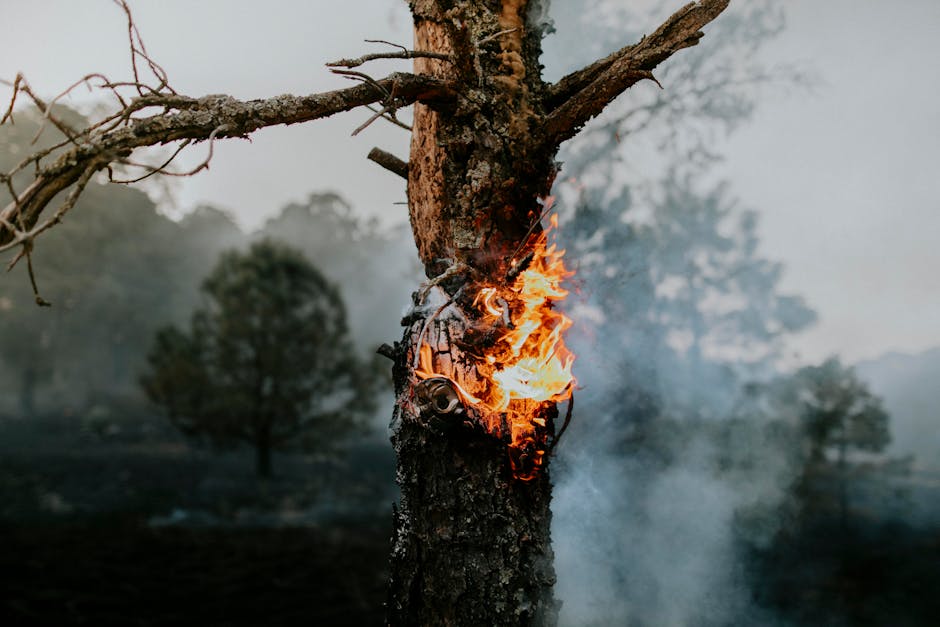

Top 10 Cool Facts About Natural Disasters

Top 10 Cool Facts About Natural Disasters

⏱️ 7 min read

Natural disasters have shaped our planet for millions of years, influencing everything from geological formations to human civilization. While these powerful events can be devastating, they also reveal fascinating insights into Earth's dynamic systems and the incredible forces that govern our world. Understanding these phenomena helps us appreciate both the power of nature and the resilience required to coexist with it.

Remarkable Insights Into Earth's Most Powerful Events

1. Earthquakes Can Make Days Shorter

The 2011 earthquake in Japan was so powerful that it literally altered Earth's rotation. Scientists calculated that this 9.0 magnitude quake redistributed enough mass to shorten each day by approximately 1.8 microseconds. This occurs because massive earthquakes can shift the Earth's axis and change how the planet's mass is distributed. The phenomenon is similar to how figure skaters spin faster when they pull their arms closer to their body. While the change is imperceptible to humans, it demonstrates the extraordinary power these seismic events possess. The 2004 Indian Ocean earthquake similarly affected Earth's rotation, shortening the day by 6.8 microseconds.

2. Lightning Strikes Earth 8 Million Times Daily

Thunderstorms produce an astonishing amount of electrical activity across the globe. Every single day, approximately 8 million lightning strikes hit Earth's surface, with roughly 100 strikes occurring every second. The temperature of a lightning bolt can reach 30,000 Kelvin (53,540 degrees Fahrenheit), which is five times hotter than the surface of the sun. This intense heat causes the surrounding air to expand rapidly, creating the thunder we hear. Some lightning bolts can stretch for miles, and certain thunderstorms can produce thousands of strikes in just a few hours, making lightning one of nature's most frequent and powerful displays.

3. Tornadoes Create Their Own Weather Systems

Tornadoes don't just respond to weather conditions—they actively create their own atmospheric phenomena. The powerful updrafts and downdrafts within and around a tornado can generate localized pressure drops so significant that they produce unique weather effects. Some tornadoes have been known to cause sudden temperature drops of up to 20 degrees Fahrenheit in seconds. The most powerful tornadoes can also produce their own lightning, a phenomenon called "in-cloud" lightning that occurs within the debris cloud. Additionally, the extreme low pressure at a tornado's core can cause buildings to explode outward, a force so powerful it appears to make structures burst from the inside.

4. Volcanic Eruptions Can Trigger Global Climate Changes

Major volcanic eruptions have the power to affect global temperatures for years. When Mount Tambora erupted in 1815, it ejected so much ash and sulfur dioxide into the atmosphere that it caused "The Year Without a Summer" in 1816. Temperatures dropped worldwide, crops failed across Europe and North America, and snow fell in June in New England. The eruption released approximately 100 cubic kilometers of material into the atmosphere, creating a volcanic winter effect. More recently, the 1991 eruption of Mount Pinatubo in the Philippines lowered global temperatures by about 0.5 degrees Celsius for nearly two years, demonstrating how volcanic activity can have immediate and measurable impacts on Earth's climate systems.

5. Hurricanes Release Enormous Amounts of Energy

A fully developed hurricane releases heat energy equivalent to a 10-megaton nuclear bomb exploding every 20 minutes. Over the course of a single day, a hurricane can release energy equal to about 200 times the entire world's electrical generating capacity. This energy comes primarily from the latent heat released when water vapor condenses into rain. The largest hurricanes can contain more than 2 trillion gallons of water and generate wind speeds exceeding 200 miles per hour. Despite this incredible power, only about 3% of a hurricane's total energy is converted into the kinetic energy of wind—the rest is released as heat.

6. Tsunamis Travel at Jet Aircraft Speeds

In deep ocean waters, tsunami waves can travel at speeds exceeding 500 miles per hour, comparable to a commercial jet airplane. At these speeds, a tsunami can cross the entire Pacific Ocean in less than a day. Despite their incredible velocity in deep water, tsunamis are barely noticeable at sea, with wave heights often less than three feet and wavelengths extending hundreds of miles. However, as these waves approach shallow coastal waters, they slow down and compress, causing the water to pile up into devastating walls that can exceed 100 feet in height. This transformation from barely visible ocean swell to catastrophic coastal wave makes tsunamis particularly dangerous and difficult to detect in open water.

7. Wildfires Can Create Their Own Storm Systems

Extreme wildfires generate so much heat that they can create pyrocumulonimbus clouds, also known as fire thunderstorms. These massive cloud formations can reach heights of 50,000 feet and produce their own lightning, which can then spark additional fires miles away from the original blaze. The intense heat from large wildfires creates powerful updrafts that can generate winds of over 100 miles per hour, strong enough to uproot trees and hurl burning debris considerable distances. Some of these fire-generated storms have even produced fire tornadoes, swirling vortexes of flame and ash that can cause additional destruction. The 2003 Canberra firestorm in Australia produced such intense pyrocumulonimbus activity that it generated thousands of lightning strikes.

8. Avalanches Can Reach Highway Speeds in Seconds

Snow avalanches can accelerate from zero to 80 miles per hour in just five seconds, making them one of the fastest-moving natural disasters. Large powder avalanches can reach speeds of 200 miles per hour and create blast waves of compressed air ahead of them that can destroy forests and buildings before the snow even arrives. The force generated by a medium-sized avalanche moving at highway speed is equivalent to being hit by hundreds of cars simultaneously. Despite appearing to be just flowing snow, avalanches can generate impact pressures of 50 tons per square meter, enough force to snap mature trees, crush vehicles, and demolish buildings. The powder cloud that accompanies some avalanches can suffocate victims even if they're not directly hit by the dense snow mass.

9. Sinkholes Can Swallow Entire Buildings Instantly

Sinkholes form when underground water dissolves soluble bedrock like limestone, creating massive hidden cavities beneath the surface. When the roof of these cavities finally collapses, it can happen with terrifying suddenness, opening holes hundreds of feet deep in mere seconds. The largest known sinkhole, Xiaozhai Tiankeng in China, is 2,172 feet deep and 1,760 feet wide—large enough to contain several skyscrapers. In urban areas, sinkholes pose unique dangers because they can develop beneath roads, buildings, and infrastructure with little warning. Some sinkholes continue to grow after their initial collapse, while others can trigger chain reactions of additional collapses in surrounding areas where the bedrock has been similarly weakened.

10. Floods Are the Most Common Natural Disaster Worldwide

Despite the dramatic nature of earthquakes and hurricanes, floods account for more than 40% of all natural disasters globally and affect more people than any other type of catastrophic event. Flash floods, which can occur in mere minutes, are particularly deadly because they give people almost no time to evacuate. Water moving at just 6 miles per hour can knock adults off their feet, and two feet of rushing water can carry away most vehicles, including SUVs and pickup trucks. Floods can also persist for weeks or months, unlike other disasters that pass relatively quickly, leading to long-term displacement, disease outbreaks, and infrastructure damage. The economic and human costs of flooding continue to rise as climate patterns shift and more people settle in flood-prone areas.

Understanding Nature's Power

These remarkable facts about natural disasters reveal the extraordinary forces that shape our planet and challenge human resilience. From earthquakes that alter Earth's rotation to wildfires that generate their own weather systems, these events demonstrate nature's raw power and complexity. While natural disasters can cause tremendous destruction, understanding their mechanisms helps scientists develop better prediction methods, early warning systems, and safety protocols. As climate change continues to influence the frequency and intensity of many natural disasters, this knowledge becomes increasingly vital for communities worldwide. Respecting the power of these natural phenomena while advancing our scientific understanding remains essential for building a safer, more resilient future for all inhabitants of our dynamic planet.