






1 / 10 Questions
0 Points

What color is the center circle on the Japanese flag?

White

Orange

Yellow

Red

Points won
0
Correct score
0%

More questions

More Articles

Top 10 Hidden Details in Pixar Movies

Top 10 Hidden Details in Pixar Movies

⏱️ 7 min read

Pixar Animation Studios has built a legendary reputation not just for groundbreaking animation and heartfelt storytelling, but for the incredible attention to detail woven throughout their films. Beyond the main narrative, animators and storytellers have hidden countless Easter eggs, visual callbacks, and meaningful references that reward careful viewers. These hidden details range from subtle nods to previous films to carefully researched authenticity that adds layers of depth to every scene. Discovering these secrets transforms a simple viewing into a treasure hunt, revealing the meticulous craftsmanship behind each frame.

Discovering Pixar's Secret Language

1. The Persistent Pizza Planet Truck

One of Pixar's most famous running Easter eggs is the yellow Pizza Planet delivery truck from Toy Story. This distinctive vehicle, adorned with a rocket ship logo, has appeared in nearly every Pixar film since its debut. Sharp-eyed viewers have spotted it in Finding Nemo as one of the vehicles crossing a bridge, in A Bug's Life during the bug city scene, and even in Brave despite the medieval Scottish setting, where it's cleverly disguised as a wood carving. The truck represents Pixar's commitment to creating a connected universe where all their stories potentially exist within the same world. This tradition has become so beloved that fans eagerly search for the truck in each new release, making it an interactive element that extends beyond passive viewing.

2. A113: The Mysterious Classroom Code

The alphanumeric sequence A113 appears throughout Pixar's filmography, and its presence is a heartfelt tribute to the animators' origins. A113 was the classroom number at the California Institute of the Arts where many Pixar animators, including John Lasseter and Brad Bird, studied character animation. This code appears as license plate numbers in multiple films, as the model number on the camera Andy's mom uses in Toy Story 3, as the courtroom number in Finding Nemo, and even on Git's license plate in Cars. The inclusion of A113 serves as a touching reminder of where these talented artists learned their craft and honors the educational foundation that launched countless animation careers.

3. The Luxo Ball's Endless Journey

The iconic yellow ball with a blue stripe and red star, first featured in Pixar's early short film about the Luxo Jr. lamp, has become one of the studio's most recognizable symbols. This simple prop has traveled through decades of storytelling, appearing in Toy Story as one of the toys in Andy's room, bouncing around the dentist's office in Finding Nemo, appearing in the day care center in Toy Story 3, and showing up in various scenes throughout the Pixar catalog. The ball represents Pixar's humble beginnings when they were experimenting with computer animation technology, and its continued presence celebrates how far the studio has come while never forgetting its roots.

4. Boo's Surprisingly Deep Connection to the Pixar Universe

In Monsters, Inc., the adorable toddler Boo captures hearts, but eagle-eyed viewers have noticed something extraordinary in her bedroom. Among her toys, viewers can spot Jessie the cowgirl doll from Toy Story 2, even though Monsters, Inc. was released before Toy Story 2 made Jessie a household name. Additionally, a carved wooden figure resembling the witch from Brave can be seen, leading to fan theories about time travel and interconnected storylines. Some theorists have even suggested that Boo could be the witch from Brave, having spent her life trying to recreate the magic doors that once let her see Sulley. Whether intentional or not, these details have sparked countless discussions about the deeper Pixar universe.

5. Buy n Large: The Mega-Corporation Timeline

The sinister Buy n Large corporation from WALL-E didn't suddenly appear in that dystopian future—it has been subtly establishing its presence throughout Pixar's timeline. The BnL logo appears in Toy Story 3 on batteries that Andy's mom uses, suggesting the corporation already existed during Andy's childhood. It's visible on various products and advertisements in other Pixar films as well, creating a cohesive corporate presence across decades. This detail suggests that WALL-E's apocalyptic future could be a potential outcome for the same world where Toy Story and other Pixar films take place, adding a darker, more cautionary layer to the otherwise whimsical Pixar universe.

6. The Books on Bookshelves Tell Stories Within Stories

Pixar's animators don't just throw random props into scenes—every detail serves a purpose, including the books visible on bookshelves throughout their films. In Monsters, Inc., a book titled "A Bug's Life" can be spotted, while in Up, Carl and Ellie's house contains books referencing other Pixar titles. These aren't merely Easter eggs; they represent the idea that Pixar films could exist as stories within their own universe, where characters might read about each other's adventures. This meta-textual approach adds philosophical depth to what might otherwise be simple background details, suggesting layers of reality within the animated worlds.

7. Authentic Cultural Research in Coco's Details

While not a traditional Easter egg, Coco contains hidden details that showcase Pixar's commitment to authentic cultural representation. The film's Land of the Dead features papel picado (decorative perforated paper) designs that change based on what part of the afterlife characters occupy, with more elaborate designs in wealthier areas. The marigold petals that form bridges aren't just visually stunning—they're accurate to Día de los Muertos traditions where cempasúchil flowers guide spirits home. Even the guitar designs, facial structures, and architectural details underwent extensive research trips to Mexico. These hidden authenticity details demonstrate that Pixar's attention extends beyond clever callbacks to respectful, researched representation.

8. Character Cameos That Blur Timeline Boundaries

Pixar loves sneaking characters from one film into another, creating delightful moments for attentive viewers. Lots-o'-Huggin' Bear from Toy Story 3 appears in Up, even though Up was released a year earlier, suggesting Pixar animators plan these cameos well in advance. Rex the dinosaur appears as a toy in Partysaurus Rex at a swimming pool party. The Omnidroid from The Incredibles can be spotted in one of the toy collections in Toy Story 3. These character cameos aren't mistakes or coincidences—they're carefully planned insertions that reward fans who watch films multiple times and pay attention to background details.

9. Dinoco: The Success Symbol Across Films

The Dinoco gas station and oil company serves as a fascinating through-line connecting multiple Pixar films. It first appears in Toy Story as the gas station where Andy's family stops, representing a standard American roadside business. By Cars, Dinoco has become the most prestigious racing sponsor, the ultimate symbol of success that Lightning McQueen initially craves. The Dinoco logo and brand appear in Finding Nemo, The Incredibles, WALL-E, and numerous other films, suggesting an economic consistency across the Pixar universe. The evolution of Dinoco from simple gas station to corporate powerhouse mirrors real American business growth, adding subtle socioeconomic commentary to the animated world.

10. The Hidden Voices of Pixar Employees

A particularly touching hidden detail involves how many Pixar employees lend their voices to films, often uncredited or in minor roles. Directors, animators, and staff members frequently voice background characters, additional voices in crowd scenes, or minor roles. Andrew Stanton, director of Finding Nemo and WALL-E, voices Crush the sea turtle and provides various vocal effects. John Ratzenberger has voiced a character in every Pixar film, becoming the studio's good luck charm. These hidden vocal contributions create a sense of family and ownership throughout Pixar's work, with every employee literally having a voice in the final product. This practice transforms each film from a corporate product into a collaborative family achievement.

The Significance of Hidden Details

These hidden details serve multiple purposes beyond simple fan service. They create a sense of interconnected storytelling that makes the Pixar universe feel richer and more cohesive. They reward multiple viewings, encouraging audiences to engage more deeply with the films. They represent the passion and dedication of Pixar's creative teams, who understand that great animation involves caring about elements that most viewers might never consciously notice. Most importantly, these Easter eggs and hidden details have fostered a dedicated community of fans who share discoveries, develop theories, and celebrate the artistry behind every frame. The hidden details in Pixar movies transform passive entertainment into active exploration, proving that animation can be as layered and complex as any art form. For both casual viewers and devoted fans, discovering these secrets adds immeasurable joy to the Pixar experience.


Top 10 Hidden Secrets from the Middle Ages

Top 10 Hidden Secrets from the Middle Ages

⏱️ 6 min read

The Middle Ages, spanning roughly from the 5th to the 15th century, remains one of history's most misunderstood periods. Beyond the common narratives of knights, castles, and plagues lies a fascinating world of innovation, complexity, and surprising sophistication. These lesser-known aspects of medieval life challenge our preconceptions and reveal a society far more advanced and nuanced than popular culture suggests.

Remarkable Medieval Discoveries That Changed Our Understanding

1. The Medieval Internet: A Sophisticated Postal Network

Long before the digital age, medieval Europe developed an remarkably efficient communication system. Universities, monasteries, and merchant guilds maintained extensive networks of messengers who could deliver letters across the continent in surprisingly short timeframes. The University of Paris could receive correspondence from Oxford in approximately two weeks, while urgent messages traveled even faster through relay systems. This "medieval internet" facilitated intellectual exchange, business transactions, and diplomatic relations across vast distances, creating a surprisingly interconnected medieval world that contradicts the notion of isolated, provincial communities.

2. Advanced Medieval Dentistry and Anesthesia

Contrary to popular belief, medieval physicians practiced surprisingly sophisticated dentistry. Barber-surgeons performed tooth extractions, filled cavities with gold leaf, and even attempted rudimentary orthodontics. More remarkably, they developed effective anesthetics using combinations of opium, hemlock, and henbane mixed with wine—a concoction called "dwale." Patients would inhale vapors from sponges soaked in these substances, achieving a state similar to modern general anesthesia. Medieval surgical texts reveal detailed knowledge of pain management that wouldn't be significantly improved upon until the 19th century.

3. The Hidden Jewish Refuges Beneath Medieval Cities

Archaeological discoveries have revealed secret networks of tunnels and hidden chambers beneath many medieval European cities, constructed by Jewish communities as refuges during periods of persecution. These underground sanctuaries contained mikvahs (ritual baths), Torah storage areas, and even small synagogues. Cities like Prague, Cologne, and Toledo harbor these forgotten spaces, which served as emergency hiding places during pogroms and forced conversions. These architectural secrets demonstrate both the constant threats faced by medieval Jewish populations and their remarkable resilience and ingenuity in creating safe spaces.

4. Medieval Women's Property Rights and Business Authority

Medieval women enjoyed legal and economic rights that would disappear in subsequent centuries. Married women in many medieval jurisdictions could own property independently, run businesses, and represent themselves in court. The "femme sole" status allowed married women to operate as independent merchants, making contracts and assuming debts separate from their husbands. Guild records show women working as brewers, textile merchants, silversmiths, and even manuscript illuminators. Widows often continued their late husbands' businesses with full legal authority. This economic agency would largely vanish during the early modern period, making medieval women surprisingly empowered compared to their 17th and 18th-century descendants.

5. The Lost Technology of Greek Fire

The Byzantine Empire guarded one of history's most closely kept military secrets: the formula for Greek Fire. This incendiary weapon, which burned on water and couldn't be extinguished by conventional means, gave the Byzantines naval supremacy for centuries. The recipe was so closely guarded that it was lost entirely after the empire's fall, and despite centuries of speculation, modern scientists cannot definitively recreate it. Historical accounts describe a terrifying weapon that shot liquid fire through bronze tubes, incinerating enemy fleets. The secret was passed only between emperors and select chemists, making it one of history's successfully protected state secrets.

6. The Medieval Warm Period and Agricultural Revolution

Between approximately 950 and 1250 CE, Europe experienced the Medieval Warm Period, with temperatures significantly higher than preceding and following centuries. This climatic phenomenon enabled agriculture in regions previously too cold for cultivation. Vikings established farming communities in Greenland, English vineyards produced wine that rivaled French varieties, and Scandinavian farmers grew crops at latitudes where they're impossible today. This warming period fueled population growth, urban expansion, and economic development. The subsequent cooling that began in the 14th century contributed to crop failures, famine, and social upheaval, demonstrating how climate dramatically shaped medieval history.

7. The Secret Language of Medieval Stonemasons

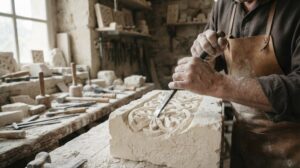
Medieval stonemasons developed a private language of symbols, gestures, and passwords to protect their trade secrets and identify qualified craftsmen. These secret marks, still visible on cathedral stones today, indicated individual masons, quality standards, and construction techniques. The mason's guild operated much like a secret society, with initiation rituals and progressive levels of knowledge. Apprentices spent years learning not just stone-cutting techniques but also geometry, engineering principles, and the symbolic language that unified masons across linguistic boundaries. This secretive system allowed skilled craftsmen to travel across Europe and gain immediate recognition and employment at cathedral construction sites.

8. Medieval Islamic Hospitals and Medical Schools

While Europe struggled with basic medical care, the Islamic world developed sophisticated hospital systems that presaged modern medical institutions. Baghdad's 9th-century Bimaristan hospital featured specialized wards for different conditions, pharmacies, libraries, and teaching facilities. These institutions admitted patients regardless of religion or ability to pay, maintained detailed medical records, and required physicians to pass examinations before practicing. Medieval Islamic physicians performed cataract surgeries, developed surgical instruments still recognizable today, and compiled medical encyclopedias that wouldn't be surpassed in Europe for centuries. This advanced medical tradition directly influenced European medicine through translations and cultural exchange in Spain and Sicily.

9. The Forgotten Medieval Democracy of Iceland

While most of Europe lived under feudal monarchies, medieval Iceland developed a unique democratic system called the Althing, established in 930 CE. This parliamentary institution brought together representatives from across Iceland to legislate, adjudicate disputes, and make collective decisions without a king or central executive authority. The Althing represents one of the world's oldest surviving parliaments and demonstrates that democratic governance existed in medieval Europe, contradicting assumptions about universal feudal autocracy. This system functioned for over three centuries until Iceland came under Norwegian rule, preserving a model of representative government that anticipated later democratic developments.

10. The Secret Recipe for Medieval Stained Glass

The brilliant blue glass found in medieval cathedrals, particularly the stunning windows of Chartres Cathedral, has never been successfully replicated. Medieval glaziers incorporated cobalt and other compounds in proportions and through processes that remain mysterious. The specific shade of "Chartres blue" possesses a depth and luminosity that modern techniques cannot duplicate. Beyond chemistry, medieval glass-makers possessed knowledge of light physics, creating windows that glow with internal radiance regardless of external light conditions. This lost technology represents not primitive craft but sophisticated understanding of materials science that disappeared as guild systems collapsed and manufacturing processes industrialized.

Conclusion

These hidden aspects of medieval life reveal a period far more sophisticated, interconnected, and innovative than traditional narratives suggest. From advanced medical practices to democratic institutions, from international communication networks to lost technologies, the Middle Ages produced achievements that challenge our assumptions about historical progress. Understanding these secrets not only enriches our knowledge of the past but also reminds us that human ingenuity, complexity, and advancement don't follow simple linear paths. The medieval world, long dismissed as the "Dark Ages," contained lights of knowledge, innovation, and social organization that continue to surprise and inspire modern researchers.