










1 / 10 Questions
0 Points

Which ancient practice do medical schools now teach?

Bloodletting

Crystal healing

Acupuncture

Trepanation

Points won
0
Correct score
0%

More questions

More Articles

Did You Know? 15 Legendary Rules About Industrial Revolution

Did You Know? 15 Legendary Rules About Industrial Revolution

⏱️ 6 min read

The Industrial Revolution stands as one of the most transformative periods in human history, fundamentally altering how societies functioned, how people worked, and how nations developed. This era, spanning roughly from the mid-18th to the mid-19th century, introduced principles and patterns that shaped modern industrial civilization. Understanding these foundational "rules" or principles helps illuminate why this period was so revolutionary and how its effects continue to influence our world today.

The Foundational Principles That Changed Everything

1. Mechanization Replaces Manual Labor

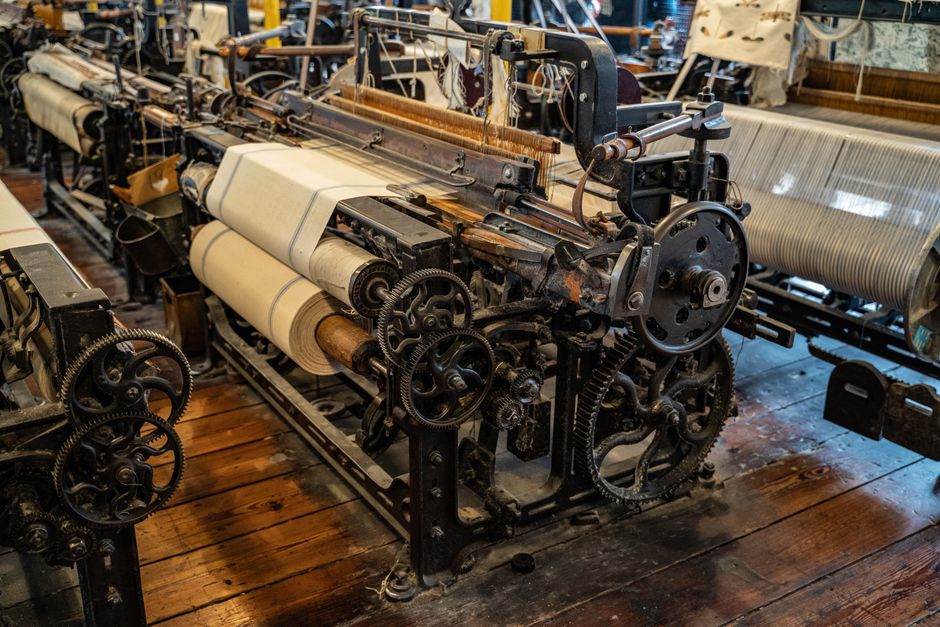
The fundamental principle of the Industrial Revolution was the systematic replacement of human and animal power with machines. This wasn't merely about making work easier; it represented a complete reimagining of production. Textile mills demonstrated this principle most dramatically, where spinning jennies and power looms could produce in hours what previously took skilled workers days or weeks to complete. This rule established that machinery, once perfected, would inevitably replace manual processes across all industries.

2. Centralization of Production Creates Efficiency

Before industrialization, production occurred in scattered homes and small workshops. The Industrial Revolution established that gathering workers and machines under one roof—the factory system—dramatically increased efficiency. This centralization allowed for better supervision, coordinated workflow, and economies of scale. The factory became the dominant model precisely because it proved that concentrated production outperformed dispersed cottage industries in nearly every measurable way.

3. Capital Investment Drives Innovation

The Industrial Revolution proved that substantial upfront capital investment in machinery and infrastructure would generate unprecedented returns. Entrepreneurs learned that those willing to invest heavily in new technologies and production methods would dominate their markets. This principle transformed economic thinking, establishing that access to capital and willingness to invest in innovation became more important than traditional land ownership or inherited wealth.

4. Steam Power Enables Independence from Natural Limitations

James Watt's improvements to the steam engine established a crucial principle: human industry need no longer depend on natural power sources like rivers, wind, or animal strength. Factories could be built anywhere, operating continuously regardless of weather or geography. This rule meant that industrial development could occur in locations chosen for strategic, economic, or logistical reasons rather than being bound to waterfalls or windswept plains.

5. Division of Labor Maximizes Productivity

Adam Smith's pin factory example became industrial gospel: breaking complex tasks into simple, repetitive steps performed by specialized workers dramatically increased output. Each worker mastering one small task could work faster and with greater precision than a craftsman performing all steps. This principle became fundamental to industrial organization, though it transformed skilled artisans into specialized laborers performing repetitive tasks.

6. Standardization Enables Mass Production

The Industrial Revolution established that manufacturing identical, interchangeable parts was essential for efficient production and repair. Eli Whitney's demonstration of interchangeable musket parts proved that standardization reduced costs, simplified assembly, and made repairs feasible. This principle became foundational to all modern manufacturing, from simple tools to complex machinery.

7. Transportation Infrastructure Determines Economic Success

Industrialists quickly learned that production capacity meant nothing without efficient transportation. Canals, improved roads, and especially railroads became as important as factories themselves. Nations and regions that invested heavily in transportation infrastructure prospered, while those that neglected it stagnated. This rule established that industrial success required thinking beyond the factory floor to entire supply chains and distribution networks.

8. Coal Fuels Industrial Expansion

The Industrial Revolution proved that access to abundant, affordable energy was non-negotiable for industrial development. Coal became the essential commodity, powering steam engines, heating factories, and fueling iron production. Regions with coal deposits gained enormous advantages, while those without it faced significant industrial handicaps. This principle established energy access as a fundamental prerequisite for industrial power.

9. Urbanization Follows Industrialization

A consistent pattern emerged: wherever factories appeared, cities grew rapidly. Workers migrated from rural areas to industrial centers, creating unprecedented urban growth. This wasn't merely coincidental but represented a fundamental rule of industrial development—mechanized production required concentrated labor forces living near factories. This principle transformed predominantly rural societies into urban ones within a few generations.

10. Technical Education Creates Competitive Advantage

Early industrializers recognized that technical knowledge and engineering expertise were crucial competitive advantages. Nations and companies that invested in technical education, scientific research, and knowledge-sharing prospered. This principle established that industrial leadership required not just copying existing machines but developing the educational infrastructure to innovate and improve technologies continuously.

11. Iron and Steel Production Measures Industrial Capacity

The amount of iron and steel a nation could produce became the primary measure of its industrial strength. These materials were essential for building machines, railways, ships, and structures. The principle was simple: industrial power required mastering large-scale iron and steel production. Nations that achieved this dominated global trade and military power.

12. Factory Discipline Replaces Agricultural Rhythms

Industrialization imposed rigid time discipline unknown in agricultural societies. Factory whistles, punch clocks, and strict schedules replaced the seasonal, daylight-dependent rhythms of farm life. This principle established that industrial work required punctuality, continuous attention, and subordination to machine-paced production schedules—fundamentally changing how humans experienced work and time.

13. Child and Female Labor Expands the Workforce

Early industrialists discovered that women and children could operate many machines, dramatically expanding the available labor force while reducing wage costs. Though eventually reformed through labor legislation, this principle initially shaped industrial development by demonstrating that traditional labor restrictions could be overcome when economic incentives were strong enough.

14. Innovation Cycles Accelerate Continuously

The Industrial Revolution established that technological improvement was not a one-time event but a continuous process. Each innovation created opportunities for further improvements and entirely new technologies. This accelerating cycle of innovation became a defining characteristic of industrial societies, establishing that continuous adaptation and improvement were necessary for survival, not just success.

15. Global Trade Networks Become Essential

Industrialization required access to global markets for both raw materials and finished goods. Cotton from America and India fed British textile mills, whose products sold worldwide. This principle established that successful industrial nations needed not just domestic production capacity but global trade networks, colonial access, or international trade agreements to sustain industrial growth.

The Lasting Legacy of Industrial Principles

These fifteen principles established during the Industrial Revolution continue shaping our world. Modern manufacturing, global supply chains, urban development, and economic policies all reflect lessons learned during this transformative era. Understanding these foundational rules provides essential context for comprehending how industrial societies developed and why they function as they do. The Industrial Revolution wasn't simply a period of technological change—it established enduring principles about how production, society, and economy could be organized, principles that remain influential more than two centuries later.

Did You Know? 12 Amazing Myths About Silk Road

Did You Know? 12 Amazing Myths About Silk Road

⏱️ 6 min read

The Silk Road stands as one of history's most romanticized trade networks, connecting East and West for over 1,500 years. However, centuries of storytelling have woven numerous myths into the fabric of its legacy. These misconceptions have shaped popular understanding of this ancient network, often obscuring the fascinating historical reality beneath. Let's explore twelve common myths about the Silk Road and uncover the truths they conceal.

Debunking Common Misconceptions

1. The Silk Road Was a Single, Continuous Route

Contrary to popular imagination, the Silk Road was never a singular highway stretching from China to Europe. Instead, it comprised an intricate web of interconnected trade routes spanning thousands of miles across diverse terrains. Merchants rarely traveled the entire distance; goods passed through numerous hands across multiple regions. Local traders would transport items to regional hubs, where other merchants would continue the journey westward or eastward. This relay system of trade was the actual mechanism that moved goods across continents.

2. Silk Was the Only Valuable Commodity Traded

While silk gave the network its name, it represented merely one of countless commodities exchanged along these routes. Precious metals, gemstones, spices, tea, porcelain, glassware, wool, precious woods, and paper all traveled these paths. Ideas, religions, technologies, and cultural practices proved equally valuable. Buddhism spread from India to China along these routes, while papermaking technology traveled westward. The Silk Road functioned as a conduit for cultural exchange as much as commercial trade.

3. The Routes Were Named "Silk Road" by Ancient Traders

The term "Silk Road" is surprisingly modern, coined by German geographer Ferdinand von Richthofen in 1877. Ancient merchants and travelers had no collective name for these trade networks. They simply knew individual routes, cities, and regions along their particular trading paths. This romantic designation emerged during the Victorian era's fascination with Oriental exoticism, centuries after the routes' peak importance had declined.

4. The Silk Road Was Primarily Overland

Maritime routes played a crucial role in Silk Road commerce, yet they're frequently overlooked in popular narratives. The Maritime Silk Road connected Chinese ports with Southeast Asia, India, the Arabian Peninsula, and East Africa. These sea routes often proved faster, safer, and more economical than overland caravans. Monsoon winds enabled predictable seasonal sailing, and ships could carry far heavier loads than camel caravans, making maritime trade increasingly important over time.

5. The Network Operated Continuously Throughout History

The Silk Road's activity fluctuated dramatically across centuries, influenced by political stability, warfare, disease, and economic conditions. The network flourished during the Han Dynasty, declined during periods of fragmentation, revived under the Tang Dynasty, and experienced renewed vigor during the Mongol Empire's Pax Mongolica. The rise of Ottoman power and the development of maritime routes to Asia by European powers in the 15th century gradually diminished the overland routes' importance. The Silk Road wasn't a constant feature of ancient life but rather experienced distinct periods of prosperity and decline.

6. Travel Along the Silk Road Was Always Dangerous and Exotic

Popular culture portrays Silk Road travel as a constant adventure filled with bandits, hostile tribes, and treacherous terrain. While dangers certainly existed, much of the journey involved mundane commercial activity in well-established trading cities. Many route sections passed through settled agricultural regions with developed infrastructure. Caravanserais provided safe lodging, local authorities often protected merchants for tax revenue, and established trading protocols governed commerce. For experienced merchants, Silk Road trade was a calculated business venture rather than a reckless adventure.

7. Only Luxury Goods Were Worth Transporting

While high-value luxury items dominate historical accounts due to their prestige and documentation, bulk commodities also moved along these routes. Cotton, grain, salt, and livestock traveled regional segments. The perception that only silk, spices, and precious stones justified the journey overlooks the diverse economic activities sustaining communities along the routes. Local and regional trade in everyday necessities supported the infrastructure that enabled luxury goods to traverse greater distances.

8. The Silk Road Connected Only China and Rome

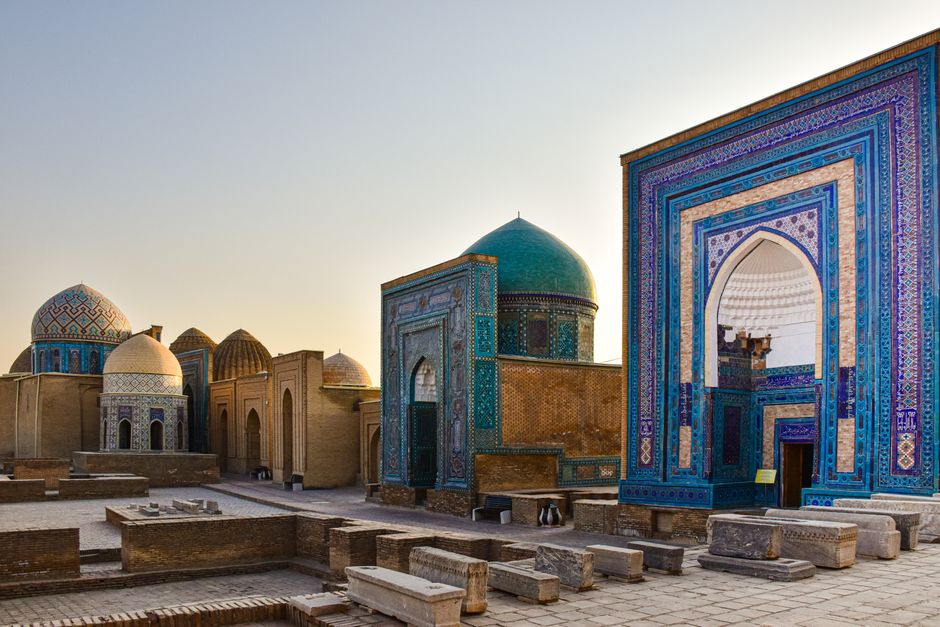
This myth oversimplifies the network's geographic scope. The Silk Road connected numerous civilizations including Persia, India, Central Asian kingdoms, Arabia, Byzantium, and eventually various European states. Important trading hubs like Samarkand, Bukhara, Kashgar, and Dunhuang served as cultural crossroads where multiple civilizations interacted. These Central Asian cities weren't mere waypoints but vibrant centers of commerce, scholarship, and cultural synthesis in their own right.

9. Women Never Traveled the Silk Road

Historical records reveal women's active participation in Silk Road commerce and travel, though their stories receive less attention. Women merchants, particularly in Central Asia, conducted business independently. Buddhist nuns made pilgrimages along these routes. Noblewomen traveled for diplomatic marriages. Additionally, communities along the routes included women in all social roles. This myth reflects historical documentation bias rather than actual absence of women from Silk Road life.

10. The Silk Road's Decline Was Sudden and Complete

The network's decline occurred gradually over centuries rather than ending abruptly. While European maritime exploration in the 15th and 16th centuries redirected much long-distance trade, overland routes continued operating for regional commerce. Political changes, including the Ming Dynasty's reduced interest in western trade and the fragmentation of the Mongol Empire, contributed to declining international traffic. However, some routes remained economically significant well into the modern era, with cities like Bukhara maintaining trading importance into the 19th century.

11. Cultural Exchange Was Always Peaceful and Welcomed

While the Silk Road facilitated remarkable cultural exchange, this process wasn't uniformly peaceful or accepted. Religious conflicts arose as Buddhism, Islam, Christianity, and other faiths competed for followers. Governments sometimes restricted foreign merchants or religions perceived as threatening. Cultural borrowing often generated resistance from traditionalists. The spread of diseases, including potentially the Black Death, represented a devastating form of unwanted exchange. The Silk Road's legacy includes both enriching cultural synthesis and destructive conflicts.

12. The Silk Road's Importance Is Purely Historical

The ancient Silk Road's legacy extends far beyond historical interest. Modern China's Belt and Road Initiative explicitly invokes this heritage while developing contemporary infrastructure across similar geographic regions. Cultural connections established through ancient trade continue influencing modern identities across Central Asia. Archaeological discoveries along Silk Road routes provide ongoing insights into human history. The concept of interconnected trade networks enabling cultural exchange remains profoundly relevant to understanding globalization. Rather than a dead relic, the Silk Road provides frameworks for understanding contemporary international relations and economic development.

Understanding the Reality Behind the Romance

These twelve myths reveal how romanticized narratives can obscure complex historical realities. The actual Silk Road was neither a single road nor exclusively about silk, involved diverse participants beyond Chinese and Roman merchants, and experienced fluctuating fortunes across centuries. Recognizing these myths allows for deeper appreciation of the intricate economic, cultural, and social networks that connected ancient civilizations. The real Silk Road, with its diverse routes, commodities, peoples, and changing fortunes, proves far more fascinating than simplified legends suggest. By understanding what the Silk Road truly was—and wasn't—we gain valuable insights into how trade networks shape civilizations and how historical narratives evolve across time.