






1 / 20 Questions
0 Points

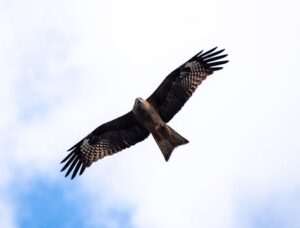
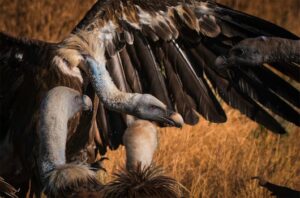
What is a group of vultures in flight called?

A murder

A kettle

A parliament

A congress

Points won
0
Correct score
0%

More questions

More Articles

Did You Know? 15 Unbelievable Stories About Coffee

Did You Know? 15 Unbelievable Stories About Coffee

⏱️ 7 min read

Coffee is one of the world's most beloved beverages, consumed by millions of people every day. Yet behind every cup lies a rich tapestry of fascinating historical events, surprising discoveries, and incredible tales that most coffee drinkers have never heard. From ancient goat herders to modern-day innovations, the journey of coffee through human civilization is filled with remarkable stories that seem almost too extraordinary to be true. Here are fifteen astonishing facts and tales about coffee that will forever change how you view your morning brew.

The Ancient Origins and Legendary Discoveries

1. The Dancing Goats of Ethiopia

The discovery of coffee is attributed to an Ethiopian goat herder named Kaldi around 850 CE. According to legend, Kaldi noticed his goats becoming unusually energetic and "dancing" after eating bright red berries from a certain tree. Intrigued by this behavior, he tried the berries himself and experienced a similar burst of energy. He shared his discovery with local monks, who initially disapproved and threw the berries into a fire. The enticing aroma of roasting coffee beans convinced them to give it another chance, leading to the creation of the first coffee beverage.

2. Coffee as Currency in Ancient Turkey

In the Ottoman Empire during the 15th and 16th centuries, coffee was so valuable that it was sometimes used as a form of currency. Turkish law during this period even allowed women to divorce their husbands if they failed to provide them with a daily quota of coffee. This unusual legal provision highlights just how integral coffee had become to daily life and social customs in Ottoman society.

3. The Pope's Blessing That Changed History

When coffee first arrived in Europe in the 16th century, some Catholic clergy called it the "bitter invention of Satan" because of its association with the Ottoman Empire and Islam. They petitioned Pope Clement VIII to ban the beverage. However, after tasting coffee himself, the Pope was so delighted that he declared it would be a sin to let only non-Christians enjoy such a wonderful drink. He gave coffee his papal blessing, paving the way for its acceptance throughout Christian Europe.

Coffee's Role in Revolutionary Movements

4. The Beverage That Fueled the French Revolution

Café de Foy and other Parisian coffeehouses served as the primary meeting places for revolutionary thinkers before and during the French Revolution. In fact, the call to storm the Bastille on July 14, 1789, originated in the Café de Foy when journalist Camille Desmoulins jumped onto a table and rallied the crowd to action. Coffeehouses became such hotbeds of political discussion that authorities frequently tried to shut them down.

5. The Boston Tea Party's Caffeinated Aftermath

After the Boston Tea Party in 1773, drinking coffee became a patriotic duty in America. Tea was associated with British oppression, so colonists switched en masse to coffee as their beverage of choice. This shift in preference fundamentally changed American drinking culture and established coffee as the nation's preferred hot beverage—a distinction it maintains to this day.

Extraordinary Coffee Cultivation Stories

6. The Smuggled Seedling That Built Brazil's Empire

Brazil is now the world's largest coffee producer, but it almost never entered the coffee business. In 1727, Francisco de Melo Palheta was sent to French Guiana to settle a border dispute. The French jealously guarded their coffee plants and refused to share them. However, the governor's wife, allegedly infatuated with Palheta, secretly gave him a bouquet containing hidden coffee seedlings as a farewell gift. Those smuggled plants became the foundation of Brazil's massive coffee industry.

7. The Kopi Luwak Phenomenon

One of the world's most expensive coffees, Kopi Luwak, is made from coffee beans that have been eaten and excreted by the Asian palm civet, a cat-like animal. Dutch colonists in Indonesia originally prohibited native farmers from harvesting coffee for themselves. The farmers discovered that civet droppings contained partially digested coffee beans, which they collected, cleaned, and roasted. The digestive process actually improved the coffee's flavor by reducing its bitterness, creating a delicacy that now sells for hundreds of dollars per pound.

Medical and Scientific Surprises

8. The First Webcam Monitored a Coffee Pot

The world's first webcam was created at Cambridge University in 1991, but it wasn't for security or communication—it was to monitor a coffee pot. Computer scientists in the Trojan Room became frustrated with walking to the coffee maker only to find it empty, so they set up a camera that streamed images to their computers. This innovation, born from caffeine devotion, laid the groundwork for modern webcam technology.

9. Bach's Coffee Cantata

German composer Johann Sebastian Bach was such a coffee enthusiast that in 1735 he wrote the "Coffee Cantata," a humorous mini-opera about a young woman's coffee addiction. The piece satirized the movement in Leipzig to prevent women from drinking coffee and includes the memorable line, "If I can't drink my bowl of coffee three times daily, I'm just like a dried-up piece of roast goat." This composition demonstrates that coffee culture debates have existed for centuries.

Modern Coffee Phenomena

10. The Coffee Taster with a Million-Dollar Palate

Professional coffee tasters, known as "Q Graders," have their taste buds insured for millions of dollars. Gennaro Pelliccia, the chief coffee taster for Costa Coffee, had his tongue insured for £10 million by Lloyd's of London. These experts can distinguish between thousands of different flavor notes and are responsible for maintaining consistency across millions of cups of coffee.

11. The Espresso Machine Invented for Impatience

The espresso machine was invented in 1884 by Angelo Moriondo in Turin, Italy, not to create a new type of coffee, but simply because he wanted to reduce the amount of time his employees spent on coffee breaks. His invention allowed coffee to be made much faster by forcing hot water through finely ground coffee under pressure. This time-saving device accidentally created one of the world's most popular coffee preparation methods.

12. New York City's Coffee Consumption Record

New York City residents drink nearly seven times more coffee than residents of any other U.S. city. The city's 7,000+ coffee shops serve approximately 2.5 million cups of coffee daily. This extraordinary consumption rate means that New Yorkers drink enough coffee each day to fill an Olympic-sized swimming pool, reinforcing the city's reputation as a place that never sleeps.

Unusual Coffee Facts from Around the World

13. Finland's Unmatched Coffee Obsession

While many assume Americans or Italians drink the most coffee per capita, Finland actually holds this title. The average Finnish person consumes approximately 12 kilograms of coffee per year—roughly four cups per day. This Nordic nation's coffee culture includes multiple daily coffee breaks, including "kahvitauko," which is written into many employment contracts as an official work break.

14. The Volcanic Island Coffee That Almost Disappeared

Coffee from the island of St. Helena, where Napoleon was exiled, was once considered the world's finest. Napoleon himself became addicted to it during his imprisonment. After his death, the island's coffee industry nearly vanished, with only a few trees surviving by the 1990s. A massive restoration effort has since revived this rare coffee, which now sells for premium prices to coffee connoisseurs worldwide.

15. Instant Coffee Was Invented During War

Instant coffee was invented in 1901 by Japanese scientist Satori Kato, but it didn't become popular until World War I. The U.S. government ordered massive quantities for troops overseas, as it was lightweight, had a long shelf life, and required only hot water. Soldiers developed such a taste for it that instant coffee became a household staple after the war, fundamentally changing coffee consumption patterns globally and leading to brands like Nescafé, which launched in 1938.

Conclusion

These fifteen remarkable stories demonstrate that coffee is far more than just a beverage—it's a substance that has shaped history, fueled revolutions, inspired art, and connected cultures across centuries and continents. From dancing Ethiopian goats to papal blessings, from smuggled seedlings to million-dollar taste buds, coffee's journey through human civilization is filled with unexpected twists and fascinating characters. The next time you enjoy your daily cup, remember that you're participating in a rich tradition filled with incredible tales of discovery, innovation, and human ingenuity. Whether you prefer espresso, drip coffee, or even the exotic Kopi Luwak, each sip connects you to this extraordinary global story that continues to unfold with each passing day.

Did You Know? 15 Facts About Extinct Animals

Did You Know? 15 Facts About Extinct Animals

⏱️ 7 min read

The history of life on Earth is marked by countless species that once roamed our planet but have since disappeared forever. While extinction is a natural part of evolution, studying these lost creatures offers fascinating insights into biodiversity, adaptation, and the delicate balance of ecosystems. From massive prehistoric beasts to recently vanished species, extinct animals continue to capture our imagination and teach us valuable lessons about conservation. Here are fifteen remarkable facts about animals that no longer walk, swim, or fly among us.

Fascinating Discoveries About Lost Species

1. The Dodo Bird Wasn't Actually Stupid

Contrary to popular belief and the phrase "dumb as a dodo," these flightless birds from Mauritius were well-adapted to their environment. The dodo had no natural predators on its island home, so it didn't need to fear ground-dwelling threats. It was human arrival in the 1500s, along with introduced species like rats and pigs, that led to their extinction by 1681. Recent studies of dodo brain cases suggest these birds had relatively large brains for their body size, comparable to modern pigeons.

2. Woolly Mammoths Survived Until the Pyramids Were Built

While most woolly mammoths died out around 10,000 years ago, a small population survived on Wrangel Island in the Arctic Ocean until approximately 4,000 years ago. This means these magnificent creatures were still alive when the ancient Egyptians were constructing the Great Pyramid of Giza. The isolated island population likely succumbed to genetic problems from inbreeding and environmental changes rather than human hunting.

3. The Thylacine Had a Pouch Despite Being a Carnivore

The Tasmanian tiger, or thylacine, was a remarkable marsupial predator that went extinct in 1936. Unlike most carnivorous mammals, both male and female thylacines had pouches. The female's pouch opened to the rear and could hold up to four young, while males had a protective pouch covering their external reproductive organs. This apex predator could open its jaws to an incredible 120-degree angle, far wider than any modern dog or wolf.

4. Passenger Pigeons Darkened the Sky for Days

Once the most abundant bird in North America, passenger pigeon flocks were so enormous they could take three days to pass overhead and would literally darken the skies. Estimates suggest up to five billion of these birds existed in the early 1800s. Despite their incredible numbers, relentless hunting and habitat destruction drove them to extinction by 1914, when the last known individual, Martha, died at the Cincinnati Zoo.

5. The Megalodon's Teeth Were Larger Than Human Hands

The megalodon, an ancient shark that lived 23 to 3.6 million years ago, possessed teeth that measured over seven inches in length. These massive predators grew to estimated lengths of 50 to 60 feet, roughly three times the size of today's great white sharks. Scientists believe they preyed on whales and had a bite force of up to 40,000 pounds per square inch, making it one of the most powerful predators ever to exist.

6. Steller's Sea Cow Was Hunted to Extinction in Just 27 Years

Discovered in 1741 by European explorers in the Bering Sea, Steller's sea cow was a massive marine mammal reaching up to 30 feet long and weighing up to 11 tons. These gentle giants were slow-moving, peaceful herbivores that fed on kelp. Their docile nature, inability to dive, and delicious meat made them easy targets for hunters. By 1768, just 27 years after their discovery by Western science, they were completely extinct.

7. Irish Elk Weren't Elk and Weren't Exclusively Irish

Despite its name, the Irish elk was actually the largest deer species ever to exist, with antlers spanning up to 12 feet across and weighing up to 88 pounds. These magnificent creatures lived across Europe, Asia, and North Africa during the Pleistocene epoch. Their enormous antlers, while impressive for display and competition, may have contributed to their extinction around 7,700 years ago as forests became denser after the Ice Age.

8. The Quagga Was a Partially Striped Zebra

The quagga was a subspecies of plains zebra that had stripes only on the front portion of its body, while its hindquarters were solid brown. Native to South Africa, these unique animals were heavily hunted for their hides and to preserve grazing land for domestic livestock. The last wild quagga was shot in 1878, and the last captive specimen died in Amsterdam in 1883. Interestingly, a selective breeding program called the Quagga Project has been attempting to recreate their appearance from plains zebras.

9. Giant Ground Sloths Could Weigh as Much as Elephants

Prehistoric ground sloths, such as Megatherium, reached truly staggering proportions, with some species weighing up to four tons and standing over 20 feet tall on their hind legs. Unlike their small, tree-dwelling modern relatives, these creatures walked on the ground and used their powerful claws to pull down tree branches. They went extinct around 10,000 years ago, possibly due to climate change and human hunting pressure.

10. The Moa Birds Were Hunted by Giant Eagles

New Zealand's moa birds were massive, flightless birds that stood up to 12 feet tall and weighed up to 500 pounds. Before human arrival, their only predator was the equally impressive Haast's eagle, the largest eagle ever known, with a wingspan exceeding 10 feet. When Polynesian settlers arrived around 1300 CE and hunted the moa to extinction by 1400 CE, the Haast's eagle also disappeared, having lost its primary food source.

11. Saber-Toothed Cats Had Weak Bites Despite Impressive Teeth

The iconic Smilodon, commonly known as the saber-toothed cat, possessed impressive canine teeth up to seven inches long, yet had a relatively weak bite force compared to modern big cats. Research suggests they used their powerful neck muscles to drive their teeth into prey rather than relying on jaw strength alone. These impressive predators went extinct around 10,000 years ago during the late Pleistocene extinctions.

12. The Great Auk Was the Original Penguin

The great auk, a flightless seabird from the North Atlantic, was actually the original bird to be called a "penguin." When explorers later encountered similar-looking flightless birds in the Southern Hemisphere, they applied the same name, which stuck. Great auks stood about 30 inches tall and were excellent swimmers. They were hunted extensively for their feathers, meat, and fat, with the last confirmed pair killed in Iceland in 1844.

13. Gigantopithecus Was the Largest Primate Ever

Gigantopithecus blacki, which lived in Southeast Asia until around 100,000 years ago, was an enormous ape that stood up to 10 feet tall and weighed up to 1,200 pounds. Known only from fossil jaw bones and teeth, scientists believe these massive primates were herbivores that primarily ate bamboo, similar to modern giant pandas. Climate change and competition with more adaptable species like early humans likely contributed to their extinction.

14. Caribbean Monk Seals Were the Only Tropical Seals

The Caribbean monk seal was the only seal species native to the Caribbean Sea and Gulf of Mexico. Christopher Columbus documented encountering large populations during his voyages, calling them "sea wolves." Intensive hunting for their oil, fur, and meat, combined with their tameness around humans, led to their rapid decline. The last confirmed sighting was in 1952, and they were officially declared extinct in 2008.

15. The Baiji River Dolphin Was Known as the Goddess of the Yangtze

The baiji, or Yangtze River dolphin, was one of only a handful of freshwater dolphin species and was revered in Chinese culture as the "Goddess of the Yangtze." These nearly blind dolphins relied on echolocation to navigate the murky river waters. Despite being declared a national treasure, industrialization, dam construction, pollution, and boat traffic drove them to functional extinction by 2006, making them the first dolphin species driven to extinction by human activity.

Learning From the Past

These fifteen facts reveal the incredible diversity of life that once existed on our planet and the various factors that led to these species' disappearances. While some extinctions occurred due to natural climate changes and evolutionary pressures, human activity has accelerated extinction rates dramatically. From the passenger pigeon's rapid decline despite numbering in the billions to the baiji's recent disappearance in our own lifetime, these stories serve as powerful reminders of our responsibility to protect the biodiversity that remains. Understanding extinct animals helps us appreciate the fragility of ecosystems and the importance of conservation efforts to prevent more species from joining this list of lost creatures.