
1 / 10 Questions
0 Points

What's The Only Natural Material That Can Scratch Itself?

Quartz

Diamond

Tungsten

Titanium

Points won
0
Correct score
0%

More questions

More Articles

Did You Know? 15 Legendary Rules About Industrial Revolution

Did You Know? 15 Legendary Rules About Industrial Revolution

⏱️ 6 min read

The Industrial Revolution stands as one of the most transformative periods in human history, fundamentally altering how societies functioned, how people worked, and how nations developed. This era, spanning roughly from the mid-18th to the mid-19th century, introduced principles and patterns that shaped modern industrial civilization. Understanding these foundational "rules" or principles helps illuminate why this period was so revolutionary and how its effects continue to influence our world today.

The Foundational Principles That Changed Everything

1. Mechanization Replaces Manual Labor

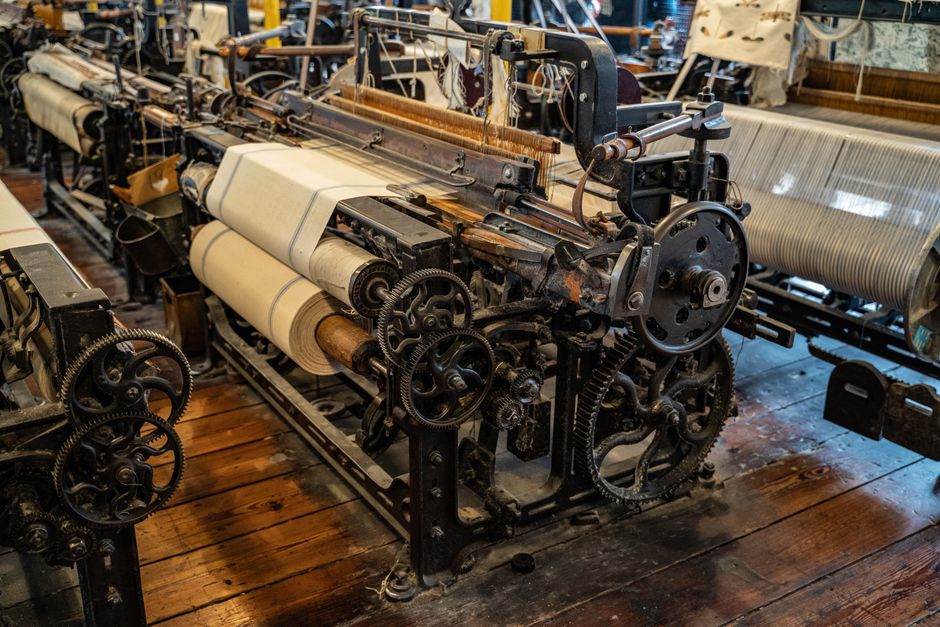
The fundamental principle of the Industrial Revolution was the systematic replacement of human and animal power with machines. This wasn't merely about making work easier; it represented a complete reimagining of production. Textile mills demonstrated this principle most dramatically, where spinning jennies and power looms could produce in hours what previously took skilled workers days or weeks to complete. This rule established that machinery, once perfected, would inevitably replace manual processes across all industries.

2. Centralization of Production Creates Efficiency

Before industrialization, production occurred in scattered homes and small workshops. The Industrial Revolution established that gathering workers and machines under one roof—the factory system—dramatically increased efficiency. This centralization allowed for better supervision, coordinated workflow, and economies of scale. The factory became the dominant model precisely because it proved that concentrated production outperformed dispersed cottage industries in nearly every measurable way.

3. Capital Investment Drives Innovation

The Industrial Revolution proved that substantial upfront capital investment in machinery and infrastructure would generate unprecedented returns. Entrepreneurs learned that those willing to invest heavily in new technologies and production methods would dominate their markets. This principle transformed economic thinking, establishing that access to capital and willingness to invest in innovation became more important than traditional land ownership or inherited wealth.

4. Steam Power Enables Independence from Natural Limitations

James Watt's improvements to the steam engine established a crucial principle: human industry need no longer depend on natural power sources like rivers, wind, or animal strength. Factories could be built anywhere, operating continuously regardless of weather or geography. This rule meant that industrial development could occur in locations chosen for strategic, economic, or logistical reasons rather than being bound to waterfalls or windswept plains.

5. Division of Labor Maximizes Productivity

Adam Smith's pin factory example became industrial gospel: breaking complex tasks into simple, repetitive steps performed by specialized workers dramatically increased output. Each worker mastering one small task could work faster and with greater precision than a craftsman performing all steps. This principle became fundamental to industrial organization, though it transformed skilled artisans into specialized laborers performing repetitive tasks.

6. Standardization Enables Mass Production

The Industrial Revolution established that manufacturing identical, interchangeable parts was essential for efficient production and repair. Eli Whitney's demonstration of interchangeable musket parts proved that standardization reduced costs, simplified assembly, and made repairs feasible. This principle became foundational to all modern manufacturing, from simple tools to complex machinery.

7. Transportation Infrastructure Determines Economic Success

Industrialists quickly learned that production capacity meant nothing without efficient transportation. Canals, improved roads, and especially railroads became as important as factories themselves. Nations and regions that invested heavily in transportation infrastructure prospered, while those that neglected it stagnated. This rule established that industrial success required thinking beyond the factory floor to entire supply chains and distribution networks.

8. Coal Fuels Industrial Expansion

The Industrial Revolution proved that access to abundant, affordable energy was non-negotiable for industrial development. Coal became the essential commodity, powering steam engines, heating factories, and fueling iron production. Regions with coal deposits gained enormous advantages, while those without it faced significant industrial handicaps. This principle established energy access as a fundamental prerequisite for industrial power.

9. Urbanization Follows Industrialization

A consistent pattern emerged: wherever factories appeared, cities grew rapidly. Workers migrated from rural areas to industrial centers, creating unprecedented urban growth. This wasn't merely coincidental but represented a fundamental rule of industrial development—mechanized production required concentrated labor forces living near factories. This principle transformed predominantly rural societies into urban ones within a few generations.

10. Technical Education Creates Competitive Advantage

Early industrializers recognized that technical knowledge and engineering expertise were crucial competitive advantages. Nations and companies that invested in technical education, scientific research, and knowledge-sharing prospered. This principle established that industrial leadership required not just copying existing machines but developing the educational infrastructure to innovate and improve technologies continuously.

11. Iron and Steel Production Measures Industrial Capacity

The amount of iron and steel a nation could produce became the primary measure of its industrial strength. These materials were essential for building machines, railways, ships, and structures. The principle was simple: industrial power required mastering large-scale iron and steel production. Nations that achieved this dominated global trade and military power.

12. Factory Discipline Replaces Agricultural Rhythms

Industrialization imposed rigid time discipline unknown in agricultural societies. Factory whistles, punch clocks, and strict schedules replaced the seasonal, daylight-dependent rhythms of farm life. This principle established that industrial work required punctuality, continuous attention, and subordination to machine-paced production schedules—fundamentally changing how humans experienced work and time.

13. Child and Female Labor Expands the Workforce

Early industrialists discovered that women and children could operate many machines, dramatically expanding the available labor force while reducing wage costs. Though eventually reformed through labor legislation, this principle initially shaped industrial development by demonstrating that traditional labor restrictions could be overcome when economic incentives were strong enough.

14. Innovation Cycles Accelerate Continuously

The Industrial Revolution established that technological improvement was not a one-time event but a continuous process. Each innovation created opportunities for further improvements and entirely new technologies. This accelerating cycle of innovation became a defining characteristic of industrial societies, establishing that continuous adaptation and improvement were necessary for survival, not just success.

15. Global Trade Networks Become Essential

Industrialization required access to global markets for both raw materials and finished goods. Cotton from America and India fed British textile mills, whose products sold worldwide. This principle established that successful industrial nations needed not just domestic production capacity but global trade networks, colonial access, or international trade agreements to sustain industrial growth.

The Lasting Legacy of Industrial Principles

These fifteen principles established during the Industrial Revolution continue shaping our world. Modern manufacturing, global supply chains, urban development, and economic policies all reflect lessons learned during this transformative era. Understanding these foundational rules provides essential context for comprehending how industrial societies developed and why they function as they do. The Industrial Revolution wasn't simply a period of technological change—it established enduring principles about how production, society, and economy could be organized, principles that remain influential more than two centuries later.


Top 10 Famous Sculptures and Their Secrets

Top 10 Famous Sculptures and Their Secrets

⏱️ 7 min read

Throughout history, sculptors have created masterpieces that continue to captivate audiences centuries after their creation. Beyond their aesthetic beauty, many of the world's most celebrated sculptures harbor fascinating secrets, hidden meanings, and untold stories that enhance our appreciation of these remarkable works. From ancient mysteries to modern controversies, these sculptural treasures reveal layers of complexity that go far beyond what meets the eye.

Unveiling the Hidden Stories Behind Iconic Sculptures

1. Michelangelo's David and Its Anatomical Imperfections

Standing at over 17 feet tall, Michelangelo's David is often considered the pinnacle of Renaissance sculpture. However, this masterpiece contains deliberate anatomical distortions that most viewers never notice. The right hand is disproportionately large, measuring approximately 10% larger than it should be relative to the body. This wasn't an error—Michelangelo purposefully exaggerated David's hands and head because the statue was originally intended to be placed high atop the Florence Cathedral, where these features would appear correctly proportioned when viewed from below. Additionally, David's eyes feature a heart-shaped pupil when examined closely, a detail Michelangelo carved to symbolize courage and passion.

2. The Venus de Milo's Missing Arms Mystery

Discovered on the Greek island of Milos in 1820, the Venus de Milo has enchanted art lovers for two centuries. While many assume her arms were lost to time and damage, evidence suggests a more intriguing story. Sketches made shortly after her discovery show that fragments of arms and hands were found alongside the statue, including one hand holding an apple. The Louvre Museum, which acquired the sculpture, may have deliberately left the arms unrestored to maintain the statue's mysterious allure and romantic incompleteness—a aesthetic preference of the era. Some art historians believe the missing arms originally held either an apple, a mirror, or a shield, each carrying different symbolic meaning.

3. Auguste Rodin's The Thinker and Its Original Context

Most people recognize The Thinker as a standalone sculpture of a contemplative nude man, but few know it was originally conceived as part of a much larger work. Rodin created The Thinker as the central figure for "The Gates of Hell," a monumental doorway inspired by Dante's Inferno. The figure was meant to represent Dante himself, brooding over the scenes of torment below. Originally titled "The Poet," the sculpture was later cast separately and renamed. Another secret: Rodin's model was a boxer, which explains the figure's muscular, powerful physique—quite different from the lean intellectuals typically associated with deep thinking.

4. The Statue of Liberty's Color Transformation

The iconic green patina that covers the Statue of Liberty wasn't part of the original design. When French sculptor Frédéric Auguste Bartholdi completed the statue in 1886, Lady Liberty gleamed with the reddish-brown color of copper. Over approximately 30 years, chemical reactions between the copper, oxygen, and atmospheric elements created the distinctive green coating we recognize today. Interestingly, the statue's torch-bearing right arm was displayed in Madison Square Park for six years before the rest of the statue was completed, helping to raise funds for the pedestal. The statue also contains a hidden room inside the torch, though it has been closed to the public since 1916 following an explosion.

5. The Terracotta Army's Individual Faces

Buried with China's first emperor, Qin Shi Huang, around 210 BCE, the Terracotta Army consists of over 8,000 soldiers, each with unique facial features. The secret behind this incredible diversity lies in an ancient assembly-line technique. Artisans created eight basic face molds, then added clay appliqués—different noses, eyes, beards, and expressions—to individualize each warrior. Recent analysis has revealed that the sculptures were originally painted in brilliant colors, and traces of purple pigment suggest the ancient Chinese had access to a rare dye previously thought to have originated in the West. Many believe thousands more warriors remain unexcavated beneath the surrounding farmland.

6. Gian Lorenzo Bernini's Ecstasy of Saint Teresa and Its Hidden Window

This Baroque masterpiece depicts Saint Teresa of Ávila in a moment of spiritual rapture, but Bernini incorporated an architectural secret that enhances its dramatic effect. A concealed window above the sculpture allows natural light to pour down onto the figures, creating an ethereal glow that seems to emanate from heaven itself. This hidden light source makes the golden rays surrounding the angel and saint appear to shimmer supernaturally. The intensely emotional expression on Saint Teresa's face sparked controversy, with some viewers interpreting the ecstasy as more earthly than spiritual—a ambiguity that Bernini, known for his dramatic flair, may have intentionally cultivated.

7. Mount Rushmore's Secret Chamber

Behind Abraham Lincoln's head, sculptor Gutzon Borglum designed a hidden chamber intended to be a "Hall of Records." This vault was meant to house important American documents and artifacts, including the Declaration of Independence and the Constitution. While Borglum died before completing this vision, in 1998, a repository was finally installed containing sixteen porcelain panels describing the creation of Mount Rushmore and the history of the United States. The chamber remains inaccessible to the public, sealed behind a 1,200-pound granite capstone. Originally, Borglum envisioned the presidents sculpted from head to waist, but funding limitations resulted in the head-only versions we see today.

8. The Sphinx's Missing Nose and Its True Culprit

Contrary to popular legend, Napoleon's troops did not shoot off the Sphinx's nose during target practice. Historical drawings from the 1700s—before Napoleon's Egyptian campaign—show the Sphinx already noseless. The most likely explanation comes from historical accounts describing Sa'im al-Dahr, a Sufi Muslim, who damaged the Sphinx in 1378 CE as an act of iconoclasm after witnessing locals making offerings to the statue. The Sphinx also contains unexplored tunnels and chambers beneath and around it, detected through seismic studies, leading to ongoing speculation about hidden chambers that might contain ancient treasures or records. Additionally, erosion patterns suggest the Sphinx might be much older than traditionally believed.

9. Michelangelo's Moses and the Horned Prophet

In Rome's Church of San Pietro in Vincoli, Michelangelo's Moses features an unusual detail: two horn-like protrusions on his head. This oddity stems from a mistranslation in the Latin Vulgate Bible, where the Hebrew word "karan" (meaning "radiant" or "shining") was translated as "horned." Saint Jerome's translation described Moses descending from Mount Sinai with "horned" face rather than a "radiant" one. Michelangelo faithfully followed this biblical interpretation. Another secret: Moses' right index finger points downward in what some scholars interpret as a gesture of accusation toward the Jewish people for worshipping the golden calf. The sculpture's muscular detail is so precise that the veins in Moses' arms appear to pulse with life.

10. Constantin Brâncuși's Bird in Space and the Customs Controversy

This sleek, abstract bronze sculpture became the center of a landmark legal battle in 1927 when U.S. customs officials refused to classify it as art, instead categorizing it as taxable metalwork. Brâncuși sued the U.S. government, and the subsequent trial fundamentally changed how abstract art was legally defined. The court ultimately ruled in Brâncuși's favor, establishing that art should be judged by artistic intent rather than literal representation. The sculpture's secret lies in its mathematical precision—Brâncuși spent years refining the form through multiple versions, each more reduced and essential than the last, seeking to capture the essence of flight rather than depicting a literal bird. The highly polished surface creates ever-changing reflections, making the sculpture appear to dematerialize and truly take flight depending on lighting and viewing angle.

The Enduring Legacy of Sculptural Secrets

These ten masterpieces demonstrate that great sculptures are far more than static objects of beauty. They are repositories of history, carriers of hidden messages, and subjects of ongoing mystery. From Michelangelo's deliberate distortions to Borglum's sealed chamber, from ancient mistranslations to modern legal battles, each sculpture tells multiple stories beyond its visible form. These secrets—whether intentional choices by artists, historical accidents, or natural transformations—deepen our connection to these works and remind us that art continues to reveal new layers of meaning across generations. The next time you encounter a famous sculpture, remember that what you see on the surface may be only the beginning of its story.