










1 / 10 Questions
0 Points

Which White-Flowered Plant Is Among North America’s Most Poisonous?

White Snakeroot

Baby's Breath

Daisy

White Clover

Points won
0
Correct score
0%

More questions

More Articles

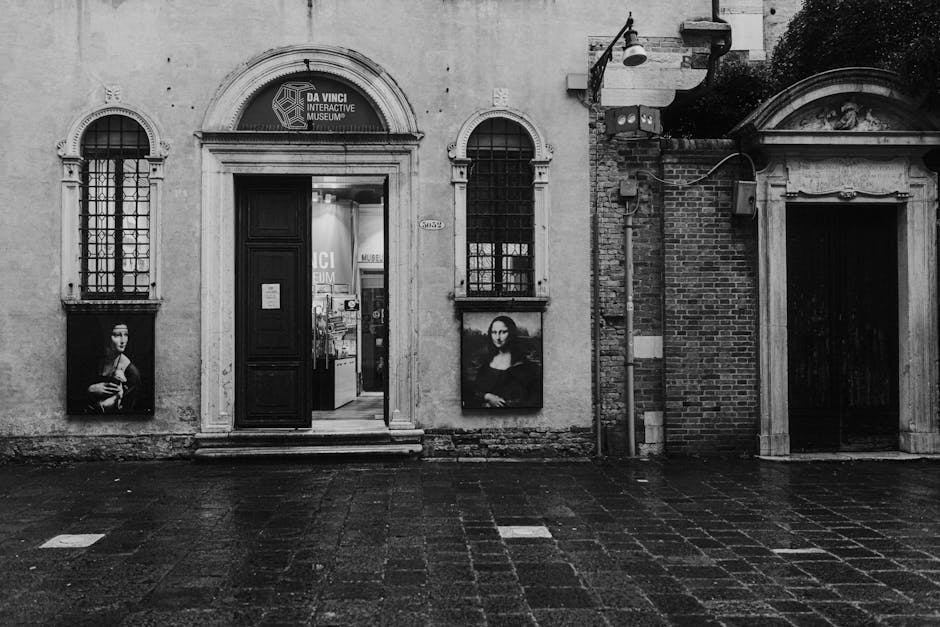
Top 10 Fascinating Facts About Leonardo da Vinci

Top 10 Fascinating Facts About Leonardo da Vinci

⏱️ 6 min read

Leonardo da Vinci stands as one of history's most remarkable polymaths, whose genius transcended the boundaries of art, science, and engineering. His insatiable curiosity and innovative spirit led to discoveries and creations that were centuries ahead of his time. From his masterful paintings to his visionary inventions, Leonardo's legacy continues to inspire and astound people around the world. The following fascinating facts reveal the depth and breadth of this Renaissance master's extraordinary life and achievements.

The Incredible Range of Leonardo's Genius

1. Master of Mirror Writing

Leonardo da Vinci wrote nearly all of his personal notes and observations in mirror script, meaning the text could only be read properly when held up to a mirror. His notebooks contain thousands of pages written from right to left in this distinctive reversed handwriting. While some historians initially speculated this was a secret code to protect his ideas, the more accepted theory is that Leonardo, being left-handed, found this method more practical as it prevented smudging the ink as his hand moved across the page. This unique writing style has fascinated scholars for centuries and adds an element of mystery to his already enigmatic persona.

2. The Unfinished Masterpiece Habit

Despite his legendary status, Leonardo had a notorious reputation for leaving projects incomplete. Of approximately fifteen paintings attributed to him, several were never finished, including the famous "Adoration of the Magi" and "St. Jerome in the Wilderness." His perfectionist nature, combined with his diverse interests, meant he would often abandon one project when something else captured his imagination. This tendency frustrated many of his patrons, but it also speaks to his restless genius and constant pursuit of new knowledge and challenges across multiple disciplines.

3. Pioneering Anatomical Studies

Leonardo conducted detailed anatomical studies that were revolutionary for his time, personally dissecting approximately 30 human corpses to understand the body's inner workings. His anatomical drawings were so precise and detailed that they remained unmatched for centuries. He was the first to accurately depict the human spine's curvature, document the heart's four chambers, and illustrate the fetus in the womb. These studies were not merely artistic exercises but serious scientific investigations that combined his artistic skill with empirical observation, creating works that served both medical and artistic purposes.

4. The Vegetarian Visionary

In an era when meat consumption was common among those who could afford it, Leonardo was reportedly a strict vegetarian who felt deep compassion for animals. Contemporary accounts describe how he would purchase caged birds in the marketplace simply to set them free. His notebooks contain passages expressing his ethical concerns about harming animals, writing that humans had no right to take animal lives. This compassion extended to his scientific work, as he sought to understand animal anatomy and movement through observation rather than solely through dissection.

5. Engineering Centuries Ahead of Technology

Leonardo's engineering notebooks reveal designs for inventions that wouldn't become practical reality for hundreds of years. He sketched plans for helicopters, tanks, submarines, parachutes, and even a primitive form of the automobile. His flying machine designs showed a sophisticated understanding of aerodynamics, though the materials and power sources of his time couldn't bring them to life. Modern engineers have built working models based on his designs, proving that his concepts were fundamentally sound, making him a true visionary who imagined the technological future.

6. The Decades-Long Mona Lisa

Leonardo worked on the Mona Lisa for approximately four years, beginning around 1503, but he never actually delivered the painting to the person who commissioned it. Instead, he kept the portrait with him, continuing to refine it for possibly another decade or more. He carried the painting with him when he moved to France near the end of his life, constantly making subtle adjustments and improvements. This obsessive perfectionism resulted in the masterpiece we know today, with its revolutionary sfumato technique and enigmatic smile that continues to captivate millions of viewers annually.

7. Military Engineering Expertise

Beyond his artistic achievements, Leonardo served as a military engineer for various Italian rulers, including Cesare Borgia. He designed fortifications, weapons, and military strategies, creating detailed plans for giant crossbows, multi-barreled cannons, and armored vehicles. His approach combined practical battlefield knowledge with innovative thinking, though many of his weapon designs were intentionally left incomplete in his notebooks, possibly due to moral concerns about their destructive potential. This work demonstrates how Renaissance artists often served multiple roles in society, applying their skills to both aesthetic and practical challenges.

8. The Ambidextrous Artist

Leonardo possessed the rare ability to write and draw with both hands simultaneously, sometimes producing mirror images of the same subject. Historical accounts suggest he could write with one hand while drawing with the other, a feat that showcases his extraordinary brain coordination and manual dexterity. This ambidexterity likely contributed to his unique perspective on spatial relationships and his ability to visualize complex three-dimensional forms, skills that served him well in both his artistic compositions and engineering designs.

9. Musical Talents and Innovations

Less widely known than his painting and inventions, Leonardo was also an accomplished musician and instrument designer. He played the lyre beautifully and was often called upon to perform for nobility. He designed innovative musical instruments, including a viola organista that combined elements of keyboard and string instruments. Contemporary accounts describe his improvisational skills and his lovely singing voice. This musical dimension of his talents further illustrates the Renaissance ideal of the universal man, excelling in both arts and sciences.

10. The Illegitimate Birth That Freed His Mind

Leonardo was born out of wedlock to a notary and a peasant woman, a circumstance that, paradoxically, may have enabled his genius to flourish. His illegitimate status barred him from following his father's profession or attending university, which would have provided a traditional classical education focused on Latin texts. Instead, he pursued an apprenticeship in art and developed his knowledge through direct observation and experimentation. This hands-on, empirical approach to learning became his trademark method, allowing him to question established wisdom and develop revolutionary ideas unconstrained by academic orthodoxy.

The Enduring Legacy of a Renaissance Master

These ten fascinating aspects of Leonardo da Vinci's life reveal a man whose curiosity knew no bounds and whose talents spanned an incredible range of human endeavor. From his mysterious mirror writing to his compassionate vegetarianism, from his anatomical precision to his visionary engineering, Leonardo embodied the Renaissance spirit of universal learning. His reluctance to finish projects, while frustrating to his contemporaries, speaks to his perpetual pursuit of perfection and deeper understanding. Today, over 500 years after his death, Leonardo continues to inspire artists, scientists, and inventors worldwide, reminding us that the greatest achievements often come from those who dare to explore the intersections between art and science, observation and imagination.


Top 10 Iconic TV Moments That Changed Television

Top 10 Iconic TV Moments That Changed Television

⏱️ 6 min read

Television has the unique power to create cultural touchstones that transcend entertainment and shape society itself. Throughout its history, certain moments have stopped viewers in their tracks, sparked national conversations, and fundamentally altered what was possible on the small screen. These watershed events didn't just entertain millions—they redefined the medium's boundaries, challenged social norms, and demonstrated television's capacity to unite audiences around shared experiences. From groundbreaking technical achievements to courageous social commentary, these moments represent turning points that forever changed how we create, consume, and think about television.

Moments That Redefined Television History

1. Lucy and Ricky's Shared Bed and Pregnancy Storyline

When "I Love Lucy" aired in the 1950s, television operated under strict censorship codes that prohibited married couples from sharing a bed on screen. Lucille Ball and Desi Arnaz broke this barrier, and when Ball became pregnant in real life, the show made another revolutionary decision: incorporating her pregnancy into the storyline. The word "pregnant" couldn't be said on air, so they used "expecting," but the January 1953 episode featuring Little Ricky's birth drew 44 million viewers—more than watched President Eisenhower's inauguration the next day. This moment proved television could reflect real family life and set precedents for how personal storylines could be integrated into entertainment programming.

2. The First Interracial Kiss on Star Trek

On November 22, 1968, "Star Trek" aired "Plato's Stepchildren," featuring a kiss between Captain Kirk and Lieutenant Uhura—television's first scripted interracial kiss. During a period of intense racial tension in America, this moment was revolutionary. While some Southern stations refused to air the episode, the overwhelming response was positive, with Nichelle Nichols reporting that the episode generated more fan mail than any other. This bold move demonstrated television's potential as a progressive force and showed that science fiction could be a vehicle for social commentary, paving the way for diverse representation in future programming.

3. The Final Episode of M*A*S*H Draws Record Viewership

On February 28, 1983, 105.9 million Americans tuned in to watch "Goodbye, Farewell and Amen," the series finale of M*A*S*H. This remains one of the most-watched television broadcasts in U.S. history. The episode's success demonstrated television's unique ability to create communal experiences and proved that audiences would invest deeply in character-driven storytelling over multiple years. The finale's emotional depth and refusal to provide entirely happy endings showed that television comedy could tackle serious themes with nuance and complexity, raising the bar for what sitcoms could achieve artistically.

4. The CNN Coverage of the Gulf War

In January 1991, CNN's live coverage of Operation Desert Storm brought war into living rooms in unprecedented real-time detail. Reporters broadcasting from Baghdad as bombs fell demonstrated 24-hour news networks' capability to deliver immediate, continuous coverage of global events. This moment transformed CNN from a cable upstart into a essential news source and changed viewer expectations about news delivery. It established the template for how breaking news would be covered going forward and cemented television's role as the primary medium for experiencing major historical events as they unfold.

5. Ellen DeGeneres's Coming Out Episode

On April 30, 1997, Ellen DeGeneres came out as gay both in real life and through her character on the sitcom "Ellen." The episode, titled "The Puppy Episode," drew 42 million viewers and sparked intense national debate about LGBTQ+ representation on television. Despite backlash and the show's subsequent cancellation, this moment opened doors for authentic LGBTQ+ characters and storylines across television. It proved that major network stars could be openly gay and demonstrated television's power to humanize marginalized communities, contributing significantly to shifting public attitudes about LGBTQ+ rights.

6. The Sopranos Revolutionizes Serialized Drama

When "The Sopranos" premiered on HBO in 1999, it fundamentally changed what television drama could be. The show's cinematic quality, morally complex protagonist, and willingness to reject conventional narrative structures proved that television could rival film in artistic ambition. Its success launched the "Golden Age" of television and demonstrated that cable networks could produce prestige content that attracted both critical acclaim and devoted audiences. The show's influence is visible in virtually every serialized drama that followed, from "Breaking Bad" to "Mad Men," establishing the template for modern television storytelling.

7. American Idol Pioneers Interactive Reality Television

Debuting in 2002, "American Idol" transformed television by making audiences active participants through call-in voting. This interactivity created unprecedented engagement and proved that reality competition shows could dominate ratings while generating massive revenue. The show launched the careers of numerous music stars and demonstrated television's potential for audience participation beyond passive viewing. It influenced countless competition shows and helped networks understand the value of social engagement, essentially creating the blueprint for how modern reality television integrates viewer participation and social media interaction.

8. The Wire's Unflinching Social Commentary

HBO's "The Wire" (2002-2008) elevated television to the level of serious social literature, offering a complex, systemic examination of urban America through interwoven storylines about crime, education, media, and politics. While never a ratings hit during its original run, the show's sophisticated narrative structure and refusal to simplify complex social issues demonstrated television's capacity for deep social analysis. Its influence on how serialized dramas approach institutional critique and social realism has been profound, proving that television could function as serious art while addressing pressing social issues with intelligence and nuance.

9. The Streaming Revolution with House of Cards

When Netflix released all episodes of "House of Cards" simultaneously in February 2013, it disrupted traditional television distribution models and popularized binge-watching. This moment signaled the beginning of the streaming era and challenged fundamental assumptions about how television content should be released and consumed. The show's success proved that streaming platforms could produce quality original content competitive with traditional networks and fundamentally altered the television industry's business model. This shift empowered viewers with unprecedented control over their viewing experience and forced traditional networks to adapt or risk obsolescence.

10. The Global Phenomenon of Game of Thrones

HBO's "Game of Thrones" (2011-2019) demonstrated that television could create a global cultural phenomenon in the streaming age. With its cinematic production values, massive budget, and complex storytelling, the series proved audiences would embrace epic fantasy on television. Despite its controversial ending, the show's ability to generate worldwide simultaneous viewing and intense social media discussion showed that appointment television could still exist in the streaming era. It demonstrated that television could achieve blockbuster film-level spectacle while maintaining the deep character development possible in long-form storytelling, influencing how streaming platforms approach prestige content.

The Lasting Impact on Television

These ten moments represent more than just memorable television—they mark evolutionary leaps in the medium's development. From breaking social taboos to pioneering new distribution models, each moment expanded television's possibilities and influenced countless programs that followed. They demonstrated television's unique power to reflect and shape culture, push technological boundaries, and create shared experiences across diverse audiences. As television continues evolving through streaming platforms and new technologies, these landmark moments remind us of the medium's remarkable capacity for innovation and cultural impact. They set standards for creativity, courage, and ambition that continue inspiring television creators today, ensuring the medium remains a vital force in entertainment and society.