











1 / 10 Questions
0 Points

Which Killer Shark Movie Had A Friendly Name Behind The Scenes?

The Meg

Deep Blue Sea

Jaws

Sharknado

Points won
0
Correct score
0%

More questions

More Articles

Did You Know? 10 Fun Facts About Time Travel Theories

Did You Know? 10 Fun Facts About Time Travel Theories

⏱️ 6 min read

Time travel has captivated human imagination for centuries, bridging the gap between science fiction and theoretical physics. From Einstein's groundbreaking theories to modern quantum mechanics, scientists have proposed fascinating concepts that challenge our understanding of time itself. While we haven't built a working time machine yet, the theoretical frameworks that exist reveal surprising insights about the nature of reality and what might be possible in the future.

Exploring the Scientific Foundations of Time Travel

Einstein's Theory Makes Time Travel Theoretically Possible

Albert Einstein's theory of special relativity, published in 1905, fundamentally changed how we understand time. According to this theory, time is not absolute but relative, depending on the observer's speed and gravitational field. The faster an object moves through space, the slower it moves through time relative to a stationary observer. This phenomenon, known as time dilation, has been proven through experiments with atomic clocks on airplanes and satellites. Technically, astronauts aboard the International Space Station are traveling into the future, aging slightly slower than people on Earth—though by only fractions of a second.

Wormholes Could Be Nature's Time Machine

Wormholes, also called Einstein-Rosen bridges, are theoretical tunnels through spacetime that could connect two distant points in the universe—or two different times. First proposed in 1935, these structures emerge from the mathematics of general relativity. If a wormhole could be stabilized (perhaps with exotic matter possessing negative energy), it might allow instantaneous travel across vast distances or even through time. While no evidence of naturally occurring wormholes exists, physicists haven't ruled out their possibility, and they remain a serious subject of scientific research.

The Grandfather Paradox Challenges Logic

One of the most famous thought experiments in time travel is the grandfather paradox. If you traveled back in time and prevented your grandparents from meeting, you would never be born—but then you wouldn't exist to travel back in time in the first place. This logical contradiction has led physicists to propose various solutions, including the many-worlds interpretation, where changing the past creates an alternate timeline, or the Novikov self-consistency principle, which suggests that any action taken by a time traveler was already part of history.

Rotating Black Holes Might Enable Time Travel

In 1963, mathematician Roy Kerr discovered that rotating black holes, unlike their stationary counterparts, could theoretically allow time travel. The intense rotation of these cosmic objects creates a region called the ergosphere, where spacetime itself is dragged around. Some theoretical models suggest that if you could navigate through a rotating black hole without being destroyed, you might emerge in a different time or universe. However, the extreme gravitational forces and radiation would make this practically impossible with current or foreseeable technology.

Cosmic Strings Could Warp Time

Cosmic strings are hypothetical one-dimensional defects in spacetime that might have formed during the early universe. These incredibly dense structures, thinner than an atom but potentially stretching across galaxies, could have enough gravitational pull to warp spacetime significantly. Physicist J. Richard Gott proposed in 1991 that two cosmic strings moving past each other at high speeds could create a closed timelike curve, allowing time travel to the past. While cosmic strings remain theoretical, their existence would open fascinating possibilities for temporal manipulation.

Time Travel to the Future Is Already Happening

Unlike traveling to the past, traveling to the future is not only theoretically possible but actually occurs regularly. The phenomenon of time dilation means that anyone moving at high speeds or spending time in strong gravitational fields will experience time more slowly than someone in a different reference frame. Astronaut Sergei Krikalev, who spent 803 days in space, traveled approximately 0.02 seconds into the future compared to people on Earth. While this effect is minimal at current speeds, a spacecraft traveling at near-light velocity could allow passengers to jump centuries or millennia into the future.

The Alcubierre Drive Proposes Warping Space

In 1994, physicist Miguel Alcubierre proposed a theoretical method of faster-than-light travel that could have time travel implications. The Alcubierre drive would work by contracting spacetime in front of a spacecraft while expanding it behind, creating a "warp bubble" that moves faster than light without violating Einstein's theories. Because traveling faster than light has temporal implications according to relativity, this method could potentially enable time travel. The major obstacle is the enormous amount of exotic matter required—more energy than exists in the known universe.

Quantum Mechanics Introduces the Many-Worlds Interpretation

The many-worlds interpretation of quantum mechanics, proposed by Hugh Everett in 1957, suggests that every quantum event creates branching parallel universes where all possible outcomes occur. This theory provides an elegant solution to time travel paradoxes: changing the past wouldn't alter your original timeline but would create a new parallel universe with a different future. While controversial, this interpretation has gained credibility among physicists and offers a framework where time travel could exist without logical contradictions.

Tipler Cylinders Require Infinite Length

Physicist Frank Tipler proposed in 1974 that an infinitely long, extremely dense cylinder rotating at near the speed of light could create closed timelike curves, allowing time travel. The intense rotation would drag spacetime around the cylinder so severely that paths through space would loop back on themselves temporally. A spacecraft spiraling around this cylinder could theoretically arrive at its starting point before it left. The impracticality lies in the requirement for infinite length and the enormous energy needed to maintain such rotation.

The Speed of Light Is the Universe's Speed Limit

According to special relativity, nothing with mass can travel at or faster than the speed of light—approximately 299,792 kilometers per second. As an object approaches light speed, its mass effectively becomes infinite, requiring infinite energy to accelerate further. This cosmic speed limit has profound implications for time travel, as many theoretical methods require exceeding light speed or manipulating spacetime in ways that demand impossible amounts of energy. This fundamental barrier is why practical time travel remains in the realm of theory rather than engineering.

The Ongoing Fascination with Temporal Possibilities

These ten fascinating aspects of time travel theories demonstrate that what once seemed purely fictional has serious scientific foundations. From Einstein's proven time dilation to speculative concepts like wormholes and cosmic strings, physicists continue exploring whether the universe's laws permit journeys through time. While practical time travel remains beyond our current capabilities, these theories push the boundaries of physics and challenge our understanding of reality itself. Whether time travel will ever become possible remains unknown, but the journey to answer that question continues to yield profound insights about the universe we inhabit.
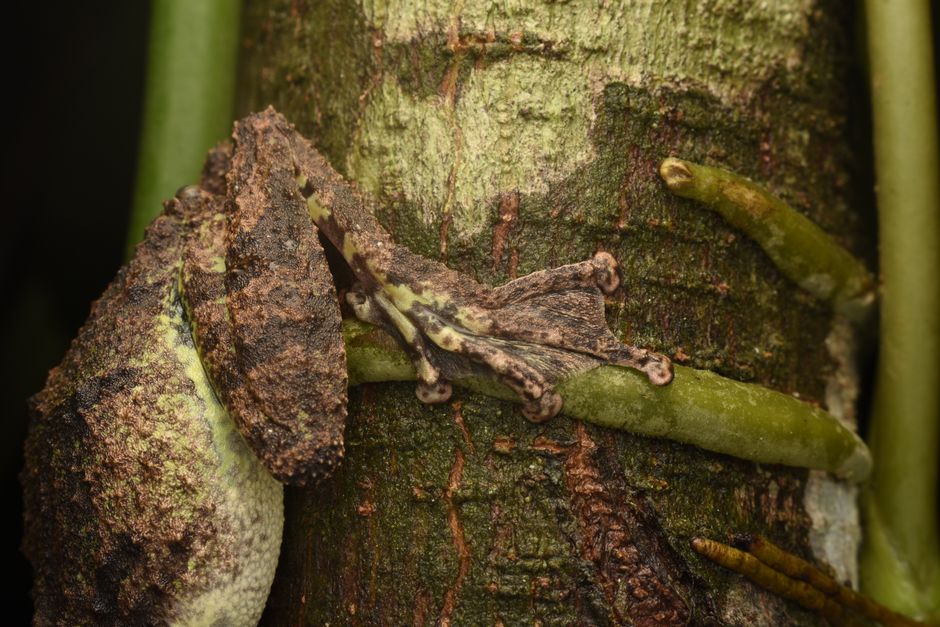

Top 10 Most Amazing Examples of Camouflage in Nature

Top 10 Most Amazing Examples of Camouflage in Nature

⏱️ 6 min read

Nature has perfected the art of disguise over millions of years of evolution. From the depths of the ocean to the canopies of tropical rainforests, countless species have developed extraordinary abilities to blend seamlessly into their surroundings. These remarkable adaptations serve crucial purposes: avoiding predators, ambushing prey, and ensuring survival in competitive ecosystems. The following examples showcase nature's most impressive masters of concealment, demonstrating the incredible diversity and sophistication of camouflage strategies across the animal kingdom.

The Masters of Natural Disguise

1. The Cuttlefish's Instantaneous Color Transformation

Cuttlefish possess one of the most advanced camouflage systems in the entire animal kingdom. These intelligent cephalopods can change their color, pattern, and texture in less than a second, utilizing millions of specialized skin cells called chromatophores, leucophores, and iridophores. Remarkably, cuttlefish achieve this feat despite being colorblind, relying instead on their ability to perceive light polarization and texture through their skin. They can mimic complex backgrounds including coral reefs, sandy bottoms, and rocky surfaces with stunning accuracy, making them virtually invisible to both predators and prey.

2. Leaf-Tailed Geckos and Their Botanical Mimicry

The satanic leaf-tailed gecko of Madagascar represents an extraordinary example of mimicry in reptiles. These nocturnal creatures don't just blend into their environment—they become it. Their bodies are flattened and shaped exactly like dried or decaying leaves, complete with vein-like patterns, irregular edges, and even fake insect bite marks. During the day, they press their bodies flat against tree bark, eliminating any shadow that might give away their position. Their coloration varies from browns to greens, perfectly matching the bark and lichen of their native forests.

3. The Walking Stick Insect's Structural Deception

Walking stick insects, or phasmids, have taken camouflage to architectural extremes. These insects have evolved bodies that are nearly indistinguishable from twigs and branches, complete with irregular bumps that resemble bark texture and leaf buds. Some species can remain motionless for hours, swaying gently only when wind moves the surrounding vegetation. Certain species even lay eggs that look like plant seeds, extending their camouflage strategy across generations. With over 3,000 species worldwide, these insects demonstrate remarkable diversity in their stick-like disguises.

4. Arctic Fox Seasonal Wardrobe Changes

The arctic fox showcases one of nature's most practical camouflage adaptations through its dramatic seasonal coat transformations. During winter months, these foxes sport thick, pristine white fur that renders them nearly invisible against snow and ice, providing both insulation and concealment. As spring arrives and snow melts, they molt into a brown or gray coat that blends perfectly with the tundra's rocky, earthy terrain. This biannual transformation allows them to maintain effective camouflage year-round in one of Earth's most visually dynamic environments.

5. Stonefish Deadly Ocean Floor Concealment

The stonefish holds the distinction of being both the world's most venomous fish and one of its best-camouflaged creatures. Residing on the ocean floor in Indo-Pacific waters, stonefish have warty, textured skin covered in algae and encrusted with debris that makes them utterly indistinguishable from surrounding rocks and coral rubble. Their camouflage is so effective that even experienced divers often fail to notice them until nearly stepping on them. This concealment serves dual purposes: ambushing small fish and crustaceans while avoiding larger predators.

6. Orchid Mantis Predatory Flower Mimicry

The orchid mantis of Southeast Asia employs aggressive mimicry by disguising itself as a beautiful flower rather than blending into the background. With petal-shaped leg lobes and coloration ranging from white to pink, these mantises don't just hide among orchids—they actively attract prey by resembling the flowers themselves. Pollinating insects approach what they believe to be a flower, only to be captured by the waiting predator. Research has shown that these mantises can even attract more pollinators than actual flowers, making their disguise not just effective but superior to their model.

7. Pygmy Seahorse Coral Integration

Pygmy seahorses, discovered only in recent decades, display such perfect camouflage that marine biologists initially overlooked them entirely. These tiny fish, measuring less than two centimeters in length, live exclusively on specific species of gorgonian coral. Their bodies feature bumpy tubercles that precisely match the polyps of their host coral, while their coloration—whether purple, red, orange, or yellow—exactly matches the coral species they inhabit. Different populations have evolved distinct appearances matching their specific coral hosts, demonstrating remarkable evolutionary specialization.

8. Mimic Octopus Multiple Disguise Repertoire

The mimic octopus possesses an unprecedented ability among animals: it can impersonate multiple different species. Discovered in Indonesian waters in 1998, this remarkable cephalopod can shape-shift to resemble at least fifteen different marine animals, including lionfish, sea snakes, flatfish, and jellyfish. It selects its disguise based on the specific threat it faces, demonstrating not just physical adaptability but behavioral intelligence. By changing its color, texture, body shape, and movement patterns, the mimic octopus represents the pinnacle of active camouflage and defensive mimicry.

9. Dead Leaf Butterfly Wing Artistry

The dead leaf butterfly of Asia exhibits one of the most striking examples of contrast camouflage. While its wings are brilliantly colored when open—displaying vibrant oranges and blues—the moment it lands and closes its wings, it transforms into a perfect replica of a dead, dried leaf. The underside of its wings features detailed veining, brown coloration with subtle variations, and even spots that resemble fungal decay or damage. Some individuals possess a small "stem" extension, completing the illusion. This dramatic transformation allows the butterfly to seemingly vanish the instant it settles.

10. Snow Leopard High-Altitude Concealment

The elusive snow leopard demonstrates how camouflage enables survival in extreme mountain environments. Its thick, smoke-gray coat covered with dark rosettes and spots provides exceptional concealment against the rocky, snow-patched terrain of Central Asian mountains. The pattern breaks up the leopard's outline against complex backgrounds of boulders, cliffs, and scattered snow, making these large cats nearly impossible to spot even in relatively open terrain. Their neutral coloration works year-round in high-altitude environments where snow coverage varies constantly, allowing them to stalk prey like blue sheep and ibex with remarkable stealth.

The Evolutionary Significance of Natural Camouflage

These ten remarkable examples illustrate the extraordinary lengths to which evolution has refined the art of concealment. Whether through instantaneous color changes, structural mimicry, seasonal adaptations, or behavioral disguises, each species has developed camouflage perfectly suited to its specific ecological niche. These adaptations remind us that survival in nature often depends not on strength or speed, but on the ability to remain unseen. As we continue studying these masters of disguise, we gain deeper insights into evolutionary processes, sensory perception, and the intricate relationships between organisms and their environments. The natural world's camouflage innovations continue to inspire human technologies, from military applications to adaptive materials, proving that nature remains our greatest teacher in the art of concealment.